

In 2026, sports sponsorship has evolved from a passive branding exercise into a high-performance marketing engine. The global sports sponsorship market is projected to exceed $100 billion this year, driven by a fundamental shift in how consumers consume media.
As traditional advertising faces headwinds like ad-blockers and fragmented streaming audiences, live sports remain the last bastion of "appointment viewing." It is the only medium where millions of people watch the same content simultaneously, in real-time, without skipping ads.
Thus, for brands, this isn't just about visibility; it's about equity transfer—borrowing the deep emotional loyalty fans have for their teams and transferring it to a product. In this guide, we will analyze the mechanics, benefits, and financial realities of sports sponsorship in the modern era, to help you better understand the logic behind the consistent sports sponsorship investments.
The Strategic Advantages of Sponsorship
1. Emotional Connection & Brand Equity
Traditional ads interrupt the content; sponsorship is the content. By supporting a team, a brand moves from being an "advertiser" to a "supporter." This psychological shift is powerful. Nielsen data suggests that sponsorships drive a 10% lift in purchase intent because fans subconsciously attribute the team's values (grit, excellence, victory) to the sponsor.
2. The "Category Exclusivity" Moat
One of the most valuable aspects of sponsorship is exclusivity. If Pepsi sponsors the NFL, Coca-Cola cannot. This creates a defensive "moat" around a specific audience, locking out competitors from the most high-visibility environments. In 2026, brands are paying premiums of 20-30% to secure these exclusive category rights.
3. B2B Hospitality and Networking
Sponsorship is not just a consumer play; it is a B2B sales engine. Access to luxury suites, VIP experiences, and player meet-and-greets allows companies to host high-value clients in an unforgettable setting. Closing a million-dollar deal is often easier in a Champions League box than in a boardroom.
How Does Sponsorship Actually Work?
It is not as simple as writing a check. A successful partnership consists of three distinct financial layers:
| Component | Definition | Budget Allocation |
|---|---|---|
| Rights Fees | The cost to legally use the team's IP (logos, name) and be called an "Official Partner." | 40% of Total Budget |
| Activation | The marketing spend to bring the sponsorship to life (e.g., fan zones, social media campaigns, giveaways). | 40% of Total Budget |
| Measurement | The cost of data analytics to track ROI and media exposure. | 20% of Total Budget |
The Critical Role of "Activation"
Buying the rights is useless if you don't "activate" them. Activation is the bridge between the rights holder (team) and the fan.
- Passive Sponsorship: Putting a logo on a wall and hoping people see it. (Low ROI).
- Active Sponsorship: Creating a halftime challenge, a co-branded digital content series, or a pop-up store outside the stadium. (High ROI).
Types of Sponsorship Assets
1. Jersey & Kit Sponsorship
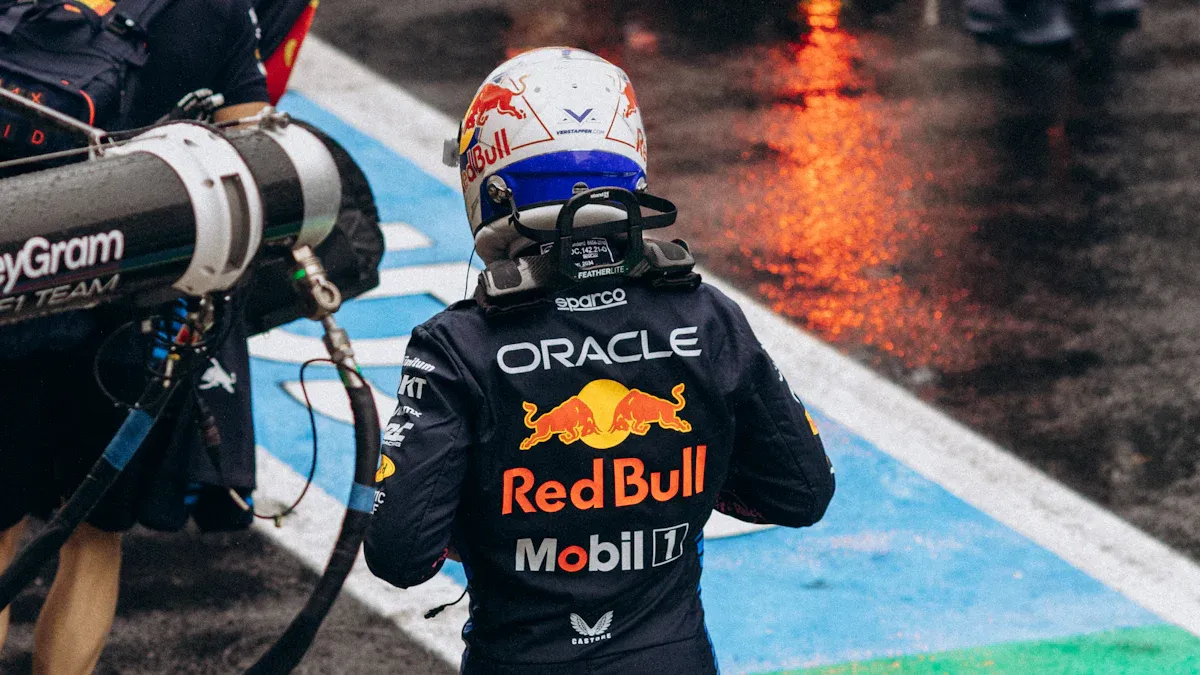
The most visible asset. Your logo travels with the player, appearing in every highlight reel, video game (EA Sports FC, NBA 2K), and press photo. It provides the highest Media Value but comes with the highest price tag.
2. Naming Rights
Naming a stadium (e.g., The Emirates, Crypto.com Arena) provides a permanent geographic legacy. However, in 2026, we are seeing "Asset Naming Rights" grow—brands sponsoring the training ground, the performance center, or even specific replay segments on the broadcast.
3. Technical Partnerships (The B2B Play)
Tech companies don't just want visibility; they want case studies. Brands like AWS (Formula 1) or Microsoft (NBA) provide the actual cloud infrastructure for the league. They use the sport as a global demo of their product's capability, proving reliability to enterprise buyers.
Risks and Challenges
Reputation & Scandal
When you tie your brand to a human athlete or organization, you inherit their baggage. If a star player is involved in a scandal, the sponsor faces immediate "guilt by association." Modern contracts now include strict "Morality Clauses" allowing brands to terminate deals instantly without penalty in such cases.
Ambush Marketing
This occurs when a non-sponsor tries to associate itself with an event without paying for rights. Think of Nike running ads featuring Brazilian football players during the World Cup, even though Adidas is the official tournament sponsor. This noise can dilute the value for the official partner.
Performance Volatility
If a team gets relegated or a star player gets injured, the audience size drops overnight. Brands mitigate this by signing portfolio deals (sponsoring the entire league rather than one team) or including "performance rebates" in their contracts.
2026 Trends: The Future of the Industry
The Explosion of Women's Sports
Women's sports are currently the most undervalued asset in marketing. Deloitte predicts revenue for women's elite sports will surpass $1.28 billion. Brands investing here (e.g., Ally Financial, Google) are seeing higher engagement rates and community goodwill compared to saturated men's leagues.
AI-Driven Valuation
Gone are the days of guessing a logo's value. AI tools like Relo Metrics now track every millisecond a logo appears on screen—whether on live TV, social media clips, or fan-generated content—to calculate a precise dollar value for every asset in real-time.
Virtual Overlays (Programmatic Ads)
Broadcast technology now allows different ads to be overlaid on the stadium boards depending on where the viewer is watching. A viewer in London might see an ad for a British bank, while a viewer watching the same match in Tokyo sees an ad for a Japanese insurer. This allows teams to sell the same asset multiple times.
Conclusion
Sports sponsorship is a high-stakes, high-reward arena. It remains the only marketing channel that offers simultaneous access to mass reach, emotional connection, and B2B networking. For brands willing to invest in activation and data tracking, it is a growth engine that outperforms traditional media year after year.
FAQ
What is the "3-to-1 Rule" in sponsorship?
This is a budgeting rule of thumb. For every $1 spent on rights fees (buying the sponsorship), a brand should spend $2 to $3 on activation (marketing it). Without this ratio, the sponsorship is usually invisible and fails to generate ROI.
How do you measure sponsorship ROI in 2026?
ROI is measured via a "Balanced Scorecard" approach. This combines Media Equivalence (how much that exposure would cost in TV ads), Brand Lift (surveys measuring sentiment change), and Direct Business Impact (sales leads, ticket usage, or app downloads triggered by the partnership).
Is sponsorship effective for small businesses?
Yes, if hyper-local. A local car dealership sponsoring a youth baseball league or a high school stadium can generate immense community goodwill and direct sales. The key is to own a small pond completely rather than being a small fish in a big ocean.
What is "Greenwashing" in sponsorship?
This is a risk where high-carbon industries (oil, airlines) sponsor sports to clean their image. Modern fans are skeptical of this. Successful sponsorships now often require a sustainability component, such as a brand funding solar panels for the stadium.
Why are tech companies dominating sponsorship?
Tech companies (B2B SaaS, Cloud, Cyber Security) struggle to demonstrate their complex products. Sports allow them to showcase reliability. If a bank sees that a tech firm can handle the real-time data of an F1 car, they trust them to handle their financial data.
Can a brand exit a sponsorship early?
Yes, but usually only if specific contract clauses are triggered. These include "Morality Clauses" (scandals), "Performance Clauses" (relegation), or "Force Majeure" (cancellation of events). Otherwise, contracts are binding for the agreed term.
Does sponsorship only come from big brands?
No. While global rights are expensive, local teams and niche sports offer affordable entry points. A local business sponsoring a youth league can generate immense community goodwill and loyalty for a fraction of the cost of a TV ad.