
TikTok Engagement Rate Calculator

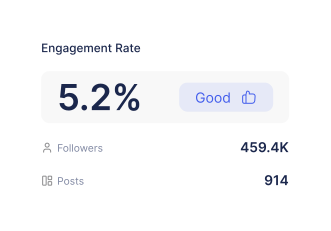
Average TikTok Engagement Rates by Influencer Tier (2026)
How to Use Scrumball's TikTok Engagement Calculator?
Input TikTok Content Information
Configure Your Calculation Settings
Review and Compare Results
How Do We Calculate TikTok Engagement Rates?
Understanding TikTok engagement calculations helps you make smarter influencer partnership decisions. Our TikTok ER calculator uses two proven methods to give you accurate TikToker performance insights.
Engagement Rate by Views
This method calculates engagement as a percentage of total video views, showing how well content resonates with actual viewers.
- For 1 video: (Likes + Comments + Shares) ÷ Views × 100 = ER by Views
- For multiple videos: Sum of all (Likes + Comments + Shares) ÷ Sum of all Views × 100 = Average ER by Views
This approach gives you a realistic picture of content performance since it measures engagement from people who actually watched the video. It's particularly useful for evaluating viral content or creators with fluctuating view counts. Most marketers prefer this method because it reflects true audience interest rather than just follower count.
Engagement Rate by Followers
This approach measures how well you're connecting with your existing audience and is useful for comparing creators with different reach levels.
- For 1 video: (Likes + Comments + Shares) ÷ Followers × 100 = ER by Followers
- For multiple videos: Sum of all (Likes + Comments + Shares) ÷ (Followers × Number of Videos) × 100 = Average ER by Followers
This calculation helps you understand how engaged a TikToker's established audience is with their content. It's especially valuable when comparing creators with similar follower counts or evaluating long-term partnership potential. However, this method can be skewed by inactive followers or recent follower growth spurts.
What Factors Affect TikTok Engagement Rates?
Several key elements determine how well TikTokers connect with their audiences. Understanding these factors helps you identify high-performing partners and predict campaign success before investing your marketing budget.
- Hook quality in the first 1–2 seconds (scroll-stop rate): TikTok users decide within seconds whether to keep watching or scroll past. Strong opening hooks that immediately grab attention significantly boost engagement rates. This includes compelling visuals, surprising statements, or questions that make viewers want to see what happens next.
- Relevance: Content that aligns with trending topics and uses relevant keywords performs better. Smart hashtag usage helps TikTok's algorithm understand your content and show it to interested viewers (which will likely lead to real engagement). Captions that encourage comments or ask questions also drive higher engagement rates consistently.
- Audience quality: Genuine followers who actively engage with content matter more than inflated follower counts. Look for TikTokers whose audience regularly likes, comments, and shares their videos. Quality audiences stick around longer, engage more meaningfully, and are more likely to take action on brand partnerships.
- Demographic patterns: Different age groups, locations, and interests engage differently with TikTok content. Understanding when your target audience is most active and what content formats they prefer helps optimize engagement rates. Successful TikTokers adapt their posting times and content style to match their audience's behavior patterns.
How Do TikTok Engagement Rates Compare to IG and YouTube for Campaign ROI?
Cross-platform engagement differences directly impact your budget allocation and campaign performance expectations. Each platform drives different user behaviors and conversion patterns, so knowing where TikTokers, Instagram influencers, and YouTubers deliver the best results for specific campaign goals is crucial for maximizing your marketing spend.
Engagement Rate Expectations Across Platforms
TikTok consistently shows higher engagement rates than YouTube and Instagram on short-form content metrics. However, these interactions typically represent top-funnel awareness rather than purchase intent. Expect strong reach, high comment volumes, and viral potential from TikToker partnerships, but prepare for lighter conversion depth compared to YouTube campaigns.
When planning campaigns, use TikTok for brand awareness and audience discovery rather than direct sales goals. The platform excels at introducing your brand to new demographics and creating buzz around product launches or brand messaging.
Choosing the Right Engagement Metrics
TikTok's For You page algorithm makes engagement rate by views the most accurate performance indicator for campaign posts. This differs from Instagram, where marketers often rely on follower-based calculations or reach metrics.
Always compare platforms using consistent metrics. When evaluating cross-platform campaigns, standardize your TikTok, Instagram, and YouTube partner performance using the same calculation method to get meaningful ROI comparisons.
Creative Requirements for Maximum ROI
Native-style TikTok content consistently achieves 30-50% higher engagement rates compared to repurposed Instagram or YouTube assets. TikTokers who create platform-specific content with trending sounds, effects, and formats typically maintain engagement rates above platform averages, while those posting generic social media content often see rates drop below 2%.
Expect significantly lower engagement when TikTokers use obvious branded templates or corporate-style videos. Content that feels like traditional advertising usually generates 60-70% fewer interactions than authentic, creator-led posts (average viewers don’t like obvious promotional content).
When evaluating potential partners, review their recent branded content to ensure they maintain strong engagement rates on sponsored posts rather than just organic content.
Do Different TikTok Content Formats Have Different Engagement Standards?
Content format significantly impacts TikTok engagement benchmarks, so adjust your performance expectations based on the specific type of content your brand partners create.
Educational vs. Entertainment vs. Promotional
Educational TikTokers typically see lower engagement rates but drive higher-quality interactions with longer watch times and more meaningful comments. These partners excel at building trust and authority for your brand, making them ideal for complex products requiring explanation. Expect engagement rates around 3-6% but stronger conversion potential.
Entertainment-focused TikTokers usually deliver the highest engagement rates, often reaching 8-15% on viral content. They're perfect for brand awareness campaigns and reaching younger demographics. However, their audience engagement tends to be more superficial, focusing on likes and shares rather than deep brand consideration.
Promotional content consistently shows the lowest engagement rates across all TikTok content types, typically 1-4%. This includes obvious sponsorships, product demos, and sales-focused posts. Factor this drop into your campaign expectations and budget for higher costs per engagement on branded content partnerships.
Videos vs. Lives vs. Effects
Standard TikTok videos remain the engagement goldmine, especially 15-30 second clips that follow trending formats. TikTokers who master short-form video content typically maintain the highest consistent engagement rates and offer the best ROI for brand partnerships.
TikTok Live streams generate different engagement patterns with lower like counts but higher comment volumes and longer audience dwell time. Partner with TikTokers who regularly host Lives if you want deeper brand conversations and real-time audience interaction during product launches or Q&A sessions.
Effect-heavy content and filter usage can boost engagement among younger demographics, but may feel less authentic for brand partnerships. Evaluate whether your target audience responds well to heavily filtered content before selecting TikTokers who primarily use effects in their videos.
What is The Best ER Calculation Method to Evaluate TikTok Campaigns?
Smart TikTok evaluation requires the right engagement metrics and calculation methods to predict campaign performance accurately and fairly.
Use ER by Views as Your Default Campaign Metric
For TikTok campaigns in general, make engagement rate by views your primary evaluation standard. This method aligns perfectly with TikTok's For You page distribution system and allows fair comparisons between TikTokers regardless of follower count differences. Unlike follower-based calculations, ER by views reflects actual content performance and audience interest.
This approach eliminates bias against newer TikTokers with smaller followings but high engagement, while also revealing established accounts with inactive follower bases. When comparing potential partners, ER by views gives you the clearest picture of content quality and audience responsiveness.
Track Quality-Weighted Engagement Signals
Beyond basic ER by views, monitor saves/favorites, shares, rewatches, and profile clicks alongside standard metrics. These deeper engagement signals predict downstream actions like website visits and conversions better than likes alone. TikTokers driving high save rates typically deliver stronger campaign results because their audience actively wants to remember the content.
Prioritize partners whose content generates meaningful actions rather than just passive scrolling. A TikToker with 8% ER by views and high save rates often outperforms someone with 12% ER driven primarily by likes.
Calculate Median Rather Than Average Engagement
Also consider median ER by views stats, which is included in our TikTok engagement calculator, instead of simple averages, to avoid viral outliers skewing your evaluation. One breakout video can artificially inflate average performance, making a TikToker appear more consistently engaging than reality.
Median calculations give you a more accurate baseline for setting campaign expectations and identifying truly consistent performers versus one-hit wonders.
FAQs
Can I find engagement rate stats on TikTok?
Nope, TikTok doesn't show engagement rate calculations in its regular app interface. Only creators with access to TikTok's Creator Center or business accounts can see some engagement metrics in their analytics dashboard. For everyone else checking influencers or competitors, you'll need external tools like our free TikTok engagement rate calculator to crunch the numbers and get accurate ER stats.
How accurate is Scrumball's TikTok engagement rate calculator?
Our TikTok ER calculator pulls real-time data directly from TikTok's public metrics, so you're getting the same numbers TikTok uses internally. We calculate engagement rates using standard industry formulas, and our results typically match what creators see in their own analytics dashboards.
The accuracy depends on TikTok's API updates, but we refresh our data regularly to ensure you're always working with current, reliable engagement statistics.
How to detect fake engagement on potential TikTok influencer partners?
Watch for red flags like sudden follower spikes, comments that don't match the video content, or engagement rates that seem too good to be true. Check if comments look genuine or are just generic phrases like "amazing!"
We recommend using the 5-10-30 videos toggle of our TikTok engagement calculator to check ER consistency across recent videos. Real creators have steady patterns, while fake engagement often shows erratic spikes. You can also check if the audience demographics match the creator's niche and your target market.
How do I integrate TikTok engagement data with other marketing metrics?
Start by exporting TikTok engagement rates into your marketing dashboards alongside other platform data. This lets you compare how creators perform across all your social media campaigns.
Next, track these engagement numbers against real campaign results like clicks and conversions to see which creators actually drive business value.
Finally, use UTM parameters to connect TikTok engagement with your website traffic and sales data for a complete ROI analysis.
What's the relationship between TikTok engagement rates and actual conversion rates?
Higher TikTok engagement rates generally indicate more active, interested audiences, which can translate to better conversion potential. However, engagement doesn't guarantee sales; it depends on audience quality, product fit, and campaign execution.
Use engagement rate as a starting point to identify promising creators, then dig deeper into their audience demographics and past campaign performance. The balance spot is finding creators with solid engagement rates whose followers actually match your target customer profile.