
As complexity grows, brands rely on influencer marketing tools to stay efficient. The right tools help you find creators, streamline workflows, and track performance, while the wrong ones waste time and budget.
With AI-powered influencer marketing tools simplifying everything from influencer discovery to ROI tracking, choosing the right solution is essential, whether you’re scaling your first campaign or managing global programs.
Choose the Best Influencer Marketing Tool From the Beginning
Selecting from the many best influencer marketing tools available can feel overwhelming. To make the right decision, you need to start with a clear framework that considers your goals, budget, integrations, and usability requirements.
Define Your Campaign Goals
Before choosing any tool, identify your primary objectives. Are you aiming to increase brand awareness, generate leads, or drive direct sales?
- Brand awareness campaigns require tools with strong influencer discovery and audience reach metrics.
- Conversion-focused campaigns need advanced tracking features like affiliate links and sales attribution.
Your goals will determine which features matter most in your chosen platform.
Consider Your Budget and Scale
Not all the best options for influencer marketing tools are built the same. Some cater to small businesses, while others are designed for enterprise-level campaigns.
- Small businesses should look for affordable tools with essential features like influencer search and outreach.
- Large brands may need full-scale platforms with automation, analytics, and CRM integrations.
Always evaluate pricing against the value and scalability the tool provides.
Evaluate Platform Integrations
A good influencer marketing tool should seamlessly integrate with your existing tech stack, allowing your marketing, sales, and data systems to work together without friction.
Look for compatibility with:
- Social media platforms like Instagram, TikTok, and YouTube
- CRM systems
- E-commerce platforms such as Shopify
Strong integrations ensure smooth data flow, real-time performance tracking, and more accurate attribution. They also reduce manual work, connect influencer activity directly to sales and customer data, and give you a clearer view of campaign ROI.
Test Usability and Support
Even the most powerful influencer marketing tool won’t deliver results if your team struggles to use it. Prioritise platforms that are easy to adopt, quick to learn, and well-supported throughout your campaigns.
- Choose platforms with intuitive dashboards and easy onboarding
- Check for tutorials, documentation, and customer support
- Look for responsive support teams that can assist during campaigns
A user-friendly experience not only improves day-to-day productivity but also reduces errors and helps your team execute campaigns more efficiently.
What to Look For When Choosing Influencer Marketing Tools?
When evaluating tools for influencer marketing, focus on features that directly impact campaign performance.
Influencer Discovery and Search Filters
One of the most important capabilities is finding the right creators. Top tools allow you to:
- Search influencers by niche, location, and audience demographics
- Filter by engagement rate and follower count
- Analyze past collaborations and content performance
This ensures you partner with influencers who align with your brand.
Campaign Management and Workflow Automation
Managing multiple influencers manually can quickly become chaotic. Look for tools that offer:
- Centralized campaign dashboards
- Automated outreach and follow-ups
- Content approval workflows
These features streamline collaboration and save time.
Analytics and Performance Tracking
Data-driven decision-making is essential in 2026. The best platforms provide:
- Engagement metrics (likes, comments, shares)
- Reach and impressions
- Conversion tracking and ROI analysis
Accurate analytics help you optimize campaigns and justify your investment.
Audience Insights and Authenticity Checks
Fake followers and low-quality engagement can ruin your campaigns. Advanced influencer marketing tools include:
- Audience quality analysis
- Fake follower checkers
- Fraud detection algorithms
- Authenticity scoring
These features ensure you work with credible influencers.
Types of Influencer Marketing Tools Available
Not all influencer marketing tools serve the same purpose. Understanding the different categories can help you choose a solution that matches your campaign goals, team structure, and level of maturity.
Some tools focus on discovery, while others specialize in campaign management, analytics, or end-to-end automation. Identifying what you need most, whether it’s finding creators, managing relationships, or tracking ROI, will help you narrow down the right platform.
Influencer Discovery Platforms
Influencer discovery platforms are designed to help brands find and evaluate creators that align with their target audience and campaign objectives.
Key features include:
- Large influencer databases
- Advanced search filters
- Audience insights
These tools are particularly useful for brands at the early stages of influencer marketing or those looking to scale creator sourcing efficiently. By simplifying the discovery process, they reduce manual research and help ensure a better fit between brands and influencers.
Influencer Marketing Management Tools
Influencer marketing management tools are designed to support the entire campaign lifecycle, from planning to performance analysis. They bring multiple functions into one platform, helping teams manage campaigns more efficiently at scale.
Capabilities include:
- Influencer discovery
- Outreach and communication
- Campaign tracking
- Performance analytics
These tools are best suited for brands running multiple campaigns or working with a large number of creators. By centralizing workflows, they reduce manual coordination and provide a clearer overview of campaign performance.
Affiliate and Collaboration Platforms
Affiliate and collaboration platforms focus on performance-driven partnerships, where influencers are rewarded based on measurable results such as clicks or sales.
Features include:
- Affiliate link generation
- Commission tracking
- Revenue attribution
These platforms are particularly valuable for e-commerce brands looking to tie influencer activity directly to sales outcomes. They offer a more accountable, ROI-focused approach compared to traditional awareness campaigns.
AI Tools for Influencer Marketing
AI tools for influencer marketing are reshaping how brands plan and execute campaigns by automating data analysis and decision-making.
They can:
- Predict campaign performance
- Recommend the best influencers
- Automate repetitive tasks
- Optimize outreach strategies
By leveraging machine learning, these tools help brands move faster, reduce guesswork, and make more data-driven decisions, especially in complex or large-scale campaigns.
Best Influencer Marketing Tools in 2026
Here are some of the best options for influencer marketing tools to consider in 2026, along with a detailed comparison based on pricing, features, ease of use, and AI capabilities.
1. Scrumball
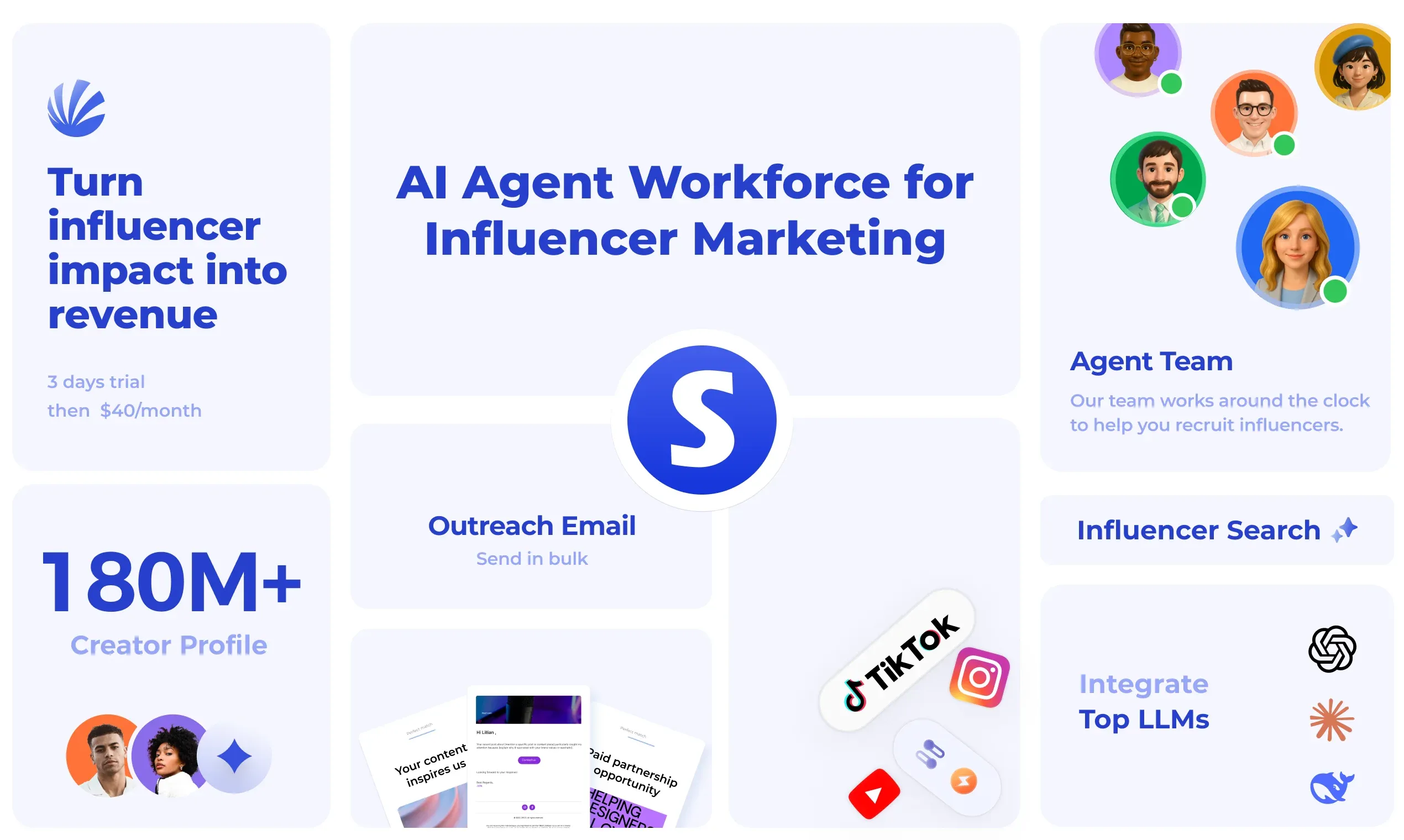
Scrumball is a comprehensive, all-in-one influencer marketing management platform designed for efficient brand–creator collaboration.
Features:
- 180M+ influencer profile discovery with competitor analysis
- Automated outreach with scheduled emails and follow-ups
- Campaign and content tracking
- Collaboration management with blacklist functionality
- Real-time group chat communication
- Performance tracking with inventory and sales synchronization
Pricing: Generous free plan available; Starter plan begins at $32/mo
Ease of Use:
- User-friendly interface designed for campaign workflows
- Centralized dashboard simplifies influencer management
- Suitable for both small teams and scaling brands
AI Capabilities:
- AI-powered email replies
- Automated follow-ups for outreach
- Smart workflow automation to reduce manual tasks
2. Upfluence
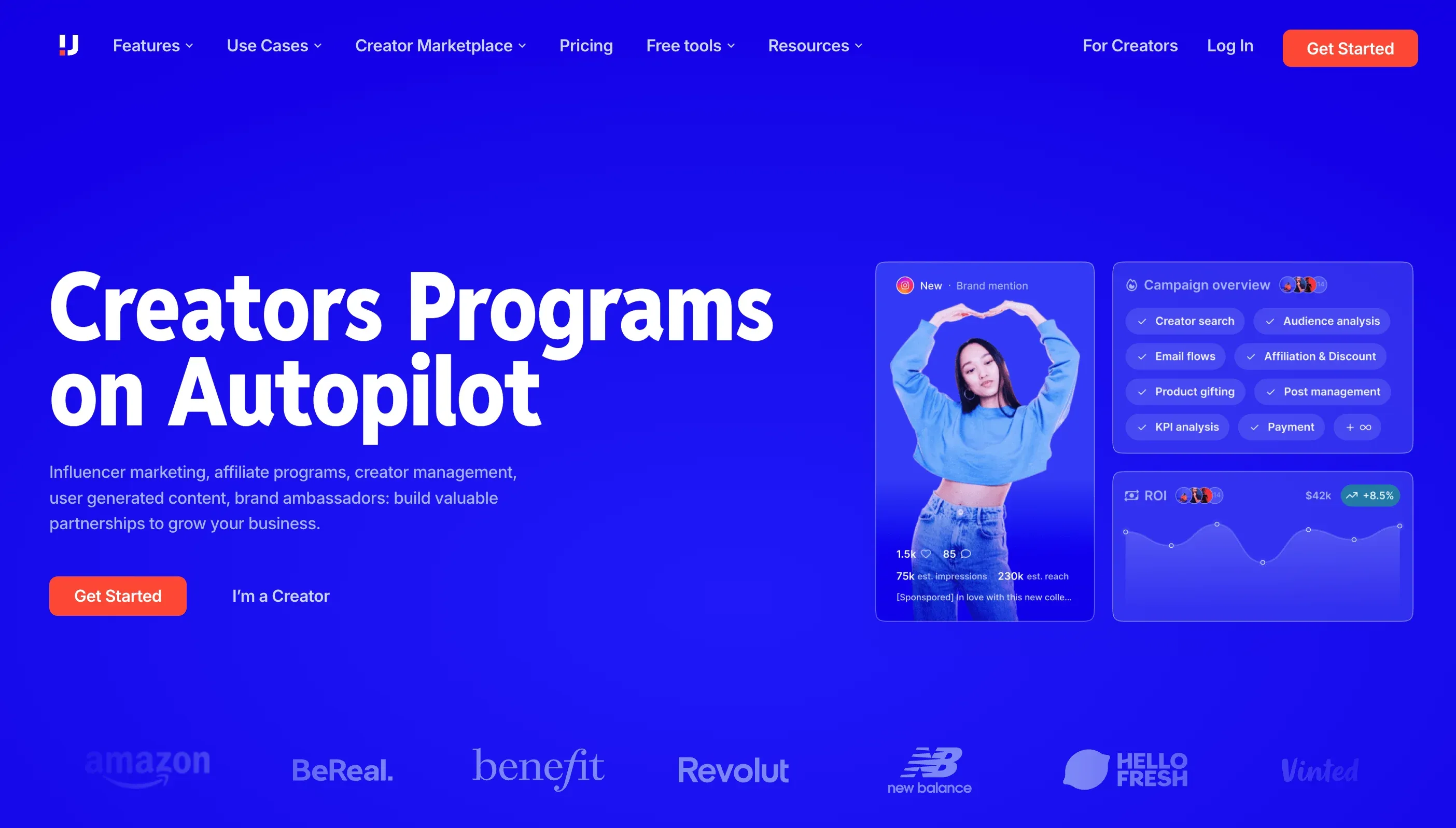
Upfluence is a powerful influencer marketing platform tailored for e-commerce brands and data-driven campaigns.
Features:
- Influencer discovery and database
- CRM and e-commerce integration (especially Shopify)
- Affiliate tracking and campaign automation
- Payment and influencer relationship management
Pricing: Custom pricing. Please refer to the actual prices on the website for details.
Ease of Use:
- Moderate learning curve due to advanced features
- Well-structured dashboard for experienced marketing teams
AI Capabilities:
- AI-driven influencer recommendations
- Predictive performance insights
- Automated campaign suggestions
3. Aspire
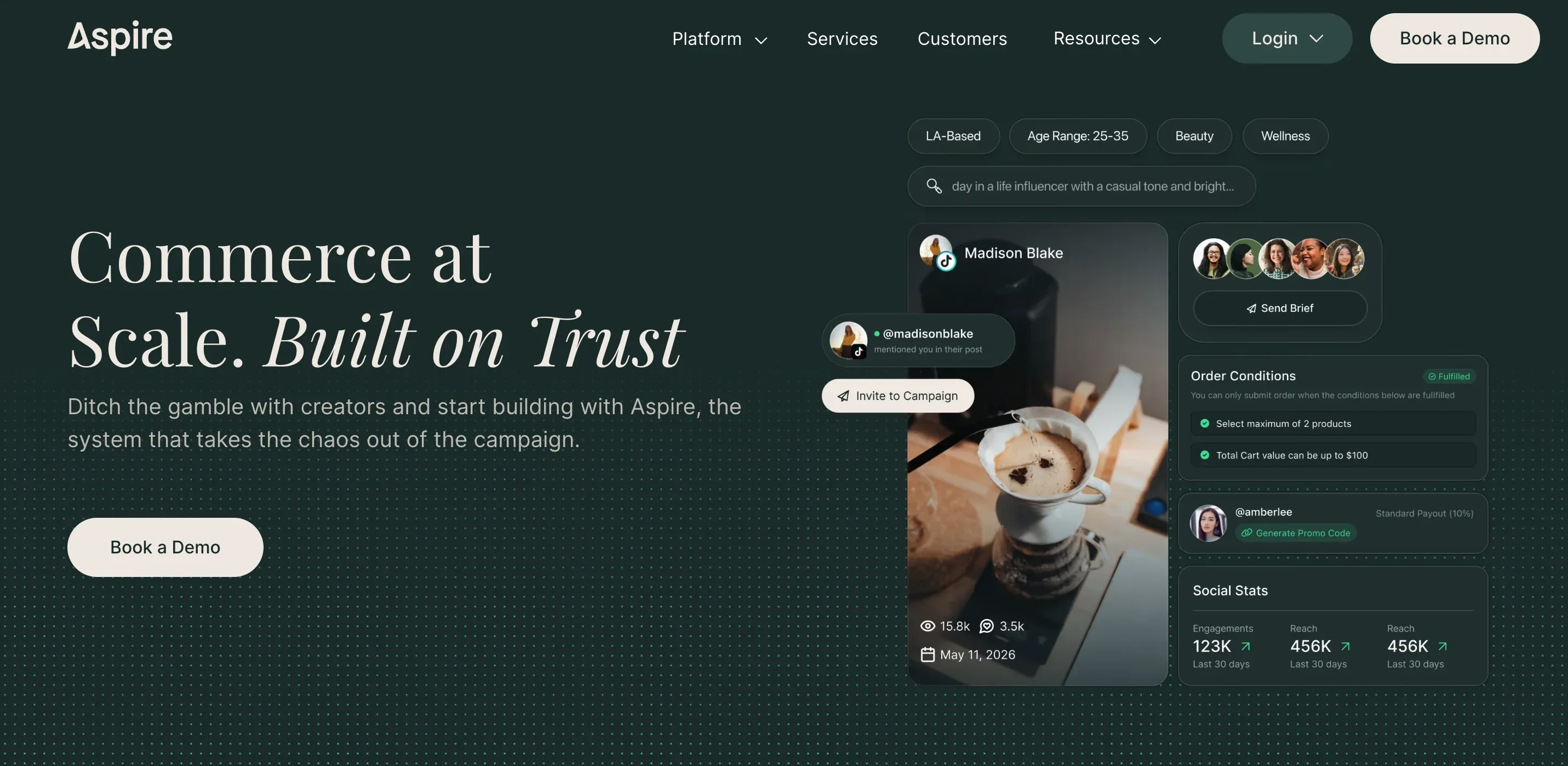
Aspire is an end-to-end influencer marketing solution focused on streamlined workflows and creator collaboration.
Pricing: Custom pricing. Please refer to the actual prices on the website for details.
Features:
- Influencer marketplace
- End-to-end campaign management
- Workflow automation
- Content collaboration and approvals
- Performance analytics
Ease of Use:
- Clean and intuitive interface
- Strong onboarding support
- Ideal for teams managing multiple campaigns
AI Capabilities:
- AI-assisted influencer matching
- Automated campaign workflows
- Data-driven performance recommendations
4. Heepsy
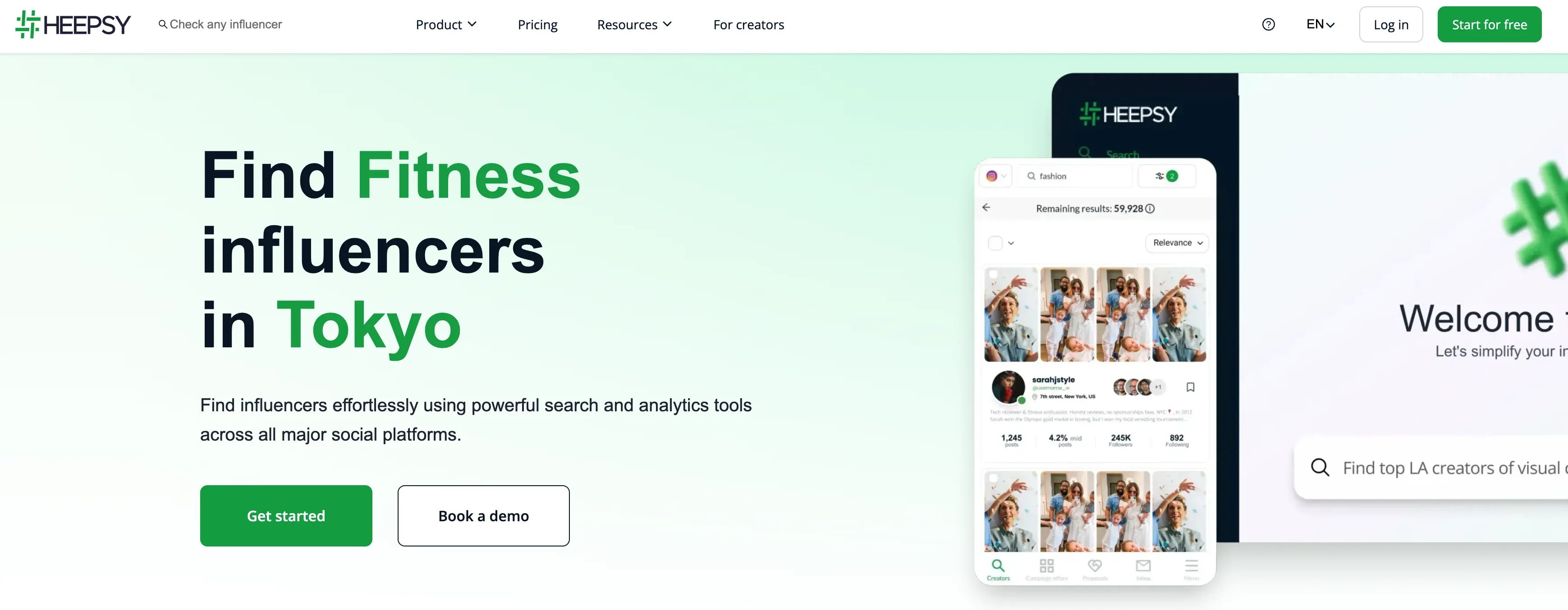
Heepsy is a beginner-friendly and budget-conscious tool ideal for discovering influencers quickly and easily.
Features:
- Influencer search and filtering
- Audience analytics
- Fraud detection tools
- Basic campaign insights
Pricing: Free plan available; Starter plan begins at $89/mo
Ease of Use:
- Very beginner-friendly
- Simple interface with minimal setup required
- Great for first-time users of influencer tools
AI Capabilities:
- Basic AI for detecting fake followers and engagement anomalies
- Limited automation compared to advanced platforms
5. CreatorIQ
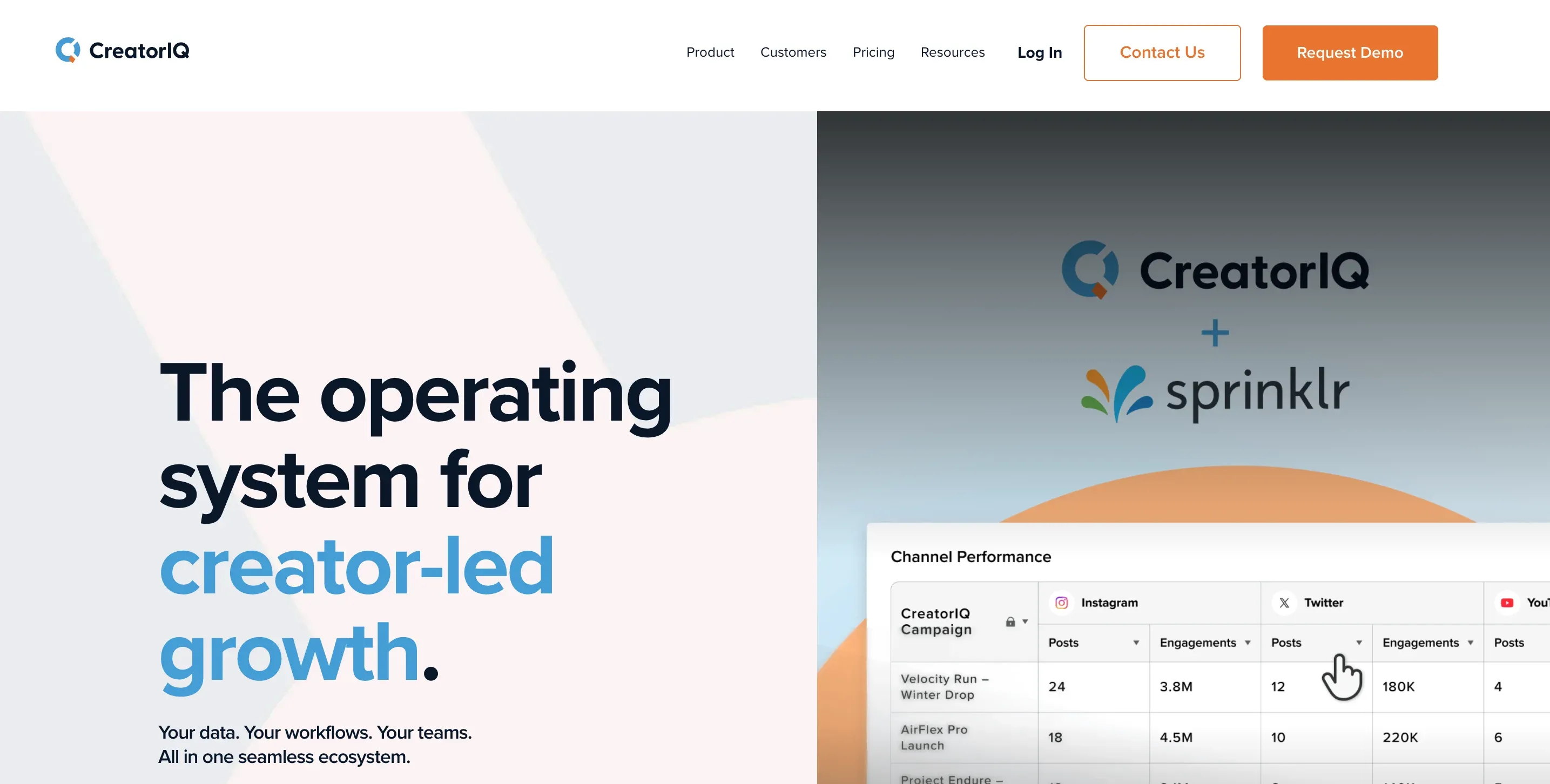
CreatorIQ is an enterprise-grade influencer marketing platform built for large-scale global campaigns and deep analytics.
Pricing: Custom pricing. Please refer to the actual prices on the website for details.
Features:
- Global influencer database
- Advanced campaign management
- Deep analytics and reporting
- Brand safety and compliance tools
- API integrations for large-scale operations
Ease of Use:
- Designed for experienced teams
- Steeper learning curve due to extensive features
- Highly customizable dashboards
AI Capabilities:
- Advanced AI-driven insights and analytics
- Predictive campaign performance modeling
- Automated influencer scoring and recommendations
Quick Comparison Summary
| Tool | Pricing Level | Ease of Use | AI Capabilities | Best For |
|---|---|---|---|---|
| Scrumball | Free plan; premium plan starts at $32/mo | Easy | Strong automation | Scaling brands & outreach-heavy teams |
| Upfluence | Custom | Moderate | Advanced AI insights | E-commerce & Shopify brands |
| Aspire | Custom | Easy–Moderate | Smart automation | Mid-to-large teams |
| Heepsy | Free plan; premium plan starts at $89/mo | Very Easy | Basic AI | Startups & small businesses |
| CreatorIQ | Custom | Advanced | Enterprise-level AI | Global brands & large campaigns |
By comparing these influencer marketing tools across pricing, usability, and AI capabilities, you can better identify the platform that aligns with your campaign goals and operational scale.
Conclusion: Choosing the Right Tool for Long-Term Success
Selecting the right influencer marketing tools is a strategic decision that can significantly impact your brand’s growth.
To recap:
- Align your tool with your campaign goals and business size
- Prioritize platforms with strong data analytics and automation features
- Invest in scalable solutions that can grow with your brand
As influencer marketing continues to evolve, leveraging the right tools—especially AI-powered ones—will give you a competitive edge in 2026 and beyond.
FAQ
What are Influencer Marketing Tools and why do I need them?
Influencer marketing tools are platforms that help brands find, manage, and analyze influencer collaborations. They simplify processes like influencer discovery, outreach, and performance tracking. Without these tools, managing campaigns manually can be time-consuming and inefficient. Using them ensures better targeting, improved ROI, and scalable campaign management.
What are the best influencer marketing tools?
The best influencer marketing tools depend on your needs and budget. Popular options include Scrumball, Upfluence, Aspire, Heepsy, and CreatorIQ. Each offers different strengths, from affordability to enterprise-level analytics. Evaluating features, ease of use, and AI capabilities can help you choose the right one.
How do influencer marketing tools work?
These tools typically provide a database of influencers along with analytics and communication features. Brands can search for creators, reach out to them, manage campaigns, and track results in one place. Many platforms also include automation and AI to improve efficiency. This streamlined approach helps brands execute campaigns more effectively.
What features should I look for in influencer marketing tools?
Key features include influencer discovery, campaign management, analytics, and audience insights. Tools should also offer fraud detection to ensure authenticity. Integration with social media and e-commerce platforms is another important factor. The best tools combine these features with ease of use and scalability.
Are AI tools for influencer marketing worth it?
Yes, AI tools for influencer marketing are highly valuable in 2026. They can analyze large datasets, match fitting influencer candidates, predict campaign outcomes, and automate repetitive tasks. This not only saves time but also improves accuracy and performance. Brands using AI-driven tools often achieve better ROI and more efficient campaigns.