Most brand ambassador programs quietly die. In a 2026 Modash survey of 35+ marketers running them, 38% said they believe up to half the ambassadors they recruited are now disengaged and inactive. Recruiting is the easy part. Keeping people is where the design shows.
That is the lens we used here. The ten programs below are not on this list because the brands are famous. They are here because each one answers four questions well:
- How do you choose ambassadors?
- What do you give them?
- How much freedom do they get?
- How do you know it is working?
Treat them as brand ambassador examples to borrow from, not trophies.
1. Nike: Ambassadors as a Layered System, Not a Roster
Why Nike's Brand Ambassador Program Works: Values Over Products
Nike does not run one ambassador program. It runs four, and each is priced differently. Elite athletes get contracts and creative input. Nike Community Ambassadors are retail staff trained in inclusive, healing-centered coaching who volunteer with local youth.
Affiliates earn commission on tracked sales. The roughly 60 athletes in Nike's Blue Ribbon Elite NIL program collaborate on campaigns and product decisions. The tiers are not the clever part. Matching each reward to what that group actually wants is the clever part, because nobody ends up being paid to fake enthusiasm.
Nike's Brand Ambassador Program Structure
- Tiered System: Elite athletes at the top, Ekins as internal product experts, and Community Ambassadors coaching youth locally.
- Employee Advocacy: Retail employees receive coaching and leadership training, then represent Nike through community sport rather than sponsored posts.
- Digital Integration: Ambassadors and the communities around them run through the Nike Run Club (NRC) app.
- 2026 Additions: The Nike After Dark Tour returned as a seven-city women's night race series, opening with a 10K in Shanghai on 25 April, while Nike Cross Nationals continues as the high school cross-country championship.
See also: how Nike built its wider influencer marketing engine.
What Nike Achieved
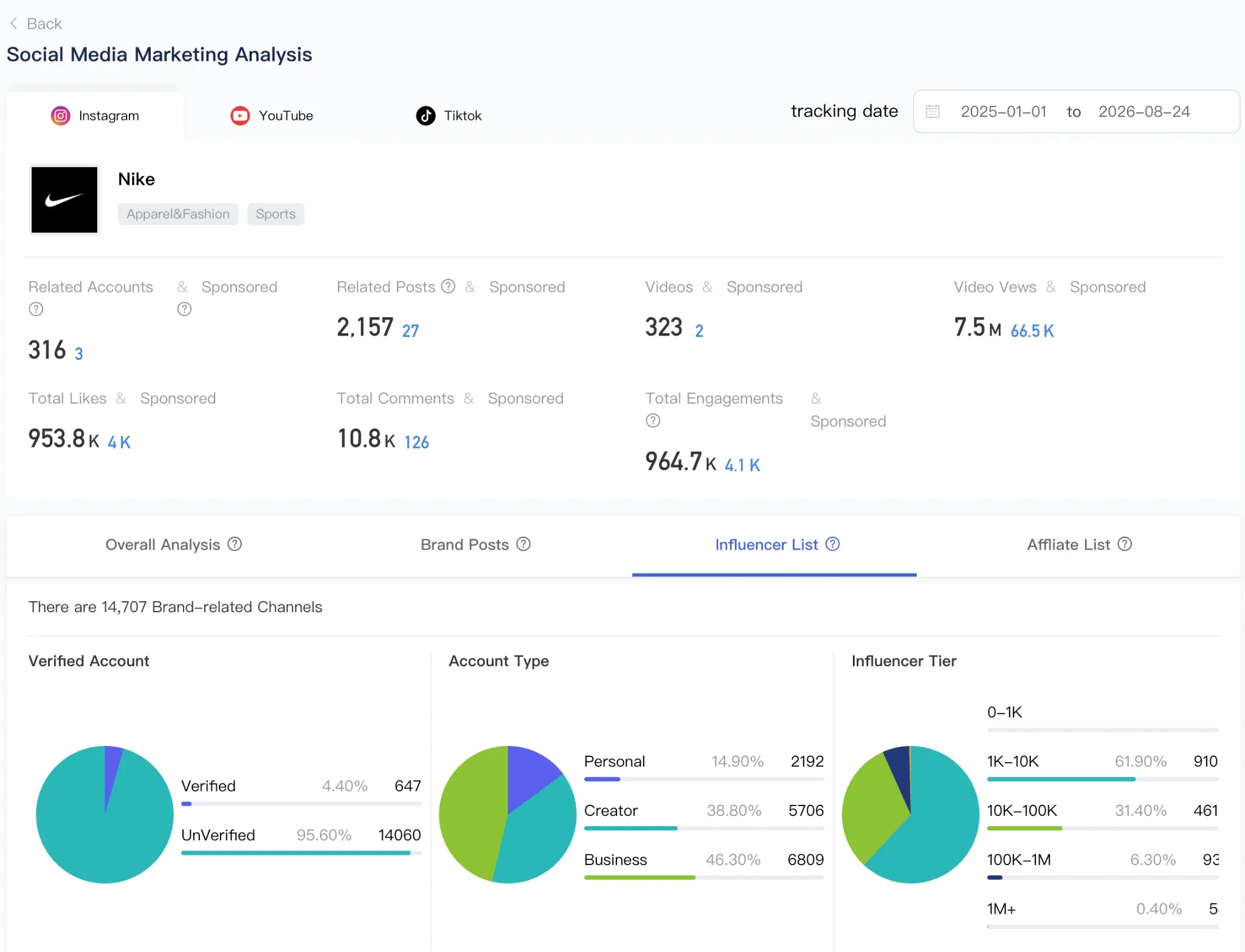
Match each tier to what it actually wants, and the advocacy keeps running without a media budget. Of the 14,707 channels posting about Nike through August 2026, almost none were paid to. Just 27 sponsored posts sit inside 2,157, and the network still returned 7.5M video views and 964.7K engagements.
The reach stays broad rather than top-heavy too. About 96% of those accounts are unverified everyday users, 61.9% sit in the 1K-10K tier, and only 0.4% clear a million. Nearly twenty months of tracking show the volume coming from coaches, Ekins, and local runners, not a handful of big names.
2. Lululemon: Store Ambassadors Who Already Own the Room
Why Lululemon's Ambassador Program Wins: Local Trust
Lululemon's store ambassadors are mostly unpaid, and that is the mechanism rather than a cost saving. They are yoga teachers, run coaches, and studio owners who already stand in front of the exact people Lululemon wants to reach. What they receive is gear, early access, event invitations, and local standing.
Because there is no post quota, nothing reads like an ad. Sweat Collective widens the same idea to any verified instructor or coach, offering 25% off and a direct channel into product feedback. Note the trade: Lululemon buys trust with access and pays for it in product instead of fees.
Lululemon's Ambassador Program Structure
- Store Ambassadors: Local instructors and studio owners nominated through their store, rewarded with product, early access, and events rather than per-post fees.
- Global Ambassadors: A small roster of athletes and cultural figures on paid contracts. Lewis Hamilton sits here, Sidney Crosby joined in November 2025, and Olympic swimmer Wang Shun followed in March 2026, after comedian and director Jia Ling in 2024.
- Sweat Collective: A verified community of coaches and instructors who receive a standing discount and a say in product development.
- Creator Partnerships: A separate affiliate and creator track handles commission-based content, keeping it distinct from community advocacy.
What Lululemon Achieved
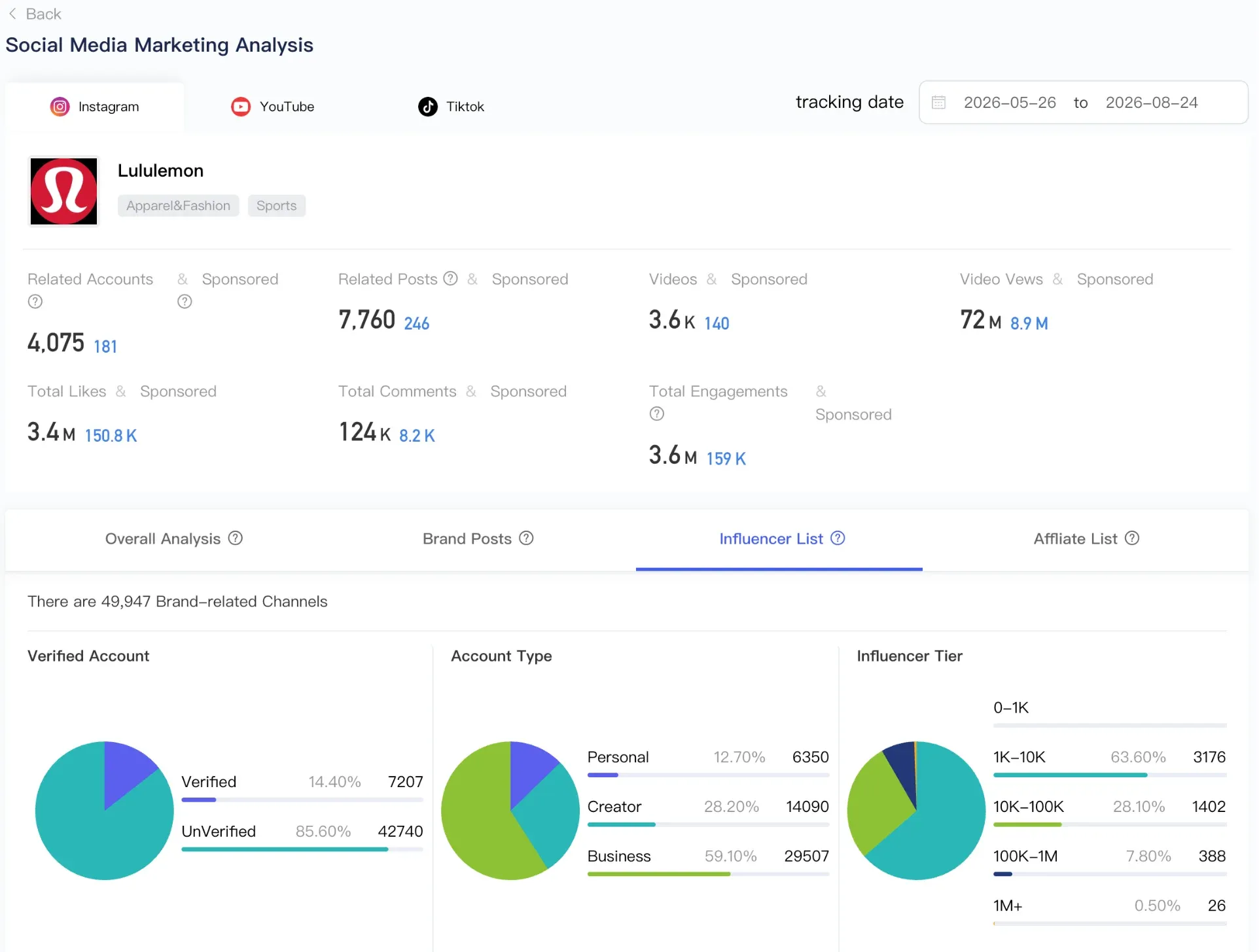
Nominating through stores means Lululemon recruits businesses, not only individual fans. In its data, 59.1% of the 49,947 brand-related channels are business accounts: the studios, gyms and coaches these programs sign. Each one reaches a client base it already has.
That shape carries the output. Over roughly three months to late August 2026, mostly small creators (63.6% in the 1K-10K band, 0.5% above a million) produced 72M video views and 3.6M engagements, with just 246 of 7,760 posts sponsored. Local trust spread across thousands of small businesses is harder to buy than it is to build through nominations.
3. Red Bull: Campus Programs Run by Student Operators
Why Red Bull's Ambassador Program Works: Ownership and Autonomy
Red Bull hires students as Student Marketeers and then largely gets out of the way. The brief is to know your campus, build visibility and distribution, and design your own activations inside brand guidelines. That is closer to a franchise than a posting schedule.
Two things follow. Students pick tactics that land on their specific campus, which no central team could plan from headquarters. And because the role reads as entrepreneurial rather than promotional, Red Bull attracts the well-connected students it wants instead of whoever needs the hours.
Red Bull's Brand Ambassador Program Structure
- Student Marketeers: Paid, part-time campus roles combining sampling, event activation and local distribution.
- Real Autonomy: Marketeers create and run their own campus strategies rather than executing a central calendar.
- Trial-Based KPIs: Success is judged on product in hands and genuine campus presence, not impressions.
- Talent Pipeline: The role is positioned as career development, which keeps applications strong year after year.
What Red Bull Achieved
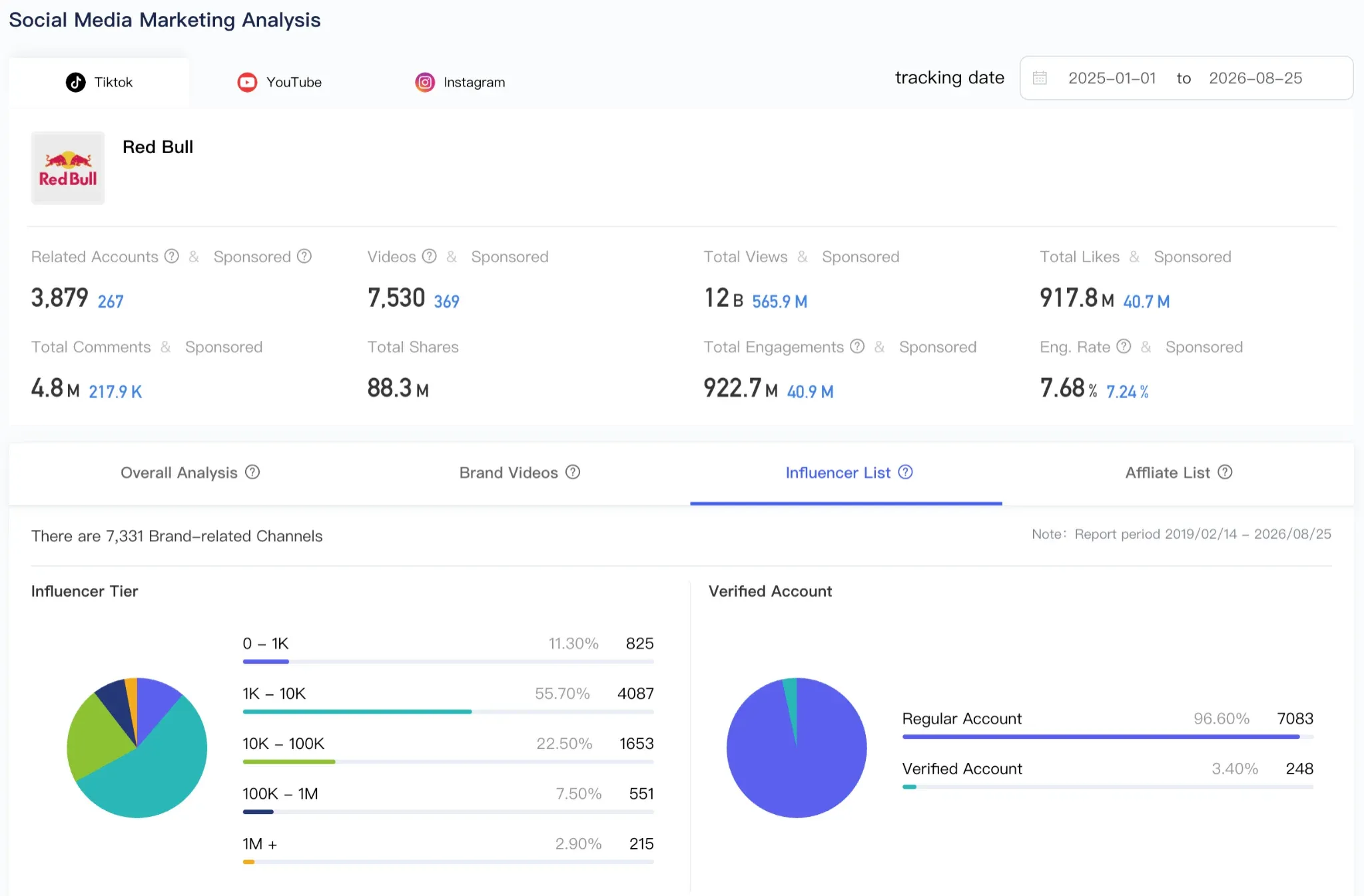
Hand campus creators real autonomy, and they post like operators, not hired promoters. On TikTok, from January 2025 through August 2026, Red Bull drew 7,331 brand-related channels that generated 12B views and 922.7M engagements at a 7.68% engagement rate. Only 267 of 3,879 posting accounts ran anything sponsored.
The spread leans mid-market but reaches wide. Just 3.4% of those channels are verified, 55.7% sit in the 1K-10K tier, and a notable 2.9% clear a million followers. That mix fits a program built on student marketeers running their own activations instead of a scripted central calendar.
4. Adobe: Three Programs for Three Kinds of Creator
Why Adobe's Ambassador Program Works: Empowering Creators
Adobe's advantage is that it stopped treating creators as one audience. Adobe Express Ambassadors is tiered and paid, running Champion, Icon and Legend levels with per-challenge fees that scale by reach, a minimum of one paid challenge a month, early feature access, and a private channel to the Adobe team.
Ambassadors may work with other brands as long as Express stays their default tool, which is refreshingly honest about how creators earn. The Creative Residency plays a longer game, funding residents through partners including MoMA and the V&A with a stated goal of reaching 10 million young creators by 2028. One buys content. The other buys habits.
Adobe's Ambassador Program Structure
- Express Ambassadors: Application-based, tiered by reach, with paid monthly challenges, swag, early access and a product feedback loop.
- Creative Residency: Institution-partnered funded residencies with mentorship and full Creative Cloud access.
- Adobe Insiders: Highly engaged users who shape the roadmap through feedback and appear as advocates at Adobe MAX and Create Now events.
What Adobe Achieved
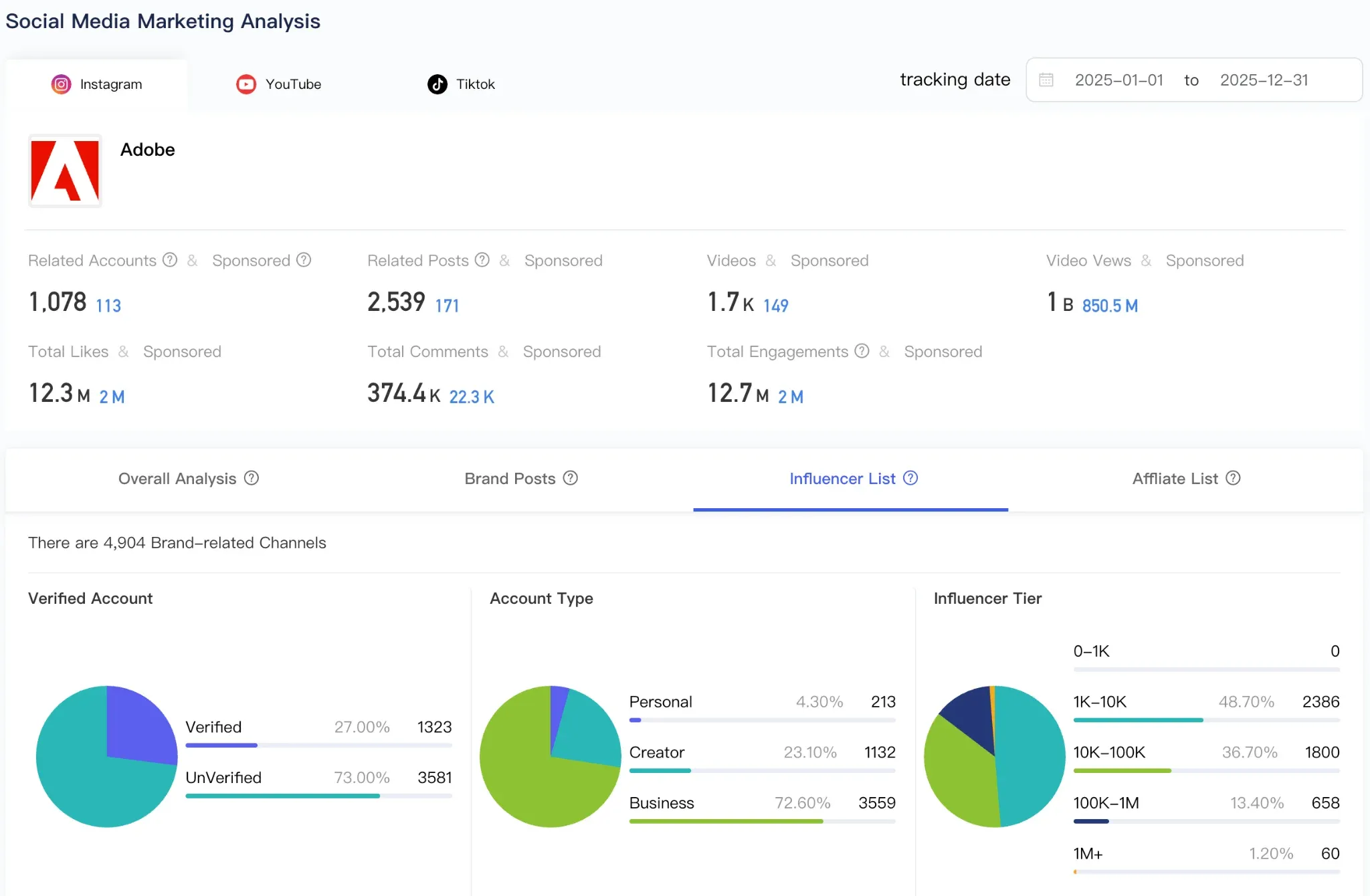
Adobe pays creators per challenge, and the paid hand shows in the data. Across 2025, its 4,904 brand-related channels logged 1B video views, but 850.5M of those came from sponsored content. Total engagements reached 12.7M. When you commission content on a schedule, the biggest numbers carry a sponsorship tag.
The network also skews professional. Business accounts make up 72.6% of the channels (3,559), verified accounts run at 27%, and 48.7% of creators sit in the 1K-10K tier with 13.4% reaching 100K to 1M. That is the shape of a tiered, application-based ambassador roster.
5. Sephora: The SephoraSquad Application Is Half the Campaign
Why Sephora's Program Works: Authenticity and Diversity
The SephoraSquad runs on a yearly cohort, which makes membership feel like a fellowship rather than an open affiliate scheme. The clever part is the application. Sephora asks applicants to collect testimonials from their own followers, so selection turns on community response instead of follower count.
Every applicant also markets the program to their audience while applying. The pull is documented: Sephora received more than 16,000 applications for the 2023 Squad, up 43% year over year, and reported that the 2022 cohort's combined following grew 99% across Instagram, TikTok and YouTube during their year. Creators apply because the program grows them too.
Sephora's Brand Ambassador Program Structure
- Application-Based: One intake a year, with a limited cohort that keeps the badge scarce.
- Community Testimonials: Followers vouch for applicants, so real influence outranks audience size.
- Year-Long Paid Partnership: A full-year commitment lets Sephora plan launches, events and seasonal campaigns around the same faces.
- Global Rollout: The Squad format now runs across markets including the US, Australia, India, Indonesia, Malaysia and Singapore.
Related reading: the case for and against micro-influencer partnerships.
What Sephora Achieved
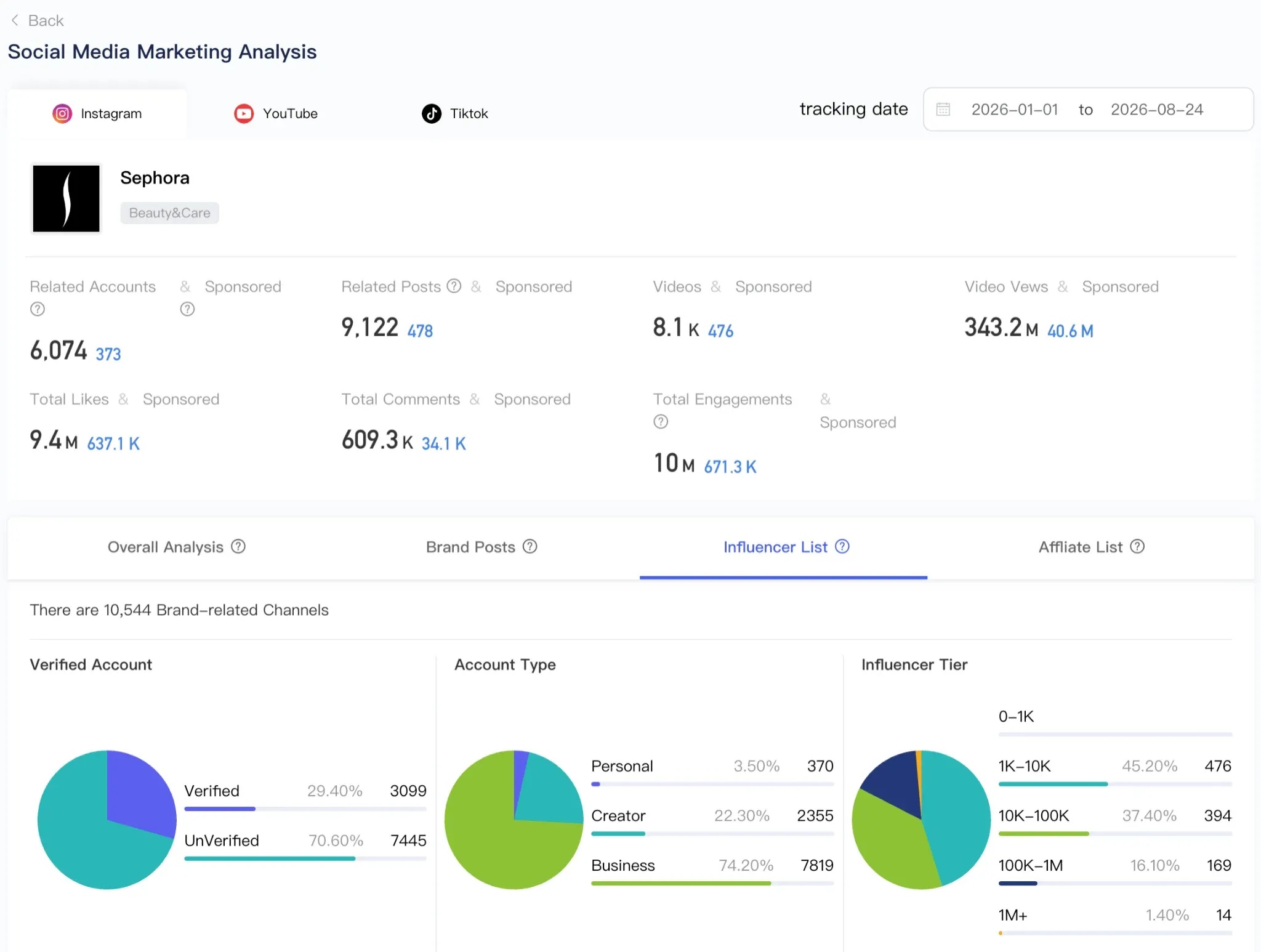
Sephora screens applicants on testimonials from their own followers, not on audience size, and that choice shapes the whole network. Its 10,544 tracked channels are modest in number but heavy on activity, returning 343.2M video views and 10M engagements through August 2026. Selecting for proven influence gets creators who actually move their audience.
The roster also skews established. Verified accounts run at 29.4% and business pages at 74.2%, while 37.4% of creators sit in the 10K-100K tier and another 16.1% higher again. A year-long, application-only cohort builds that professional base over time. The entry bar shapes the result more than the size of the budget does.
6. Gymshark: No Application, Only Scouting
Why Gymshark's Ambassador Program Works: Long-Term Relationships
Gymshark has no application form for athletes, and says so publicly. Its partnerships team scouts, weighing content quality, engagement, and fit with the brand over follower counts, and customer support is explicitly barred from passing requests along. That opacity is deliberate. It pushes creators to earn attention by posting well, which is the behavior Gymshark wants anyway.
Underneath the athlete tier sits a progression most brands could copy: seed product to micro-creators with no posting requirement, watch who posts unprompted, then formalize the ones who do. Gymshark66, the 66-day fitness challenge, works on the same principle, turning customers into advocates around their own goals rather than the brand's.
Gymshark's Ambassador Program Structure
- Athletes: Long-term partnerships built through scouting, with no public application route and no follower threshold.
- Seeding First: Product goes out to micro-creators with no obligation, and the genuine posters get promoted into ongoing relationships.
- Events: Lift events put fans and athletes in the same room.
- Tracking: Unique codes and affiliate links tie creator activity to revenue, so promotion decisions rest on evidence.
What Gymshark Achieved
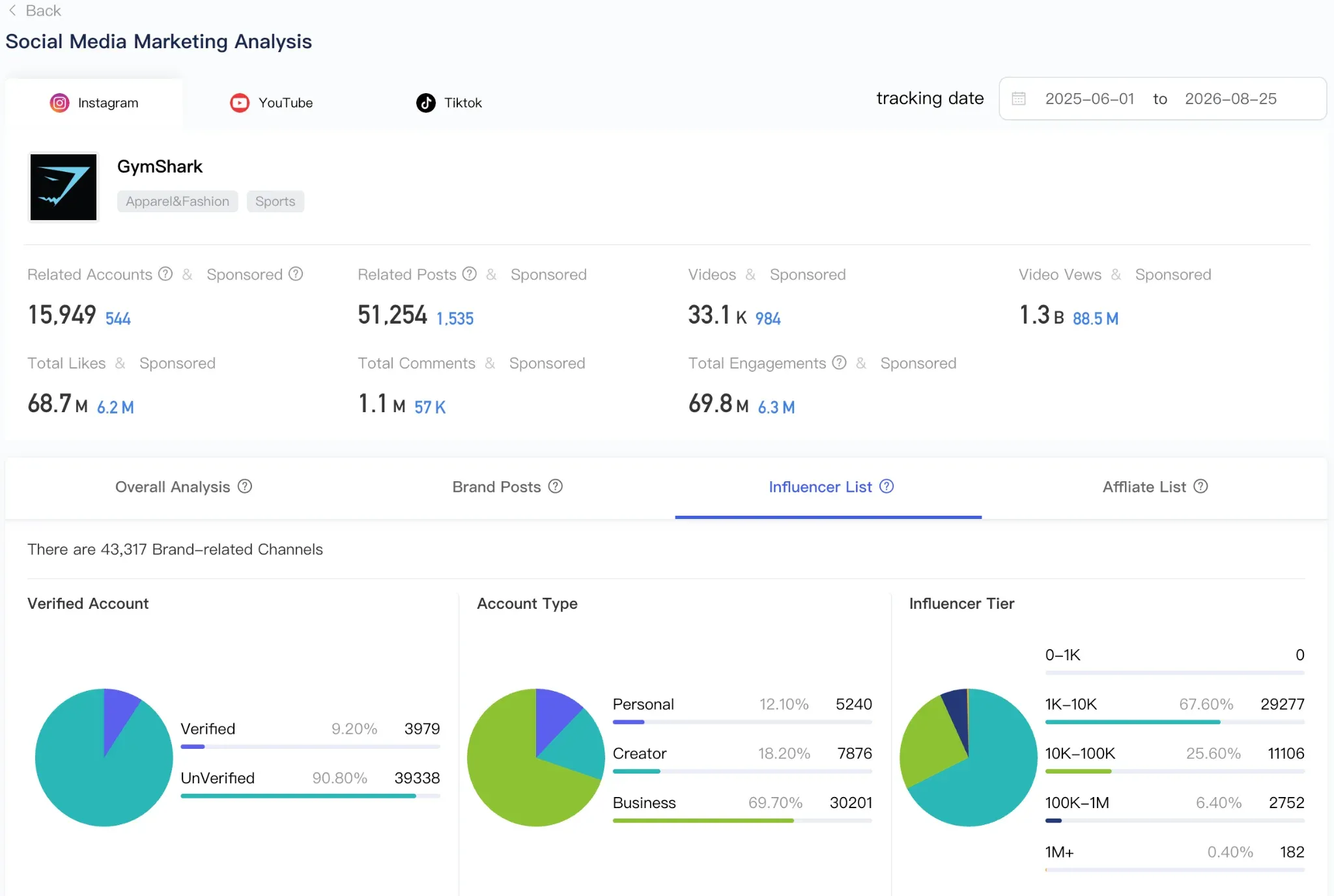
Seeding product to nano-creators first, then formalizing the ones who post, builds scale you can see. Between June 2025 and August 2026, Gymshark's 43,317 brand-related channels published 51,254 posts and pulled 1.3B video views with 69.8M engagements. Very little of it was paid: 1,535 of those posts carried sponsorship.
The footprint is deliberately bottom-heavy. Nearly 91% of channels are unverified, and 67.6% sit in the 1K-10K tier. That is the seeding engine working as designed, turning a wide base of small posters into the brand's reach rather than buying it from a few large accounts.
7. Starbucks: Employee Advocacy With a Visible Credential
Why Starbucks' Program Works: Internal Brand Pride
Starbucks does not recruit external ambassadors for this. It certifies its own people. The black apron marks a Coffee Master, and it has to be earned: levels 100 to 300 of the Starbucks Coffee Academy, more than a year of tenure, and a manager's nomination.
Customers can see that expertise across the counter, which turns an ordinary transaction into a conversation about coffee. The social layer follows the same logic. Published guidelines, the #ToBeAPartner hashtag and dedicated partner channels make posting safe and easy, and personal networks extend trust to a colleague in a way they never extend to a logo.
Starbucks' Brand Ambassador Program Structure
- Partners as Advocates: Employees share workplace experience and product knowledge under published social guidelines.
- Coffee Master Certification: The black apron requires Coffee Academy levels 100 to 300, over a year of service, and manager selection.
- Owned Channels: #ToBeAPartner and partner-specific accounts give employee content somewhere to land and be amplified.
What Starbucks Achieved
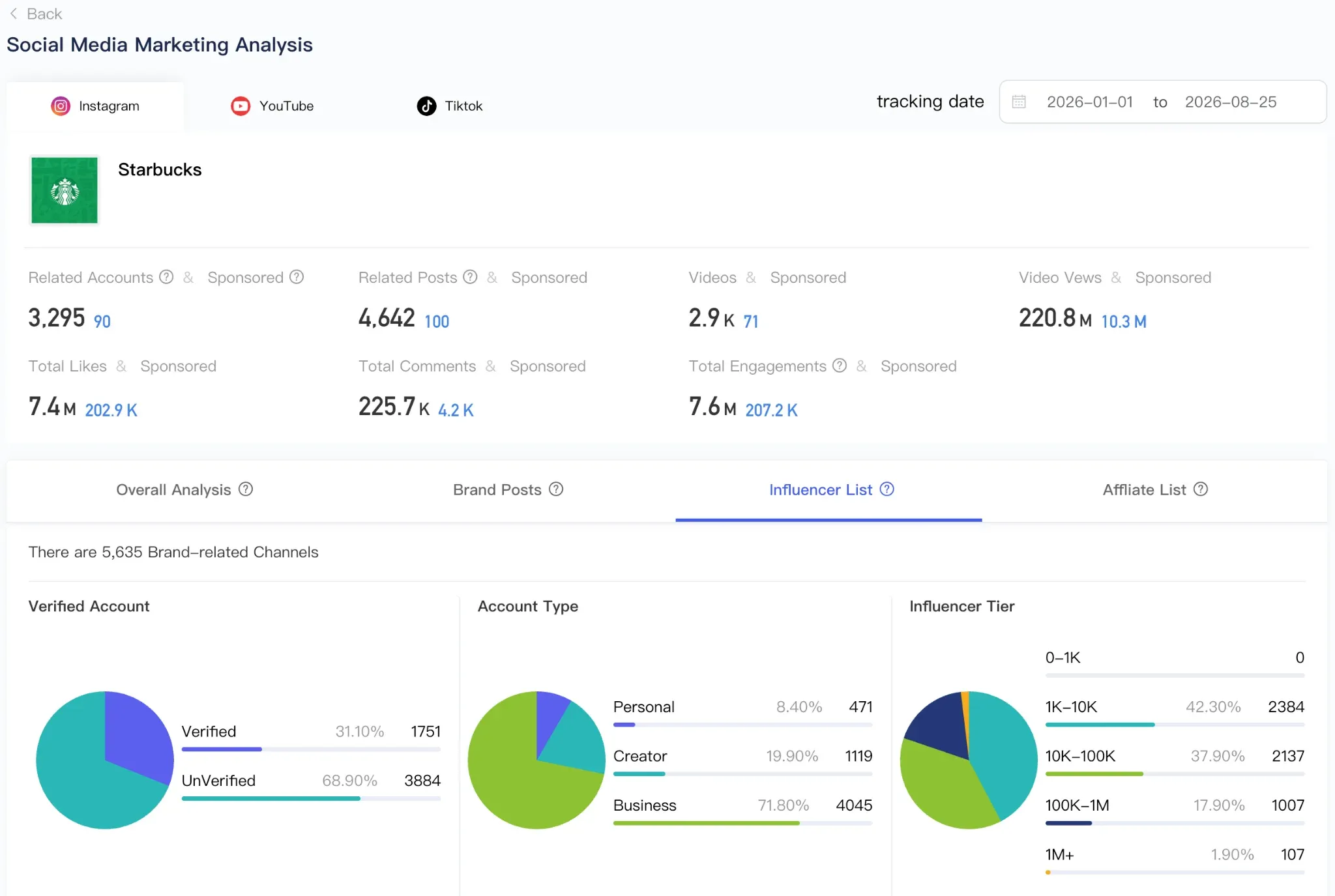
Certify employees, give them owned channels, and advocacy comes with a credential attached. From January to August 2026, Starbucks drew 5,635 brand-related channels that generated 220.8M video views and 7.6M engagements. Only 100 of 4,642 posts were sponsored.
The roster reads established. Verified accounts run at 31.1%, business pages at 71.8%, and the size mix leans large, with 37.9% of creators in the 10K-100K tier and 17.9% reaching 100K to 1M. Partner-run accounts and the #ToBeAPartner hashtag account for that professional profile.
8. Airbnb: Superhost Status as the Incentive
Why Airbnb's Program Works: Peer-to-Peer Trust
Airbnb's strongest advocacy asset is not a recruitment page; it is a badge. Superhost status is assessed quarterly on ratings, response rate, cancellations, and completed stays, and it pays. One 2026 platform analysis found Superhosts earn about 29% more annual revenue than standard hosts while charging roughly 11% less per night, with occupancy at 58.2% against 53.6%.
The return comes from volume and visibility rather than price. On top of that sits the Superhost Ambassador program, where experienced hosts mentor newcomers for referral rewards, held to a 90% response rate and a 90% satisfaction score. Worth knowing before you copy it: Airbnb is not currently accepting new Ambassador applications.
Airbnb's Brand Ambassador Program Structure
- Superhost Badge: Quarterly performance criteria, stronger search visibility and measurably higher earnings.
- Superhost Ambassadors: Referral rewards for bringing on and coaching new hosts, gated behind response and satisfaction thresholds. Applications are currently paused.
- Host Clubs and Community Leaders: Local host groups feed policy and product feedback back to Airbnb.
What Airbnb Achieved
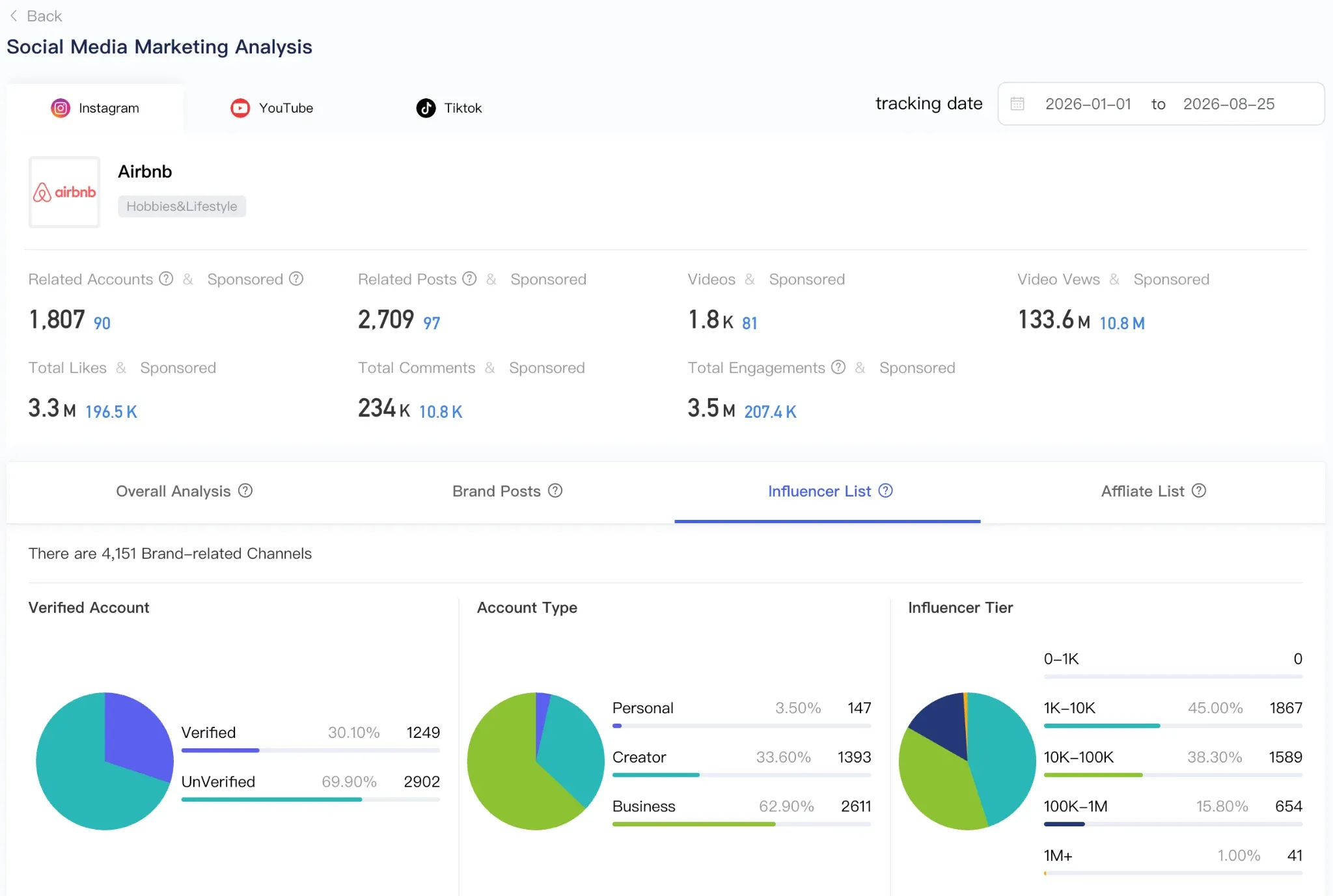
Airbnb hands out status for proven performance instead of recruiting widely, and the network stays small but credible. Through 2026 so far, its 4,151 brand-related channels produced 133.6M video views and 3.5M engagements. Just 90 of 1,807 posting accounts ran sponsored content.
The size mix sits mid to upper: 38.3% of creators in the 10K-100K tier and 15.8% in 100K to 1M, with 30.1% of channels verified. A badge earned on ratings, response rate, and completed stays pulls in established hosts and travel creators, which keeps the tiny-account tail short.
9. GoPro: Paying for the Footage You Would Otherwise Shoot
Why GoPro's Program Works: Creator Engagement and Gamification
GoPro solved a marketing problem by turning it into a prize pool. GoPro Awards, running since 2015, commits up to $5 million a year to community-submitted photos, clips and edits, with a license that lets GoPro use winning work across advertising and its own channels. Customers make the ads, and get paid for it.
The scale is real. The fifth Million Dollar Challenge drew 42,446 clips from 126 countries, up 66% year over year, and split $1 million across 55 creators in 21 countries. That one-off format has since given way to the continuous Awards program, with recurring photo and video payouts and subscriber bonuses on some campaigns.
GoPro's Creator Ambassador Program Structure
- Open Submission, Selective Reward: Anyone can enter, only standout work gets paid and published.
- Regular Payouts: Photo and video awards run continuously, with higher amounts for subscribers during some campaigns.
- Content Licence: Award terms grant GoPro broad usage rights, so a single payment feeds years of channel content.
- Prestige: Being featured on GoPro's channels is a portfolio credential creators actively chase.
What GoPro Achieved
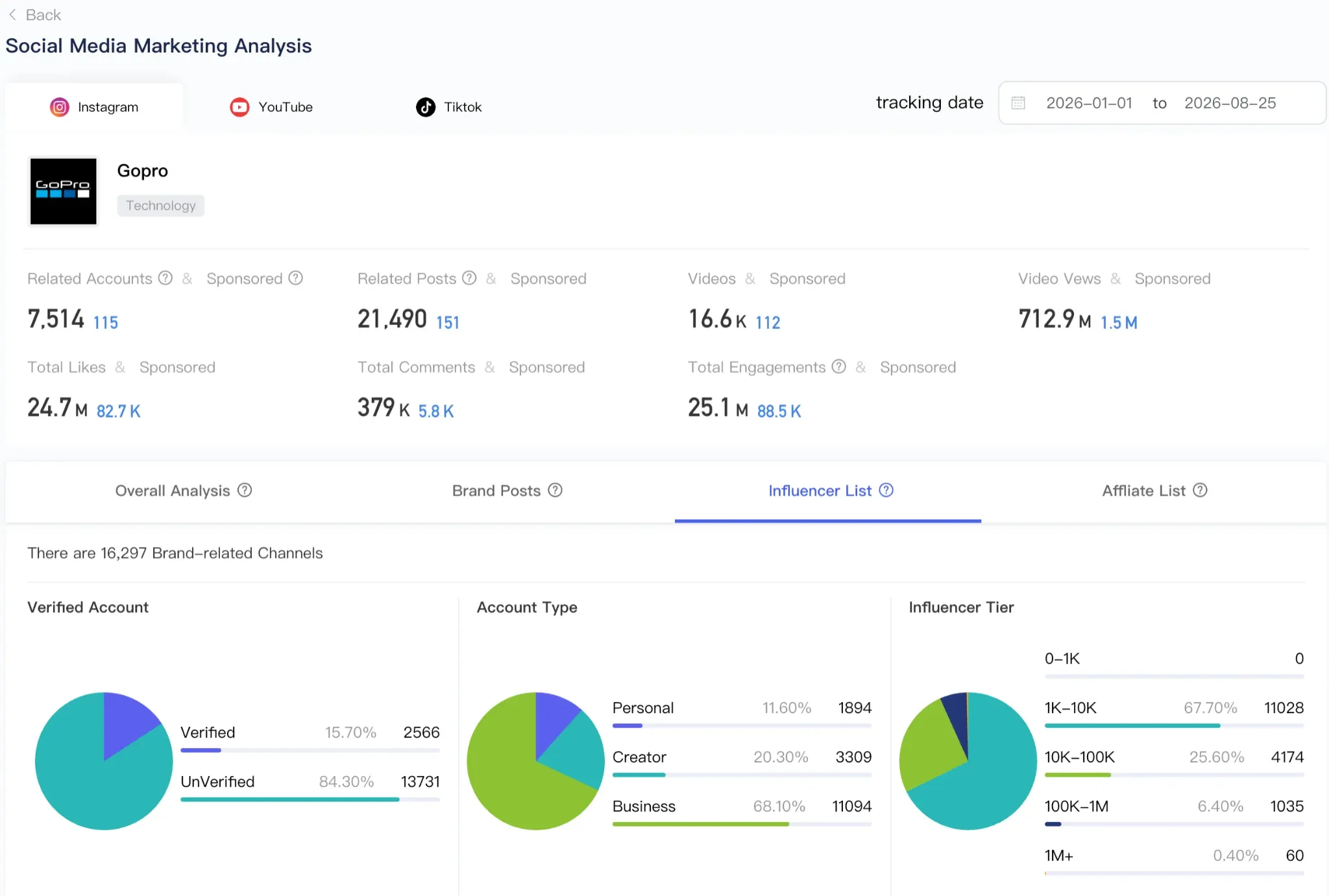
Pay for footage people already shoot, and the customers make the ads themselves. Through 2026, GoPro's 16,297 brand-related channels posted 21,490 times and produced 16.6K videos for 712.9M views. Sponsorship barely registers: 112 of those videos carried a paid tag.
The base is broad and grassroots. About 84% of channels are unverified, and 67.7% sit in the 1K-10K tier. An open-submission awards model, where standout clips get paid, puts the reach in the hands of thousands of everyday shooters.
10. Coca-Cola: A Campus Network Built for Trial
Why Coca-Cola's Program Works: Emotional Brand Presence
Coca-Cola's campus ambassadors exist to close the gap between awareness and trial. Around 100 paid student ambassadors run more than 1,000 sampling events a year across US campuses, putting a cold drink in someone's hand at the moment it means something: exam week, game day, move-in weekend. Advertising cannot do that.
The program is centrally trained but locally run. Ambassadors attend onboarding covering brand guidelines, social rules, working with bottlers and universities, and sustainability, then post through the year under #iworkforcokeca. Separately, Coca-Cola's Fan Work Is Thirsty Work Tour visited 53 partner campuses during the 2025 college football season.
Coca-Cola's Campus Ambassador Program Structure
- Campus Ambassadors: Roughly 100 paid, year-long student roles across US universities.
- Sampling at Scale: Over 1,000 student-led sampling events a year, timed around campus moments.
- Coordinated Social: Shared content calendars and community guidelines keep 100 individual accounts on message.
- Career Positioning: The role is sold as a marketing apprenticeship, which keeps applicant quality high.
https://www.instagram.com/cokecampusambassadors/
What Coca-Cola Achieved
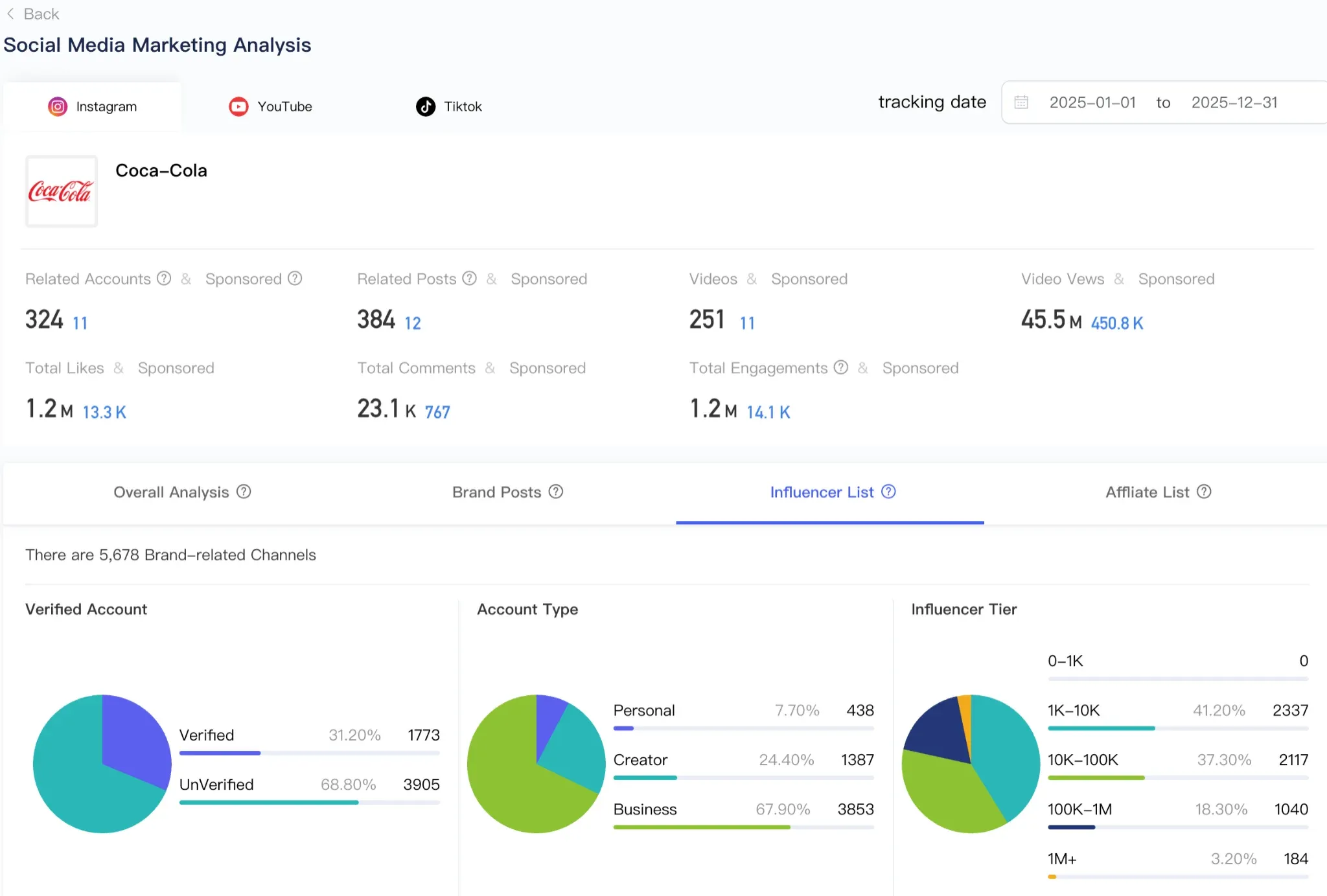
Coca-Cola's program runs offline, at sampling tables, so the Instagram footprint stays intentionally small. Across 2025, just 324 accounts posted 384 times about the brand there, drawing 45.5M video views and 1.2M engagements. Social is a support layer for the sampling, not the main event.
The broader network Scrumball maps is larger and credible: 5,678 brand-related channels, 31.2% of them verified, with 37.3% of creators in the 10K-100K tier and 18.3% in 100K to 1M. Roughly 100 paid ambassadors posting under #iworkforcokeca sit inside that much bigger branded conversation.
What the Best Brand Ambassador Companies Do Differently
Line these ten up, and the pattern is hard to miss. None of them recruit on follower count. Sephora asks for testimonials, Gymshark scouts quietly, Lululemon nominates through stores, Airbnb promotes on performance data. Reach is the last filter, never the first.
The reward always matches the motivation. Lululemon's store tier and Nike's community ambassadors run largely on status and access. Red Bull and Coca-Cola pay wages because they are asking for labour. Adobe and Gymshark pay per output because they want content on a schedule. Get that mismatched and you end up with either resentment or freeloading.
Autonomy is the quiet common thread. Almost nobody on this list dictates posts. They design situations worth posting about, then let people describe those situations in their own words.
And every durable program can prove something. Codes, links, badge criteria, application volume, submission counts. Not one of them runs on vibes, which is why they survive budget season.
That measurement layer is usually where in-house programs stall, and where ambassador management platforms like Scrumball earn their place, keeping creator relationships, collaboration status and content performance in one system instead of three spreadsheets.
Go Beyond the List: Find These Campaigns in Scrumball
Reading about these big brands is one thing. Seeing the exact creators behind those programs, and how each one performs, is what helps you build your own for your brand.
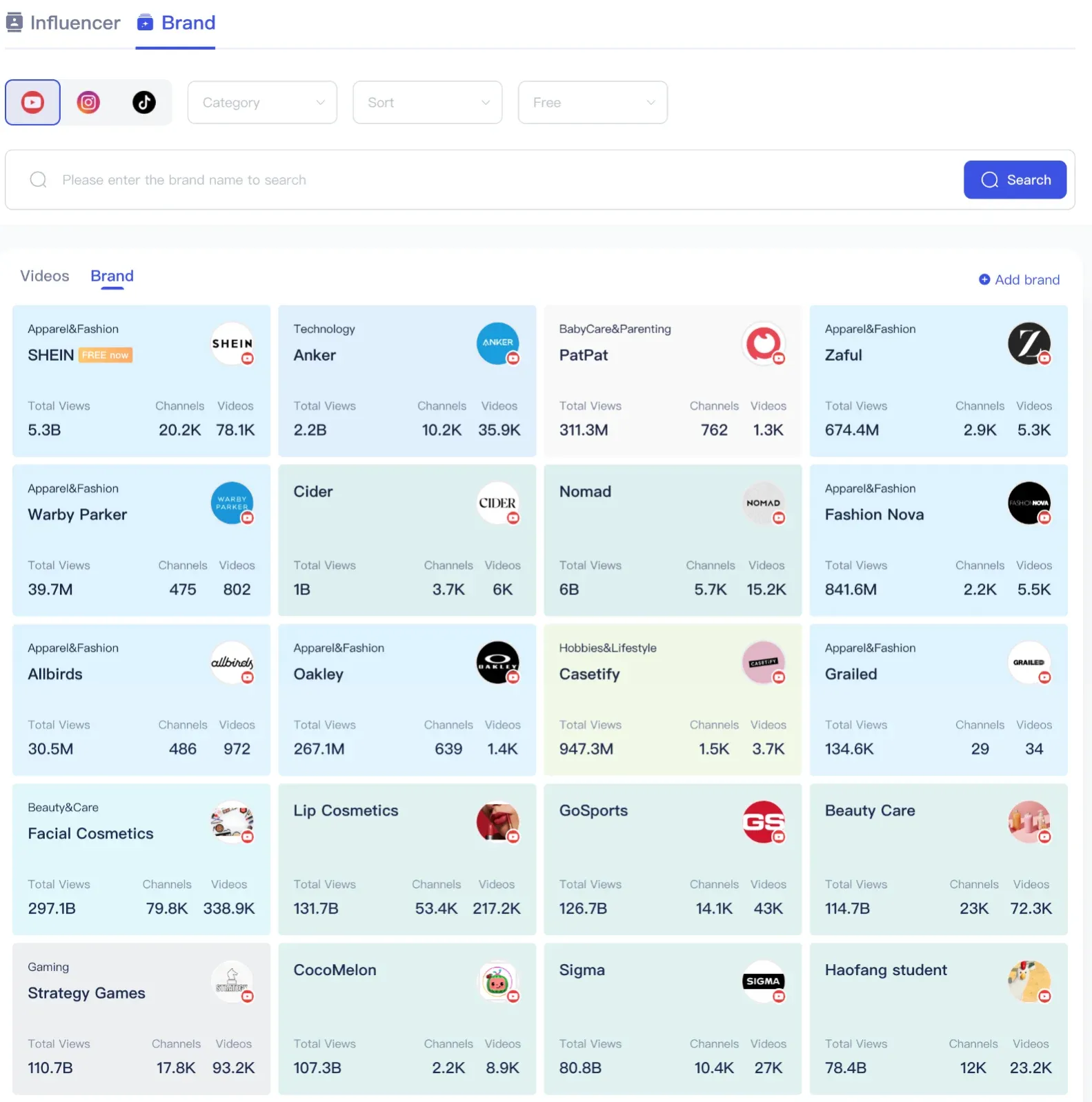
That's what Scrumball's competitor search is for. Enter a brand you admire or a campaign that caught your eye, and Scrumball pulls up the full influencer roster behind it: who the brand works with, each creator's tier, and the performance behind the partnership. You get a real paid-collaboration breakdown instead of guesswork.
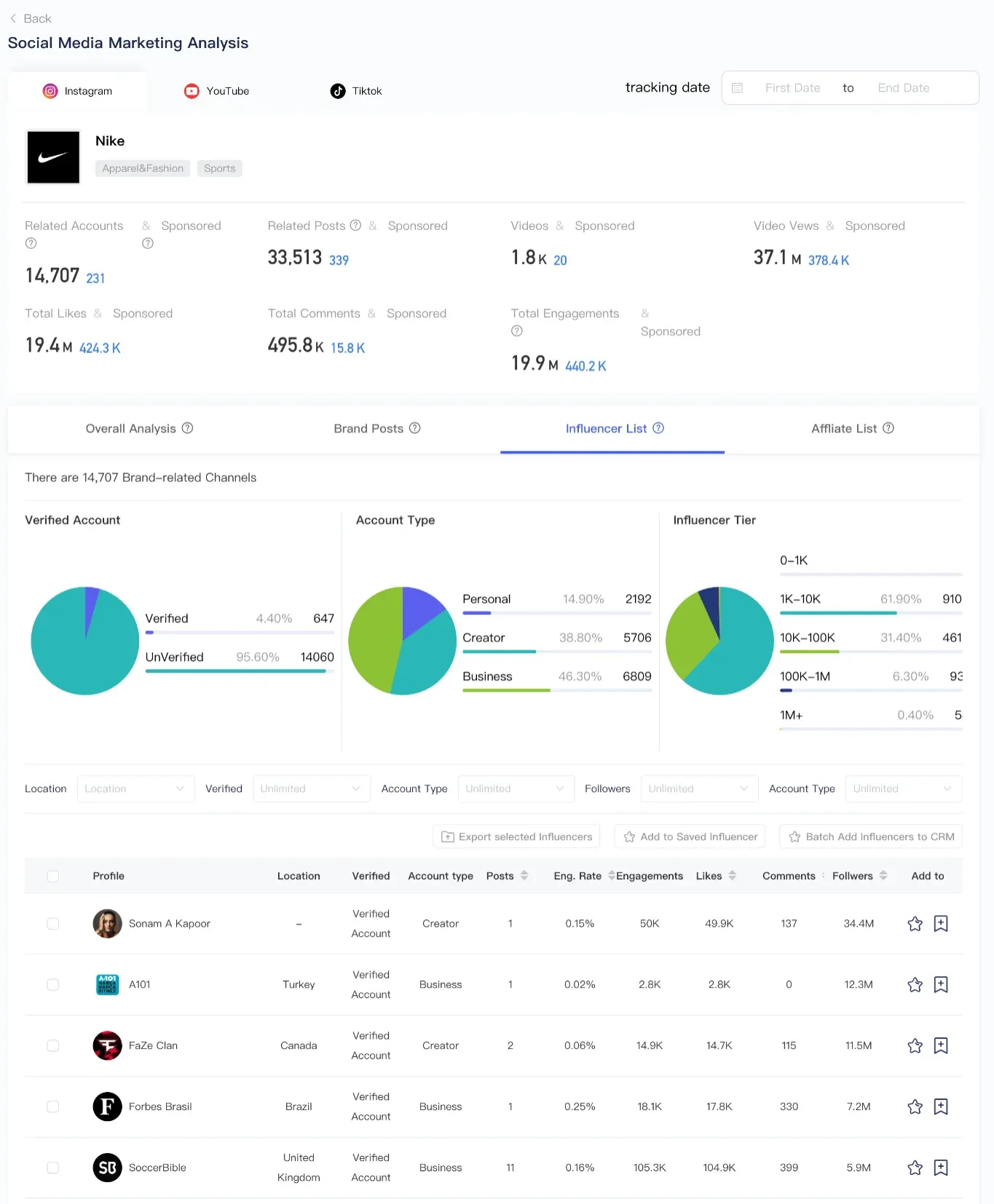
So rather than copy a program blindly, you can see what a Gymshark-style athlete roster or a Sephora-style micro-influencer mix actually looks like, then find comparable creators for your own brand. It turns the ten examples above into a shortlist you can act on.
Explore how Scrumball's influencer discovery works and reverse-engineer the campaigns you just read about.

Pull the full influencer roster behind any campaign above, check each creator's tier and results, and build your own shortlist. Start with Scrumball's competitor search.
Pull the full influencer roster behind any campaign above, check each creator's tier and results, and build your own shortlist. Start with Scrumball's competitor search.
From Campaigns to Communities: The Next Era of Brand Ambassadors
Authenticity gets used as a slogan, but in these programs it is a structural outcome. People sound genuine because they were not handed a script, were not paid to pretend, and were chosen for something other than audience size.
If you take one thing into your own planning, take this: start with what you can give that money cannot buy. Access, status, expertise, a stage. Then add cash where you are genuinely buying someone's working hours. Ambassador programs for brands fail when that order gets reversed.
Our guide to building a brand ambassador program walks through that sequence step by step.
FAQ
What is the difference between influencer marketing and brand ambassador programs?
An influencer is usually booked for a short campaign, often one to three posts, to borrow a specific audience. An ambassador holds a longer relationship, frequently six to twelve months or renewed annually, and represents the brand consistently across that period. The trade-off is depth against speed: ambassadors build familiarity, influencers deliver reach on a deadline. We compare both approaches in short-term versus long-term partnerships.
How much do brand ambassadors get paid?
It ranges enormously. Campus roles at companies like Red Bull and Coca-Cola are paid part-time jobs. Many retail ambassadors, including Lululemon's store tier, receive product, early access and event invitations instead of fees. Tiered creator programs such as Adobe Express pay per assignment, scaling with reach. Celebrity contracts sit in a different market entirely. Here is what ambassadors actually earn by region.
How do I start a brand ambassador program?
Start with people who already post about you unprompted, then formalize it. Set fixed, published terms so you are not negotiating one by one, define clearly what ambassadors get and give, and build tracking in from day one through unique codes or links. Ambassador management platforms such as Scrumball help keep those relationships and their results in one place.
Can employees be brand ambassadors?
Yes, and it is often the cheapest advocacy available. Starbucks certifies expertise with its black apron and gives partners published social guidelines plus the #ToBeAPartner hashtag. Nike trains retail staff as community coaches. Employees carry insider knowledge of the product and culture, and their personal networks tend to trust them more readily than they trust a brand account.
What metrics should I track?
Track what survives a budget review: referral sales through unique codes, affiliate link clicks, user-generated content volume, and retention, meaning how many ambassadors are still active after six months. Engagement rate works as an early signal. Impressions on their own tell you almost nothing. Our breakdown of influencer marketing ROI covers the attribution side.
Which companies have the best brand ambassador programs?
It depends what you are solving for. Lululemon and Nike lead on community-led advocacy, Sephora on structured creator cohorts, Gymshark on long-term creator partnerships, Airbnb on peer trust, and Red Bull and Coca-Cola on campus activation. Rather than copying the biggest name, pick the brand ambassador companies whose constraints look most like yours. More companies are currently hiring ambassadors.
FAQ
What is the difference between influencer marketing and brand ambassador programs?
An influencer is usually booked for a short campaign, often one to three posts, to borrow a specific audience. An ambassador holds a longer relationship, frequently six to twelve months or renewed annually, and represents the brand consistently across that period. The trade-off is depth against speed: ambassadors build familiarity, influencers deliver reach on a deadline. We compare both approaches in short-term versus long-term partnerships.
How much do brand ambassadors get paid?
It ranges enormously. Campus roles at companies like Red Bull and Coca-Cola are paid part-time jobs. Many retail ambassadors, including Lululemon's store tier, receive product, early access and event invitations instead of fees. Tiered creator programs such as Adobe Express pay per assignment, scaling with reach. Celebrity contracts sit in a different market entirely. Here is what ambassadors actually earn by region.
How do I start a brand ambassador program?
Start with people who already post about you unprompted, then formalize it. Set fixed, published terms so you are not negotiating one by one, define clearly what ambassadors get and give, and build tracking in from day one through unique codes or links. Ambassador management platforms such as Scrumball help keep those relationships and their results in one place.
Can employees be brand ambassadors?
Yes, and it is often the cheapest advocacy available. Starbucks certifies expertise with its black apron and gives partners published social guidelines plus the #ToBeAPartner hashtag. Nike trains retail staff as community coaches. Employees carry insider knowledge of the product and culture, and their personal networks tend to trust them more readily than they trust a brand account.
What metrics should I track?
Track what survives a budget review: referral sales through unique codes, affiliate link clicks, user-generated content volume, and retention, meaning how many ambassadors are still active after six months. Engagement rate works as an early signal. Impressions on their own tell you almost nothing. Our breakdown of influencer marketing ROI covers the attribution side.
Which companies have the best brand ambassador programs?
It depends what you are solving for. Lululemon and Nike lead on community-led advocacy, Sephora on structured creator cohorts, Gymshark on long-term creator partnerships, Airbnb on peer trust, and Red Bull and Coca-Cola on campus activation. Rather than copying the biggest name, pick the brand ambassador companies whose constraints look most like yours. More companies are currently hiring ambassadors.