

If you want a quick shortlist, the standout marketing campaign management tools for 2026 are Scrumball for influencer and creator campaigns, HubSpot for all-in-one growth teams, and Salesforce Marketing Cloud for enterprise orchestration. The right choice depends on your workflow, team size, and campaign channels.
That matters more now because marketing teams are handling more data, more automation, and more touchpoints at once. In HubSpot’s 2026 State of Marketing, 80% of marketers say they use AI for content creation, while 75% use it for media production.
Salesforce says marketers now work across an average of 10 engagement channels, and McKinsey reports that 88% of organizations use AI in at least one business function. With that in mind, here are the 10 best tools for marketing campaign management in 2026, starting with Scrumball.
Top 10 Tools for Marketing Campaign Management in 2026
1. Scrumball - Best for AI-powered Influencer Marketing Management
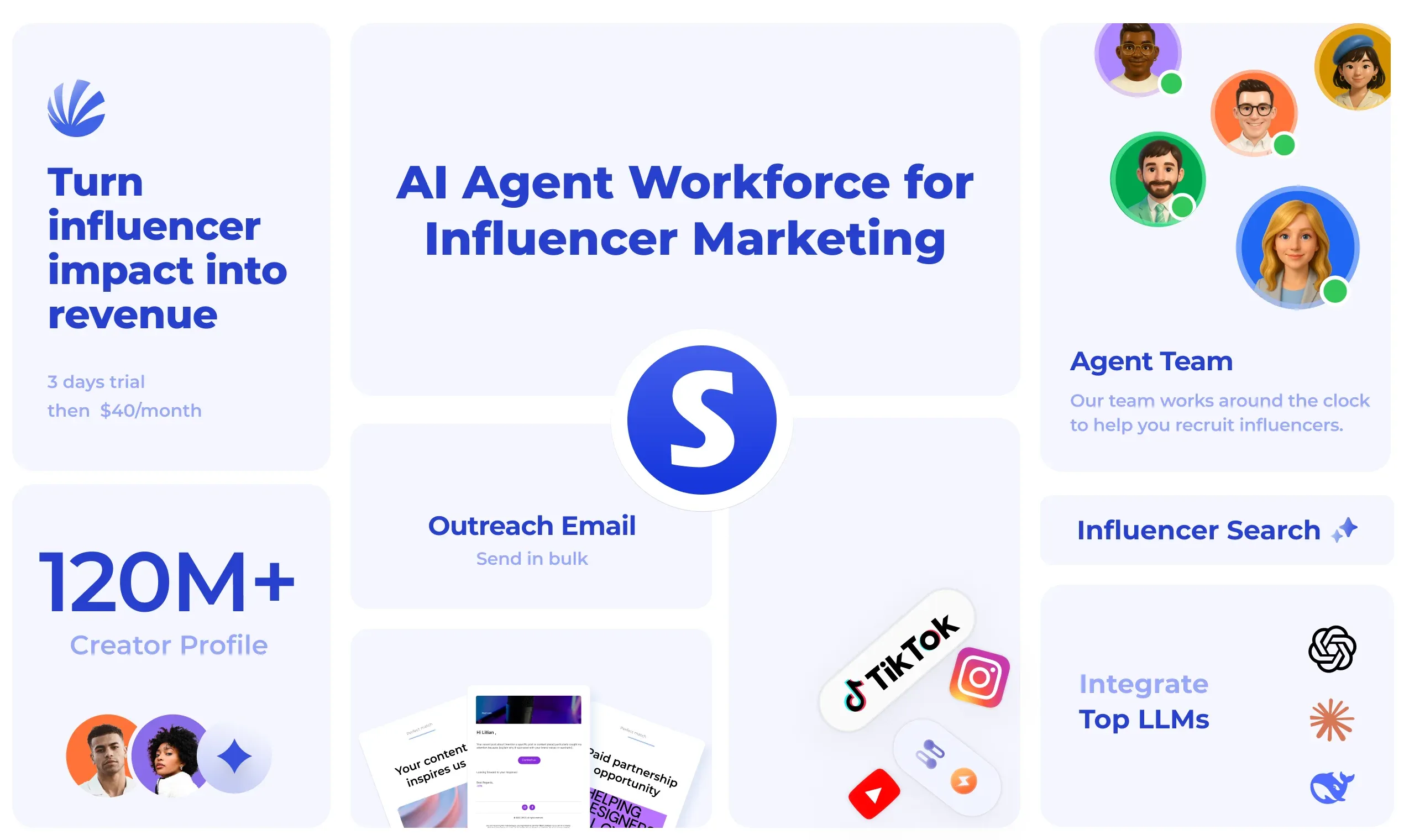
Scrumball's Key Features
- AI-powered influencer discovery and matching across 120M+ creator profiles in 190+ countries.
- Five built-in AI agents for strategy, creator matching, outreach, campaign operations, and performance analysis.
- End-to-end workflow for discovery, analysis, outreach, negotiation, approvals, and ROI tracking.
- 50+ targeting factors and 96+ analysis metrics for detailed creator evaluation.
- Campaign oversight designed for influencer, ambassador, and event-led creator programs.
Scrumball's Benefits
If your campaigns depend on creators, Scrumball is the most purpose-built option on this list. It does not just help you find influencers. It helps run the full influencer marketing campaign workflow inside one platform, which is where many teams lose time.
That makes it especially strong for individuals, marketers, and brands that want fewer manual handoffs between discovery, outreach, approvals, and reporting. It is also a natural fit for teams that need influencer marketing to feel measurable, not chaotic.
Scrumball's Pricing
- Free plan: Starts at $0/month for individuals and beginners, comes with basic features including influencer discovery, audience insights, and access to AI agents Lillian and Hunter.
- Starter plan: $32/month for growing brands. This tier adds automated email follow-ups, multilingual templates, campaign CRM, and Charlie, the outreach agent.
- Professional plan: $299/month, built for marketing teams that need social listening, collaboration tools, sub-accounts, and priority support.
- Enterprise plan: $499/month and includes higher credit limits, advanced influencer insights, and content storage.
- Premium plan: $899/month for global agencies that need extreme credit limits, custom API integration, and tailored solutions.
For high-end enterprises with large-scale implementation needs, the final quote depends on campaign scope, usage, and team needs. Check out Scrumball's Pricing page for more information.
Scrumball's Ideal Use Cases
Best for individuals, brands, agencies, and ecommerce teams running influencer campaigns, ambassador programs, product seeding, creator-led launches, and event activations that need the entire creator campaign process managed in one place.
2. HubSpot Marketing Hub - Best for All-in-one Marketing and CRM Management
HubSpot Marketing Hub's Key Features
- Email marketing, forms, landing pages, ad tools, CRM, and reporting in one platform.
- Omnichannel automation, lead scoring, personalization, and campaign reporting.
- Built-in AI across the platform through Breeze tools and agents.
- Strong alignment between marketing, sales, service, and content operations.
- Scalable tiers from free tools to enterprise-grade reporting and journey analytics.
HubSpot Marketing Hub's Benefits
HubSpot stays near the top because it balances usability and depth better than most all-in-one suites. Smaller teams can start fast. Larger teams can still build mature lifecycle programs without stitching five products together.
It is especially effective when content, email, CRM, and reporting all need to live in one operating system. That reduces handoffs and keeps campaign data easier to trust.
HubSpot Marketing Hub's Pricing
Free tools are available. According to HubSpot’s official product catalog, Marketing Hub Starter starts at $20 per seat per month, Professional starts at $890 per month with three seats, and Enterprise starts at $3,600 per month with five seats. Professional and Enterprise also require onboarding fees.
HubSpot Marketing Hub's Ideal Use Cases
Best for B2B companies, SaaS teams, inbound programs, and growth teams that need campaign execution, CRM alignment, and reporting inside one connected platform.
3. Salesforce Marketing Cloud - Best for Enterprise Omnichannel Campaign Management
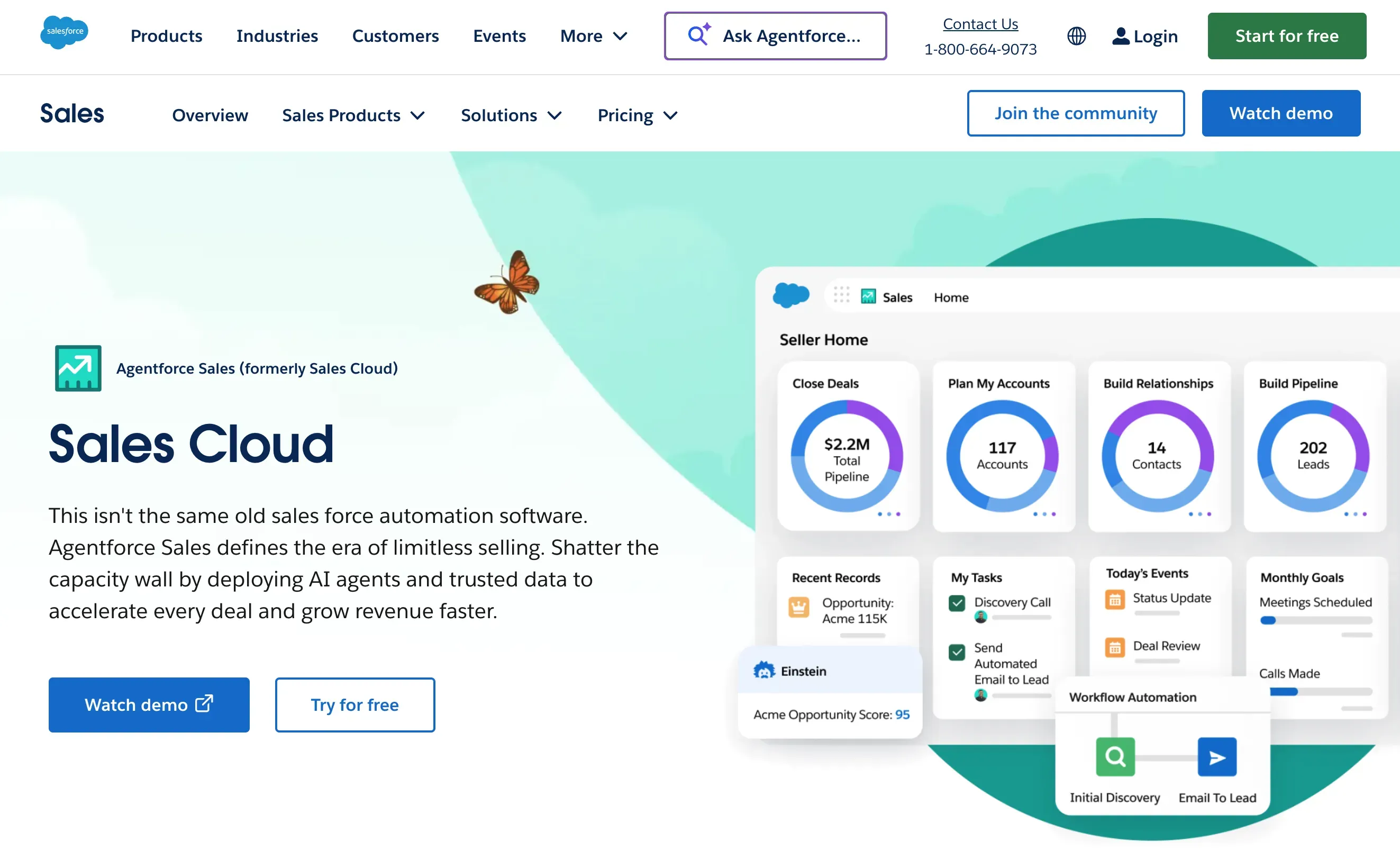
Salesforce Marketing Cloud's Key Features
- Multi-channel journey orchestration across email, SMS, mobile, web, and messaging apps.
- Agentforce campaign creation, AI-driven optimization, and real-time personalization options.
- Forms, landing pages, segmentation, and path experimentation.
- Deep connection to Salesforce CRM, data, service, and commerce workflows.
- Enterprise controls for scale, governance, and global operations.
Salesforce Marketing Cloud's Benefits
Salesforce Marketing Cloud is built for complexity. If you operate across multiple brands, business units, regions, or data systems, it gives you stronger orchestration than most mid-market tools.
It also makes more sense when your marketing team needs to work closely with sales, service, commerce, and customer data at enterprise scale. That is its edge.
Salesforce Marketing Cloud's Pricing
On Salesforce’s official pricing page, Starter Suite begins at $25 per user per month. Marketing Cloud Growth starts at $1,500 per org per month, and Advanced starts at $3,250 per org per month, billed annually. Add-ons raise the total cost quickly.
Salesforce Marketing Cloud's Ideal Use Cases
Best for enterprise marketing teams, multi-brand organizations, and global programs that need advanced orchestration, personalization, and CRM-connected campaign execution.
4. ActiveCampaign - Best for SMB Email and Lifecycle Automation
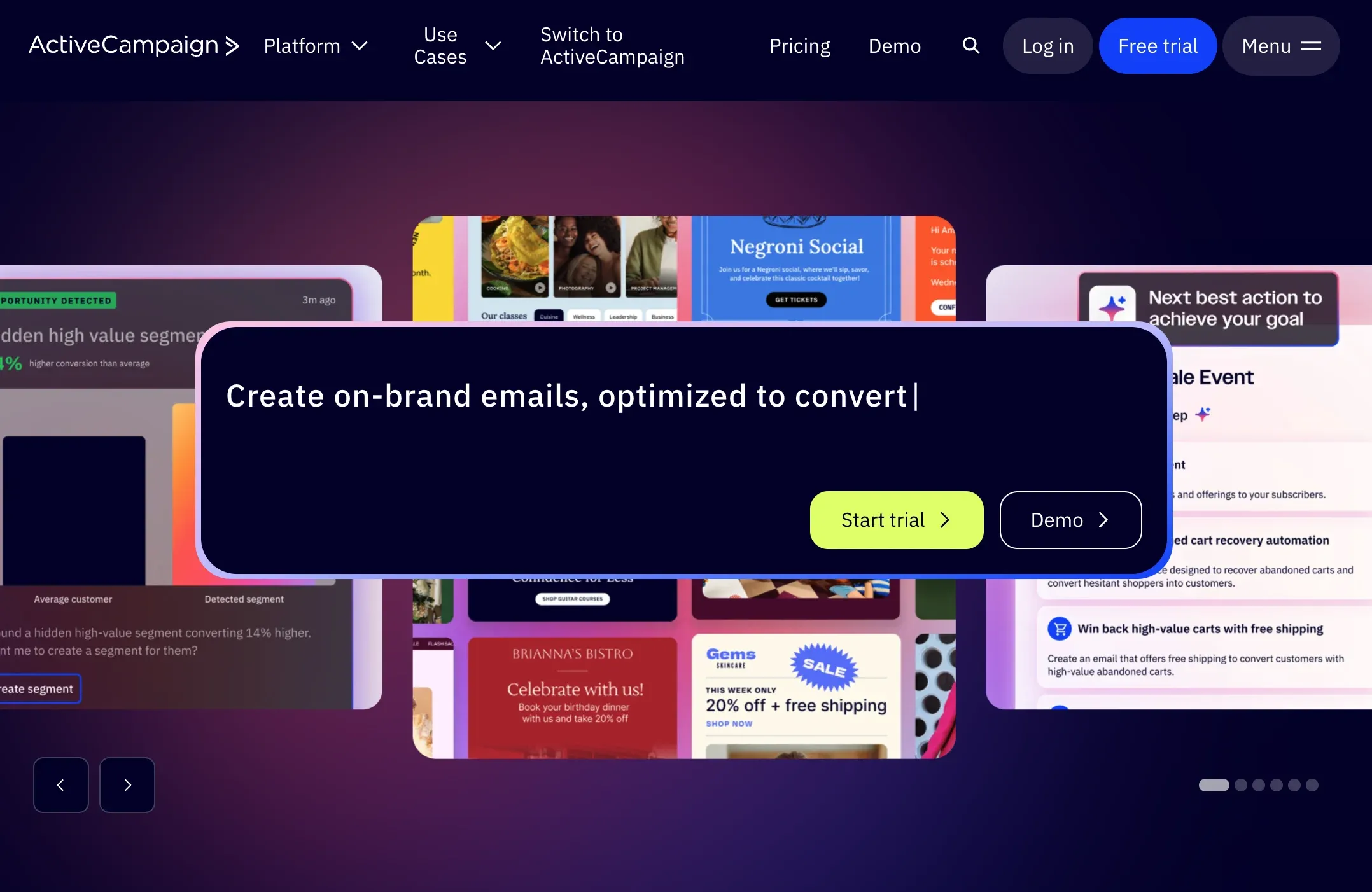
ActiveCampaign's Key Features
- Email marketing and automation with strong segmentation and behavior-based workflows.
- AI-assisted campaign building, follow-up suggestions, and predictive content in higher tiers.
- Landing pages, attribution tracking, and ecommerce integrations.
- SMS and WhatsApp add-ons for broader lifecycle messaging.
- Contact-based pricing that scales with list size and channels used.
ActiveCampaign's Benefits
ActiveCampaign remains one of the strongest email-first automation platforms for SMBs. It is more automation-focused than Mailchimp and usually easier to operationalize than large enterprise suites.
It works well when email and lifecycle automation are your primary engines, but you still want room to expand into SMS, ecommerce, and customer journeys.
ActiveCampaign's Pricing
ActiveCampaign uses contact-based pricing on its official pricing page, so your live cost changes with list size and add-ons. Recent public examples for 1,000 contacts commonly start around $19 per month for Starter, $59 for Plus, and $89 for Pro. Always verify against your current contact volume before buying.
ActiveCampaign's Ideal Use Cases
Best for SMBs, ecommerce brands, and lean marketing teams that want stronger automation, segmentation, and email performance without moving to an enterprise stack.
5. Mailchimp - Best for Beginner-friendly Email Marketing Campaigns
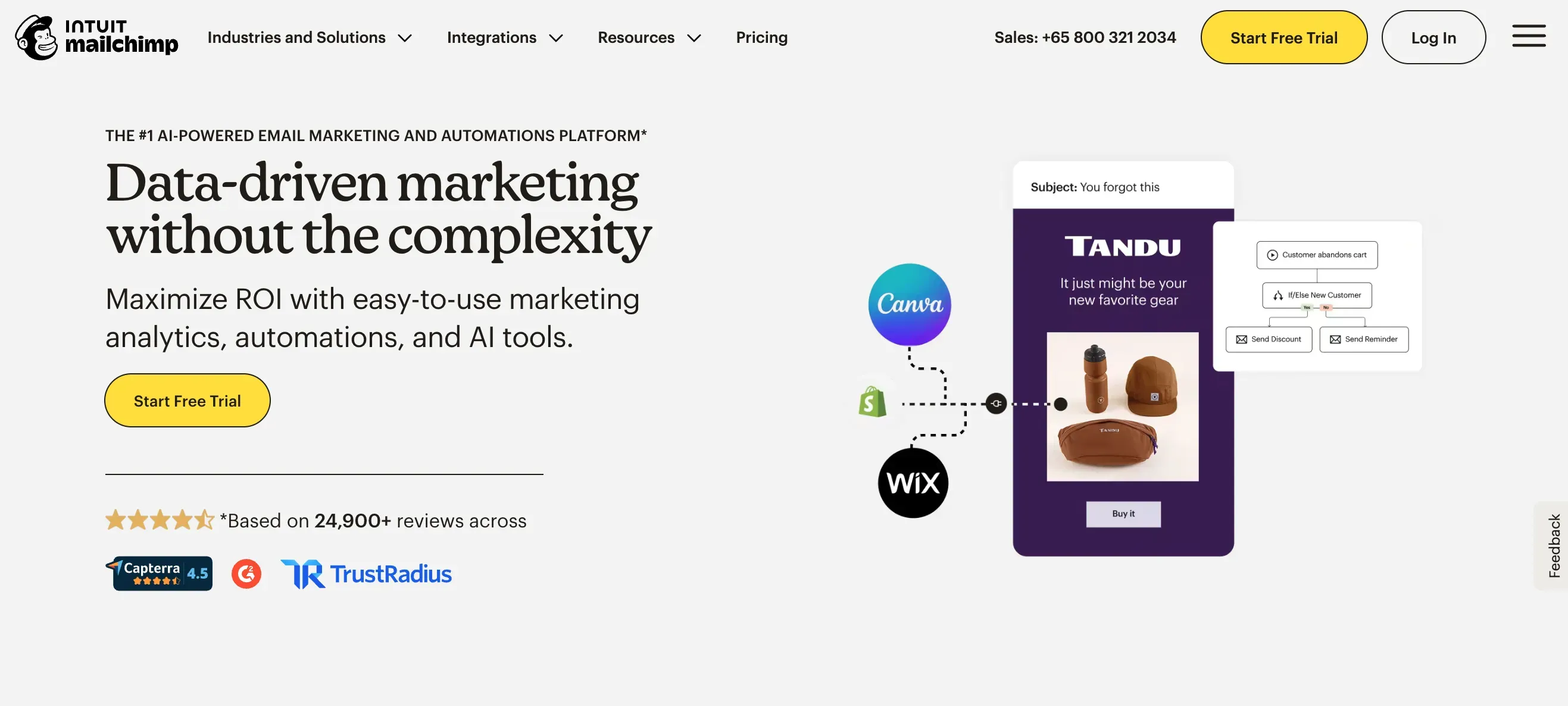
Mailchimp's Key Features
- Email campaigns, landing pages, forms, templates, and beginner-friendly automation flows.
- Generative AI features, send-time optimization, and predictive segmentation on higher tiers.
- Broad ecommerce and app integrations.
- Strong design usability for teams that need speed over complexity.
- Paid plans that scale by contacts, sends, seats, and add-ons.
Mailchimp's Benefits
Mailchimp is still a good fit for straightforward campaign execution. It is easy to learn, fast to launch, and helpful for smaller teams that need professional email marketing without a steep setup process.
Its trade-off is pricing efficiency at scale. As lists grow and automation needs become more complex, better-value alternatives often appear.
Mailchimp's Pricing
Mailchimp’s plan structure is contact-based. The free tier covers up to 250 contacts. Public 2026 pricing examples generally place Essentials at about $13 per month for 500 contacts, Standard at about $20, and Premium at $350 for 10,000 contacts. Compare current tiers on the official compare plans page.
Mailchimp's Ideal Use Cases
Best for startups, small businesses, newsletters, and ecommerce teams that want a familiar email platform with decent automation and low onboarding friction.
6. Zoho Marketing Plus - Best for Bundled Omnichannel Marketing Management
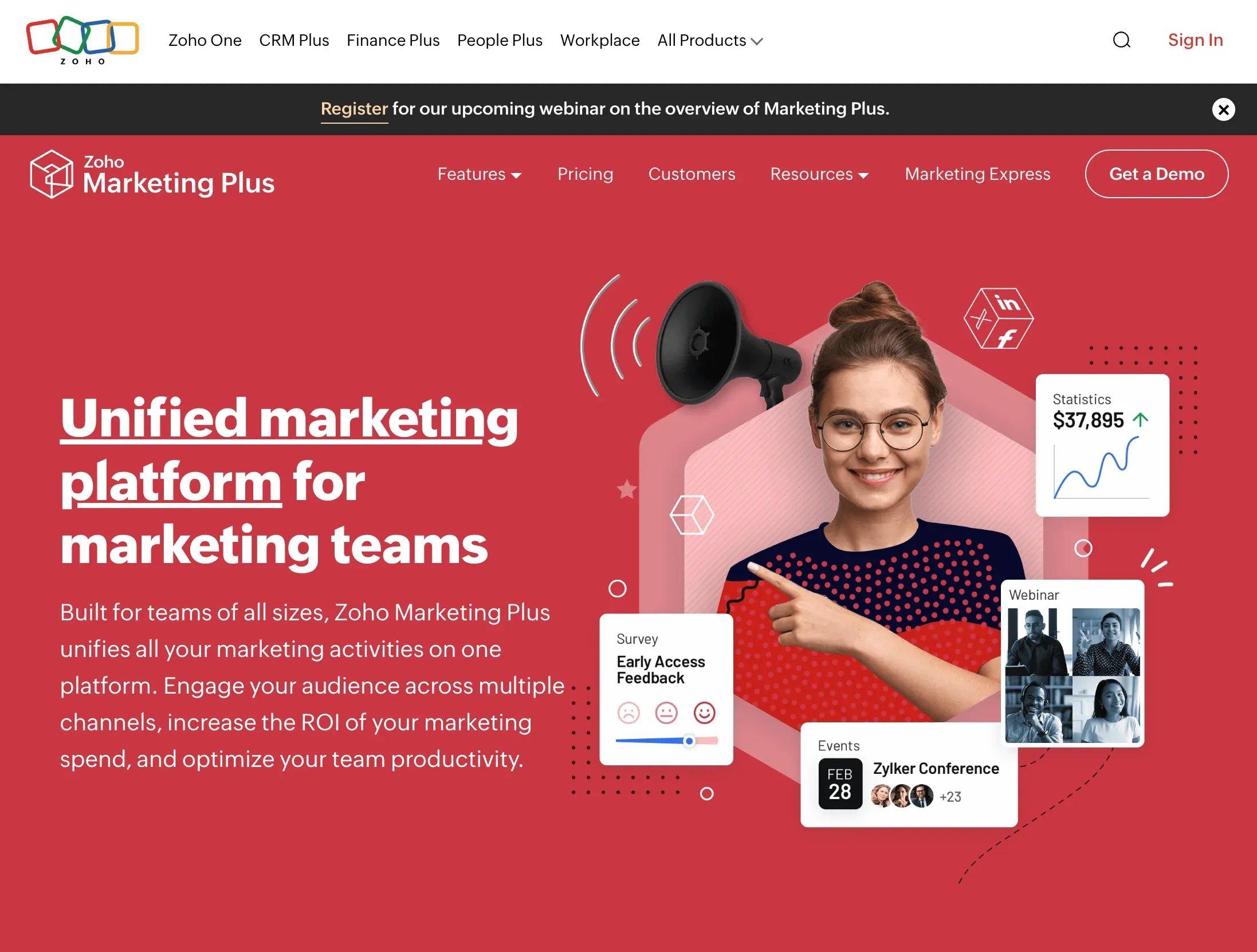
Zoho Marketing Plus's Key Features
- Unified management for email, SMS, social media, webinars, events, surveys, and presentations.
- Centralized campaign workspace with task assignment, collaboration, and approvals.
- Marketing automation, budget tracking, and asset management.
- Built-in analytics that connect channel activity and ROI.
- Natural fit for businesses already using the wider Zoho stack.
Zoho Marketing Plus's Benefits
Zoho Marketing Plus is one of the better bundled options for teams that want broad channel coverage without enterprise pricing pressure. It is practical, especially for mid-sized businesses that already live in Zoho.
Its main strength is breadth. You can manage campaigns, assets, budgets, and collaboration from one suite instead of adding separate point tools.
Zoho Marketing Plus's Pricing
Zoho shows Marketing Plus pricing by region and billing currency, so the exact amount depends on market and plan configuration. Zoho also offers a 15-day free trial. If you are comparing vendors globally, confirm the live regional price before procurement.
Zoho Marketing Plus's Ideal Use Cases
Best for mid-market teams, Zoho-first businesses, and companies that want a bundled suite for omnichannel planning, campaign collaboration, and marketing analytics.
7. Adobe Campaign - Best for Enterprise Customer Journey Orchestration
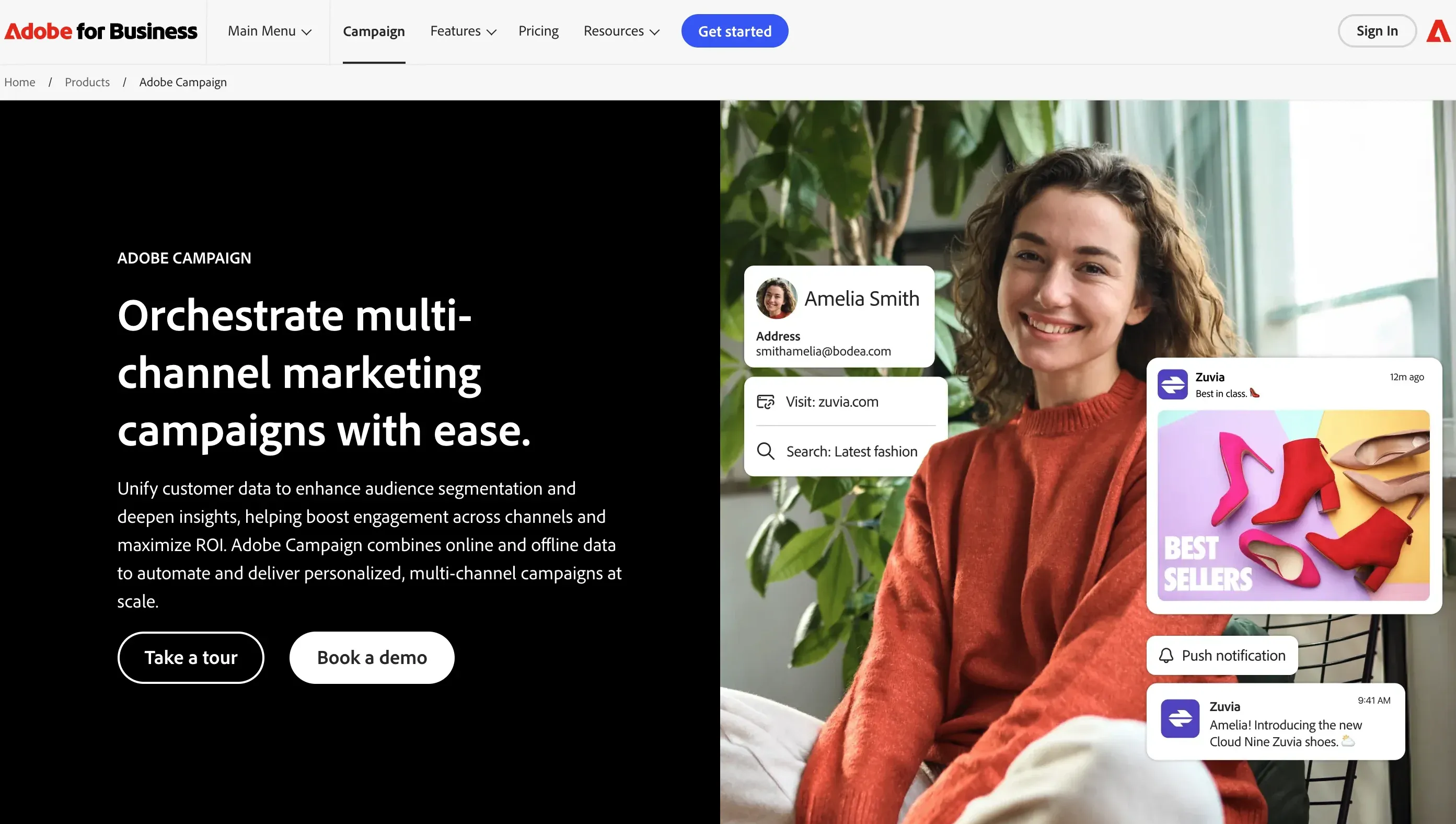
Adobe Campaign's Key Features
- Cross-channel campaign orchestration for email, mobile, direct, and other enterprise touchpoints.
- Advanced audience segmentation and workflow automation.
- Strong fit for enterprise data environments and Adobe Experience Cloud ecosystems.
- Personalization support for complex customer journeys.
- Built for organizations with higher governance, integration, and scale requirements.
Adobe Campaign's Benefits
Adobe Campaign is still relevant when enterprise-grade orchestration matters more than ease of setup. It is not the lightest option here, but it is strong for teams with demanding data and journey requirements.
In practice, its value is highest when Adobe products already shape your broader experience stack. If not, deployment can feel heavier than alternatives.
Adobe Campaign's Pricing
Adobe generally handles enterprise marketing platform pricing through custom quotes rather than public self-serve plans. If your shortlist includes Adobe, request a tailored quote based on channels, data complexity, and support needs before you compare total cost.
Adobe Campaign's Ideal Use Cases
Best for large enterprises, regulated organizations, and Adobe-centric teams that need advanced cross-channel orchestration and complex customer journey control.
8. Hootsuite - Best for Social Media Campaign Management
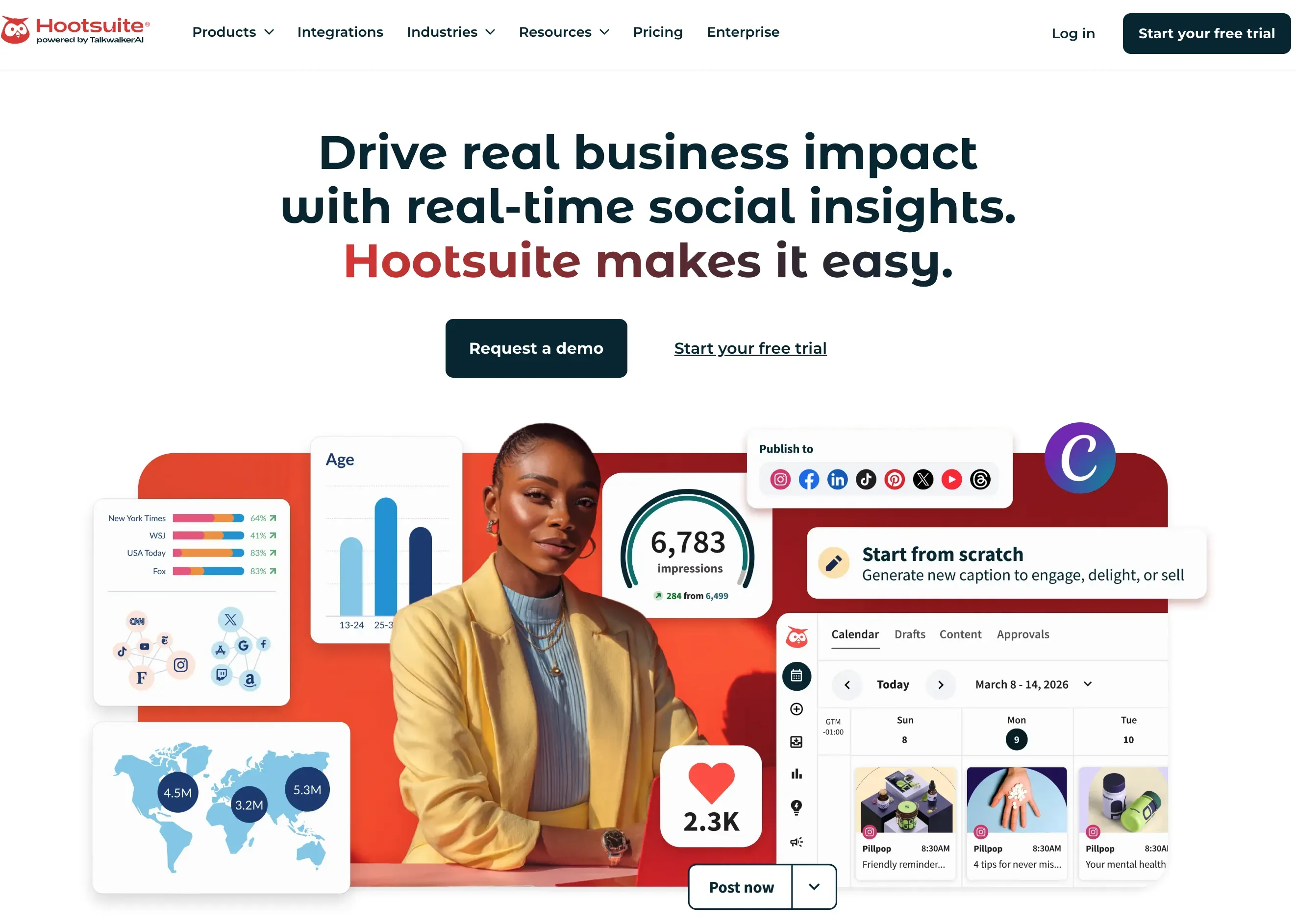
Hootsuite's Key Features
- Social scheduling, publishing, inbox management, reporting, and listening in one dashboard.
- AI tools for captions, hashtags, content ideas, and workflow assistance.
- Competitor benchmarking, sentiment tracking, and social customer care features.
- Approval workflows, team permissions, and enterprise security controls.
- Listening and advanced inbox options that scale into bigger support environments.
Hootsuite's Benefits
Hootsuite is strongest when social is a major campaign channel, not an afterthought. It helps teams consolidate publishing, engagement, reporting, and social listening into one working environment.
It is especially useful for brands with active community management or high publishing volume across multiple networks. That is where the operational gain is clearest.
Hootsuite's Pricing
Hootsuite sells Standard, Advanced, and Enterprise plans. Enterprise is quote-based. Public pricing can vary by market, billing cadence, and promotions, so it is worth checking the live plans page before budgeting.
Hootsuite's Ideal Use Cases
Best for social-first brands, community teams, agencies, and customer care teams that need scheduling, engagement, reporting, and listening in one platform.
9. Less Annoying CRM - Best for Simple Small Business Campaign Tracking
Less Annoying CRM's Key Features
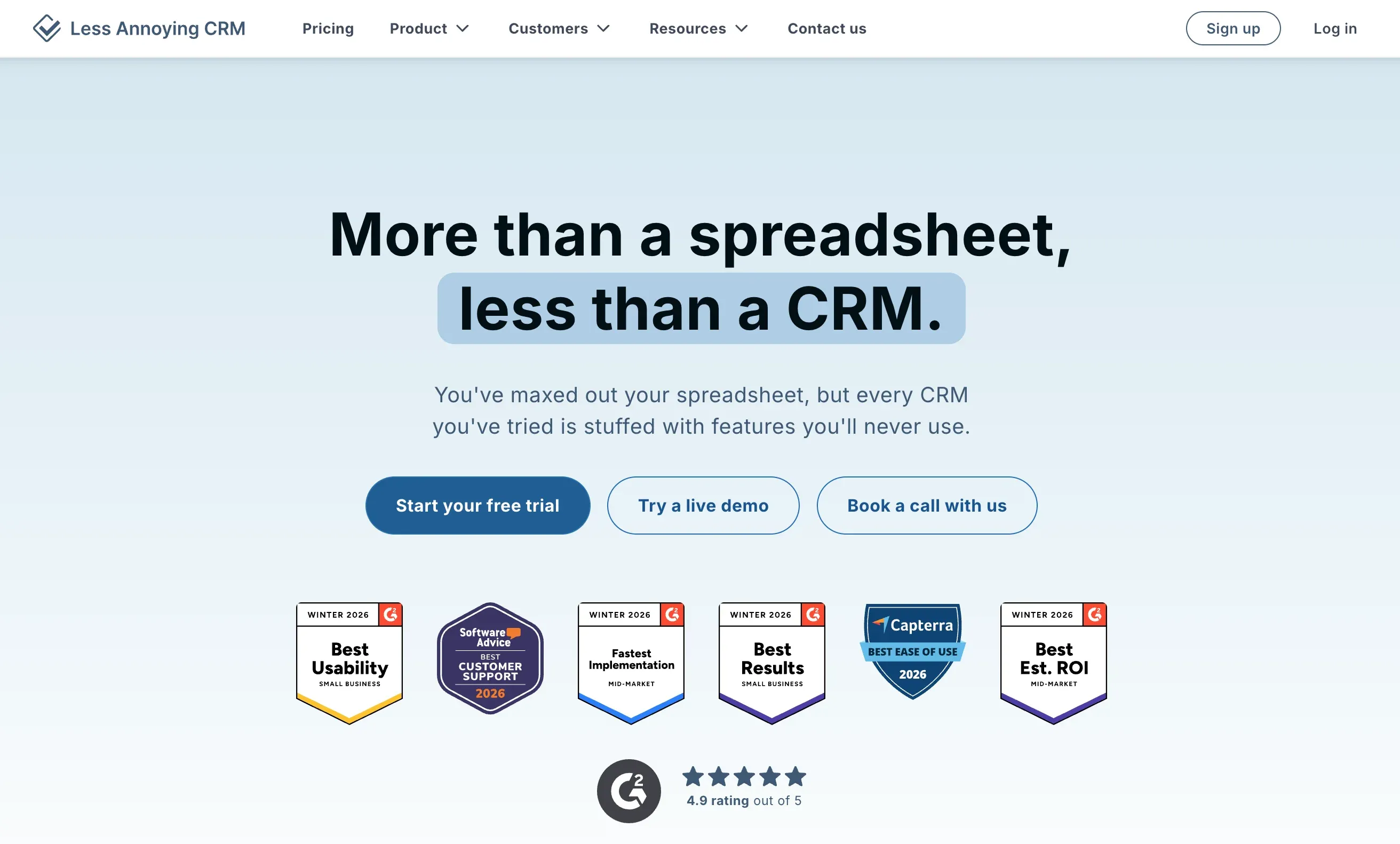
- Simple contact management, pipelines, tasks, calendars, and custom fields.
- Google Calendar and Outlook Calendar syncing.
- Email logging and lightweight collaboration features.
- No complicated pricing tiers or hidden packaging.
- Designed for small businesses that want clarity more than complexity.
Less Annoying CRM's Benefits
Less Annoying CRM earns its place because many teams do not need a huge marketing suite. They need a clean system to track contacts, follow-ups, and campaign activity without training half the company first.
It is limited compared with bigger automation platforms, but that simplicity is exactly why some small teams prefer it.
Less Annoying CRM's Pricing
Less Annoying CRM keeps pricing refreshingly direct. Its official help center states the platform costs $15 per user per month, with a 30-day free trial.
Less Annoying CRM's Ideal Use Cases
Best for small businesses, consultants, and service teams that want lightweight campaign tracking, sales follow-up, and contact organization without a bloated stack.
10. Hive - Best for Marketing Campaign Operations and Team Collaboration
Hive's Key Features
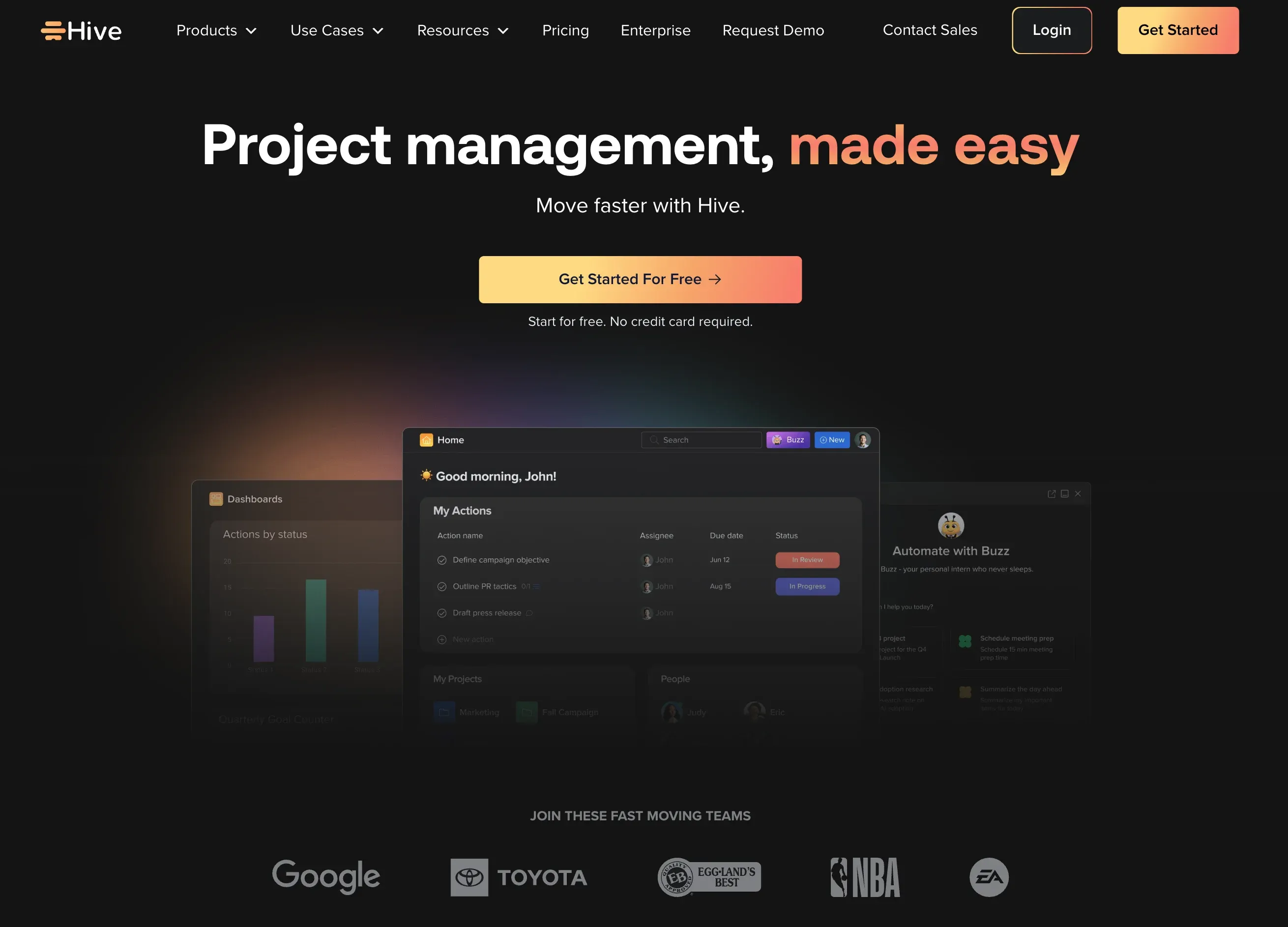
- Project, task, chat, notes, forms, dashboards, and workflow automation in one workspace.
- Multiple views, including Gantt, Kanban, calendar, table, timeline, and portfolio.
- Approvals, proofing, timesheets, resourcing, and custom dashboards as add-ons or enterprise features.
- Buzz AI for summaries, task creation, and workflow support.
- Strong integrations with Slack, Zoom, Google, Microsoft, Salesforce, Jira, and QuickBooks.
Hive's Benefits
Hive is not a classic marketing automation platform. It is a campaign operations platform. That matters for teams whose biggest pain point is execution, collaboration, and approvals across many moving parts.
Creative teams and agencies often get the most value because Hive connects planning, work management, proofing, and reporting inside one workflow.
Hive's Pricing
Hive offers a free plan and paid options. Recent public pricing places paid plans from about $12 per user per month, with several premium add-ons such as proofing, dashboards, automations, and Buzz AI priced separately.
Hive's Ideal Use Cases
Best for marketing operations teams, agencies, and creative departments that need stronger planning, approvals, work management, and campaign coordination.
Comparison of Marketing Campaign Management Tools
Key criteria for comparison
The right choice depends on the kind of campaign work you do most. If your biggest challenge is creator sourcing and outreach, a dedicated influencer marketing management platform is definitely better than a generic email suite. If your challenge is lifecycle automation, HubSpot, Salesforce, ActiveCampaign, or Mailchimp make more sense.
For 2026, I would compare tools across five practical factors: channel coverage, automation depth, analytics quality, collaboration workflow, and pricing clarity. The strongest tools reduce handoffs and make campaign performance easier to explain to leadership.
Side-by-side comparison table
| Tool | Best For | Starting Price | Standout Strength |
|---|---|---|---|
| Scrumball | Influencer and creator campaign management | Free to get started. Paid from $32/month | End-to-end creator discovery, outreach, approvals, and ROI tracking platform |
| HubSpot Marketing Hub | All-in-one growth teams | Free tools; paid from $20/seat/month | CRM, campaign execution, and reporting in one platform |
| Salesforce Marketing Cloud | Enterprise orchestration | From $25/user/month or $1,500/org/month for Marketing Cloud Growth | Enterprise journeys, data depth, and cross-cloud alignment |
| ActiveCampaign | Email-first lifecycle automation | Roughly from $19/month, depending on contacts | Strong automation and segmentation for SMBs |
| Mailchimp | Beginner-friendly email campaigns | Free up to 250 contacts; paid from about $13/month | Ease of use and broad template ecosystem |
| Zoho Marketing Plus | Bundled omnichannel execution | Region-based pricing | Broad channel coverage inside one suite |
| Adobe Campaign | Complex enterprise journey management | Custom quote | Advanced orchestration and enterprise data fit |
| Hootsuite | Social-first campaign teams | Plan-based annual pricing | Social publishing, inbox, analytics, and listening |
| Less Annoying CRM | Small business campaign tracking | $15/user/month | Simple contact, task, and pipeline management |
| Hive | Campaign operations and creative execution | Free plan; paid from about $12/user/month | Project management, approvals, and team coordination |
One more practical note on pricing. Several tools now use dynamic pricing based on contacts, seats, add-ons, or regional packaging. If your database is growing fast, always test the live pricing calculator before approval, not just the headline plan number.
Why Are Marketing Campaign Management Tools Essential in 2026?
In 2026, the challenge is not just creating campaigns. It is managing complexity across channels, teams, data sources, and AI workflows. Salesforce says 86% of marketers use CRM systems, 84% use first-party data, and only 31% feel fully satisfied with their data unification.
That gap is where good software matters. The right platform helps you reduce manual work, keep messaging consistent, and see what is actually driving revenue.
Key features to look for
- Campaign planning, task ownership, and deadlines
- Cross-channel execution across email, social, paid, and creator programs
- Automation for follow-ups, approvals, and repetitive actions
- Analytics that connect performance to pipeline, leads, or revenue
- Integrations with CRM, ecommerce, creative, and reporting tools
- Permission controls for teams, agencies, and stakeholders
- AI features that save time without making workflows harder
Wrap it Up
The best marketing campaign management tool in 2026 is the one that matches your campaign model. For creator-led programs, start with Scrumball. For all-in-one growth, start with HubSpot. For enterprise orchestration, start with Salesforce. For social operations, Hootsuite remains strong. For campaign execution and approvals, Hive is still a smart pick.
If you are refreshing your stack this year, shortlist three tools, run one live campaign through each, and compare setup speed, reporting quality, and team adoption. That test will tell you more than any demo ever will.
FAQ
What are marketing campaign management tools?
For individuals and small businesses, the best choice usually depends on campaign type. If you are running influencer campaigns, Scrumball is the specialized option to go with. HubSpot works well if you want CRM, email, and reporting together. Mailchimp is easier for simple newsletters and promotions. Less Annoying CRM is useful if you mainly need contact and follow-up tracking.
What is the best marketing campaign management tool for small businesses?
For individuals and small businesses, the best choice usually depends on campaign type. If you are running influencer campaigns, Scrumball is the specialized option to go with. HubSpot works well if you want CRM, email, and reporting together. Mailchimp is easier for simple newsletters and promotions. Less Annoying CRM is useful if you mainly need contact and follow-up tracking.
Can I use multiple marketing campaign tools together?
Yes, and many teams should. It is common to use one system for campaign automation and another for channel-specific execution. For example, a brand might use HubSpot for lifecycle campaigns, Hootsuite for social publishing, and Scrumball for influencer programs. The key is choosing tools with clear roles so reporting and ownership do not become messy.
Are free plans worth using before I buy?
Yes. Free plans and trials are useful for testing workflow fit, especially with tools like HubSpot, Mailchimp, and Hive. What you want to evaluate is not just features. Check how quickly your team can launch a real campaign, how usable the dashboards feel, and whether setup becomes harder once multiple teammates and approvals are involved.
How do I choose the right marketing campaign management software?
Start with your main bottleneck. If campaign planning is fine but execution breaks, look at Hive. If segmentation and automation are weak, compare ActiveCampaign, HubSpot, and Salesforce. If creator campaigns and programs are a growth channel, Scrumball should be on the shortlist. Then compare pricing models, integrations, analytics, and how well each tool fits your actual campaign workflow.
Do these tools require technical expertise?
Not always. Mailchimp, Less Annoying CRM, and HubSpot are generally easier for non-technical teams. Salesforce and Adobe usually need stronger admin support and more implementation planning. Hive sits in the middle. Scrumball is easier to adopt if your team already runs influencer campaigns, because its workflow is built around that use case rather than generic marketing tasks.