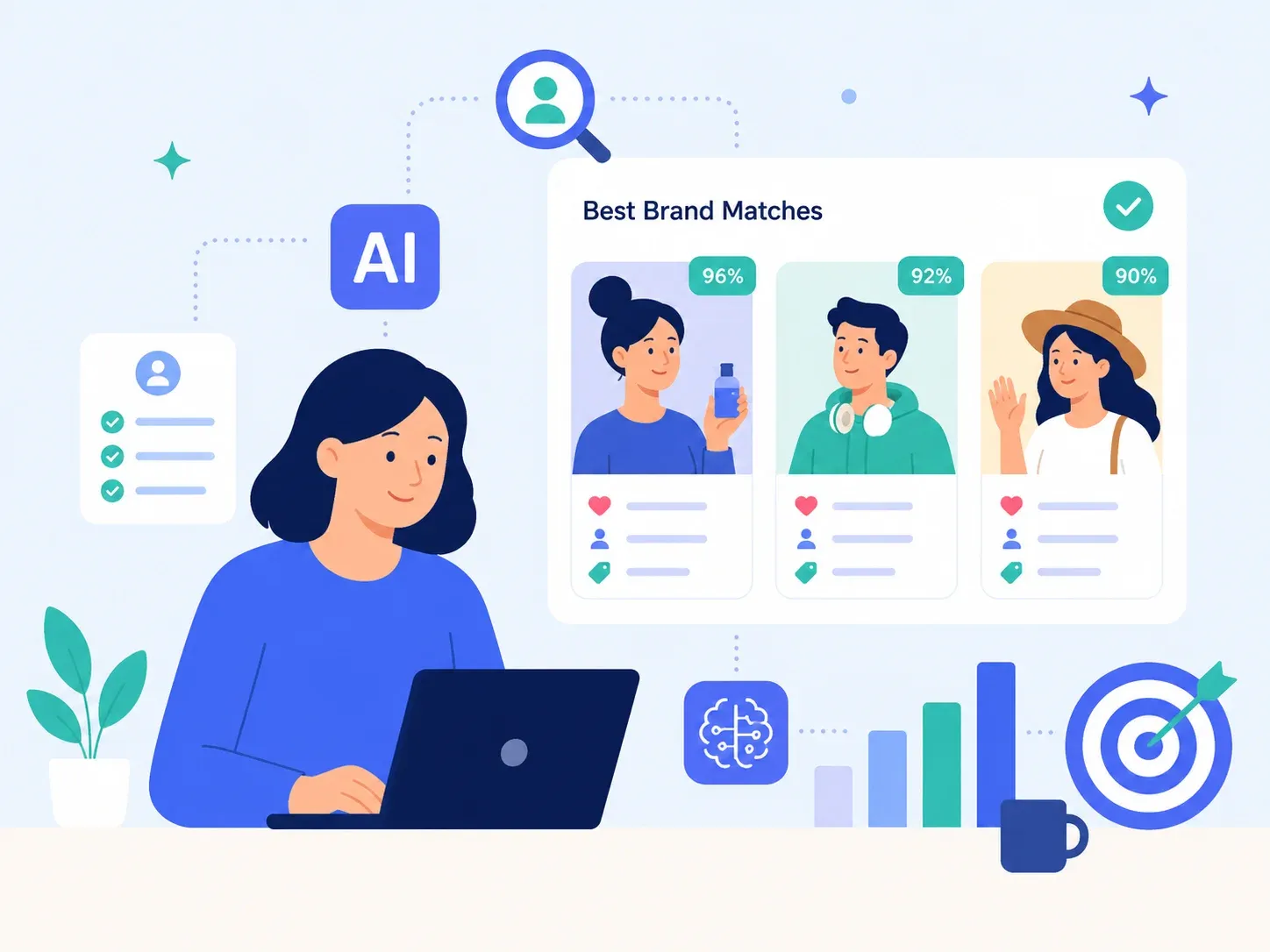

In 2026, brands face growing challenges in finding aligned, authentic creators amid a crowded social landscape, with manual influencer search leading to misaligned partnerships and wasted budgets. AI-powered influencer discovery fixes this via data-driven matching. This article explores traditional search flaws, AI solution benefits, and key tool features for better brand-creator matches.
Why Traditional Influencer Search No Longer Works
Manual Searching Is Slow and Limited
Finding the right creator by hand is the bottleneck nobody budgets for. Teams still scroll hashtags, paste handles into spreadsheets, and lean on creator lists that went stale months ago.
The math doesn't work. Vetting even a shortlist of 20 creators can eat most of a day once you check engagement quality, audience overlap, and past brand work. Time costs are significant: initial identification and preliminary screening routinely consume two to three hours per 20–30 prospects.
The ground keeps moving, too. A creator's audience, content mix, and reach shift as platform algorithms change, so last quarter's list rarely reflects who's actually performing now.
There's a quieter cost as well. Manual sourcing pushes teams toward names they already recognize. The emerging niche creators, often the ones driving the strongest engagement, never surface.
Follower Counts Don't Guarantee Brand Fit
Follower count is the metric everyone defaults to and the one that misleads most. A big number tells you reach. It tells you nothing about whether that audience cares about your category, trusts the creator, or ever converts.
Plenty of high-follower accounts carry diluted, generic audiences with no real tie to a brand's niche or messaging. Worse, raw totals hide fake followers, inactive accounts, and purchased engagement that quietly inflate a profile.
So which actually performs? Here's the contrast we see play out repeatedly:
| Dimension | Macro-influencer (1M+) | Niche micro-influencer (~10K) |
|---|---|---|
| Reach | Broad, mass audience | Narrow, targeted |
| Audience relevance | Often diluted | Tightly matched to a topic |
| Engagement rate | Typically lower | Typically higher |
| Follower signal alone | Weak | Strong when the niche aligns |
| Authenticity risk | Fakes inflate the total | Easier to verify |
A creator with 10,000 loyal, on-topic followers often beats one with millions of mismatched ones. Reach without relevance is just a number.
Poor Matches Lead to Low Campaign ROI
Every mismatch shows up in the results. When a creator's tone, audience, or values clash with your brand, the sponsored post reads as exactly that: paid and off-key. Engagement drops, trust erodes, and click-through and conversion follow it down.
The damage compounds. Repeated bad pairings send mixed signals to the same target audience, and brand recognition suffers for it.
The pattern is a cycle: budget goes out, weak partnerships come back, and little durable growth or customer retention is left to show for the spend.
Manual workflows and vanity metrics keep feeding that cycle. That's why brands are shifting toward AI-powered influencer discovery, an approach that surfaces creators genuinely aligned with the brand instead of the ones who simply look big on paper.
How AI-Powered Influencer Discovery Platforms Improve Matching
The fix for slow, surface-level search isn't more effort. It's better data. Modern influencer discovery platforms like Scrumball read the signals that actually predict fit: audience quality, content relevance, and whether engagement is real or inflated.
That moves sourcing off vanity metrics and onto evidence. What used to be guesswork becomes a process you can repeat and scale.
AI-Based Audience and Content Analysis
Good matching starts with seeing the full picture of a creator, not a follower count and a vibe. Scrumball analyzes each influencer across 90+ dimensions, covering niche relevance, content tone, posting consistency, brand sentiment, and the makeup of their audience.
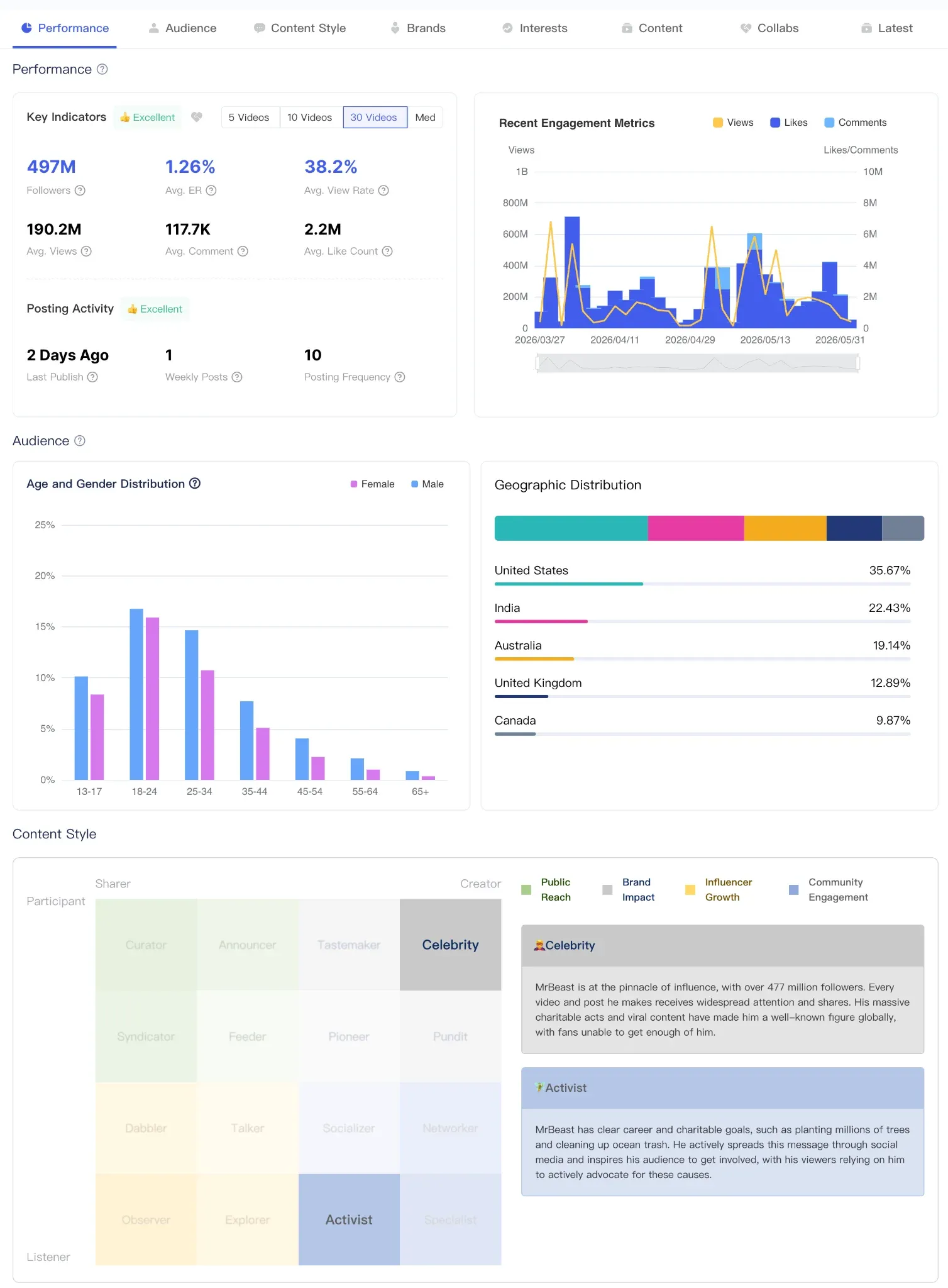
The audience reads goes well past age, location, and gender. It looks at how the audience actually behaves: their interest tags, their own personality, their engagement patterns, and whether their interactions are genuine or padded.
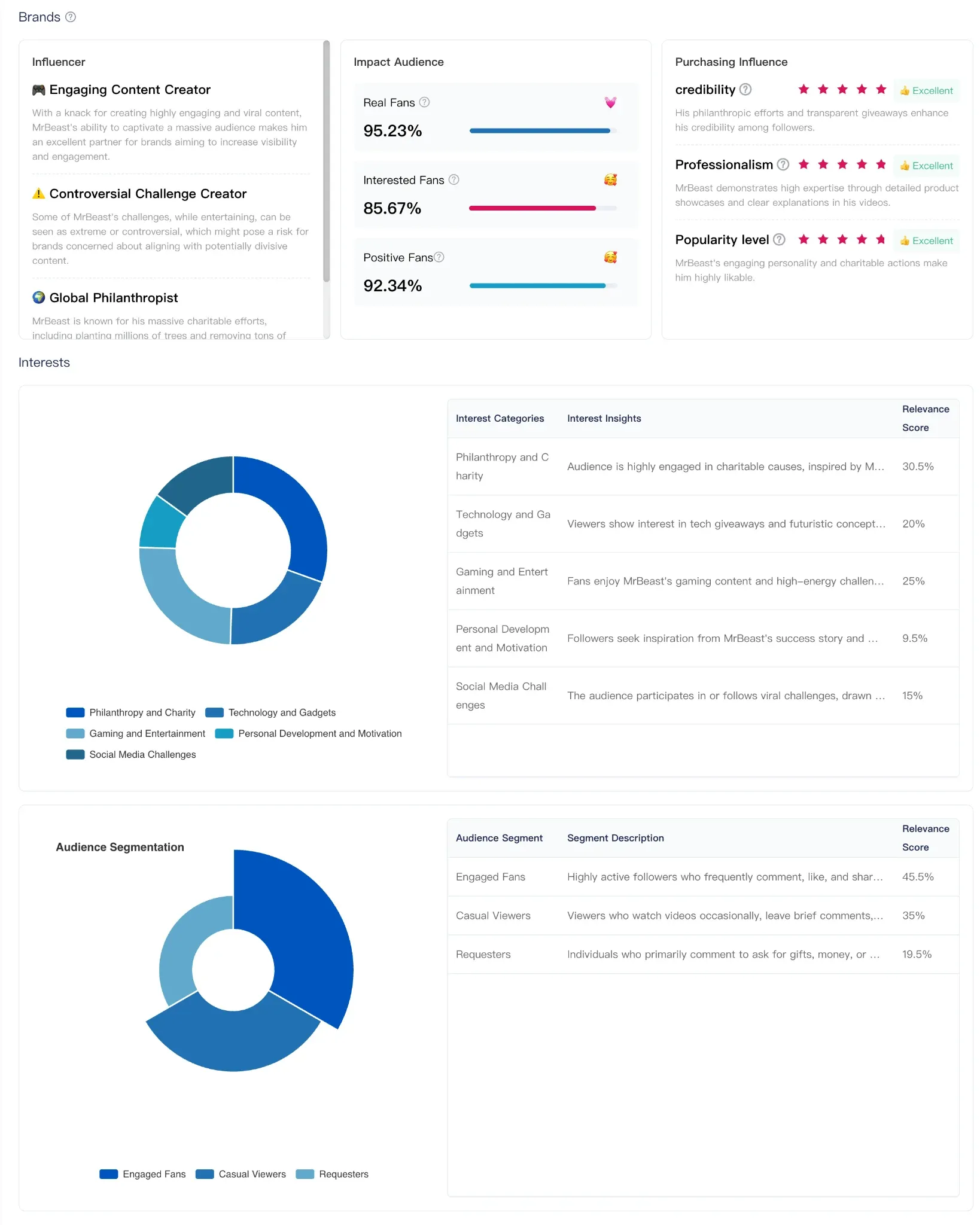
From there, the platform surfaces the alignment signals that matter. Think consistent on-topic content, organic brand mentions, and a positive audience lean toward products in your category.
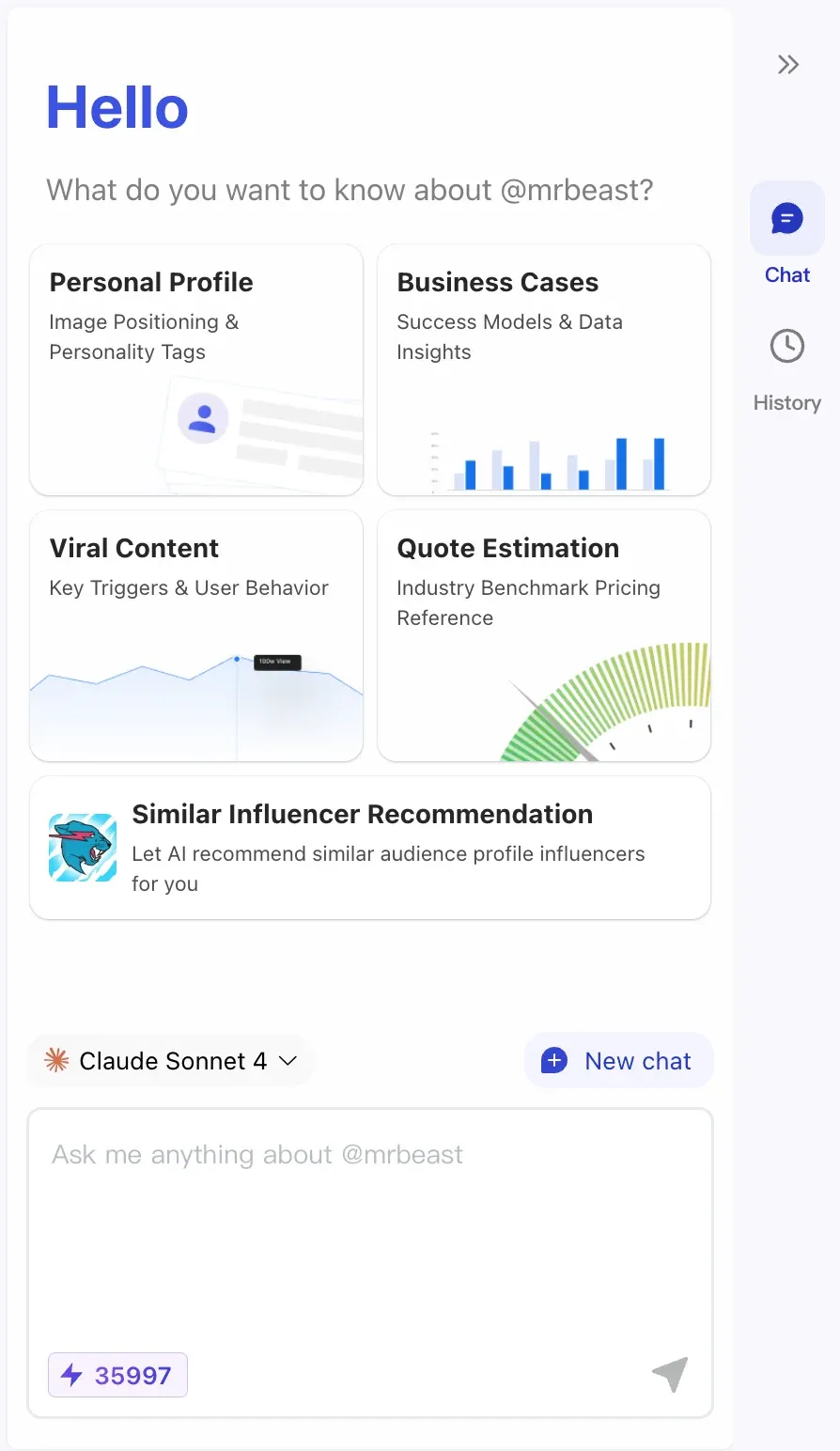
When you want a fast answer instead of a full report, the AI chat sidebar handles it. Ask a question about a creator in plain language and get the analysis back in seconds, no more manual digging through tabs.
Smarter Influencer Matching and Recommendations
This is where the data turns into a shortlist. Scrumball's recommendations map to your actual goal, whether that's awareness, lead generation, or direct conversions, and the models sharpen over time by learning from past campaign performance.
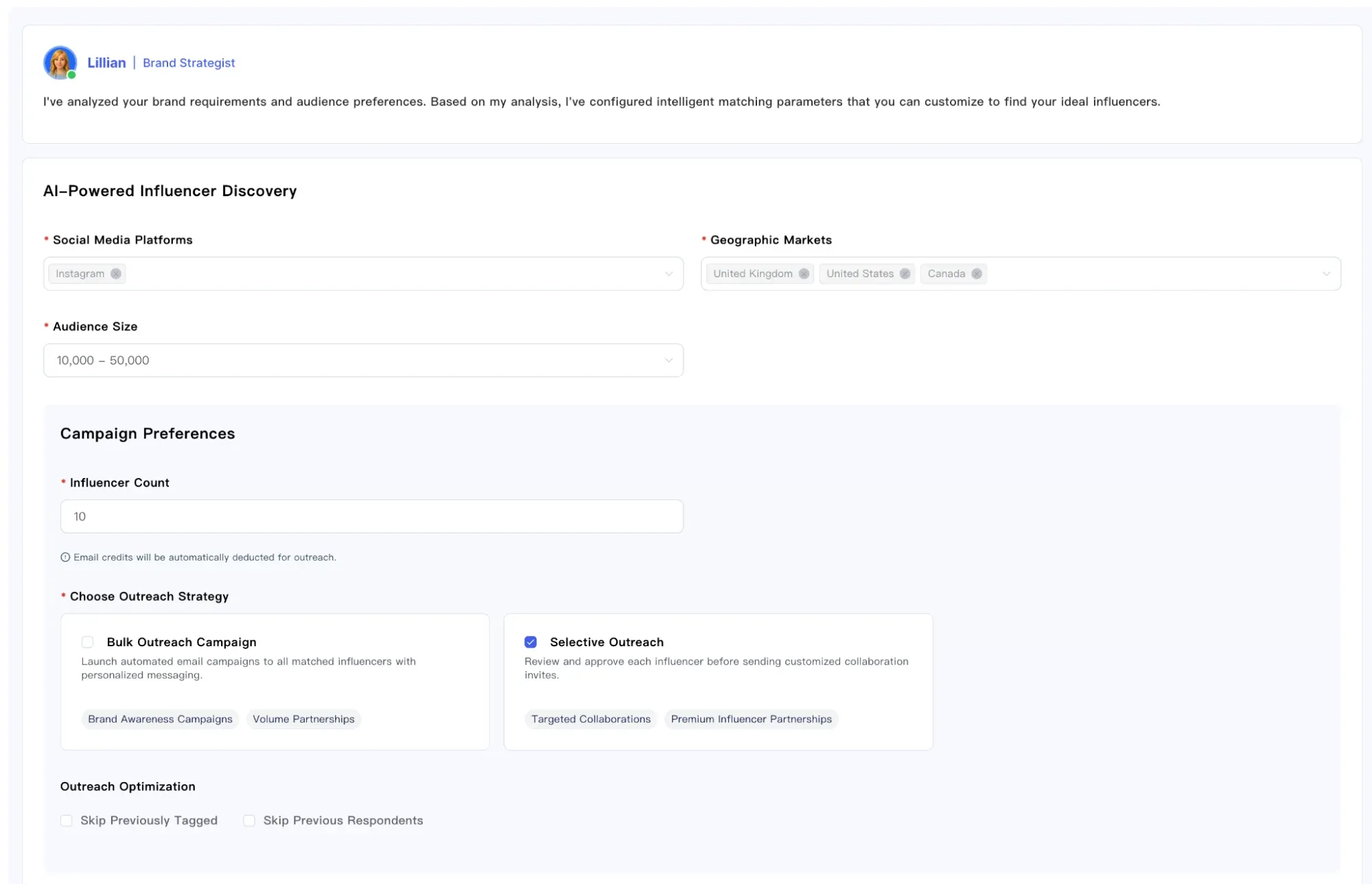
For hands-off matching, the fully automatic AI agents, Lillian and Hunter, do the legwork end to end. Feed it your product details and campaign brief, and it pairs creators to your brand based on both the influencer and their audience, weighing self-profile and follower fit together.
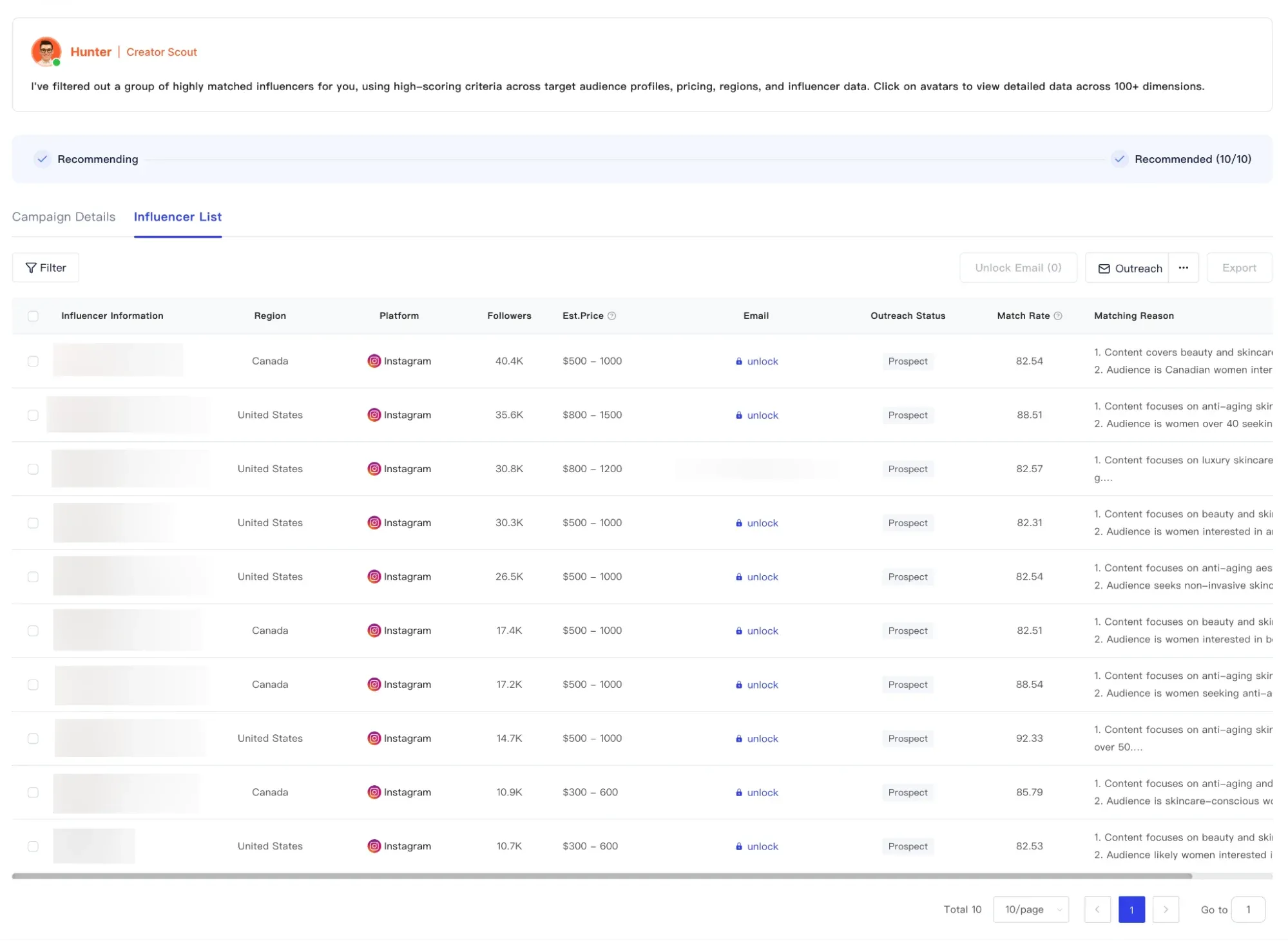
The payoff is practical. You skip the manual guesswork, cut research time nearly 60%, and start from a list of creators who already fit, not a thousand who might.
Why Brands Are Moving Toward All-in-One Influencer Marketing Platforms?
The shift is away from stitching together separate tools and toward one system that runs the whole campaign. When discovery, outreach, management, and reporting live in different apps, data fragments, and work slows. A unified platform closes those gaps.
Four things change when everything sits in one place:
- Discovery and management stop being separate jobs. You source creators, vet profiles, open conversations, and track long-term partnerships in the same interface. No more exporting a shortlist into a spreadsheet that's outdated by the next campaign.
- Performance becomes visible in real time. Built-in analytics track engagement, reach, conversions, and audience growth across every partnership at once, so optimization is based on what's actually happening, not a report assembled weeks later.
- Matching speeds up. Embedded AI takes a campaign brief and returns qualified creators in minutes, which moves negotiations and launch timelines forward instead of stalling them in research.
- Workflows scale without losing control. Running a dozen creators across several simultaneous campaigns stays manageable when oversight is centralized rather than scattered across tools and teammates.
Key Features to Look for in Influencer Discovery Tools
High-quality influencer discovery tools come with tailored features to boost matching accuracy and streamline end-to-end creator campaigns.
Advanced Search Filters
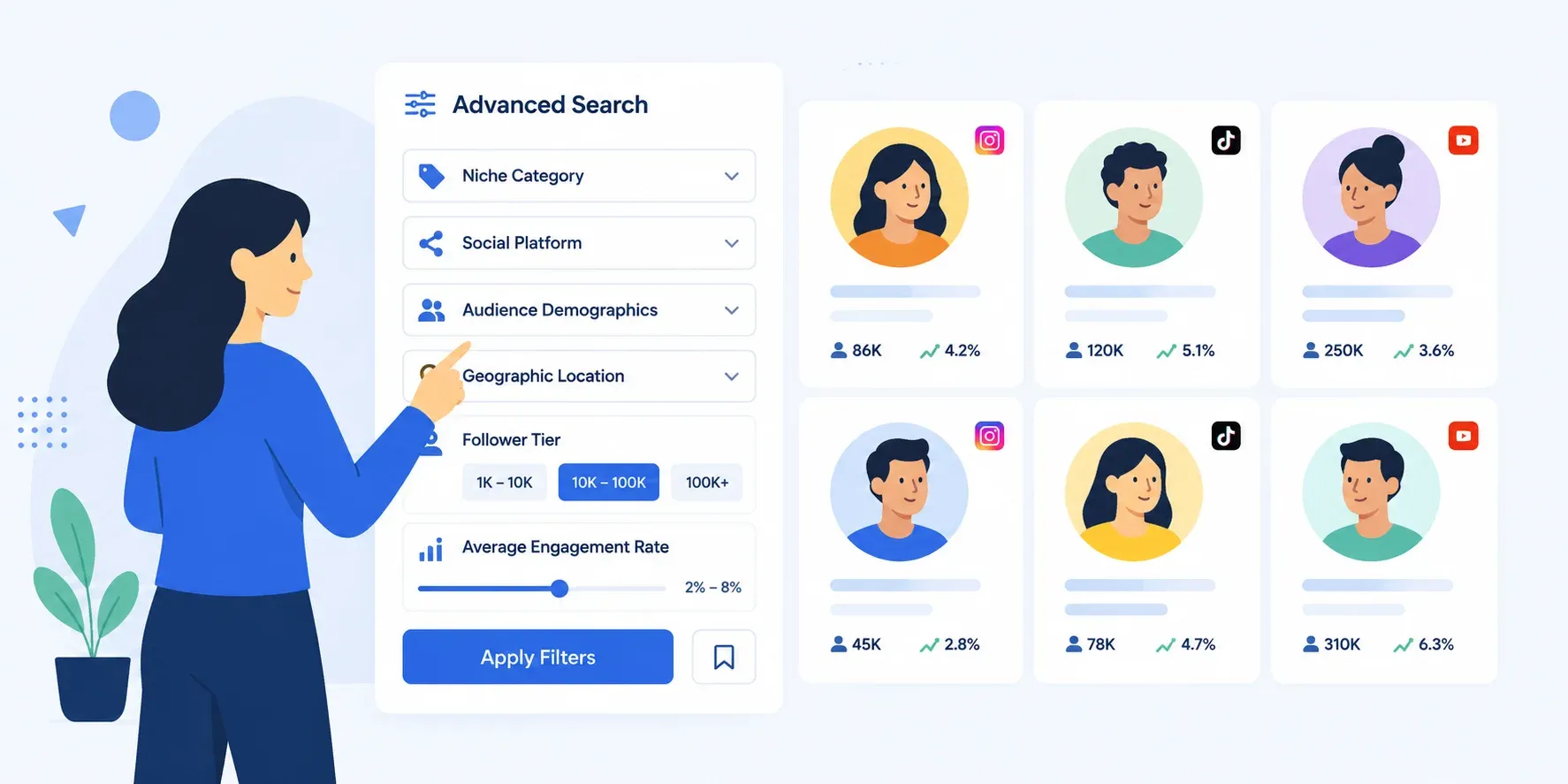
Top-tier influencer discovery tools offer granular, customizable search filters to refine creator sourcing for hyper-specific brand needs. Core filters include niche category, social platform, audience demographics, geographic location, follower tier, and average engagement rate.
These detailed filters eliminate irrelevant creator results, ensuring that brands evaluate only candidates who fit their campaign scope and target audience. Custom filter sets also save reusable search templates for recurring marketing campaigns, further boosting workflow efficiency.
AI-Powered Matching
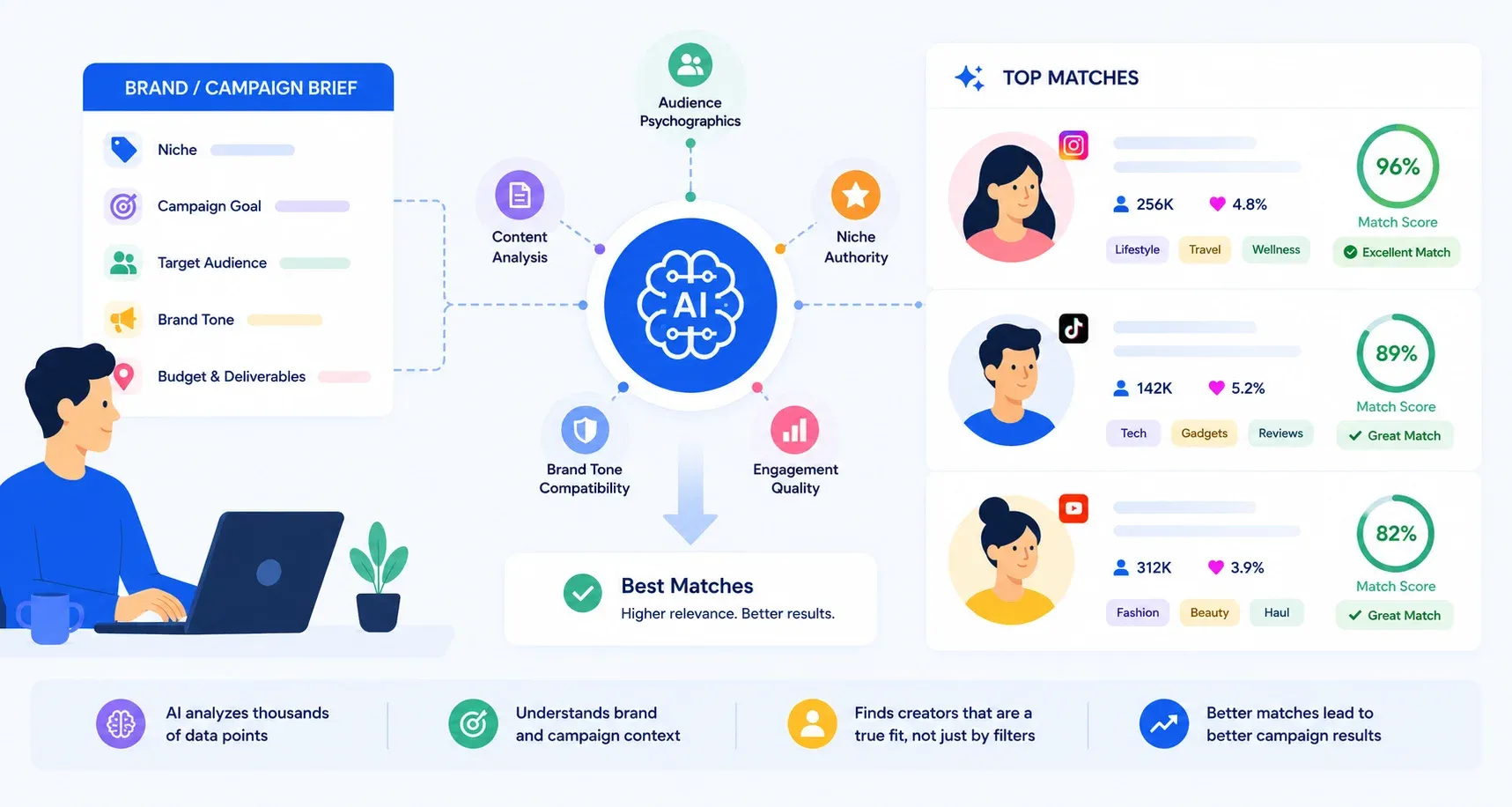
AI-driven matching technology is the cornerstone of effective modern influencer discovery. Unlike static, filter-based searches, AI algorithms analyze the contextual alignment among brand identity, campaign goals, and creator content. They evaluate nuanced factors like brand tone compatibility, audience psychographics, and niche authority.
This intelligent matching delivers far higher accuracy than manual sorting, reducing mismatched partnerships and improving overall campaign performance for brands of all sizes.
Influencer Management Workflows
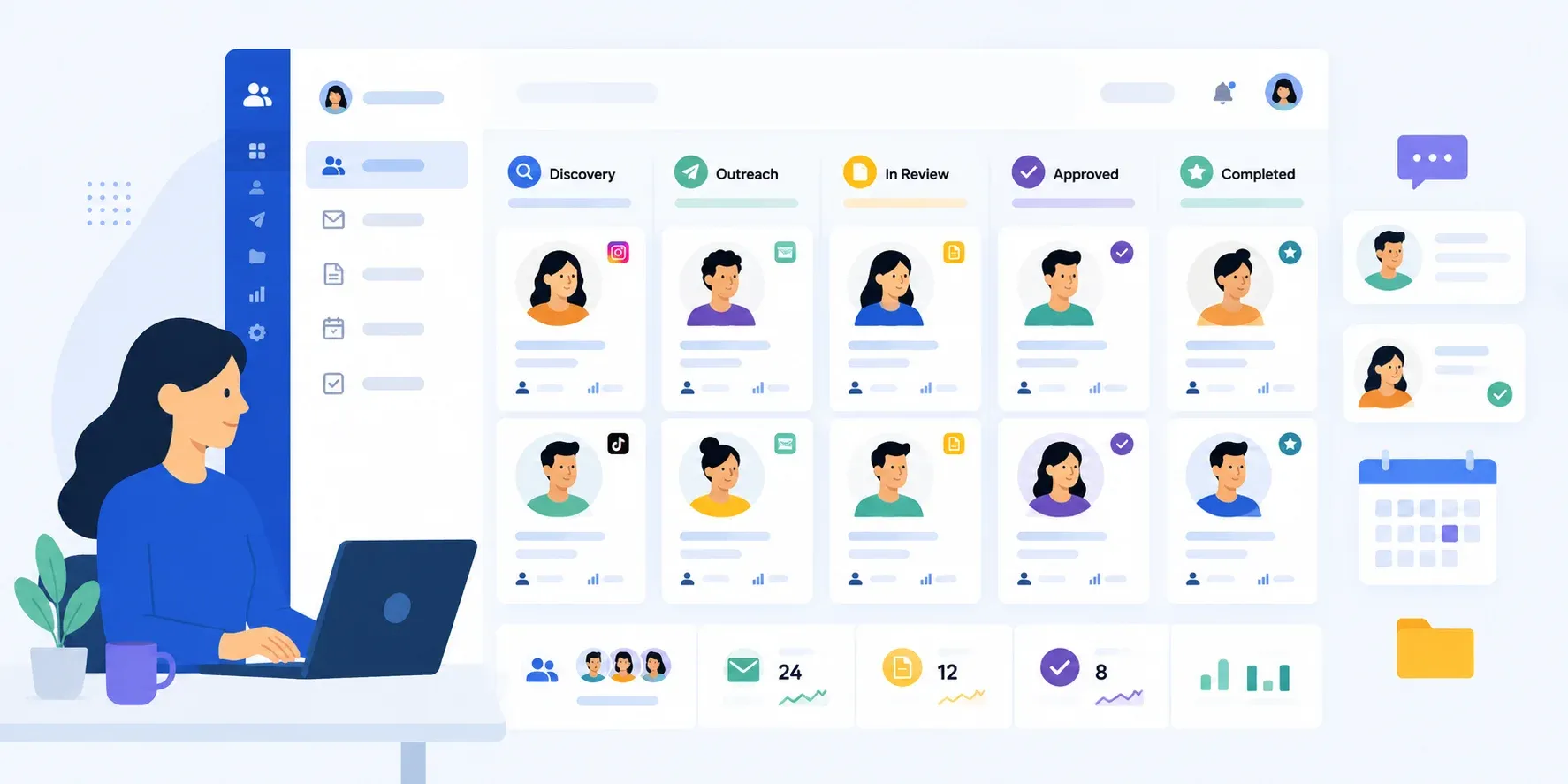
Robust influencer management features streamline end-to-end creator collaboration and nurture long-term relationships. These tools include built-in messaging systems, contract tracking, content approval workflows, and partnership calendar management.
Centralized management functionality helps brands maintain organized creator databases, nurture repeat partnerships, and build loyal creator networks that deliver consistent brand alignment over time.
Campaign Performance Tracking and Reporting
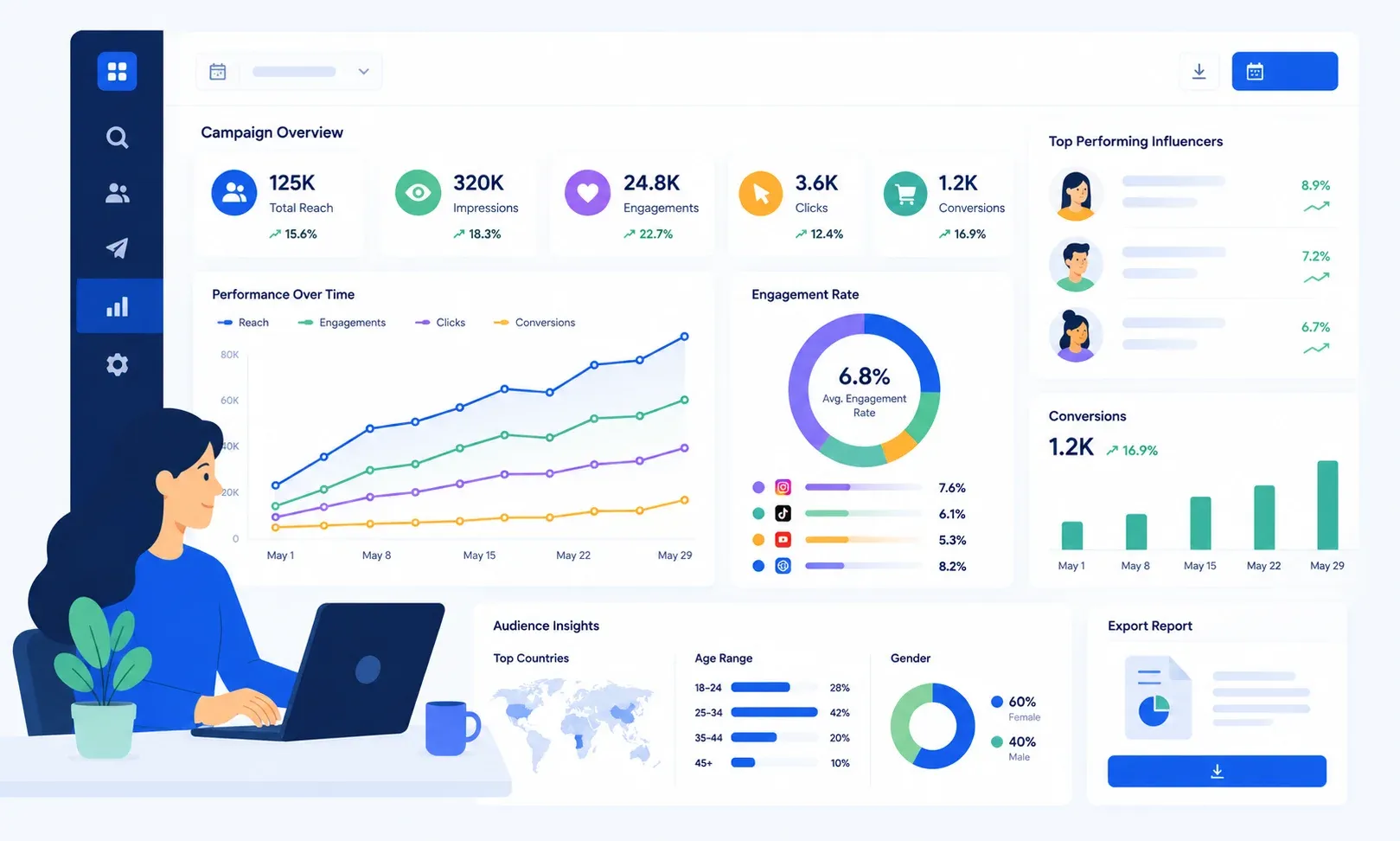
Comprehensive analytics dashboards are essential for measuring influencer campaign success and proving marketing ROI. Premium influencer discovery tools integrate real-time performance tracking for key metrics, including engagement rate, reach, impressions, click-through rates, and conversion data.
Automated customizable reports simplify post-campaign analysis, allowing marketers to identify top-performing creators, optimize targeting strategies, and refine future influencer discovery criteria.
Fraud Detection and Audience Quality Analysis
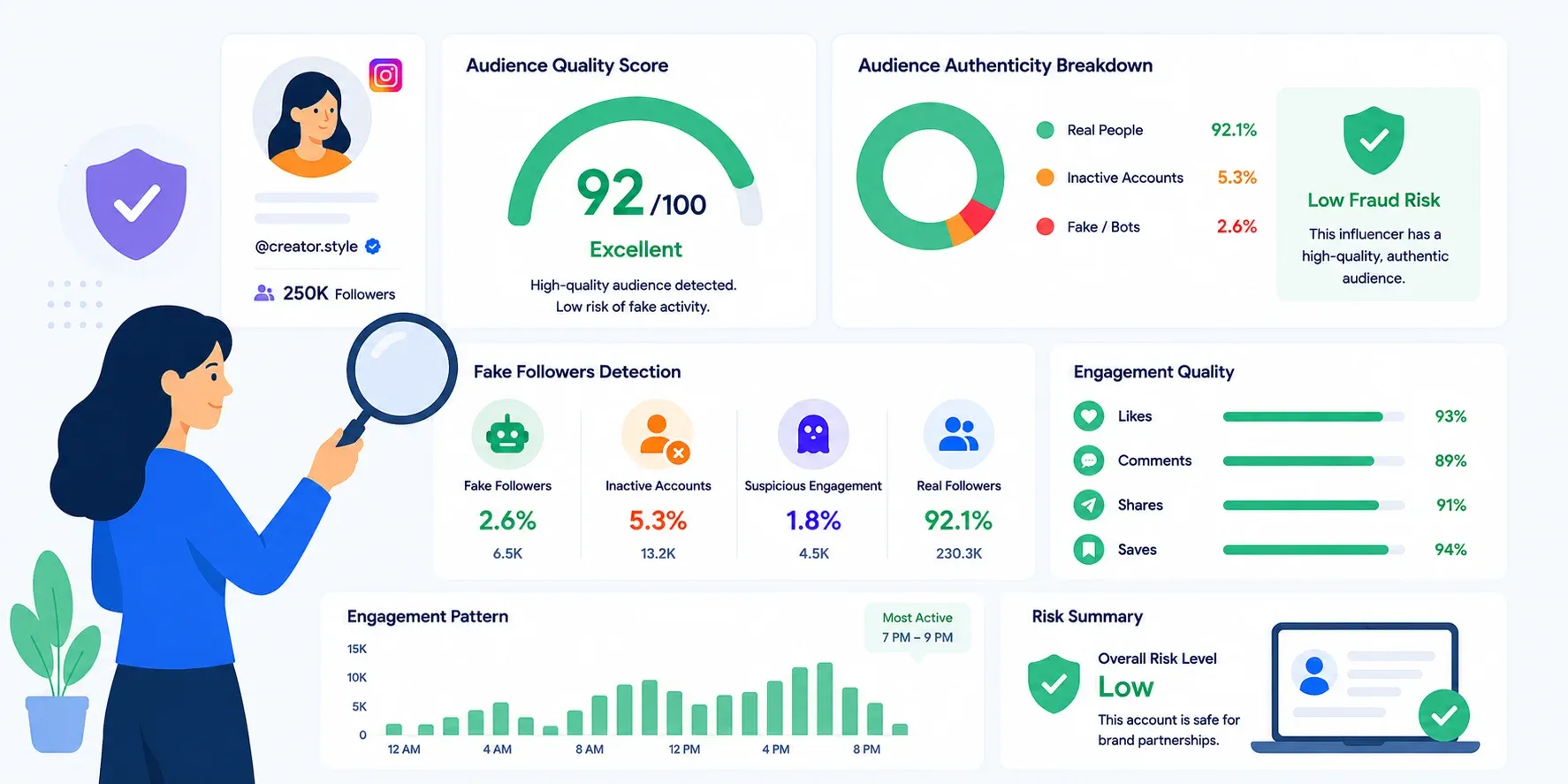
Audience verification and fraud detection features protect brands from low-quality, inauthentic creator partnerships. AI-powered tools scan creator audiences for fake followers, bot engagement, and inactive accounts to validate audience authenticity and quality.
This functionality eliminates risky creator collaborations, improves the reliability of influencer selection, and ensures marketing budgets are invested in genuine, high-converting audience connections.
Brands seeking a platform that checks all these critical feature boxes can turn to Scrumball, a comprehensive AI-powered solution built for modern influencer marketing. It consolidates precise influencer discovery, intuitive creator management, real-time performance analytics, and reliable fraud detection in one unified system, helping brands execute aligned, scalable, and ROI-focused influencer campaigns effortlessly.
FAQs about AI Influencer Discovery & Brand Matches
How does an influencer discovery tool work?
Influencer discovery tools leverage AI algorithms, multi-dimensional search filters, and cross-platform audience data analysis to identify brand-relevant creators. These systems scan millions of social media profiles, evaluate the relevance of content niches, verify audience quality, and match creators to specific campaign goals, replacing slow, manual research with automated, accurate sourcing.
How to choose an influencer discovery platform for business?
Brands should evaluate influencer discovery tools based on four core criteria: AI matching accuracy, comprehensive cross-platform data coverage, integrated workflow features, and robust performance tracking capabilities. Prioritize all-in-one solutions that combine discovery, management, and analytics to maximize operational efficiency and campaign ROI.
How to find influencers or creators that match my brand?
Brands should prioritize data-driven alignment signals over follower size alone. Focus on creator niche relevance, audience demographic and psychographic alignment, consistent high-quality engagement, and authentic content tone that matches brand values. AI-powered influencer discovery tools streamline this process by quantifying alignment metrics, enabling objective creator selection.
What platforms support influencer discovery across multiple social networks?
Most modern AI-powered influencer discovery tools support cross-platform creator search across TikTok, Instagram, and YouTube, the three highest-performing influencer marketing channels. All-in-one solutions like Scrumball further simplify multi-channel campaigns by unifying cross-platform influencer discovery, creator comparison, and performance tracking within a single centralized workflow for seamless multi-network campaign management.
Can AI replace manual influencer research entirely?
Not entirely, and the best approach is hybrid. AI handles the heavy lifting, cutting influencer vetting time by 50–70% and scanning millions of profiles in seconds, but a final human check on your shortlist still adds value for tone, context, and brand nuance. With 72% of brands citing influencer discovery as a top challenge, the winning workflow is AI-first sourcing to surface qualified creators at scale, followed by a quick manual review of the best fits.
Are micro-influencers better than macro-influencers for brand matching?
Often yes, when relevance matters more than raw reach. Micro-influencers with 10K–50K genuine followers tend to outperform larger accounts on engagement, because their audiences are tightly matched to a niche and trust their recommendations. Macro-influencers still suit broad awareness, but for conversion-focused campaigns, a smaller on-topic creator usually delivers stronger ROI. The right choice depends on your goal.
How much do influencer discovery tools cost, and are they worth it?
Pricing ranges widely, from around $39/month for an entry-level influencer platform to customized pricing for enterprises, scaling with data coverage and features. The investment pays off fastest for brands running multiple campaigns at once, where automated discovery compounds. Influencer marketing returns roughly $5.78 for every $1 spent on average, and better creator matching is the biggest lever for pushing that number higher.