

A sponsored post is paid content published on a creator's, publisher's, or brand's channel to promote a product, service, or campaign. In influencer marketing, it usually means a brand pays a creator to share content in the creator's own style, with a clear disclosure such as "ad," "sponsored," or "paid partnership."
That simple definition matters more in 2026 because sponsored posts now sit between influencer marketing, paid social, native advertising, and social search. A single post can drive awareness, clicks, sales, reusable creative, and search visibility when it is planned well.
This guide explains what sponsored posts are, how they differ from related formats, where they appear, what deliverables brands usually request, how much they cost, and how to run them without losing trust.
What Is a Sponsored Post?
A sponsored post is a type of online marketing where a brand pays for content that looks and feels native to the platform where it appears. In influencer campaigns, the creator publishes the content on their own channel and integrates the brand into a post, video, story, article, or livestream.
Buffer's sponsored post definition covers both common uses of the term: brands can pay platforms to promote posts, and brands can pay influencers to publish branded content. For most influencer marketing teams, the second meaning is the more useful one.
Sponsored Post Definition
In simple terms, a sponsored post is paid creator content. An influencer, blogger, publisher, or creator receives money, free products, affiliate compensation, or another benefit in exchange for creating or publishing promotional content.
The content should still sound like the creator. That is the point. A strong sponsored post does not copy the brand's ad script. It connects a product to the creator's real use case, audience expectations, and content format.
Where Sponsored Posts Usually Appear
Sponsored posts can appear anywhere people follow creators or consume editorial-style content:
- Instagram: Feed posts, carousels, Reels, and Stories with product placement, creator commentary, and disclosure tags.
- Facebook: Sponsored content shared through pages, groups, creator profiles, or boosted posts aimed at targeted audiences.
- TikTok: Short videos where creators fold the product into trends, tutorials, challenges, reviews, or everyday routines.
- YouTube: Sponsored segments, dedicated reviews, tutorials, Shorts, or creator-read integrations inside longer videos.
- Blogs: Long-form articles, product reviews, gift guides, comparisons, and tutorials that include the brand naturally.
- LinkedIn: B2B creator posts, newsletters, thought-leadership content, and employee or expert-led paid partnerships.
Sponsored Post vs Sponsored Content, Native Ads, and Boosted Posts
People often use these terms interchangeably, but they are not identical. The differences matter when you brief creators, set budgets, and measure performance.
Sponsored Post vs Sponsored Content
Sponsored content is the broader category. It can include articles, videos, newsletters, podcasts, social posts, or editorial packages paid for by a brand. A sponsored post is usually a single post within that broader category.
For example, a paid Instagram Reel from a creator is a sponsored post. A full editorial feature on a publisher's website is sponsored content. Both need disclosure, but the format, review process, usage rights, and metrics may differ.
Sponsored Post vs Native Advertising
Native advertising is paid media designed to match the look and feel of the platform where it appears. Sponsored posts can be native-style content because they blend into feeds, blogs, or video channels, but not all native ads are creator sponsorships.
A recommended article unit on a news site, a promoted listing, and a paid creator Reel can all feel native. Only the last one is an influencer sponsored post.
Sponsored Post vs Boosted Post
A boosted post is usually brand-owned content that a company pays a platform to distribute to a wider audience. An influencer sponsored post is creator-owned content that a brand pays the creator to publish.
Many campaigns use both. A creator publishes the sponsored post, then the brand negotiates usage rights to promote that content as an ad. That can work well because creator-made assets often feel more natural than polished brand ads.
Why Brands Use Sponsored Posts in 2026
Brands use sponsored posts because trusted creators can introduce products in places where audiences already pay attention. That is especially useful as paid ad costs rise, organic reach shifts, and buyers increasingly research products through social platforms and creator content.
The channel is no longer experimental. Sprout Social's 2026 influencer marketing statistics report that 86% of consumers make a purchase inspired by an influencer at least once a year, and 80% of marketers say influencer marketing is essential to their social strategy.
- Authentic brand promotion: Influencers act as trusted voices for the brand. Sponsored content feels stronger when the creator explains why the product fits their life, workflow, or audience.
- Targeted audience reach: Brands can work with creators whose followers match a specific niche, location, interest, or buyer profile instead of paying for broad reach that may never convert.
- Higher engagement potential: Sponsored posts invite comments, saves, shares, and questions because they are part of a creator's normal content stream, not a standalone banner ad.
- Reusable campaign content: Brands can repurpose sponsored content across paid social, email, websites, landing pages, sales decks, and product pages when usage rights are negotiated upfront.
- Search and discovery value: Creator content can support branded search demand, social search, and discoverability. Sprout Social notes that influencer marketing can support SEO through content visibility, brand mentions, and audience engagement.
For B2B and ecommerce teams, the practical value is simple: sponsored posts can generate awareness and content at the same time. The best campaigns treat them as measurable assets, not one-off shoutouts.
Examples of Sponsored Posts
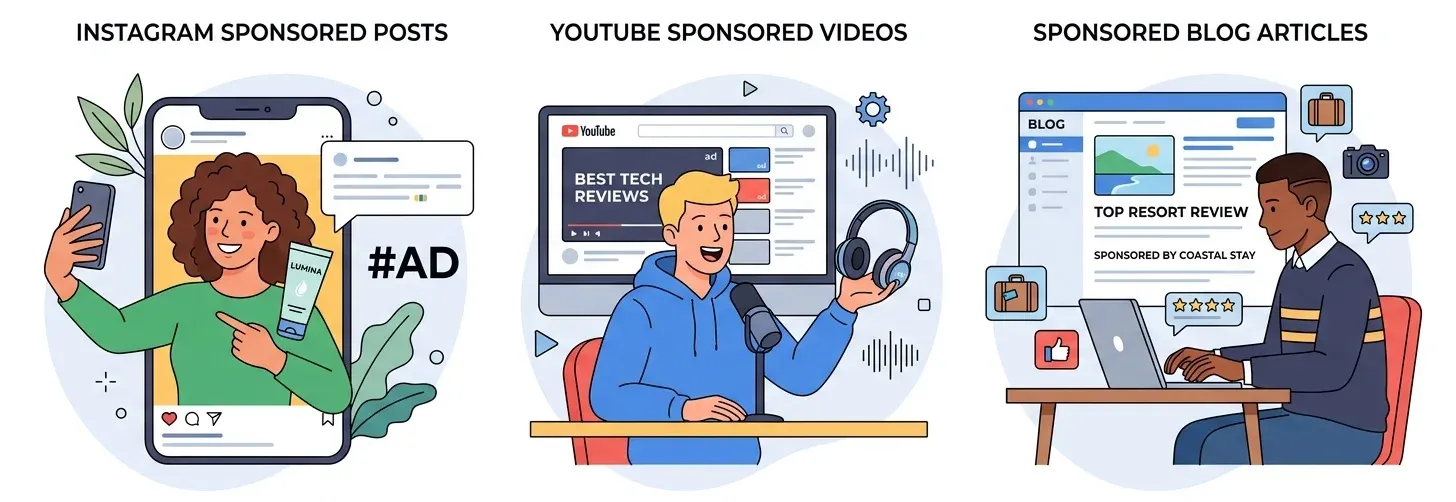
Sponsored post examples vary by platform, but the pattern is consistent: the creator introduces the brand in a way that fits their normal content, gives the audience a reason to care, and discloses the relationship clearly.
Instagram Sponsored Posts
A skincare influencer might publish a Reel showing their nighttime routine and explain how a brand's moisturizer fits into it. The caption may include #ad, while the post itself uses a paid partnership label.
The best Instagram sponsored posts do more than show packaging. They show texture, results, use cases, objections, and audience questions. Carousels can work well for comparisons, while Reels often work better for demonstrations.
TikTok Sponsored Videos
On TikTok, sponsored content usually needs a fast hook. A creator might open with a relatable problem, show the product in action, and end with a simple next step such as trying a code or visiting a link.
This format rewards natural delivery. Overly scripted content can feel out of place, while creator-led storytelling can make a sponsorship feel like a useful recommendation.
YouTube Sponsored Videos
Tech reviewers, educators, gamers, and lifestyle creators often integrate sponsorships into longer videos. They may include a 30 to 90 second brand segment, a product demonstration, a discount code, or a dedicated review.
YouTube sponsored posts are useful when a product needs explanation. They can support tutorials, comparisons, walkthroughs, and high-consideration purchases better than a single static image.
Sponsored Blog Articles
Bloggers create long-form sponsored articles such as travel reviews, recipes, gift guides, software comparisons, or product tutorials. A travel blogger, for instance, might write a sponsored hotel review with photos, personal notes, and booking context.
Blog content can keep working after the social post fades. When optimized for search, a sponsored article may continue attracting visitors who are actively comparing options.
Common Sponsored Post Deliverables
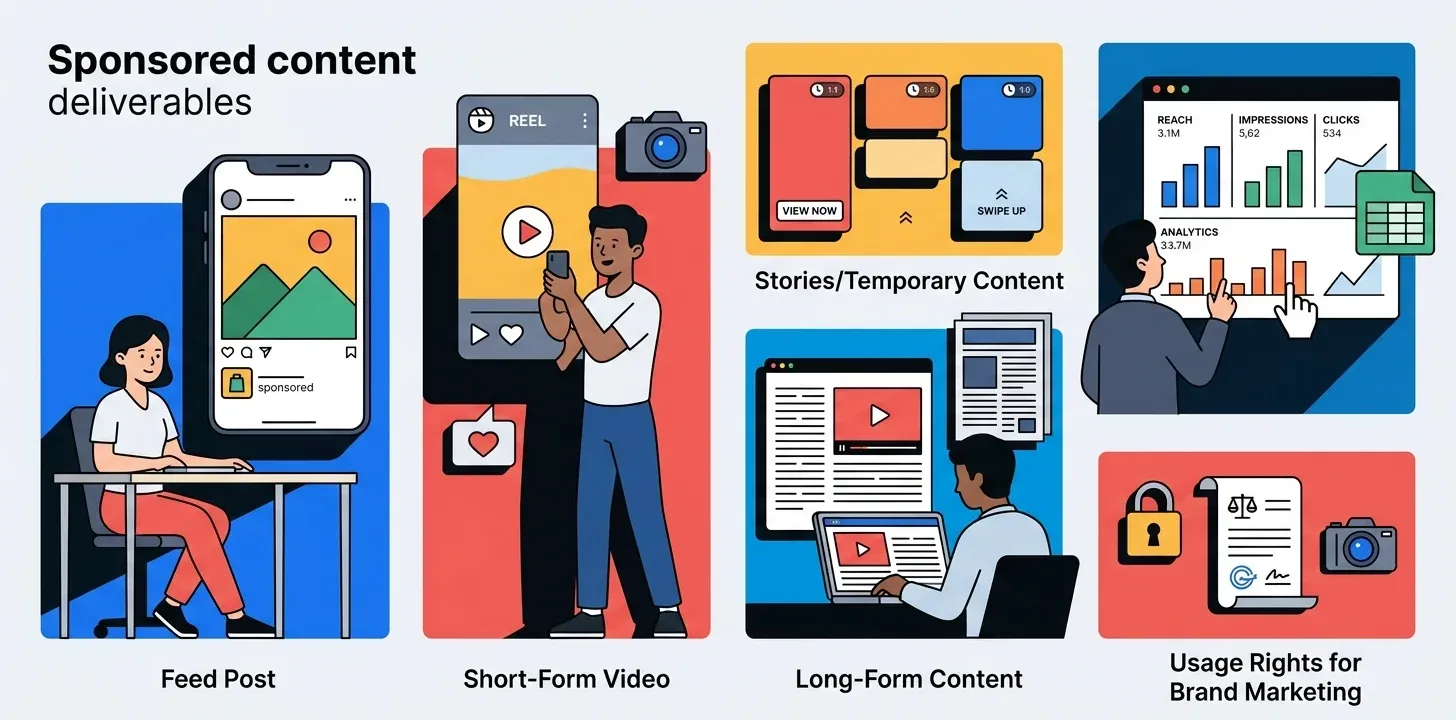
Sponsored post deliverables define exactly what the creator will produce, where it will appear, when it will go live, and what the brand can do with the content afterward. Clear deliverables protect both sides.
- Social media feed posts: A set number of posts on the creator's main feed, usually with product placement, approved messaging, disclosure tags, and campaign links.
- Short-form video content: TikTok clips, Instagram Reels, YouTube Shorts, or similar videos designed to hook attention quickly and show the product in context.
- Stories or temporary content: Instagram Stories, Facebook Stories, or Snapchat posts with link stickers, polls, limited-time offers, or behind-the-scenes content.
- Long-form content: YouTube videos, blog articles, livestreams, newsletters, reviews, or tutorials that explain the product in greater depth.
- Usage rights: Permission for the brand to reuse the creator's content in ads, emails, social posts, landing pages, or sales materials.
- Exclusivity terms: Limits on whether the creator can work with competing brands during or after the campaign.
- Performance reports: Screenshots or exported data covering impressions, reach, engagement, clicks, saves, conversions, and other agreed metrics.
Usage rights, exclusivity, review rounds, and payment timing should be written into the agreement. Influencer agreement terms often cover deliverables, approval rights, intellectual property, compliance, compensation, and termination.
How Sponsored Post Collaborations Work
Sponsored post collaborations work best when the process is clear before the creator starts filming, writing, or editing. A good workflow reduces revision loops and protects the creator's voice.
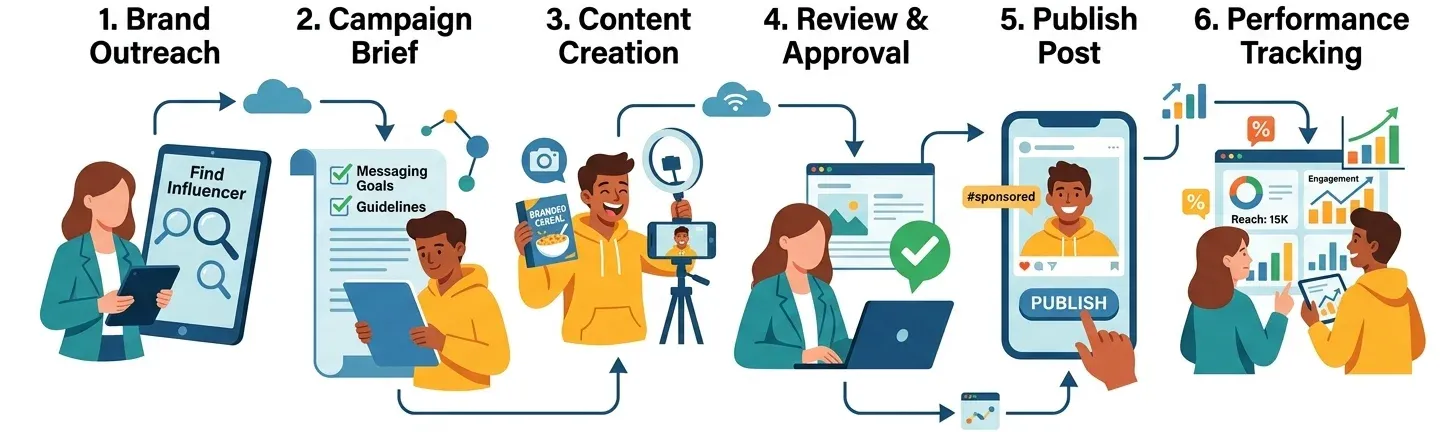
- Brand outreach: Brands find creators whose audience fits the campaign, then contact them with a relevant partnership idea.
- Creator vetting: The brand reviews audience fit, engagement quality, content history, past sponsorships, brand safety, and signs of fake followers.
- Campaign brief: The brief explains goals, key messages, required claims, content format, disclosure language, posting dates, links, coupon codes, and creative boundaries.
- Content creation: The creator develops the post in their own style while meeting the campaign requirements. This may include photos, videos, scripts, captions, or a blog draft.
- Review and approval: The brand checks accuracy, compliance, usage rights, and required messaging. The process should avoid rewriting the creator into a brand ad.
- Publishing: The creator publishes the sponsored post on the agreed platform, at the agreed time, with clear disclosure and tracking links where relevant.
- Campaign performance tracking: The brand and creator review results. Performance tracking helps connect impressions, reach, engagement, clicks, conversions, and sales back to the campaign.
Scrumball fits naturally into this workflow when teams need to manage discovery, outreach, campaign coordination, and reporting in one place instead of running partnerships through scattered spreadsheets and inboxes.
How Much Do Sponsored Posts Cost?
Sponsored post cost depends on creator size, platform, engagement, niche, format, production effort, usage rights, exclusivity, and campaign timeline. Treat rate charts as planning benchmarks, not fixed prices.
According to 2026 influencer rate benchmarks, nano creators may charge about $50-$300 per post, micro creators about $200-$2,500, mid-tier creators about $1,500-$5,000, macro creators about $5,000-$10,000 or more, and mega creators $10,000-$50,000 or more.
| Creator tier | Typical follower range | Common planning range per post |
|---|---|---|
| Nano influencer | 1,000-10,000 | $50-$300 |
| Micro influencer | 10,000-100,000 | $200-$2,500 |
| Mid-tier influencer | 100,000-500,000 | $1,500-$5,000 |
| Macro influencer | 500,000-1 million | $5,000-$10,000+ |
| Mega influencer | 1 million+ | $10,000-$50,000+ |
The original article's range still works for many smaller campaigns: micro-influencers may charge $50-$500 per post, mid-tier creators $500-$5,000, and top-tier influencers $10,000 or more. In 2026, though, rates can climb quickly when video production, paid usage, or competitive niches are involved.
What Changes Sponsored Post Pricing?
- Audience size and follower count: Larger audiences usually cost more, but follower count should never be the only pricing input.
- Engagement quality: Comments, saves, shares, click behavior, and audience trust can matter more than raw reach.
- Platform and format: Video, multi-post packages, livestreams, and long-form content often cost more than a single static post.
- Industry or niche: Finance, technology, beauty, health, and B2B categories may cost more because the audience value and compliance burden are higher.
- Usage rights and exclusivity: A brand should expect to pay more if it wants to run the creator's content as ads or block competitor work.
Sponsored Post Disclosure Rules
Sponsored posts need clear disclosure. This is not just a platform preference. In the United States, the FTC says creators must disclose material connections with brands when those connections are not obvious to the audience.
A material connection can include payment, free products, discounts, gifts, affiliate commissions, employment, family relationships, or any benefit that could affect how people evaluate the recommendation. The FTC Endorsement Guides explain how these rules apply to endorsements.
The FTC's disclosure guidance for influencers says disclosures should be hard to miss and easy to understand. Short labels such as "Ad," "Sponsored," or "Thanks to [Brand] for the free product" are clearer than vague tags like "sp," "spon," or "collab."
- Place the disclosure near the endorsement, not only in a profile, bio, or hidden link.
- Use plain language the audience will understand.
- For videos, include the disclosure in the video itself, not only in the description.
- For livestreams, repeat the disclosure so late viewers still see or hear it.
- Use platform paid partnership tools, but do not rely on them as the only disclosure when clearer language is needed.
Good disclosure protects trust. Audiences do not usually object to creators being paid. They object to feeling tricked.
Tips for Creating Effective Sponsored Posts
Effective sponsored posts balance the brand's goal with the creator's relationship with their audience. If the content feels forced, performance usually suffers.
- Keep the content authentic: Choose creators who already talk about adjacent topics. A natural fit does more for trust than a perfect script.
- Focus on storytelling instead of hard selling: Use a problem, moment, routine, tutorial, before-and-after, or honest comparison to make the product useful.
- Choose the right creator partnerships: Match audience demographics, content style, values, and engagement quality to the campaign. Relevance beats reach when budgets are tight.
- Give creators creative room: Strong briefs define goals and guardrails. They should not flatten the creator's voice.
- Set KPIs before launch: Awareness campaigns may track reach, impressions, views, and brand lift. Conversion campaigns may track clicks, coupon use, lead quality, revenue, and cost per acquisition.
- Plan repurposing early: If the brand wants to reuse content in ads, newsletters, or product pages, include usage rights in the contract before publishing.
- Optimize for search behavior: Ask creators to use natural keywords, clear product language, captions, alt text where available, and searchable questions when the platform supports discovery.
For measurement, start with the campaign objective. Digital marketing KPI examples can help teams choose metrics such as website traffic, conversion rate, qualified leads, sales revenue, and campaign performance.
The strongest sponsored posts feel useful first and promotional second. That is why creator selection, briefing, approval, disclosure, and tracking all matter.
Conclusion
Sponsored posts are a core part of modern social media sponsorship and influencer marketing. They help brands reach targeted audiences through creators who have already earned attention and trust.
In 2026, the best sponsored posts are not just paid shoutouts. They are planned campaign assets with clear deliverables, fair compensation, visible disclosure, measurable KPIs, and content that can keep working across social, search, email, paid media, and owned channels.
If you are building sponsored post campaigns at scale, Scrumball can help teams discover relevant creators, coordinate partnerships, and track performance from outreach through reporting.
Sponsored Post FAQ
What does sponsored post mean?
A sponsored post is paid content that promotes a brand, product, service, or campaign on a creator's, publisher's, or brand's channel. In influencer marketing, it usually means a creator is compensated to publish content in their own style while clearly disclosing the relationship with the brand.
Is a sponsored post the same as an ad?
A sponsored post is a form of advertising, but it usually feels more native than a traditional ad. The content appears inside a creator's normal feed, video, story, or blog. It should still be disclosed clearly so the audience understands that a brand relationship exists.
What should a sponsored post include?
A sponsored post should include a clear brand mention, a relevant product or service use case, the agreed campaign message, any required link or code, and a visible disclosure such as "ad" or "sponsored." Strong posts also include the creator's honest context, not just brand-approved claims.
How much do sponsored posts cost?
Sponsored post costs vary widely. Nano creators may charge under a few hundred dollars, while micro and mid-tier creators often range from hundreds to several thousand dollars. Large creators, video-heavy campaigns, exclusivity, and paid usage rights can push fees much higher.
How do you disclose a sponsored post?
Use clear language such as "Ad," "Sponsored," or "Paid partnership with [Brand]" near the endorsement. Do not hide the disclosure in a profile, at the bottom of a long caption, or behind vague tags. For video, place the disclosure in the video and description.
What metrics should brands track?
Track metrics based on the campaign goal. Awareness campaigns usually focus on reach, impressions, views, saves, and engagement rate. Conversion campaigns need clicks, promo code use, leads, revenue, cost per acquisition, and return on investment. Qualitative feedback in comments can also reveal audience fit.