

In 2026, influencer marketing is no longer optional—it is the engine of modern brand growth. With 85% of marketers now dedicating specific budgets to creator partnerships, the industry is projected to surpass $28 billion this year. The challenge is no longer "why" but "how" to scale efficiently using the top influencer marketing platforms available today.
Managing hundreds of relationships via spreadsheets is impossible. Brands now rely on dedicated influencer marketing platforms for brands that automate discovery, vet fake followers, and track ROI in real-time. Whether you are a D2C startup or a global enterprise, choosing the right influencer marketing tool is critical.
Below is a quick overview of the top influencer marketing platforms dominating the influencer marketing landscape in 2026.
TL;DR: Best Influencer Marketing Platforms in 2026
If you are short on time, here are some of the best influencer marketing platforms based on common business needs. These tools stand out for their features, scalability, and ability to support modern influencer campaigns.
- Best Overall AI Platform: Scrumball
- Best for E-commerce Brands: Upfluence
- Best for Large Enterprises: CreatorIQ
- Best for Content Creation & UGC: Aspire
- Best Budget-Friendly Option: Shopify Collabs
Each of these platforms excels in a different area of influencer marketing, which is why choosing the right influencer marketing tool ultimately depends on your campaign goals and team size.
Top Influencer Marketing Platforms for 2026
To help brands navigate the rapidly evolving creator economy, we evaluated the top influencer marketing platforms based on several key factors, including AI capabilities, influencer discovery tools, campaign management features, integrations, and pricing transparency.
The following platforms represent some of the most reliable influencer marketing solutions available in 2026, each designed to support different marketing goals—from e-commerce growth to enterprise-level campaign management.
1. Scrumball: The All-in-One AI Influencer Marketing Solution
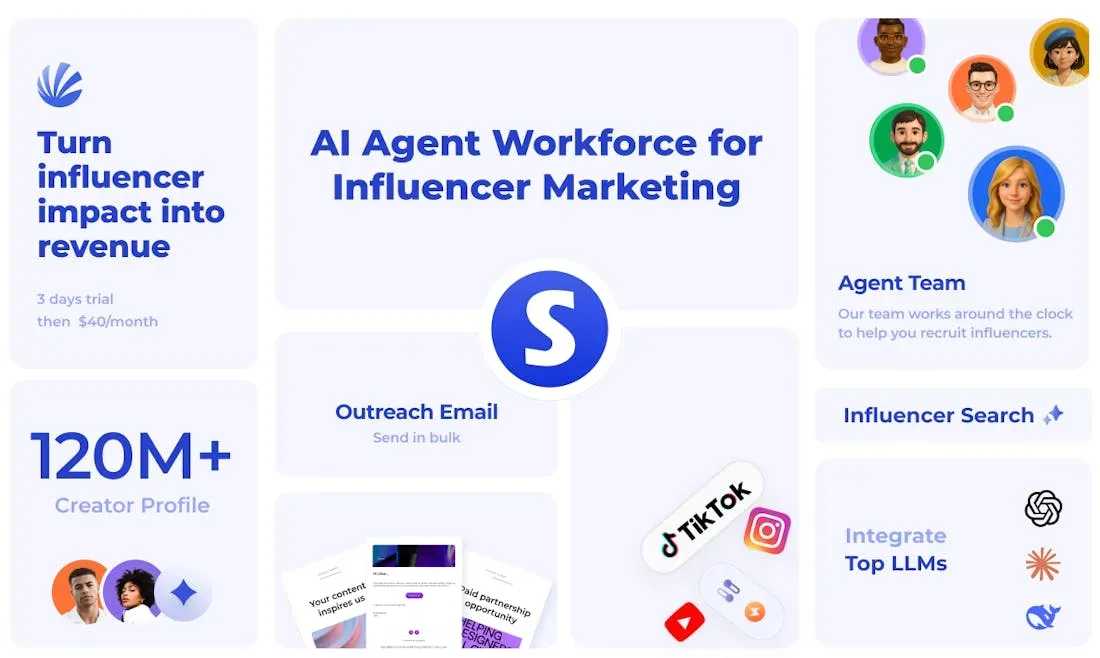
Scrumball has rapidly emerged as the disruptor of 2026 among the best influencer marketing platforms. While legacy platforms act as databases, Scrumball functions as an intelligent workforce. It utilizes specialized AI Agents to handle the heavy lifting of campaign management, making it a powerful influencer management platform for modern marketing teams.
Core Features
- Hunter (Influencer Discovery Agent): Unlike static filters, Hunter scans a database of 120M+ profiles using natural language processing to find "hidden gem" micro-influencers who match your specific brand ethos.
- Charlie (Outreach Agent): Automates hyper-personalized email sequences. Charlie handles follow-ups, negotiations, and scheduling, ensuring you never miss a reply.
- Unified CRM: A Kanban-style board that tracks every campaign and relationship from "Identified" to "Posted" and "Paid," streamlining logistics.
- Cross-Platform Tracking: Real-time monitoring of Instagram, TikTok, and YouTube content, automatically pulling performance data into ROI dashboards.
Best For: Individuals, Startups, SMEs, and Agencies who want scalable influencer marketing solutions without enterprise pricing.
Pricing: Freemium model available. Paid plans start at $32/mo for growing brands.
2. Sprout Social - The Unified Social Suite
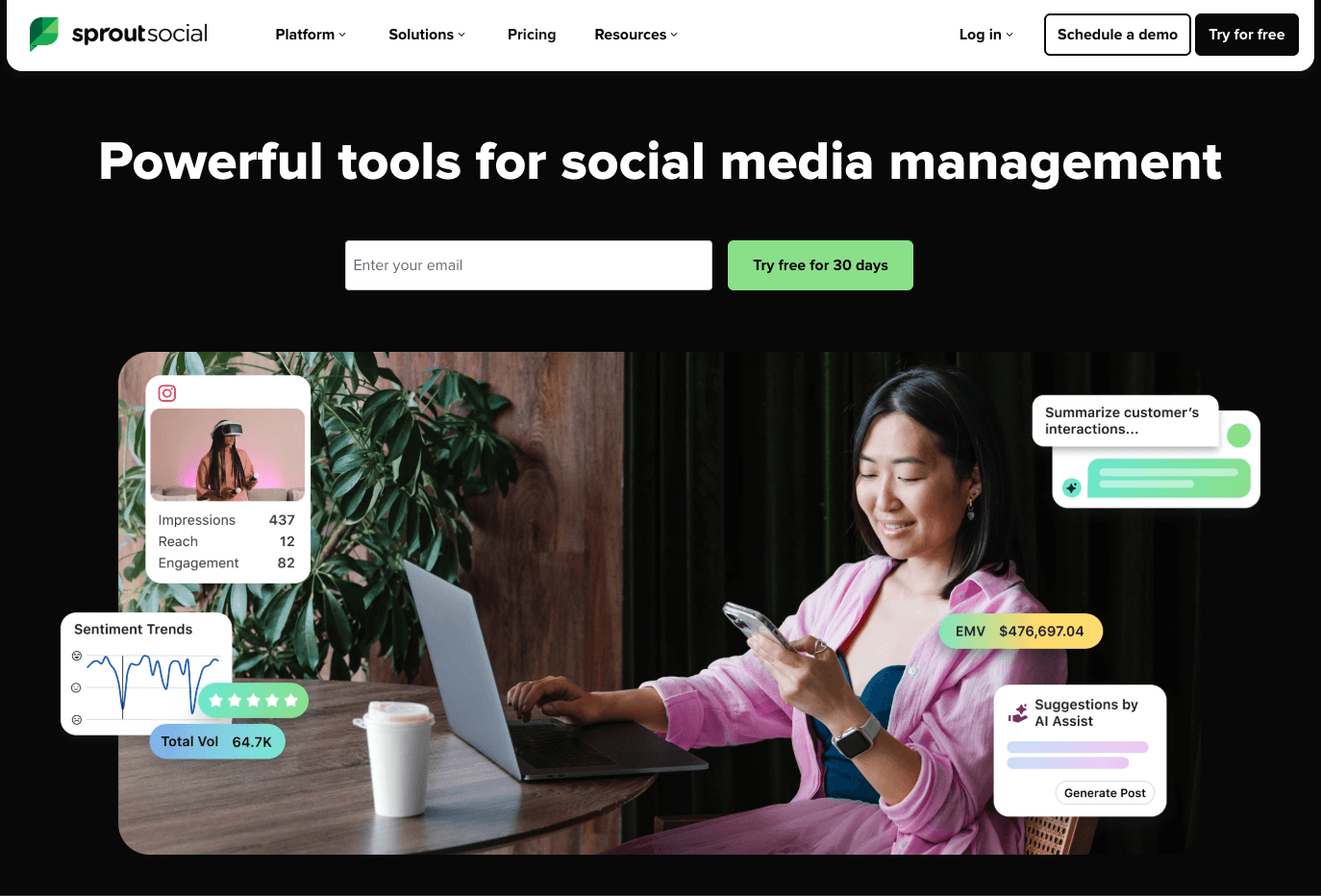
Sprout Social integrates influencer management directly into its broader social media scheduling and listening suite. In 2026, this integration is vital for brands that want to bridge the gap between their community management team and their influencer team.
Core Features
- Social Listening: Identify who is already talking about your brand to turn organic fans into paid ambassadors.
- Seamless Workflow: Manage influencer comments and DMs from the same "Smart Inbox" used for customer support.
- Reporting: robust analytics that combine your organic social performance with your influencer campaign metrics in one PDF report.
Best For: Mid-to-Large enterprises that want to consolidate their tech stack.
Pricing: Premium tier, typically starting around $249/user/mo.
3. Upfluence - Turning Customers into Creators
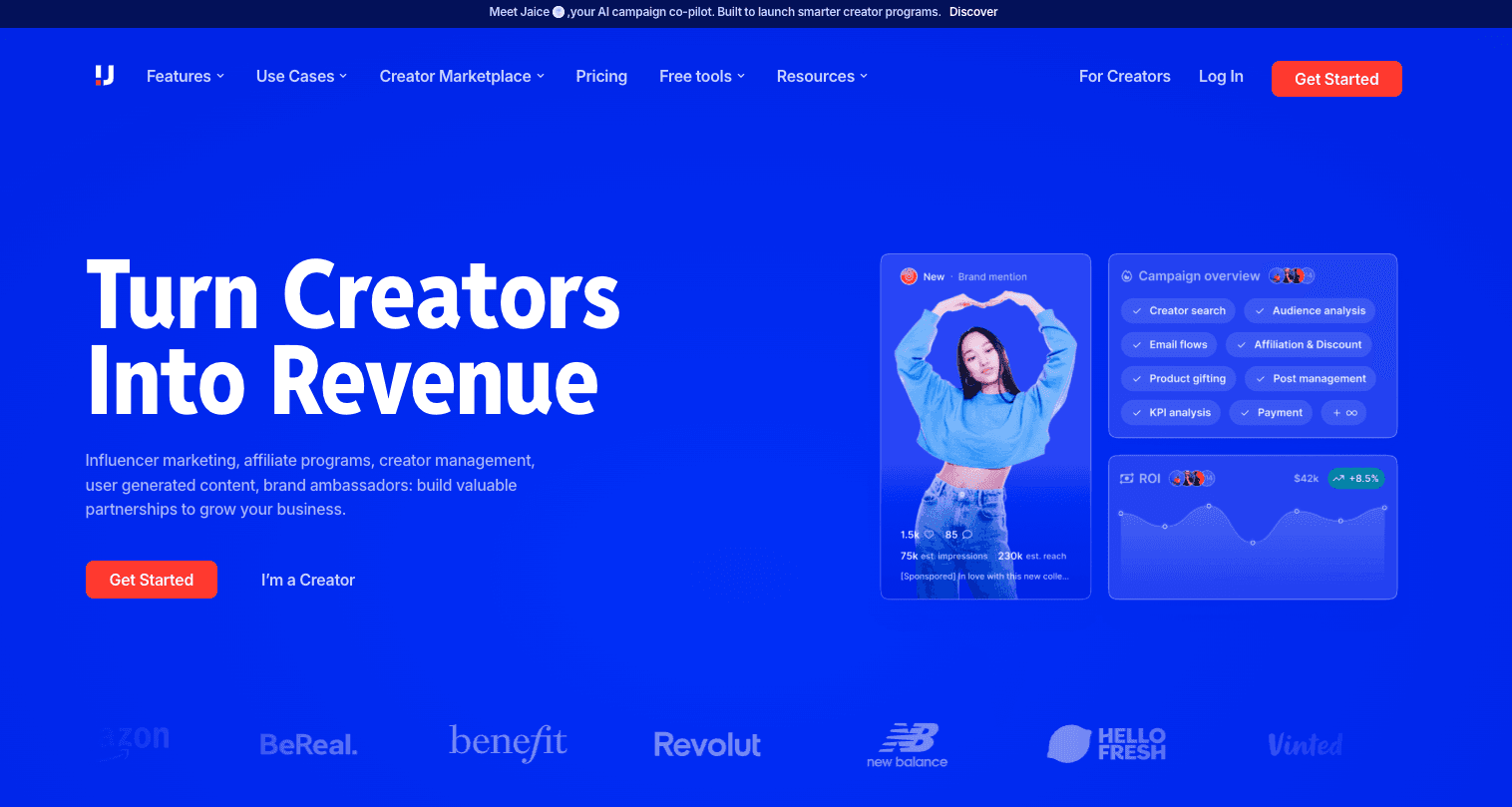
Upfluence distinguishes itself among the best e-commerce influencer marketing platforms by focusing on deep integration capabilities. It connects directly to your Shopify, WooCommerce, or Magento store to analyze your customer database.
One of the biggest selling points is that the platform identifies influential creators who have already bought your products, allowing you to recruit authentic brand ambassadors rather than cold strangers.
Core Features
- Live Capture: A tool that scans your website visitors to reveal their social influence in real-time.
- ChatGPT Integration: Uses AI to draft personalized outreach emails based on the creator's recent bio and posts.
- Payment Handling: Handles global payments and tax compliance for international creators.
Best For: E-commerce brands with a significant customer list looking to build an affiliate program.
Pricing: Custom enterprise pricing, generally starting around $800/mo.
4. GRIN - The Creator Management Platform for DTC
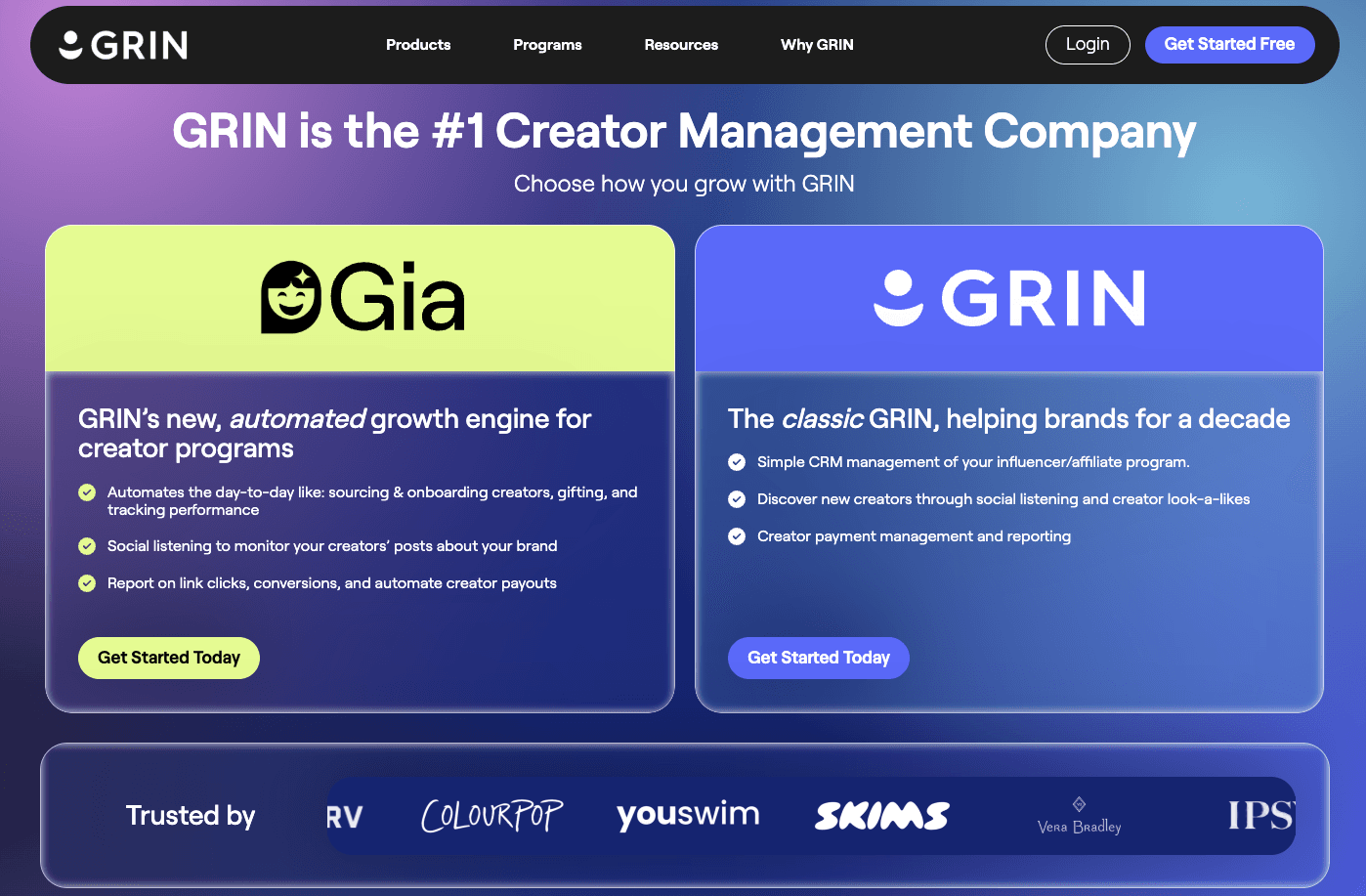
GRIN is widely recognized as one of the top influencer marketing platforms for direct-to-consumer brands. It focuses on building long-term relationships instead of transactional collaborations. It removes the "middleman" feel, allowing brands to own the direct relationship with the creator. It is widely considered the gold standard for high-volume product seeding (gifting) campaigns.
Core Features
- Gia by GRIN: The brand new AI agent solutions to run influencer campaigns.
- Product Seeding Logistics: Integrates with your inventory system to create "zero dollar" orders, automate shipping labels, and track deliveries to influencers.
- Content Management: Automatically aggregates user-generated content (UGC) for easy downloading and repurposing.
- Sales Attribution: Creates unique discount codes and affiliate links automatically for every creator.
Best For: High-growth DTC brands running massive gifting or affiliate campaigns.
Pricing: Annual contracts only, typically starting around $25,000/year.
5. Shopify Collabs - The Native E-commerce Solution
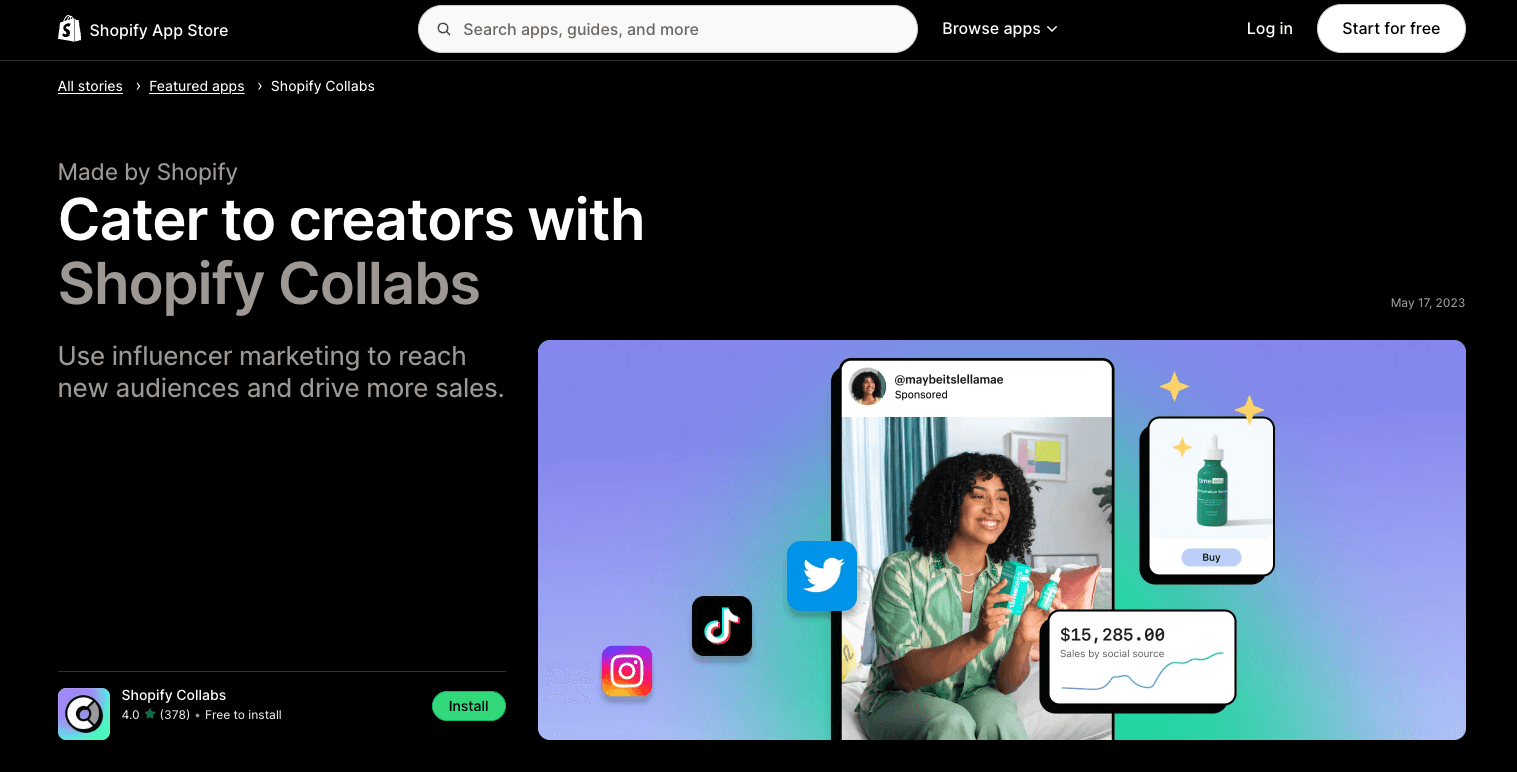
Formerly Dovetale, Shopify Collabs is built directly into the Shopify admin. It creates a seamless bridge between merchants and the creator economy. It allows brands to build a branded "Application Page" where influencers can apply to work with them, flipping the traditional outreach model on its head.
Core Features
- Creator Marketplace: Search a database of millions of creators who have opted-in to work with Shopify brands.
- Automated Gifting: Creators can claim gifts directly from your store catalog.
- Affiliate Tracking: Automatically tracks sales via link or code and handles payouts through PayPal.
Best For: Small-to-medium Shopify merchants who want a free, integrated solution.
Pricing: Free for Shopify merchants (costs included in your subscription).
6. Later Influence (formerly Mavrck) - The Ambassador & Community Engine
Later Influence focuses on large ambassador ecosystems and always-on programs. It is often used by global companies looking for scalable influencer marketing solutions rather than one-off campaigns. Because of its ability to coordinate thousands of creators, it is frequently listed among the top influencer marketing platforms for enterprise programs.
Core Features
- Referral Programs: Tools to incentivize creators to refer other creators or customers.
- Digital Rights Management: Streamlined workflows to request and secure usage rights for creator content in paid ads.
- Survey & Feedback: Tools to poll your ambassador community for product feedback.
Best For: Enterprise retail and lifestyle brands building long-term community programs.
Pricing: Custom enterprise pricing.
7. Aspire (formerly AspireIQ) - The "Word of Mouth" Platform
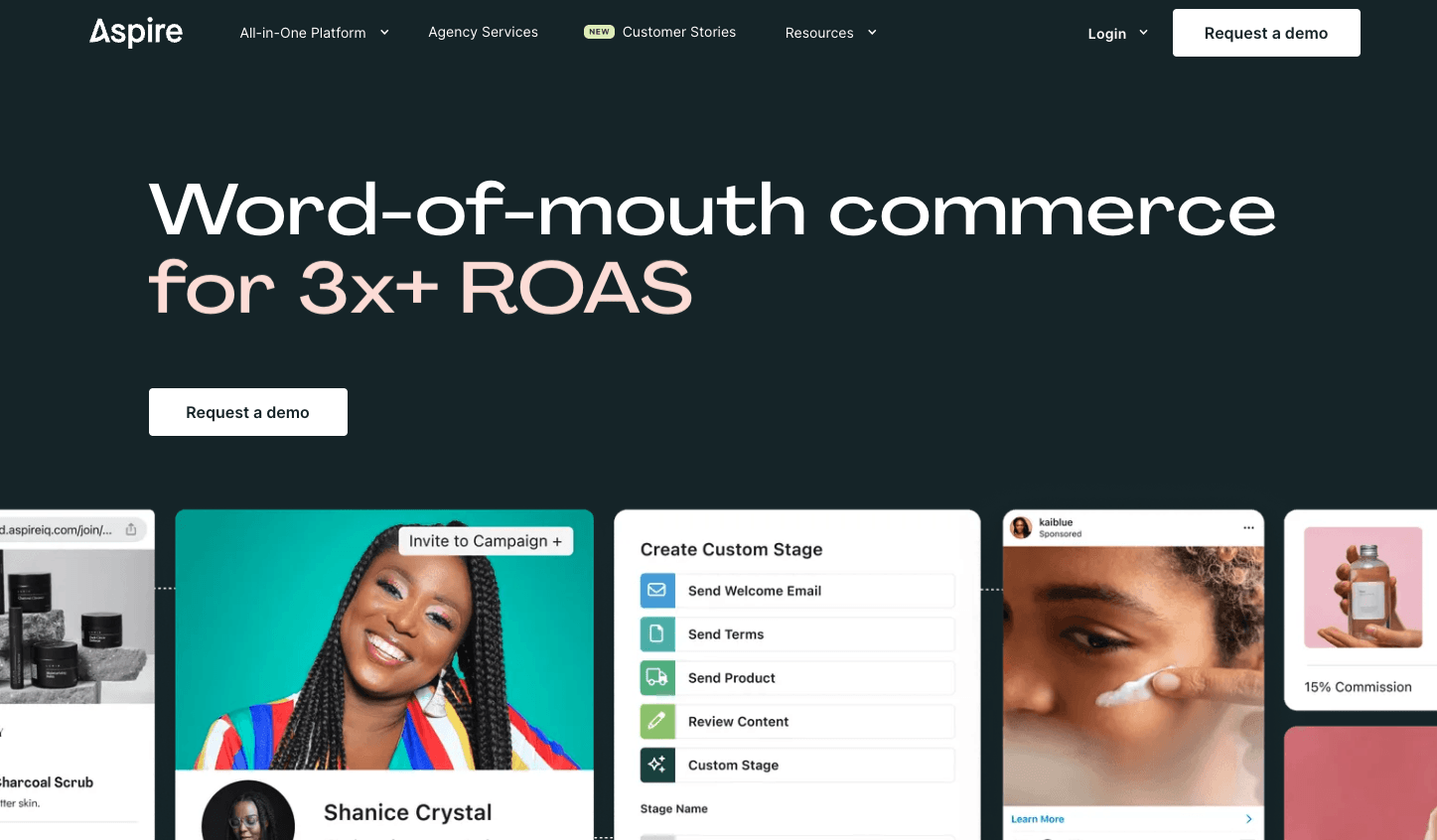
Aspire automates the entire supply chain of influence. It is particularly strong in discovery, offering a "Creator Marketplace" where influencers can pitch ideas to brands. This inbound method saves marketing teams significant time on outreach, making it one of the best influencer marketing platforms for scaling creator partnerships efficiently.
Core Features
- Image Recognition AI: Search for influencers by uploading an image (e.g., a picture of a coffee cup) to find creators who post similar aesthetics.
- Social Listening: Monitor brand mentions and competitor activity.
- Agency Services: Offers managed services if you want to hand off the campaign entirely.
Best For: Brands looking to scale UGC production quickly with a mix of inbound and outbound recruitment.
Pricing: Starts around $99/mo for basic features, scaling to enterprise tiers.
8. Traackr - The Data & Benchmarking Heavyweight
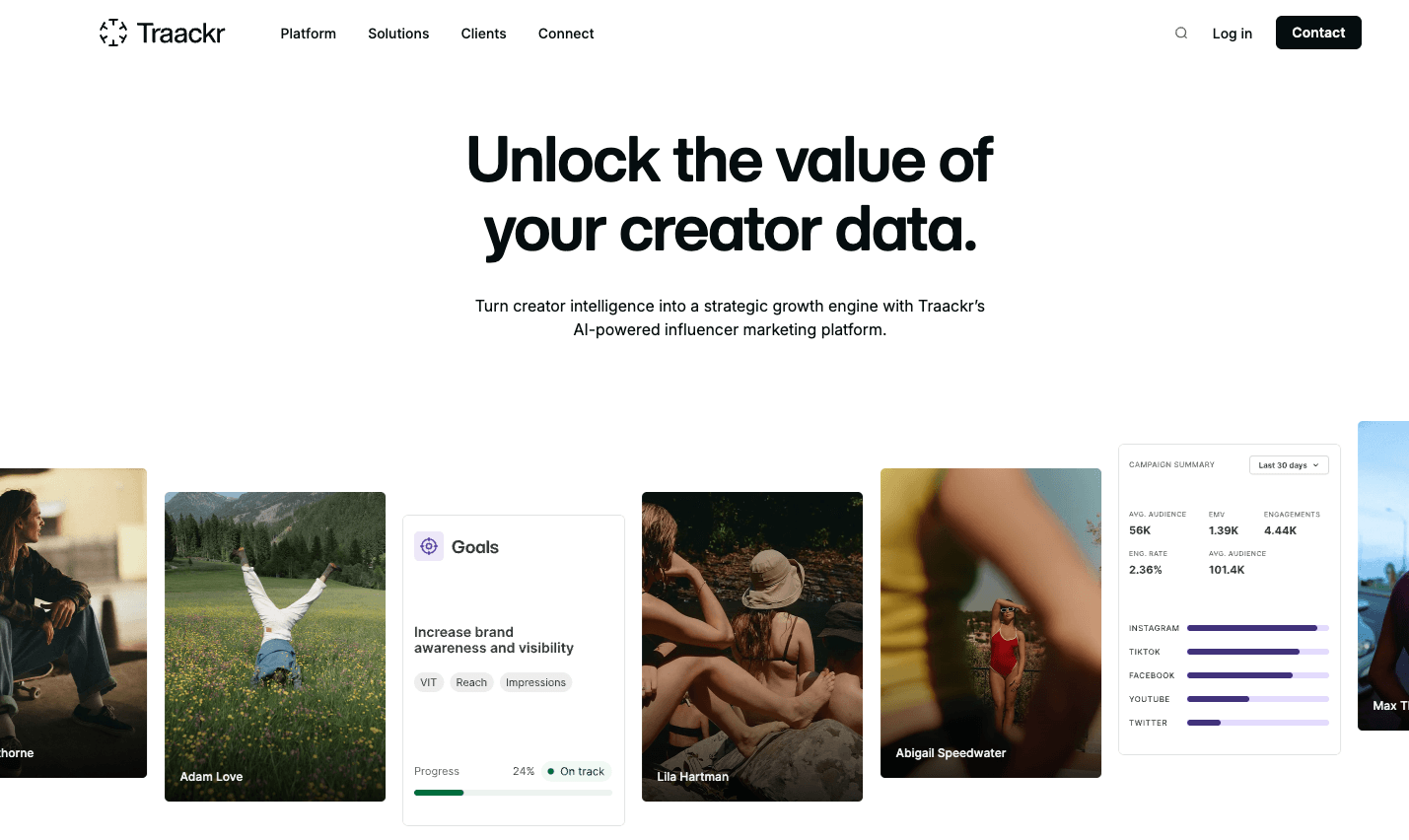
Traackr is a data-driven influencer management platform used by global corporations that require competitive intelligence and benchmarking. It introduced the Brand Vitality Score (VIT), a metric that measures the visibility, impact, and trust of content. This allows brands to benchmark their performance against competitors with scientific precision.
Core Features
- Competitive Intelligence: See exactly how much your competitors are spending and who they are working with.
- Global Compliance: Tools to manage complex multi-region campaigns and regulatory disclosures.
- Influencer Vetting: Deep analysis of audience quality to detect fraud.
Best For: Global beauty and fashion conglomerates (like L'Oreal or Coty) that need rigorous data compliance.
Pricing: High-tier Enterprise only.
9. Klear - Smart, Simple, and Visual
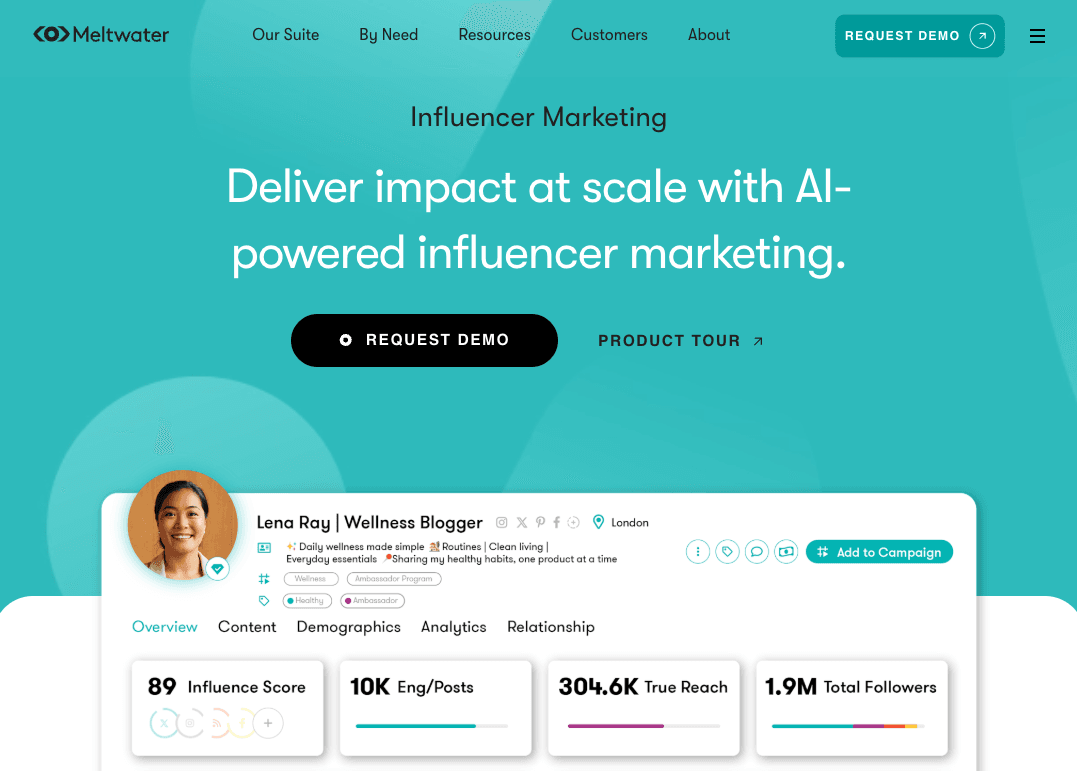
Klear simplifies complex analytics into visual dashboards, making it an intuitive influencer marketing tool for agencies and mid-sized companies. It breaks down complex data into visually digestible "Klear Cards." It is particularly strong in Social Listening, helping brands identify influencers who are already engaging with relevant topics.
Core Features
- Monitor: Tracks conversations and hashtags to find relevant creators.
- Measure: Calculates "True Reach" (adjusting for algorithm suppression) to give a realistic view of ROI.
- Vet: Automatically flags fake followers and engagement bots.
Best For: Agencies and mid-sized brands that prioritize ease of use and visual reporting.
Pricing: Custom pricing, typically mid-range.
10. Influencity - Granular Audience Intelligence
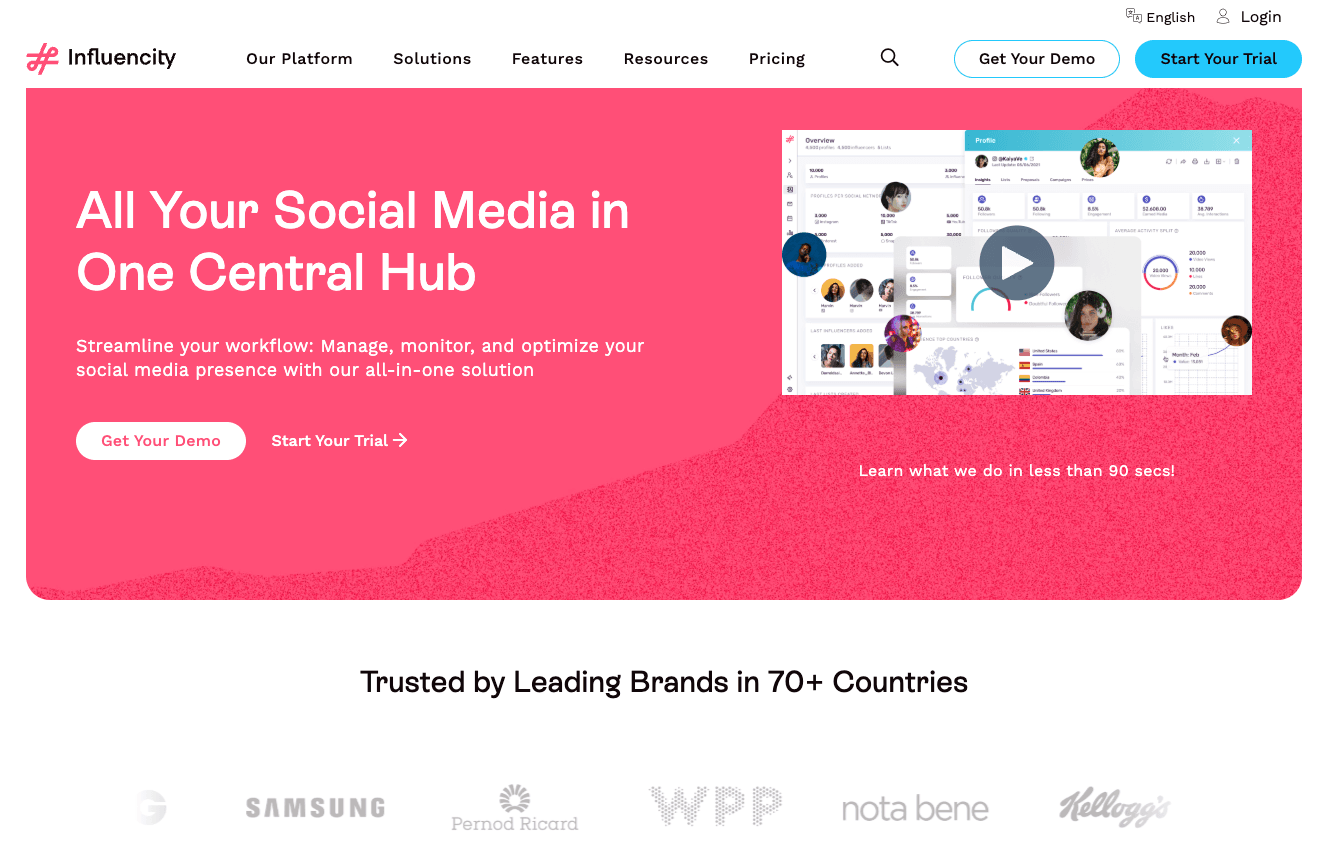
If your strategy relies on precise demographics, Influencity is the tool. It offers the most stackable filters in the industry, allowing you to find influencers whose audience is, for example, "60% female, aged 25-34, living in Madrid, interested in Yoga."
Core Features
- Audience Overlap: Check if two influencers share the same followers to avoid wasting budget on duplicate reach.
- Lookalike Search: Find influencers who are statistically similar to your best-performing partners.
- Forecasting: Predict campaign results before you spend a dollar.
Best For: Data-driven marketers needing precise geographic or demographic targeting.
Pricing: Modular "pay as you go" plans starting around $168/mo.
11. CreatorIQ - The Enterprise Operating System
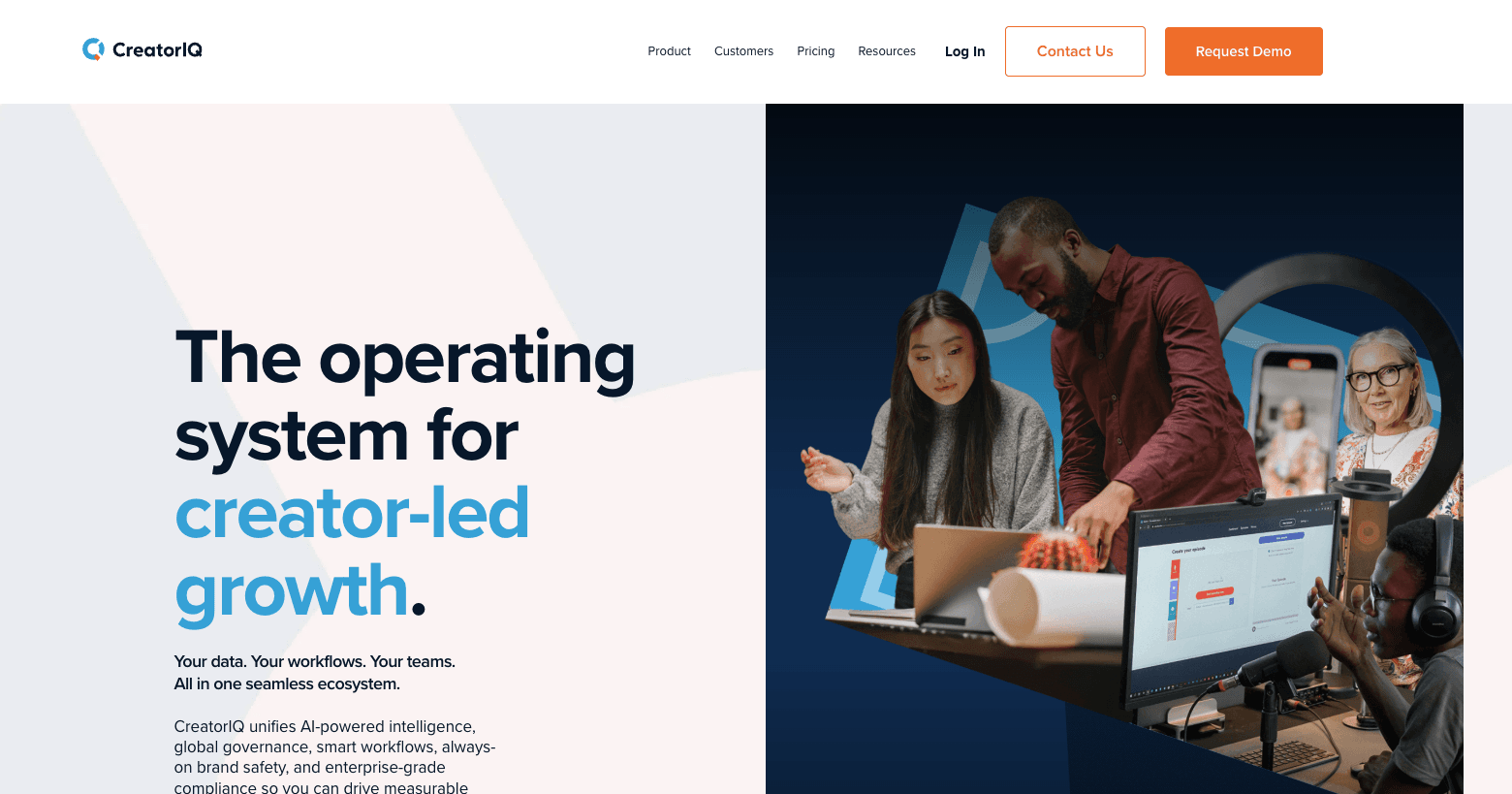
CreatorIQ is the software behind the world's largest companies (Disney, Unilever, Dell). It integrates with almost everything—Salesforce, Tableau, and Google Analytics. It is designed to be the "central nervous system" for creator relationships across an entire global organization.
Core Features
- Private White-Label Portals: Create a branded portal for your influencers to log in, view briefs, and submit content.
- One-Click Payments: Automated tax forms and global payments in 120 currencies.
- Data Security: Enterprise-grade security and compliance features.
Best For: Fortune 500 companies managing thousands of creators across multiple teams.
Pricing: High-tier Enterprise pricing.
12. HypeAuditor - The Fraud Detection Specialist
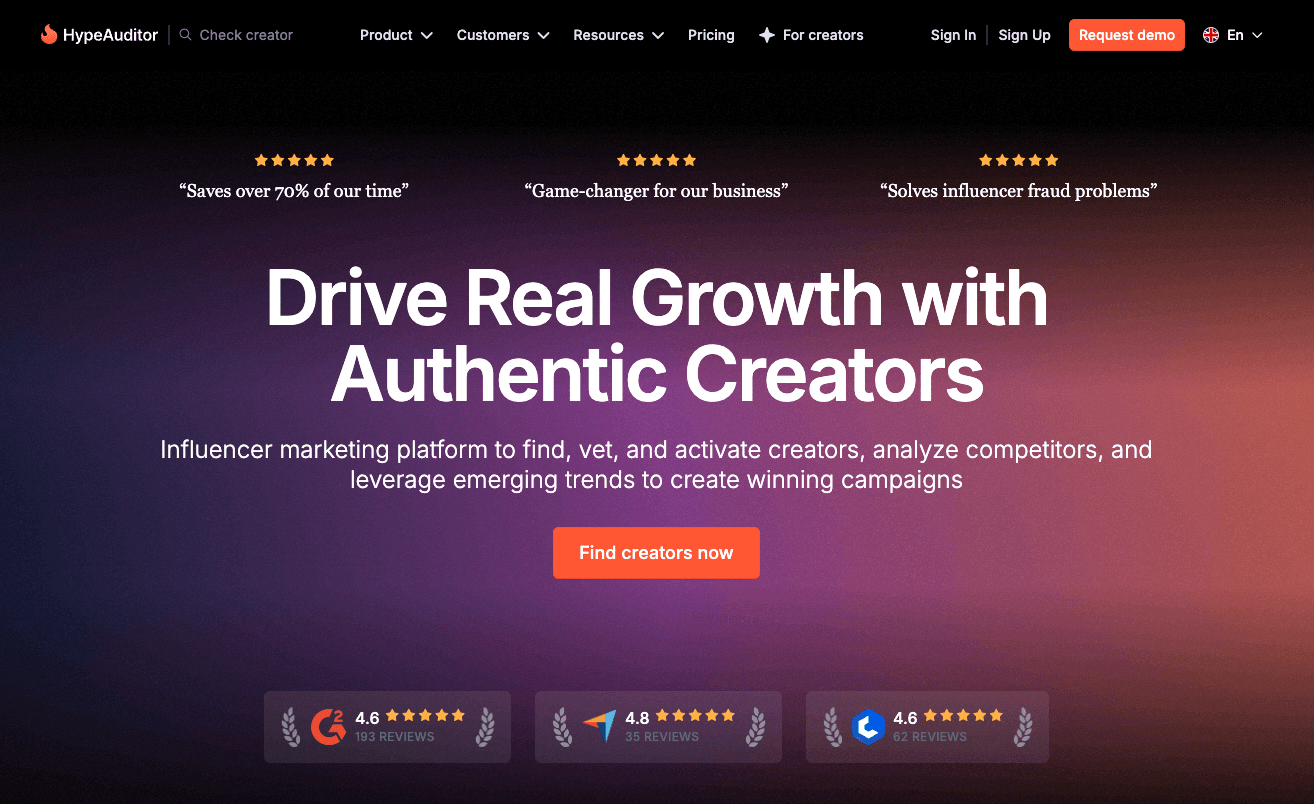
In 2026, bot farms are more sophisticated than ever. HypeAuditor has become a critical influencer marketing tool for brands that prioritize authenticity. It uses AI to analyze engagement patterns, determining the "Audience Quality Score" (AQS) of any account.
Core Features
- Audience Quality Score: A single number (1-100) that rates the authenticity of an influencer's following.
- Competitor Analysis: See which influencers your competitors are hiring and how those campaigns performed.
- Market Analysis: Research global trends in the creator economy.
Best For: Brands highly concerned with fraud prevention and data accuracy.
Pricing: Freemium model for basic reports; Paid plans start around $399/mo.
13. NeoReach - Hybrid Tech & Agency Services
NeoReach was born out of Stanford University and offers a unique mix. You can use their software to search for influencers, or you can hire their managed services team to run the entire crypto, tech, or gaming campaign for you. They have deep roots in the Web3 and Tech sectors.
Core Features
- API Access: Gives you access to their raw data firehose for custom internal tools.
- Campaign Management: Full-service team available to handle logistics.
- TikTok Specialization: Deep data on TikTok trends and music usage.
Best For: Tech, Gaming, and Web3 brands needing a hybrid between software and agency support.
Pricing: Custom pricing.
14. Bazaarvoice (affable.ai) - Visual Discovery & Commerce
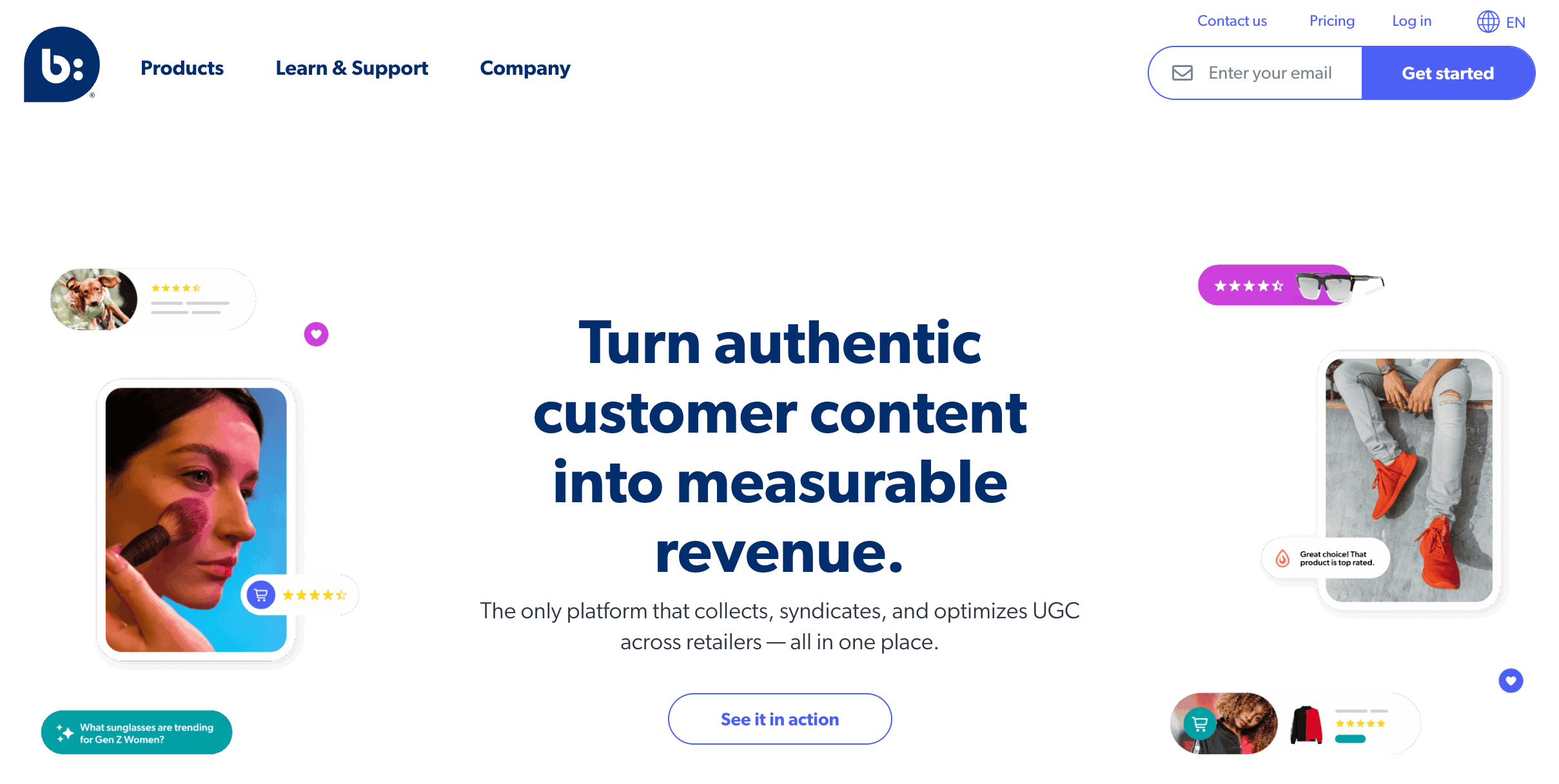
Following the acquisition of affable.ai, Bazaarvoice offers a powerful visual AI engine. It analyzes the images and videos content creators post, not just their captions. This allows you to find creators who match your visual aesthetic perfectly. It also links influencer content to e-commerce product pages (syndication).
Core Features
- Image Analysis: Find creators based on objects, logos, or scenes in their photos.
- Review Syndication: Push influencer content to retail sites like Walmart or Amazon.
- Automated Reporting: Stories tracking without requiring screenshots.
Best For: Fashion, Home, and Beauty brands where visual aesthetics are the primary KPI.
Pricing: Custom pricing.
15. IZEA - The Opt-In Marketplace
IZEA, formally named TapInfluence, is one of the long-standing top influencer marketing platforms, known for its transparent pricing and opt-in creator marketplace. Influencers in their network have pre-set rates, meaning you can see the "Cost Per Engagement" (CPE) before you even reach out, eliminating the awkward negotiation phase.
Core Features
- Programmatic Matching: Matches you with influencers based on data, not manual search.
- Rate Transparency: Clear pricing for posts, blogs, and videos.
- Content Distribution: Tools to amplify influencer content across paid channels.
Best For: Brands that want to skip negotiation and buy influencer content like media inventory.
Pricing: Custom pricing.
Quick Comparison of the Top Influencer Marketing Platforms in 2026
With so many options available, it can be difficult to quickly compare the top influencer marketing platforms discussed above. The table below summarizes the key strengths, limitations, and ideal use cases of each platform to help brands identify the right solution for their marketing strategy.
| Platform | Key Strength | Best Use Case |
|---|---|---|
| Scrumball | All-in-one platform with AI Agents automates discovery, outreach, and campaign management |
|
| Sprout Social | Unified social media management and influencer analytics | Mid-to-large enterprises managing social + influencer together |
| Upfluence | Deep Shopify/WooCommerce integrations and customer-to-creator discovery | E-commerce brands building ambassador programs |
| GRIN | Powerful product seeding logistics and creator relationship management | High-growth DTC brands running large gifting campaigns |
| Shopify Collabs | Native integration within Shopify ecosystem | Small to medium Shopify brands |
| Later Influence | Ambassador community programs and UGC generation | Retail and lifestyle brands building long-term communities |
| Aspire | Creator marketplace and inbound influencer pitches | Brands scaling UGC production |
| Traackr | Advanced benchmarking and Brand Vitality Score analytics | Global corporations requiring data-driven insights |
| Klear | Visual reporting and strong social listening | Agencies and brands prioritizing usability |
| Influencity | Highly granular demographic targeting filters | Marketers focused on audience precision |
| CreatorIQ | Enterprise integrations and global influencer management | Fortune 500 organizations |
| HypeAuditor | Industry-leading fraud detection and audience quality scoring | Brands prioritizing influencer authenticity |
| NeoReach | Hybrid software + managed campaign services | Tech, gaming, and Web3 brands |
| Bazaarvoice | Visual content analysis and retail content syndication | Fashion, beauty, and visually driven industries |
| TapInfluence | Transparent influencer pricing and programmatic matching | Brands wanting simple influencer buying workflows |
Best Influencer Marketing Platforms by Use Case
Different tools excel at different tasks. To make the decision easier, here are some of the best influencer marketing platforms based on common marketing goals.
Best for AI Automation: Scrumball
Scrumball stands out for its AI-driven approach to campaign management. Its specialized agents handle influencer discovery, outreach, and campaign tracking, making it a powerful influencer marketing tool for teams that want to automate time-consuming tasks and scale campaigns efficiently.
Best for E-commerce Integration: Upfluence
Upfluence is particularly strong for online retailers because it connects directly to platforms like Shopify and WooCommerce. This makes it one of the most practical influencer marketing platforms for brands focused on turning customers into brand ambassadors and tracking revenue from influencer campaigns.
Best for Large Enterprises: CreatorIQ
CreatorIQ is built for global organizations managing thousands of creators across multiple regions. With integrations for tools like Salesforce and Google Analytics, it functions as a comprehensive influencer management platform for large marketing teams that require enterprise-level data control and security.
Best for Content Creation & UGC: Aspire
Aspire excels at scaling creator collaborations through its creator marketplace and inbound influencer pitches. This makes it one of the most efficient influencer marketing solutions for brands that need a steady stream of user-generated content for ads, social media, and product launches.
Best for Budget-Conscious Startups: Shopify Collabs
For smaller brands and emerging businesses, Shopify Collabs provides a cost-effective entry point into influencer marketing. Its built-in marketplace and affiliate tracking make it one of the easiest top influencer marketing platforms to adopt without investing in expensive enterprise software.
How to Choose the Right Influencer Marketing Platforms in 2026?
With so many options available, selecting from the top influencer marketing platforms can feel overwhelming for brands and marketing teams. To make the decision easier, the following factors will help you evaluate which platform best fits your campaign goals, workflow, and long-term growth strategy.
1. Align Platform Capabilities with Campaign Goals
Not all platforms are built for the same purpose. You should match the tool's "DNA" to your primary objective when selecting among different influencer marketing platforms for brands.
- For Direct Sales & E-commerce: If your KPI is revenue, avoid platforms that only offer "Brand Awareness" metrics. You need deep integration with Shopify/WooCommerce, automated affiliate link generation, and product seeding logistics. (Look at: GRIN, Shopify Collabs, Upfluence).
- For Brand Awareness & PR: If your goal is "Share of Voice," prioritize platforms with strong social listening, competitor benchmarking, and visual content discovery. (Look at: Traackr, Klear, Bazaarvoice).
- For Content Production (UGC): If you need hundreds of assets for paid ads, prioritize platforms with a "Creator Marketplace" or "Casting" tool where influencers apply to you. (Look at: Aspire, Scrumball).
Evaluate AI Maturity (The 2026 Standard)
In 2026, "AI-powered" is a buzzword. Literally all tools, platforms, and software you can find right now tag themselves as "AI-powered." When evaluating any influencer marketing tool, you need to dig deeper to see if the AI actually saves time or just looks cool.
- Predictive Analytics: Does the platform predict how an influencer will perform for your specific brand before you hire them?
- Natural Language Search: Can you search for "Mom bloggers who love hiking and coffee" and get accurate results, or do you have to manually filter by 20 different tags?
- Automated Outreach: Does it use generative AI to write personalized emails that actually get opened, or does it send generic spam?
2. Audit the Data Integrity & Fraud Detection
The rise of AI-generated influencers and bot farms has made fraud detection critical. Any influencer management platform without robust vetting is a liability.
- Audience Credibility: Look for an "Audience Quality Score." The platform should be able to tell you what percentage of an influencer's followers are real people vs. bots or mass-followers.
- Brand Safety Checks: Can the platform scan an influencer's history for controversial keywords, hate speech, or competitor mentions?
- First-Party Data Access: Does the platform rely on scraped data (which breaks often) or official API partnerships with Meta, TikTok, and YouTube? Always choose API partners.
3. Assess Integration & Workflow Efficiency
Your influencer platform cannot live on an island. It must talk to your existing tech stack to prove ROI.
- CRM Integration: Does it sync with Salesforce or HubSpot so your sales team can see influencer impact?
- Payment Rails: Can you pay 50 influencers in 5 different currencies with one click? Or will your finance team hate you for creating 50 separate invoices?
- Product Gifting: Does it automate the creation of shipping labels and tracking codes? Manual gifting is the #1 time-waster in campaign management.
4. Watch Out for "Hidden" Pricing Costs
SaaS pricing in this sector can be opaque. When negotiating contracts, ask these specific questions to avoid surprise bills:
- Contact Limits: "Do you charge by the number of influencers I search for, or the number I activate?" (Always prefer the latter).
- Seat Licenses: "Is the price for the whole team, or per user?"
- Data Export Fees: "Can I export all my campaign data and content for free if I leave the platform?"
- Network Fees: "Do you take a percentage cut of the payments I send to influencers?" (Some platforms charge 10-20% on top of the subscription).
5. The "Usability" Factor
Finally, the most powerful platform is useless if your team refuses to use it. When comparing top influencer marketing platforms, usability and workflow simplicity can be just as important as advanced analytics.
Enterprise tools (like CreatorIQ) are powerful but complex; they may require a dedicated administrator. Tools like Scrumball or Klear prioritize UI/UX, allowing junior marketers to launch campaigns on day one without extensive training. Request a trial to test the workflow yourself.
Summary
Choosing the right influencer marketing platform is the first step toward a scalable influencer strategy. While enterprise solutions like CreatorIQ offer powerful analytics and large-scale campaign management, newer AI-driven tools such as Scrumball are making advanced features more accessible to growing brands.
Start by defining your campaign goals and budget. Testing a few free trials or entry-level plans can help you evaluate which platform fits your workflow, team size, and long-term marketing strategy.
FAQ
What is the most affordable platform for startups?
Among many influencer marketing platforms, Shopify Collabs is free for Shopify merchants and works well for brands already operating within the Shopify ecosystem. Additionally, platforms like Scrumball provide free tiers and relatively affordable starter plans that may suit early-stage brands.
Can I manage influencers without software?
Technically, yes, using spreadsheets. However, once your campaign grows beyond a small number of creators, tasks such as tracking posts, approvals, deliverables, and payments can quickly become time-consuming. Using a dedicated influencer marketing platform can help streamline these processes and reduce manual workload.
Do these platforms find influencers for me?
Most modern influencer marketing platforms, like Scrumball, include influencer discovery tools. Some use AI to recommend creators based on audience data and brand criteria, while others provide marketplaces where influencers can apply to collaborate with brands.
How do I detect fake followers?
Most top-tier influencer marketing platforms (HypeAuditor, Scrumball, and Upfluence) have built-in fraud detection that analyzes engagement patterns to flag suspicious accounts. These insights can help marketers identify suspicious accounts and evaluate influencer credibility before launching campaigns.
Is it better to use an agency or a platform?
Agencies typically provide fully managed influencer campaigns, while an influencer marketing platform gives brands the tools to manage campaigns internally.
The best option depends on your budget, available resources, and how much control you want over campaign execution. Some companies also adopt a hybrid approach by combining agency expertise with platform-based management tools.