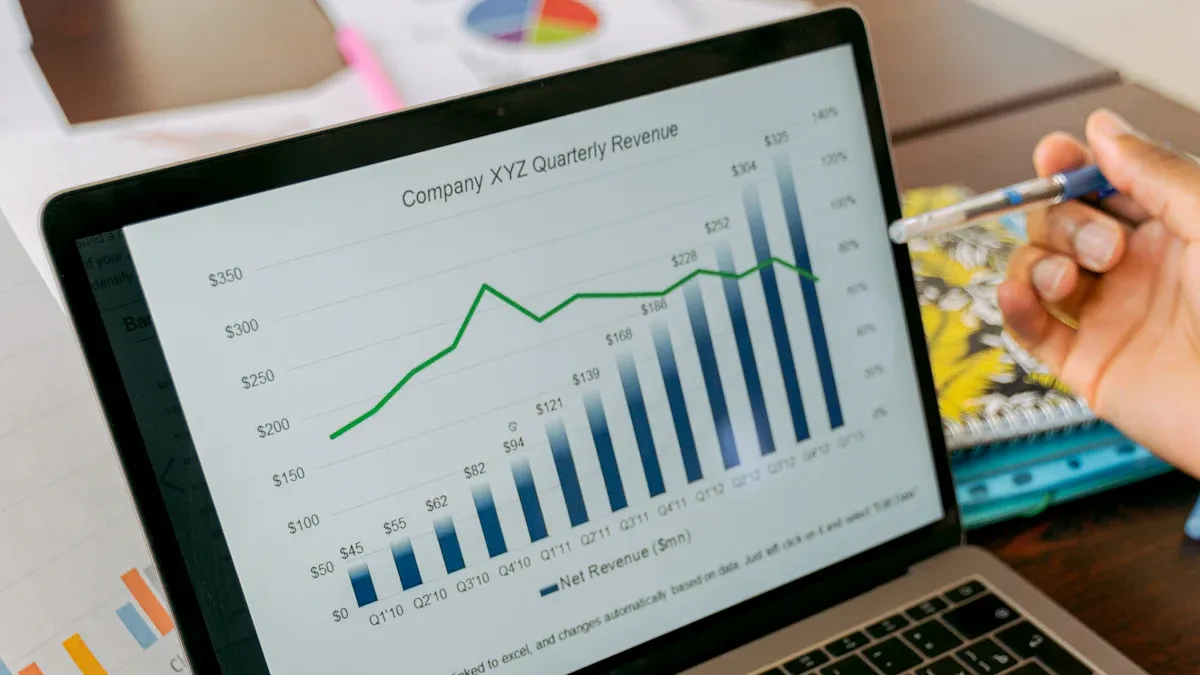

Influencer marketing has matured from a side tactic into a core growth channel, and the numbers behind it are now big enough to shape real budgets. The global market sits at roughly $32.55 billion, fueled by AI-powered tools, the rise of TikTok Shop, and creators who increasingly drive sales as well as awareness.
The latest benchmark reports from Influencer Marketing Hub, Aspire, and Sprout Social point to the same shifts: AI moving into everyday workflows, social commerce becoming a genuine sales channel, and authenticity mattering more than polish. The catch is that a lot of the stats marketers repeat have quietly drifted out of date.
So here are the 20 influencer marketing statistics worth knowing in 2026, with the current figures and a primary source for each.
The State of the Industry: Growth, Budgets, and Spending
1. How big is the influencer marketing industry in 2026?
The global market reached roughly $32.55 billion in 2025, up from about $24 billion in 2024, with 2026 projections landing near $34 billion. That makes it more than triple its 2020 size.
Influencer spend is also growing faster than digital advertising overall, expanding around 30% a year while broader digital ad budgets grow closer to 10%. The channel is taking an increasing share of the marketing mix as a result.
2. How much are brands budgeting for creators?
According to Influencer Marketing Hub, 75.6% of brands planned a dedicated influencer marketing budget in 2025. Spending has become more selective, but the overall commitment to the channel remains high.
The momentum is clearly upward. Linqia's 2026 State of Influencer Marketing report found 62% of marketers increasing their influencer budgets, with 33% planning to spend more than $5M, much of it shifted from TV and programmatic display.
3. How large is the creator economy?
Estimates put the global creator population at roughly 200 to 300 million people. The bigger story now is professionalization rather than raw headcount.
The fastest-growing segment is the creator "middle class." The Influencer Marketing Factory defines this as creators earning $10k to $100k a year, now around 45.6% of active creators. That gives brands a deep bench of experienced partners well below celebrity rates.
4. What is the average ROI of influencer marketing?
Brands earn roughly $5.20 to $5.78 for every $1 spent, according to 2025-2026 benchmarks from Influencer Marketing Hub and corroborating data compiled by Shopify. Top-performing campaigns push past $18 per dollar.
A realistic 2026 target is around $5 to $6 returned per dollar invested, with better attribution and AI-assisted creator matching helping brands reach the higher end of that range.
5. Are people buying through social platforms?
Yes, and the US is leading. About 45.8% of US social media users made a social-commerce purchase in 2024, per eMarketer, though many still complete checkout off-platform after discovery.
TikTok Shop and Instagram Shopping have turned creator content into a measurable sales channel, letting a single post double as both recommendation and point of purchase.
Consumer Behavior and Trust
6. Do consumers trust influencers more than brands?
Yes. Matter Communications found 69% of consumers are more likely to trust a recommendation from a friend, family member, or influencer than information coming directly from a brand.
In the creator economy, that trust gap is the whole point. Authenticity has become the currency that polished branded messaging struggles to match, which is why creator recommendations consistently outperform brand-published content.
7. Are younger users searching on TikTok and Instagram instead of Google?
A Google executive noted in 2022 that nearly 40% of people aged 18 to 24 turn to TikTok or Instagram instead of Google when looking for a place to eat, based on internal Google research.
That behavior has only deepened since. For brands, it explains why creator content increasingly functions as a discovery layer for younger audiences, sitting alongside traditional search.
8. Does honest, critical content build trust?
It does. In the 2025 Influencer Trust Index from BBB National Programs, 79% of consumers said authentic reviews, even negative ones, increase their trust in an influencer. Transparency about brand relationships ranked as the single biggest trust driver.
Peer-reviewed research backs this up: influencers who post a critical review are rated meaningfully more trustworthy than those who only praise. The "de-influencing" trend works because honesty signals credibility.
Platform Dominance in 2026
9. Which platform has the highest engagement?
TikTok still leads on engagement. Micro-creators on TikTok average roughly 6 to 8% engagement, compared with about 3 to 4% on Instagram and around 0.15% on Facebook.
Nano-creators and top performers can climb higher still, which is why smaller, highly engaged accounts remain so valuable for brands chasing interaction rather than raw reach.
10. Which platform do marketers use most for influencer marketing?
Instagram, by a wide margin. Aspire's data shows 84% of marketers use Instagram for influencer marketing, ahead of TikTok at 77% and YouTube at 43%.
Its mature monetization tools, creator features, and Reels-first formats keep Instagram at the center of most brand partnership strategies.
11. How big is YouTube Shorts?
YouTube Shorts now averages 200 billion daily views, a figure CEO Neal Mohan shared at Cannes Lions in June 2025, up from 70 billion just over a year earlier.
That scale is why brands increasingly repurpose long-form video into short, shoppable Shorts to extend reach without producing entirely new content.
12. Is influencer marketing working for B2B?
Increasingly, yes. The LinkedIn and Ipsos 2025 B2B Marketing Benchmark found 55% of B2B marketers already use influencer or creator marketing, with another 29% planning to start within a year.
B2B programs lean on subject-matter experts and thought leaders rather than follower counts, using credible voices to build visibility and generate leads on LinkedIn.
AI and Technology Adoption
13. How many marketers use AI in influencer marketing?
A majority now do. Aspire's 2026 report found 59% of marketers already use AI in their influencer operations, spanning creator discovery, workflows, and performance analysis. Fewer than 11% use no AI at all.
AI-powered platforms like Scrumball sit in this category, helping teams filter large creator databases, screen audience quality, and assess creator fit before a campaign launches.
14. Are virtual influencers catching on?
The audience is real. Emplifi found that 58% of US consumers follow at least one virtual creator, rising to 75% among Gen Z.
Engagement is the standout metric. HypeAuditor data shows virtual-influencer campaigns averaging around 5.67% engagement versus 1.89% for human creators, roughly 3x, driven largely by novelty and entertainment value.
15. Is influencer fraud getting better or worse?
Worse. Fraud is rising, and it is one of the channel's most pressing risks. Industry analysis estimates fraud now consumes about 12.4% of total influencer spend, around $4.8 billion a year.
The scale is hard to ignore. A 2026 World Federation of Advertisers study found 81% of senior marketers encountered influencer fraud in the past 12 months, which makes vetting and audience-authenticity checks more important than ever.
Strategy and Execution
16. Are nano-influencers worth building campaigns around?
On engagement, nano-creators (1k to 10k followers) consistently top the charts, around 6.2% on Instagram and as high as 10.3% on TikTok, according to eMarketer and Influencer Marketing Hub.
Brands are leaning in. Aspire reports 27% of marketers primarily work with nano-influencers, and 54% work mainly with nano or micro creators combined, trading raw reach for trust and targeted community engagement.
17. Does video outperform other formats?
Short-form video delivers the highest ROI of any content format and consistently beats static images and text on engagement, according to Sprout Social.
That advantage has made short-form video the engine of creator content, anchoring most campaigns on TikTok, Instagram Reels, and YouTube Shorts.
18. Do brands prefer long-term creator partnerships?
They do. Influencer Marketing Hub found 63.2% of brands prefer ongoing, repeat partnerships over one-off posts, up from 57% in 2022.
Consistency wins because repeated collaboration builds the kind of audience trust and brand recognition a single sponsored post cannot deliver.
19. How well do UGC ads perform as paid media?
Strongly. Ads built on user-generated content earn up to 4x higher click-through rates and roughly 50% lower cost per click than studio-produced creative, per Bazaarvoice.
Repurposing creator content into paid media has become one of the most reliable ways to lift advertising performance in 2026, especially as AI-driven ad systems reward creative variety.
20. How widely is creator content reused across channels?
Reuse is now standard practice. Sprout Social data shows 77% of marketers actively repurpose creator content in paid ads.
Brands stretch creator assets across email, landing pages, paid social, and even out-of-home, extending the value of each piece well beyond the original feed.
What These Numbers Mean for 2026
Read together, the data tells a clear story: influencer marketing is bigger, more measurable, and more scrutinized than ever. AI-assisted discovery, social commerce, short-form video, and long-term creator relationships are doing the heavy lifting.
The flip side is accountability. ROI is real but grounded, fraud is climbing, and trust now hinges on authenticity rather than polish. The brands that win in 2026 will treat influencer marketing like any other performance channel: tracked, vetted, and built on data rather than recycled myths.
FAQ
What is the most important stat for 2026?
The most critical stat is the $6.50 ROI. This proves that influencer marketing is no longer "experimental"—it is a high-yield investment channel that outperforms almost every other digital medium.
Why are nano-influencers so important?
They offer the highest trust and engagement. With algorithms prioritizing retention over follower count, a nano-influencer with a loyal community can drive more sales than a celebrity with millions of passive followers.
Is AI replacing human influencers?
No. While virtual influencers are growing, AI is primarily being used to assist marketers in finding, vetting, and managing human relationships more efficiently.
How much budget should I allocate?
While it varies by company size, the standard recommendation for 2026 is to allocate 15-25% of your total digital marketing budget to creator partnerships.
Which platform has the best ROI?
Currently, Instagram and TikTok are tied for ROI, but they serve different goals. TikTok drives massive top-of-funnel awareness and viral traffic, while Instagram drives consistent, high-value conversions for lifestyle brands.