


By 2026, marketing automation will have evolved from a convenience to a critical operational engine. Businesses utilizing advanced automation today report significantly higher conversion rates by letting software handle the heavy lifting.
Did you know that over 80% of high-performing companies now rely on automated workflows? These platforms help you nurture leads efficiently and improve customer engagement without requiring a 24/7 human presence.
Whether you run a lean startup or a global enterprise, selecting the right tech stack is the difference between stagnation and scalable growth. In this guide, I’ll walk you through some of the top tools defining the marketing landscape this year.
Top 3 All-in-One Marketing Platforms for 2026
Tool 1: Scrumball
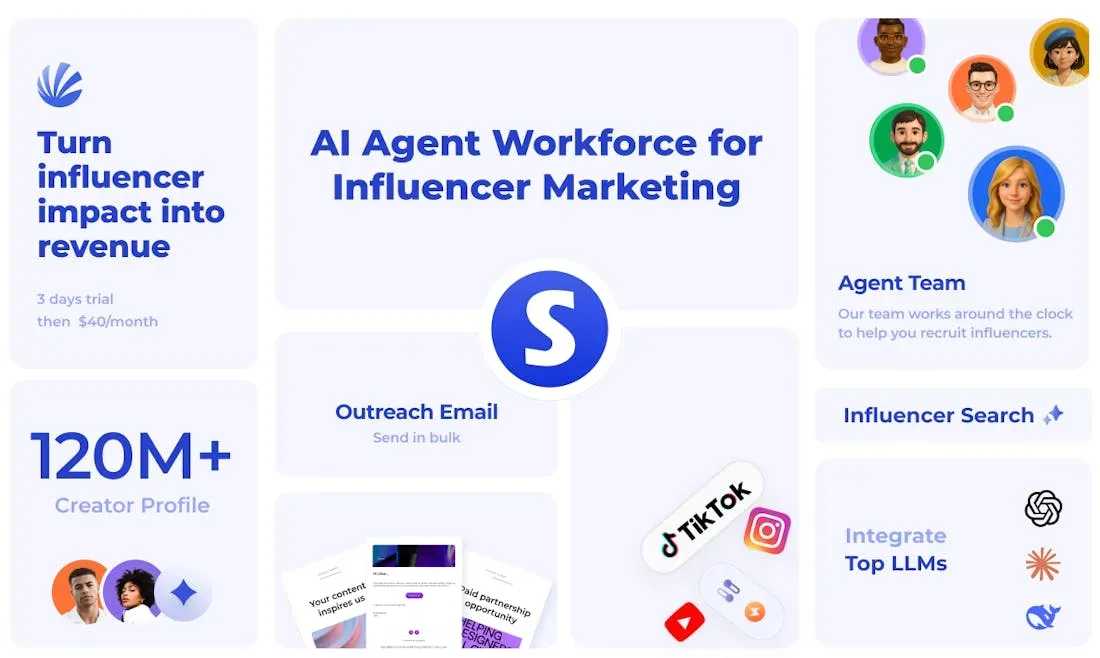
Scrumball is an all-in-one, AI-driven marketing automation platform that acts as your complete marketing team in a box. It replaces manual work with AI Agents:
- Lillian (Strategy Agent): Analyzes your product and target audience to build data-backed campaign blueprints before you spend a dime.
- Hunter (Discovery Agent): Scans a massive database of 120M+ creators to find your perfect match based on audience authenticity, brand fit, and past performance metrics.
- Charlie (Outreach Agent): Automates your email sequences with hyper-personalized messages, handling follow-ups and even negotiation support so you never miss an opportunity.
Beyond these agents, Scrumball offers enterprise-grade Social Listening to monitor competitors, a centralized CRM to manage all creator relationships without spreadsheets, and real-time ROI Tracking to measure conversions automatically.
In terms of pricing, Scrumball offers several plans designed for individuals, growing brands, and enterprises.
| Category | Plan | Price | Best For | Key Features |
|---|---|---|---|---|
| Personal Use & Creators | Free | $0/month | Individuals & beginners | Basic influencer discovery, audience insights, and AI agents Lillian & Hunter |
| Starter | $32/month | Growing brands | Automated email follow-ups, multilingual templates, campaign CRM, and Charlie the outreach agent | |
| Professional | $299/month | Marketing teams | Social Listening, collaboration tools, sub-accounts, priority support | |
| Business & Enterprise | Enterprise | $499/month | Large-scale campaigns | Higher credit limits, advanced influencer insights, and content storage |
| Premium | $899/month | Global agencies | Extreme credit limits, Custom API integration, tailored solutions |
You can always visit Scrumball's Pricing page for the latest offers.
Tool 2: ActiveCampaign
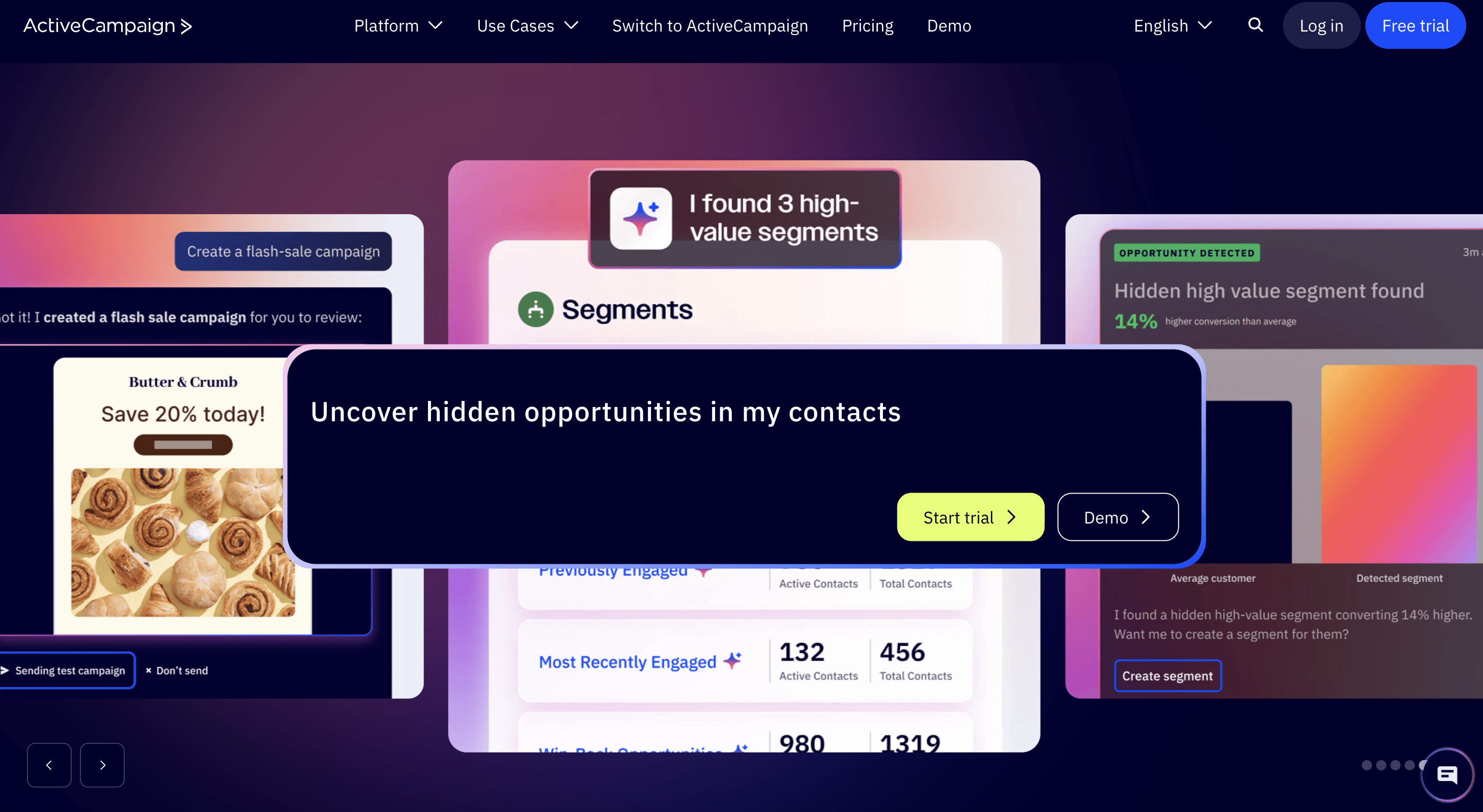
ActiveCampaign remains a dominant force for 2026. It balances power with usability elegantly. It is arguably the best CRM with marketing automation capabilities for mid-sized businesses. The platform offers "Recipes"—pre-built automation workflows—that save massive amounts of setup time.
With pricing starting around $15 per month (for email services, an annual subscription is applied), it provides enterprise-level power and efficiency without the enterprise price tag.
Tool 3: HubSpot Marketing Hub
HubSpot defines inbound marketing. Its strength is its connected ecosystem. Blogs, landing pages, email, and CRM all integrate seamlessly. Costs rise with large contact lists, but the data coherence it provides is often worth it for scaling teams. HubSpot is one of the top marketing automation tools that ensures smooth growth.
Top 2 Marketing Tools for Email Marketing
Tool 1: Brevo (formerly Sendinblue)
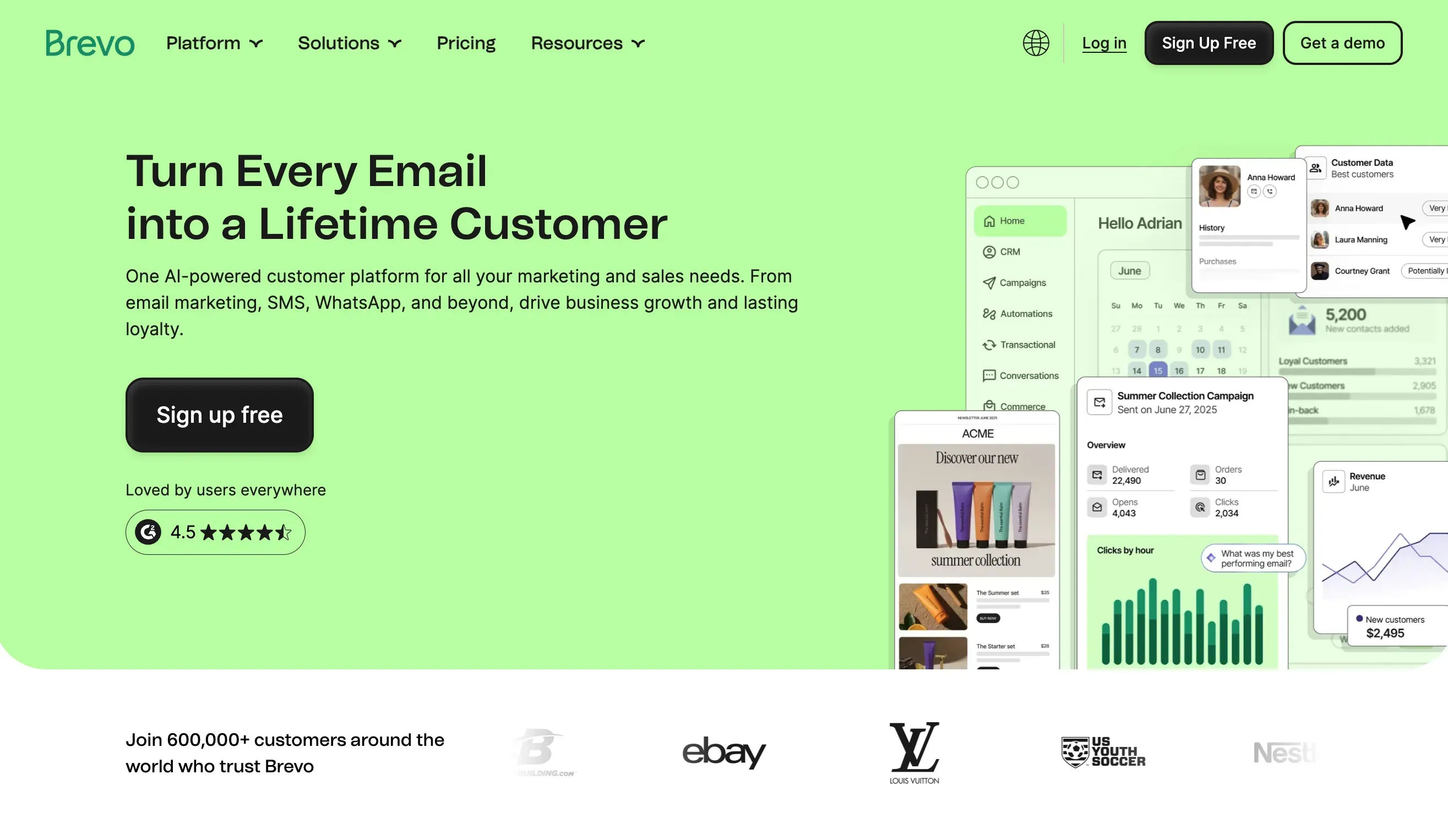
Brevo stands out for its versatility. Unlike many competitors that charge by contact count, Brevo charges by email volume. This is a huge advantage for businesses with large but infrequently contacted lists. It also includes built-in CRM features and transactional email capabilities, making it a robust utility player.
Tool 2: Klaviyo
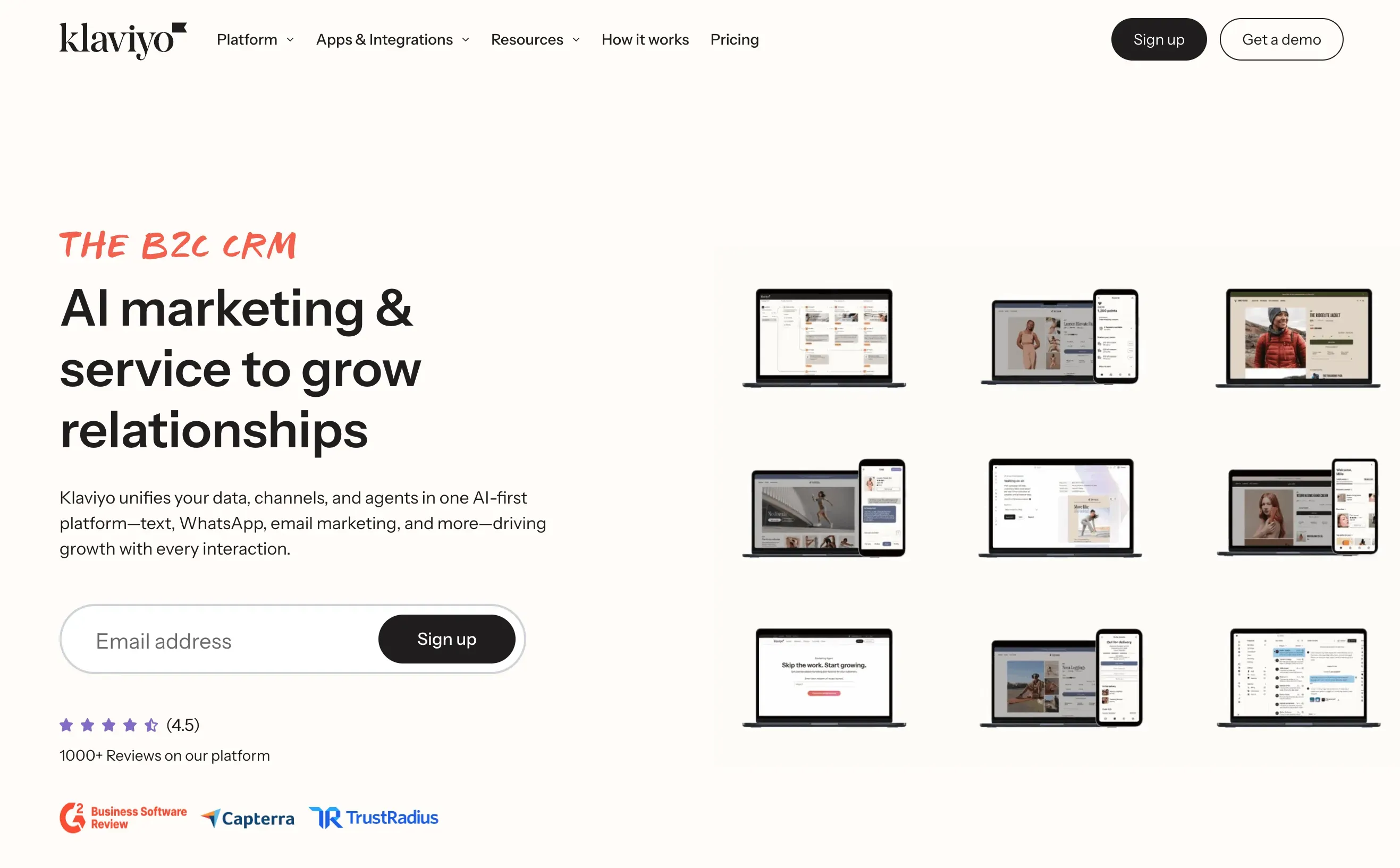
If you sell online,Klaviyo is the gold standard. Its integration with platforms like Shopify is unparalleled. The specific value here is predictive analytics; it tells you who will likely buy next and how much they will spend. This allows for incredibly precise segmentation that generic tools cannot match.
Best Social Media Automation Tool
Hootsuite
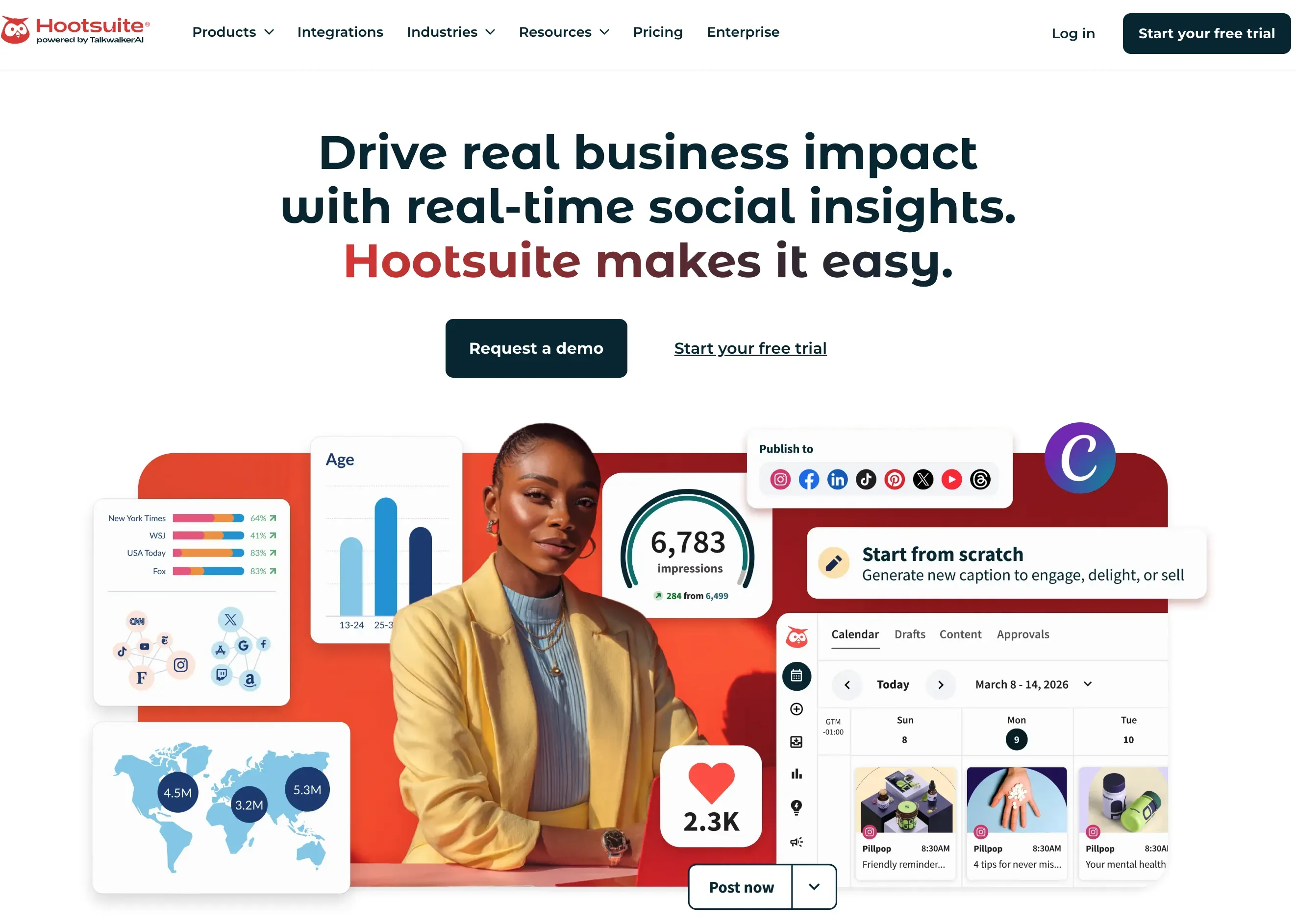
Hootsuite simplifies social governance. For teams managing multiple brands or locations, the ability to reply to comments from all networks in a single inbox is a lifesaver. Its latest updates include AI content suggestions, which help overcome writer's block when filling out your monthly calendar.
Top 2 Marketing Tools for Customer Journey Mapping
Tool 1: Iterable
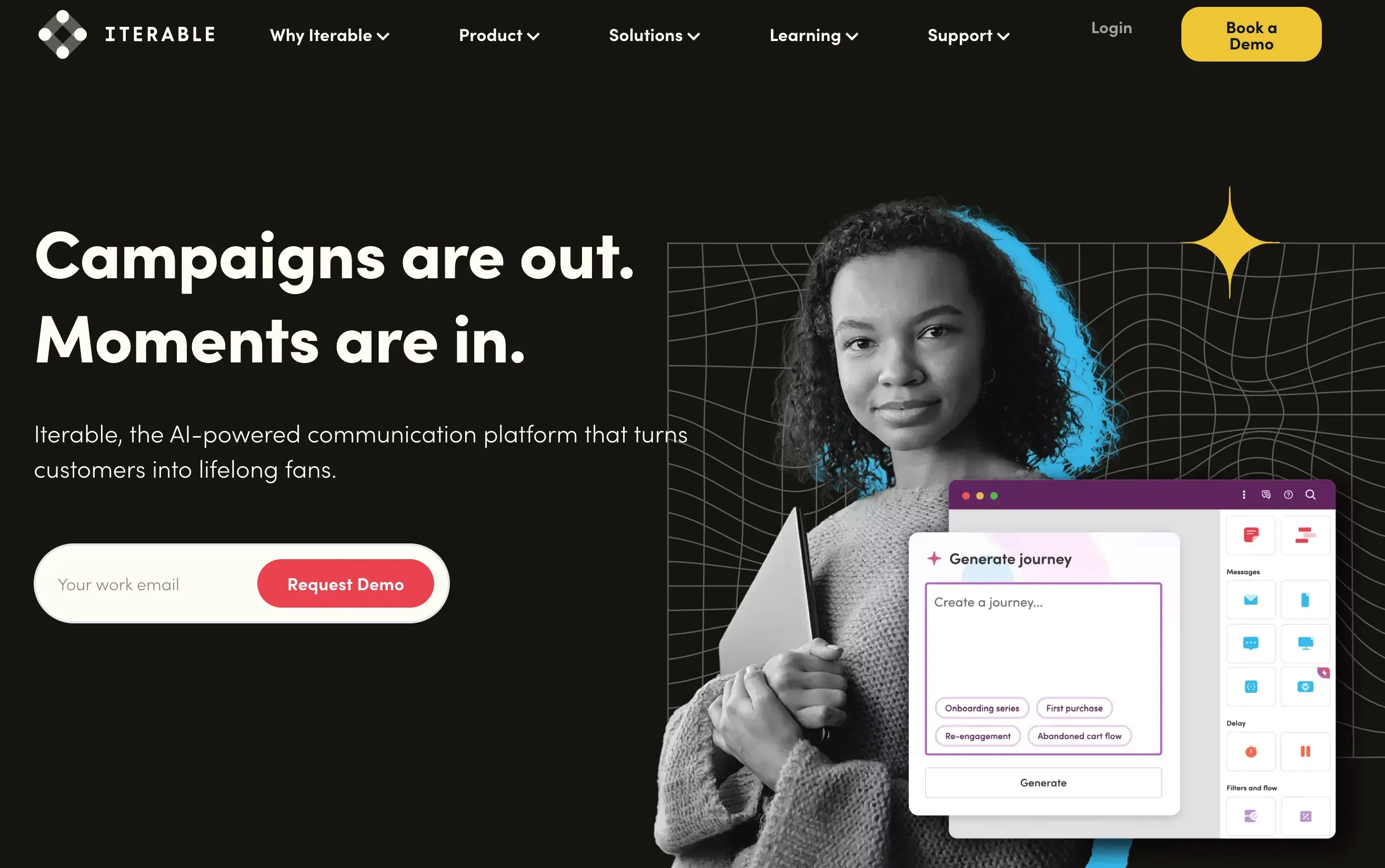
Iterable is built for growth marketers who need speed. It treats every customer interaction—web, mobile, email, in-app—as a trigger. Its visual workflow builder allows marketers to create complex automation paths easily. Due to its flexibility, many teams consider it a robust marketing automation solution for real-time engagement.
Tool 2: Eloqua by Oracle
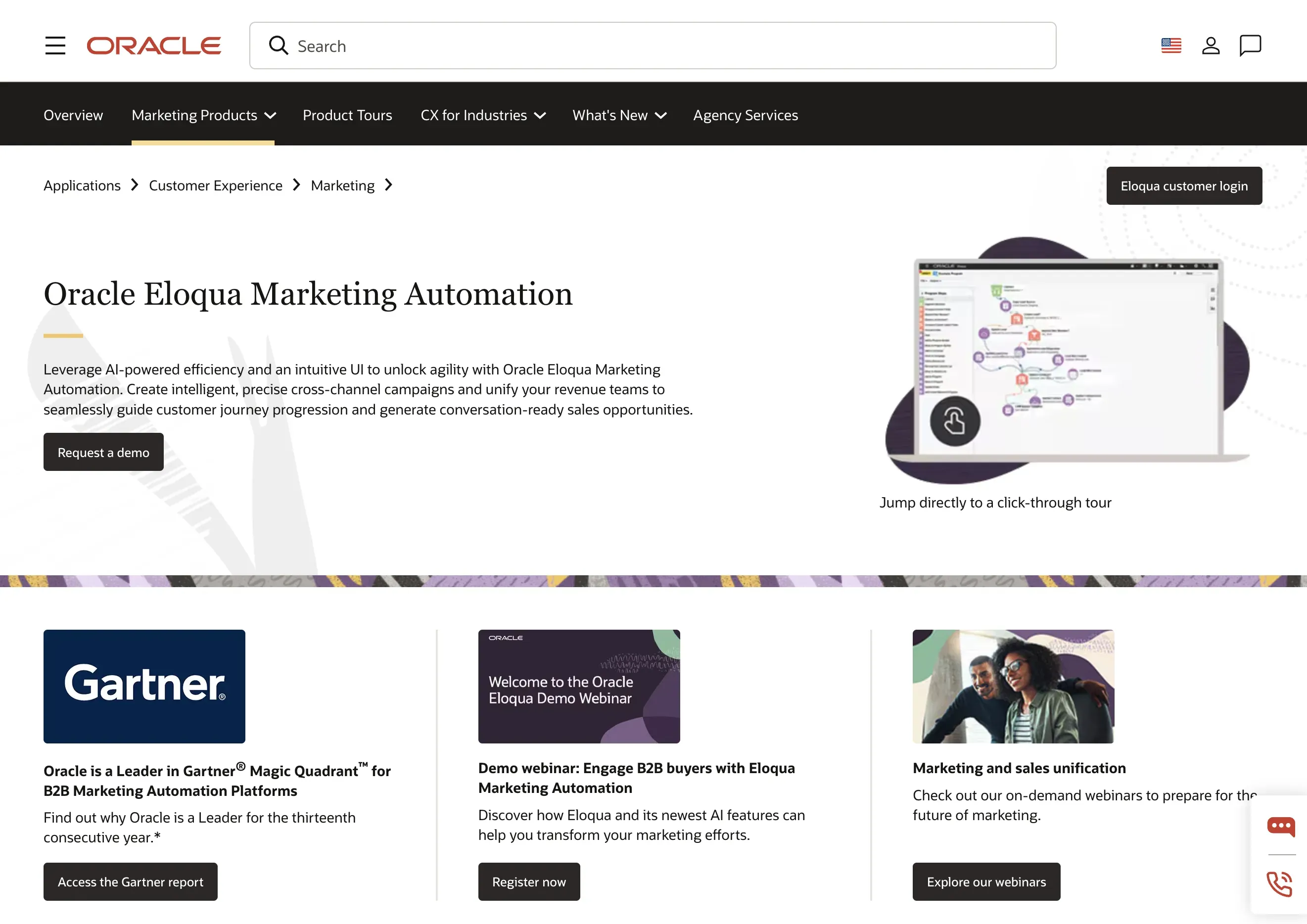
Eloqua is the heavy hitter for complex B2B needs. Its "Campaign Canvas" is legendary for its flexibility. If you need to manage lead scoring across different global regions with strict compliance rules, this is your tool. Companies often see a 15% to 30% jump in effectiveness after migrating to this robust environment.
Top 2 Marketing Tools for Small Businesses
Tool 1: Mailchimp
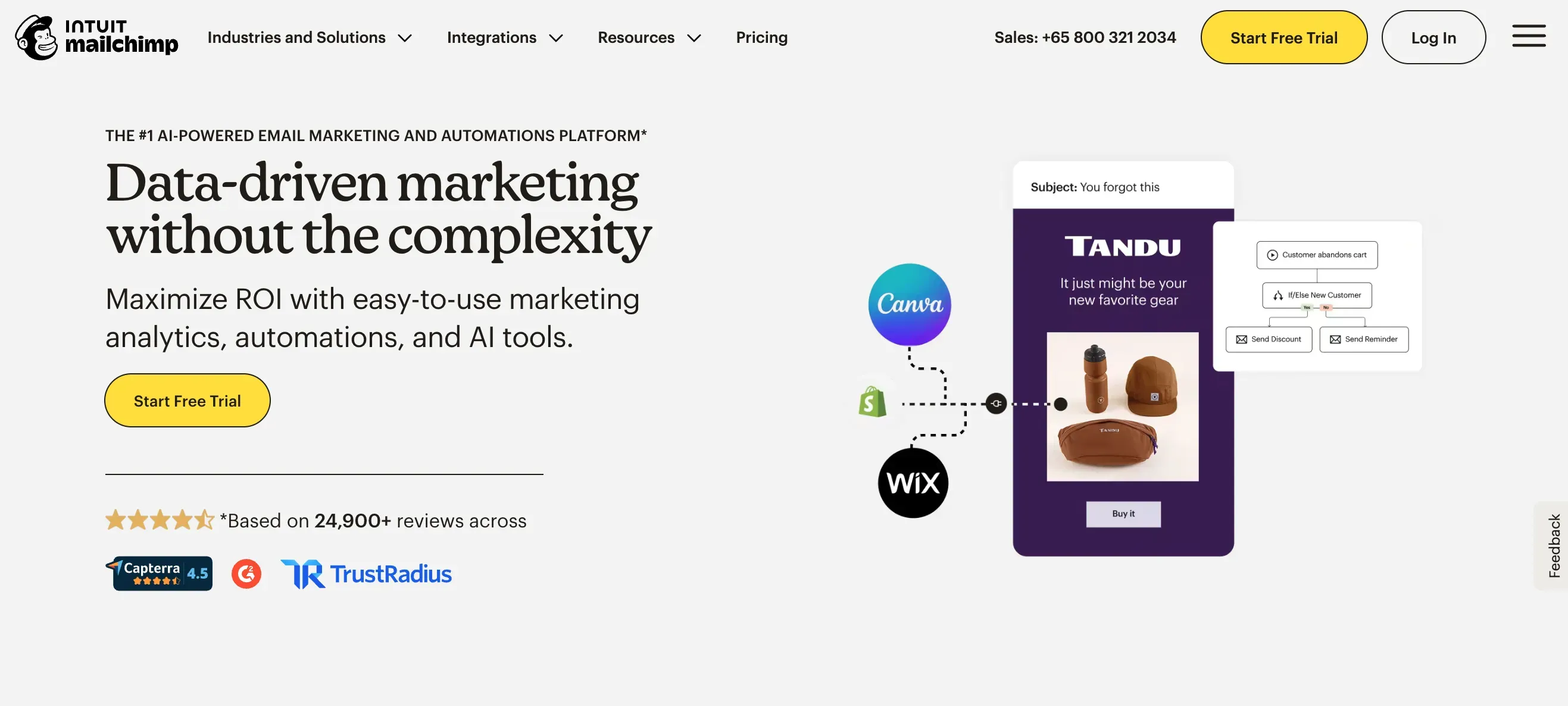
Mailchimp has successfully pivoted from "just email" to a full marketing platform. It is a trusted entry point for automation. The "Customer Journey Builder" is simple enough for beginners but powerful enough to set up welcome series and abandoned cart emails in minutes. For small teams, it eliminates the need for IT support.
Tool 2: Brevo
Brevo also works well as marketing automation for small businesses. Its free plan is generous, and the pay-as-you-go model prevents small businesses from getting locked into expensive contracts during lean months. The addition of SMS and WhatsApp marketing makes it a modern choice for reaching younger demographics.
Top 2 Marketing Tools for Large Enterprises
Tool 1: Agentforce Sales (formerly Sales Cloud)
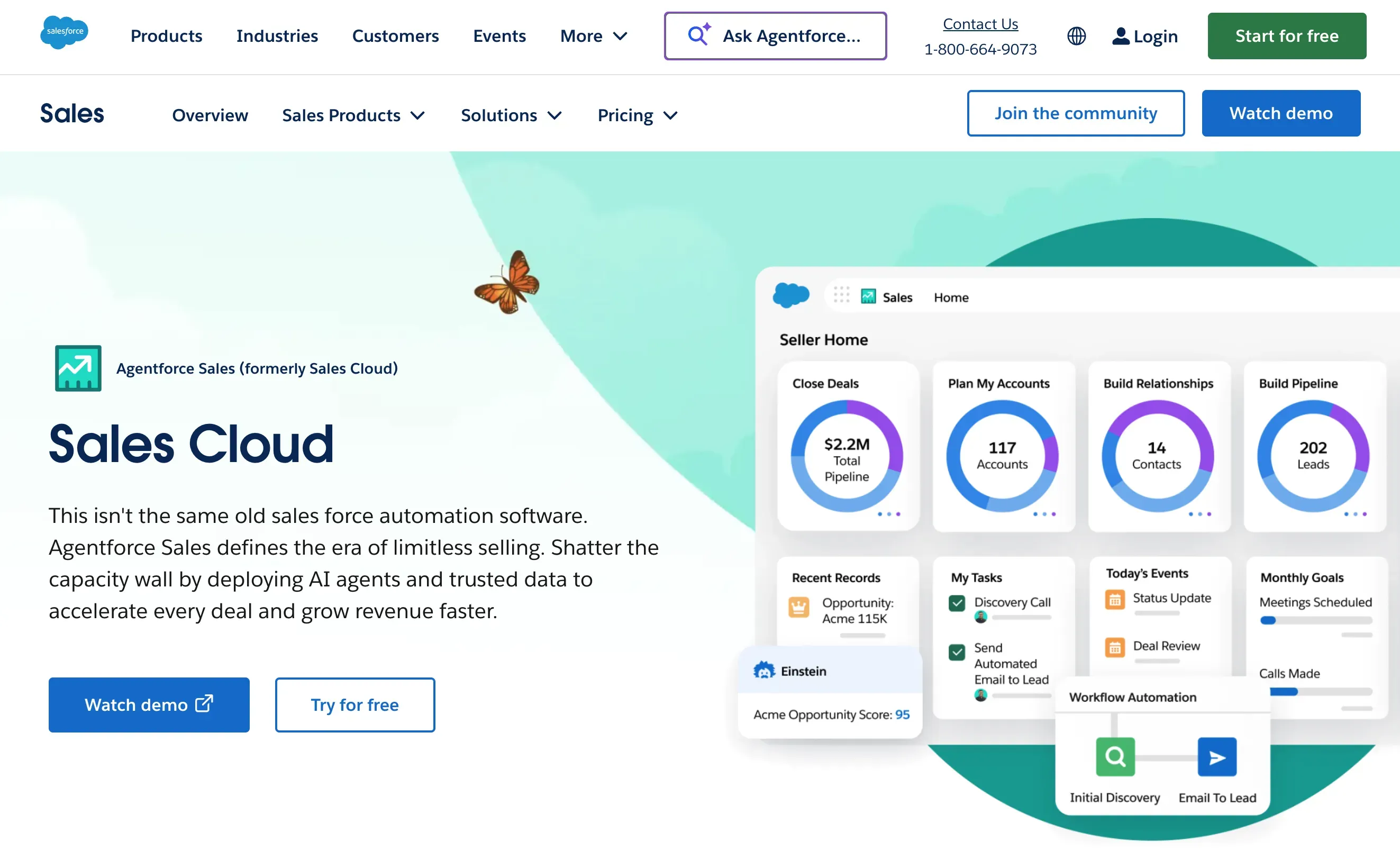
Agentforce Sales by Salesforce is maximizing the value of the Salesforce ecosystem. If your sales team already uses Salesforce, it becomes a natural marketing automation solution for aligning marketing and sales data. Its lead grading system helps sales reps prioritize the most qualified prospects.
Tool 2: Adobe Marketo Engage
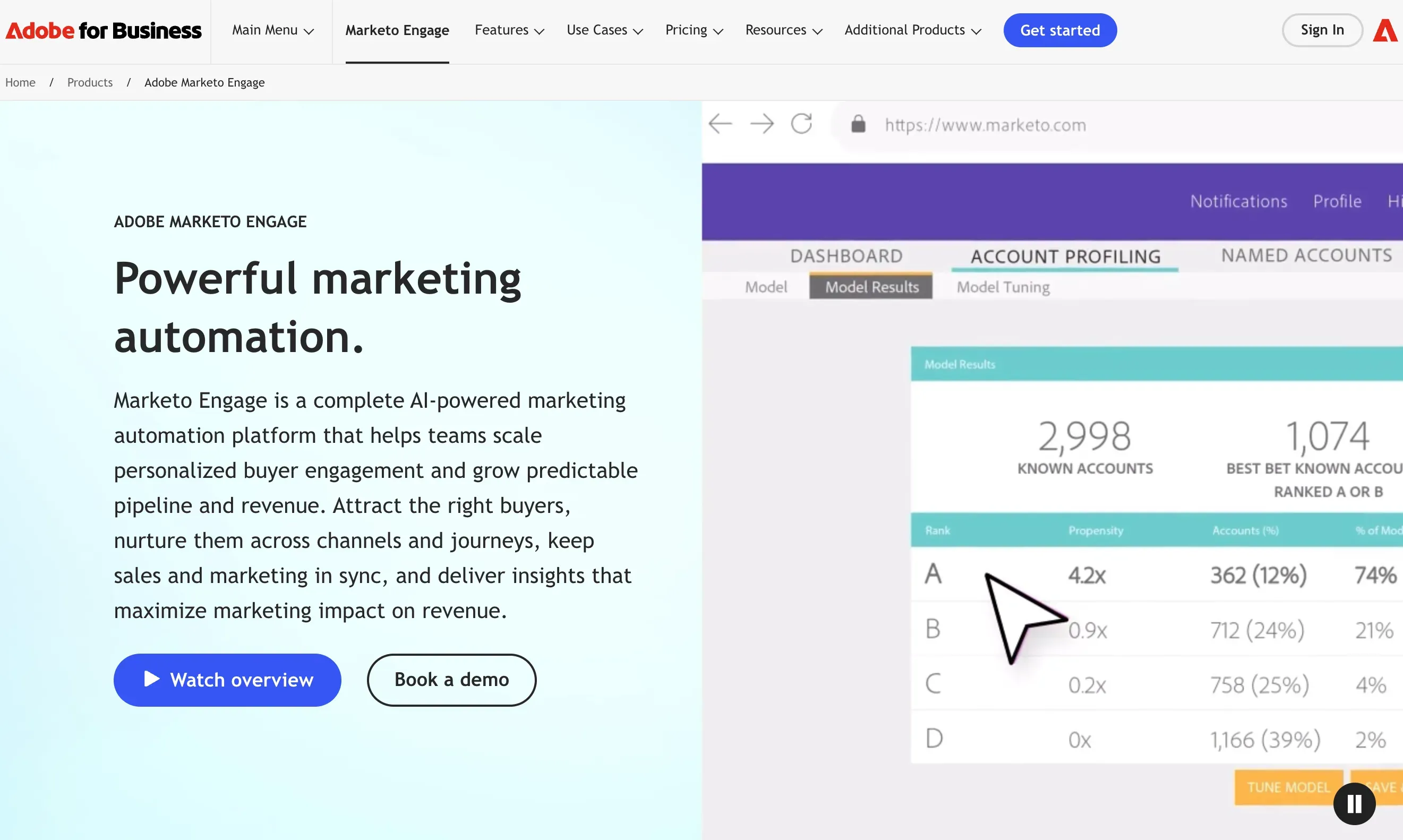
Marketo excels at account-based marketing (ABM). For enterprises targeting specific high-value accounts, Marketo’s personalization capabilities are top-tier. It integrates deep behavioral data to ensure your messaging resonates with decision-makers at every stage of a long sales cycle.
Benefits of Using Marketing Automation Tools
Marketing automation tools are software platforms designed to simplify complex marketing operations. They execute repetitive actions—like email sequences, social posting, and ad retargeting—based on user behavior. Beyond simple tasks, modern tools in 2026 utilize AI agents to predict customer needs and deliver hyper-personalized content automatically.
Here is why they are indispensable:
- They automate inbound marketing workflows, allowing your team to focus on strategy.
- They bridge the gap between sales and marketing by syncing data in real-time.
- They provide predictive analytics to forecast campaign outcomes before you spend a dime.
Time-saving and operational efficiency
I have seen teams reclaim 20+ hours a week simply by automating routine follow-ups. Tools today handle everything from email drip campaigns to database hygiene. This allows your creative talent to focus on what they do best: creating compelling stories and strategies.
Improved customer engagement
Automation allows you to maintain a consistent conversation with thousands of customers simultaneously. By triggering messages based on specific actions—like viewing a pricing page—you build relevance. Companies leveraging this level of timing often see a massive increase in qualified leads.
Enhanced data-driven decision-making
Modern platforms act as a central source of truth. They don't just execute; they measure everything. With features like AI-driven lead scoring, you can identify which prospects are ready to buy immediately. Acting on this data is how top businesses outperform competitors by wide margins.
Why Marketing Automation Is Essential in 2026?
The digital landscape in 2026 is defined by speed. Trends like adaptive AI campaigns have raised the bar. Customers now expect instant, context-aware interactions. If a user interacts with your chatbot, they expect your email follow-up to know about that conversation.
Manual processes simply cannot keep up with this demand for immediacy. If you aren't using intelligent automation to unify these touchpoints, you are likely losing market share to competitors who do.
How to Choose the Best Marketing Automation Tool?
Selecting the best marketing automation tool can be challenging because many platforms offer similar features. Evaluating integrations, scalability, usability, and pricing helps businesses identify the most suitable marketing automation platform for their needs.
Factors to Consider
Before choosing a marketing automation solution, it is important to evaluate several practical factors that will affect long-term usability and performance.
Integration with existing systems
A marketing tool is only as good as its ability to talk to your existing tech stack. If it doesn't sync perfectly with your CRM or analytics dashboard, you create data silos. In my experience, tools like HubSpot and Salesforce set the standard here, ensuring distinct departments view the same customer data.
Scalability for business growth
Don't just buy for today; buy for where you want to be in 12 months. Your software should support increasing contact lists and more complex logic without crashing. A scalable marketing automation platform should allow modular upgrades, so you only pay for the features you need as your business grows.
Ease of use and user interface
Complex features are useless if your team can't figure them out. Adoption is the biggest hurdle in automation. I always recommend prioritizing platforms with intuitive, drag-and-drop builders. Tools like Mailchimp or ActiveCampaign prioritize UX, making onboarding significantly smoother.
Pricing and budget considerations
It is easy to overspend on "shiny" features you will never use. Compare core functionalities against your actual daily needs. Small businesses often flourish with cost-efficient tools like Brevo, while large organizations often justify the premium of Eloqua or Pardot through advanced attribution reporting.
Identifying Your Business Needs
Even the best marketing automation tool will not deliver results if it doesn't match your business structure or industry requirements. Defining your team size, goals, and technical needs is crucial.
Small businesses vs. enterprises
Small teams usually need "plug-and-play" simplicity. If you have fewer than five marketers, look for all-in-one simplicity. Conversely, enterprises reaching a certain scale need robust governance, custom API capabilities, and advanced security. Knowing which camp you fall into prevents costly migration headaches later.
Industry-specific requirements
Context matters. An e-commerce brand needs deep integration with Shopify and cart abandonment triggers. A B2B consultancy needs strong lead scoring and CRM syncing. Define your "must-haves" based on your business model before booking demos.
Common Mistakes to Avoid When Choosing a Marketing Tool
Even when evaluating a top marketing automation tool, businesses can still make strategic mistakes. Avoiding the following issues will help you choose a platform that truly supports your marketing goals.
- Assuming one size fits all. What works for a SaaS giant won't necessarily work for a local agency.
- Over-automating human interactions. Never automate a task that requires genuine empathy or high-touch relationship building.
- Ignoring data hygiene. Automating bad data just messes things up faster. Clean your lists before migrating.
- Neglecting onboarding. Failing to train your team properly leads to low adoption rates and wasted budget.
Comparing the Best Marketing Automation Tools
Feature Comparison
Every tool claims to do it all, but they have different DNA. Here is where the leaders focus:
- Lead Management: HubSpot and Pardot offer the deepest CRM syncing.
- eCommerce Intelligence: Klaviyo dominates with revenue-focused data usage.
- Omnichannel Reach: Brevo and Iterable seamlessly blend Email, SMS, and Chat.
- Reporting: Eloqua and Tableau (via Salesforce) offer the most granular attribution models.
Pricing Overview
Budgeting for 2026 requires understanding the hidden costs:
- Entry-Level: Mailchimp and Brevo offer viable free trials or start around $30-$40 per month (with a yearly subscription).
- Mid-Market: ActiveCampaign and HubSpot Starter plans range from $30 to $50/month but can scale to $800+.
- Enterprise: Pardot and Marketo typically start near $1,200/month, often requiring annual contracts.
Pros and Cons of the Top 5 Competitors in Our List
To make the best marketing automation tool easier to evaluate, we selected five widely used platforms mentioned in this guide. The table below highlights their key strengths and limitations, helping you quickly compare which marketing automation solution may fit your business needs.
| Tool | Pros | Cons | |
|---|---|---|---|
| 1 | Scrumball | Focused specifically on influencer workflow automation. | Cheap to get started and packed with powerful features. It has a steep learning curve. |
| 2 | Mailchimp | Zero coding required; massive template library. | Automation logic is simpler/limited compared to others. |
| 3 | HubSpot | Top-tier education/support; effortless scaling. | Gets very expensive quickly as contacts grow. |
| 4 | Salesforce Pardot | Unbeatable B2B analytics; sales team alignment. | Implementation usually requires a certified consultant. |
| 5 | Brevo | Great value; unlimited contacts on many plans. | The drag-and-drop builder can feel rigid to designers. |
Marketing automation in 2026 is about "smart" work, not just "fast" work. These platforms boost efficiency by removing manual bottlenecks, allowing you to deliver personalized experiences that actually convert. The future belongs to brands that use these tools to treat every customer like their only customer.
Before you sign a contract, be honest about your resources. Do you have a developer? If not, skip the complex enterprise tools. Define your specific goals—whether it's lead gen or retention—and choose the tool that solves that specific problem best. Always map out your budget scaling to avoid surprises later.
Finally, I strongly urge you to utilize free trials offered on each platform. Load in some data, create a test workflow, and see how it actually feels (which you can’t really know when just watching the demo). The "best" tool is simply the one your team actually enjoys using.
FAQ
What is the best marketing automation tool for beginners?
For those new to automation, Scrumball, Mailchimp, and Brevo are excellent starting points. They combine intuitive interfaces with affordable pricing, allowing you to launch campaigns without needing a technical background.
Can small businesses afford marketing automation tools?
Yes. Tools like Scrumball, Brevo, and HubSpot offer free trials or $0 starter plans designed for small businesses looking for marketing automation solutions. These tiers often include basic email limits and list management, which is plenty of power to start streamlining your operations.
How do I know if a tool integrates with my current systems?
Most reputable marketing automation platforms list their integrations publicly on their "Marketplace" or "App Store" pages. If you use niche software, use a connector tool like Zapier or Make to bridge the gap.
Are free trials worth trying?
Yes. Even with limited features and capabilities, free trials still allow you to field test a marketing automation solution before committing to a paid plan. You can explore the interface, build sample workflows, and evaluate whether the tool fits your marketing processes.
Do I need technical skills to use these tools?
In 2026, most marketing automation platforms are "no-code" by design. They utilize visual builders and drag-and-drop logic. In most cases, all you need to do is draw a flowchart on a whiteboard, and you can build an automation sequence with ease.
💡 Pro Tip: Focus on your content strategy first. Even the best marketing automation tool in the world can't fix a marketing message that doesn't resonate.