


A data-driven marketing agency helps you turn customer and campaign data into better targeting, stronger personalization, and clearer ROI. On an influencer-led growth strategy, that also means using creator data to choose better partners, improve content fit, and measure what each collaboration actually delivers.
That matters more now because marketing performance is rarely driven by one channel alone. McKinsey reports that companies that get personalization right generate 40% more revenue from those activities than average players. At the same time, Salesforce says marketers still face major challenges with data unification, especially across channels, teams, and platforms.
That gap becomes even more visible in influencer marketing. Creator discovery, audience fit, outreach, approvals, and attribution all produce useful data, but many brands still manage them in separate tools. A strong agency, and the right workflow, help connect those signals so campaigns become easier to scale and easier to measure.
The Role of Data in Modern Marketing
How data-driven marketing transforms strategies
Data-driven marketing changes how you build strategy. Instead of relying on assumptions, you use customer behavior, channel performance, and campaign outcomes to decide where to invest and what to improve.
That logic applies to influencer marketing as well. The best creator campaigns are not built on follower count alone. They are built on audience overlap, engagement quality, brand fit, content style, and post-campaign results.
Well-known brands have shown how powerful this can be. Starbucks uses loyalty data to make offers more relevant. Amazon uses behavioral and purchase data to shape recommendations. In creator marketing, the equivalent is using audience and performance data to choose creators who can move beyond vanity metrics.
Unlocking the power of customer and creator data for personalization
Personalization is stronger when you combine customer data with creator data. That gives you a clearer view of both the buyer and the messenger.
| Type of Data | Description |
|---|---|
| Personal data | Basic customer details such as name, email, phone number, or location. |
| Engagement data | Signals from opens, clicks, likes, replies, video views, and on-site interactions. |
| Transactional data | Purchase history, order value, product mix, payment method, and buying frequency. |
| Behavioral data | Browsing paths, product views, cart actions, and conversion steps across the journey. |
| Psychographic data | Interests, values, attitudes, and lifestyle signals that shape messaging and positioning. |
| Creator audience-fit data | Audience demographics, engagement quality, content niche, brand affinity, and creator performance history. |
That last category matters more than many brands realize. A creator can look impressive on paper but still be a poor fit if the audience is too broad, too passive, or misaligned with your offer. The right agency helps you spot that before budget is wasted.
Achieving growth and efficiency through data insights
Data is not only for reporting. It helps you improve efficiency while you grow. When you know which channels, creators, and customer segments perform best, you can stop spreading budget too thin.
In influencer marketing, this often means shifting spend toward creators with stronger save rates, higher click quality, better assisted conversions, or better repeat purchase impact. It also means using content performance to decide which creator assets deserve paid amplification.
That is where a data-driven partner creates real value. They help you move from broad campaign activity to focused, repeatable performance.
Key Benefits of Partnering with a Data-Driven Marketing Agency
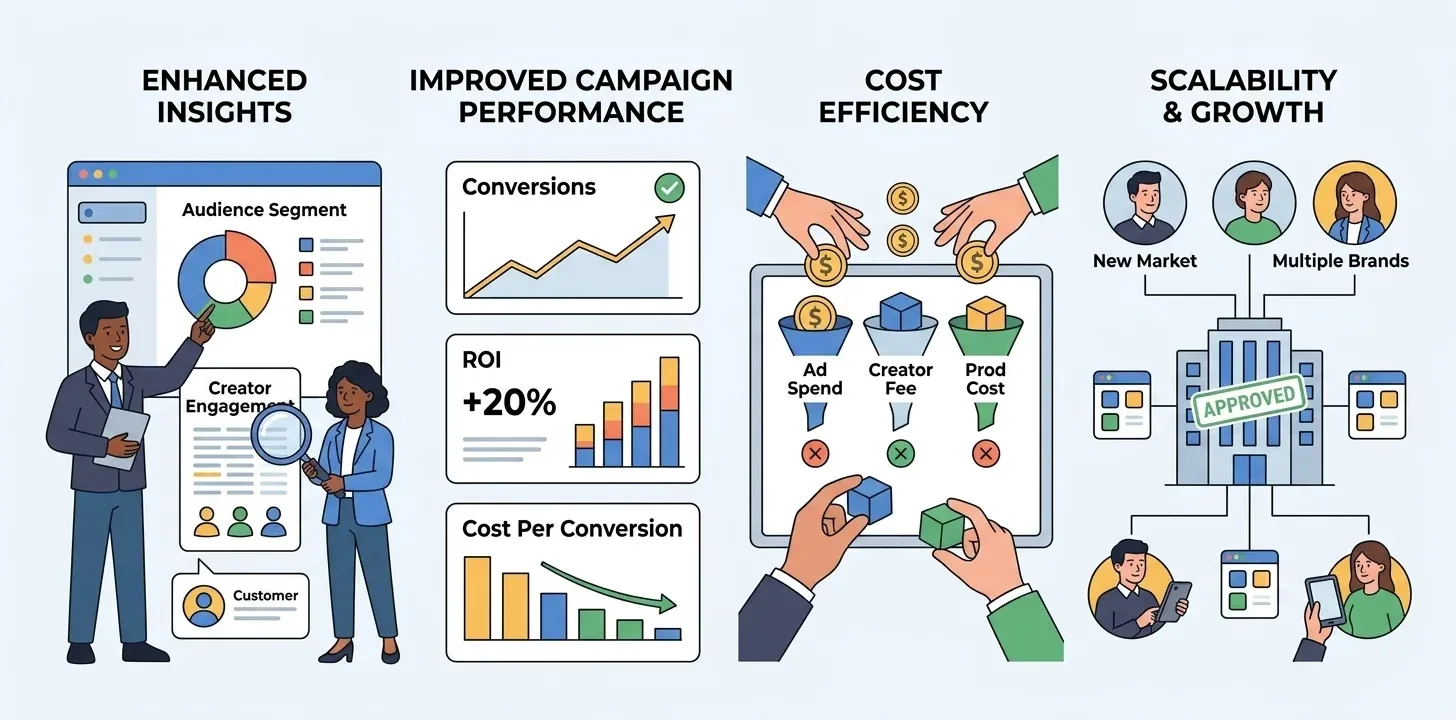
Enhanced customer and creator insights for better decision-making
A data-driven marketing agency gives you sharper visibility into what is working and why. That includes customer behavior, high-value audiences, underperforming channels, and creator partnerships that are driving real engagement or revenue.
This is especially useful in influencer marketing, where poor partner selection can waste time and budget. Instead of choosing creators based on surface metrics, you can evaluate audience quality, niche relevance, content style, and historical campaign outcomes.
Optimized campaign performance with data-driven influencer marketing
Better measurement leads to better campaigns. Strong agencies connect campaign activity to business outcomes, not just top-line reach. In influencer marketing, that means looking beyond impressions and tracking how creator content supports clicks, conversions, and customer quality.
| Metric | Description |
|---|---|
| Customer Acquisition Cost | The cost of acquiring a new customer across your marketing channels. |
| Lifetime Value | The total projected revenue from a customer over the full relationship. |
| Conversion Rate | The share of visitors or leads who complete a desired action. |
| Engagement Rate | The level of interaction with the creator or branded content relative to audience size or reach. |
| Influencer-Assisted Conversions | Conversions influenced by creator content, tracked through links, codes, landing pages, or attribution models. |
| Return on Investment | The revenue impact of a campaign compared with its total cost. |
This approach improves more than reporting. It helps you decide which creators to rehire, which content angles to scale, and which campaigns deserve more budget.
Cost efficiency through targeted resource allocation
Good agencies help you put resources where they matter most. That applies to ad spend, content production, and influencer partnerships. Instead of chasing too many channels or creators at once, you focus on the combinations with the strongest evidence behind them.
For influencer programs, this usually means better shortlists, cleaner outreach, fewer mismatched partnerships, and stronger post-campaign learning. The result is not just lower waste. It is a better-performing program.
Scalability for growth with a data marketing agency
Scalability matters when your business expands into more channels, more regions, or larger creator programs. A data-driven agency helps you build processes that can grow without turning your campaign operations into a mess.
This becomes especially important in influencer marketing. As creator counts rise, so do the moving parts. Outreach, approvals, briefs, contracts, content tracking, and reporting can quickly become fragmented.
How Data-Driven Agencies Stand Out?
Expertise in data analysis and influencer strategy
A strong agency does more than build dashboards. It turns analysis into action. That includes customer segmentation, attribution, channel mix decisions, creative testing, and increasingly, creator selection and performance review.
In influencer marketing, this expertise matters because campaign success often depends on fit, not volume. The agency should be able to explain why a creator is right for the campaign, how success will be measured, and what to change if performance lags.
“Half the money I spend on advertising is wasted; the trouble is I don’t know which half.”
John Wanamaker
That line still feels current because many brands still cannot connect campaign activity to business outcomes. A data-driven partner helps reduce that uncertainty, especially across creator-led campaigns where attribution is often messy.
Access to advanced tools and technology
Most businesses do not keep a full analytics and influencer ops stack in-house. Agencies usually work with a broader toolset that covers reporting, CRM, automation, attribution, and experimentation.
For example, they may combine Google Analytics 4 with CRM data, ecommerce reporting, and creator campaign workflows. They may also use influencer platforms to improve discovery, audience screening, and outreach execution.
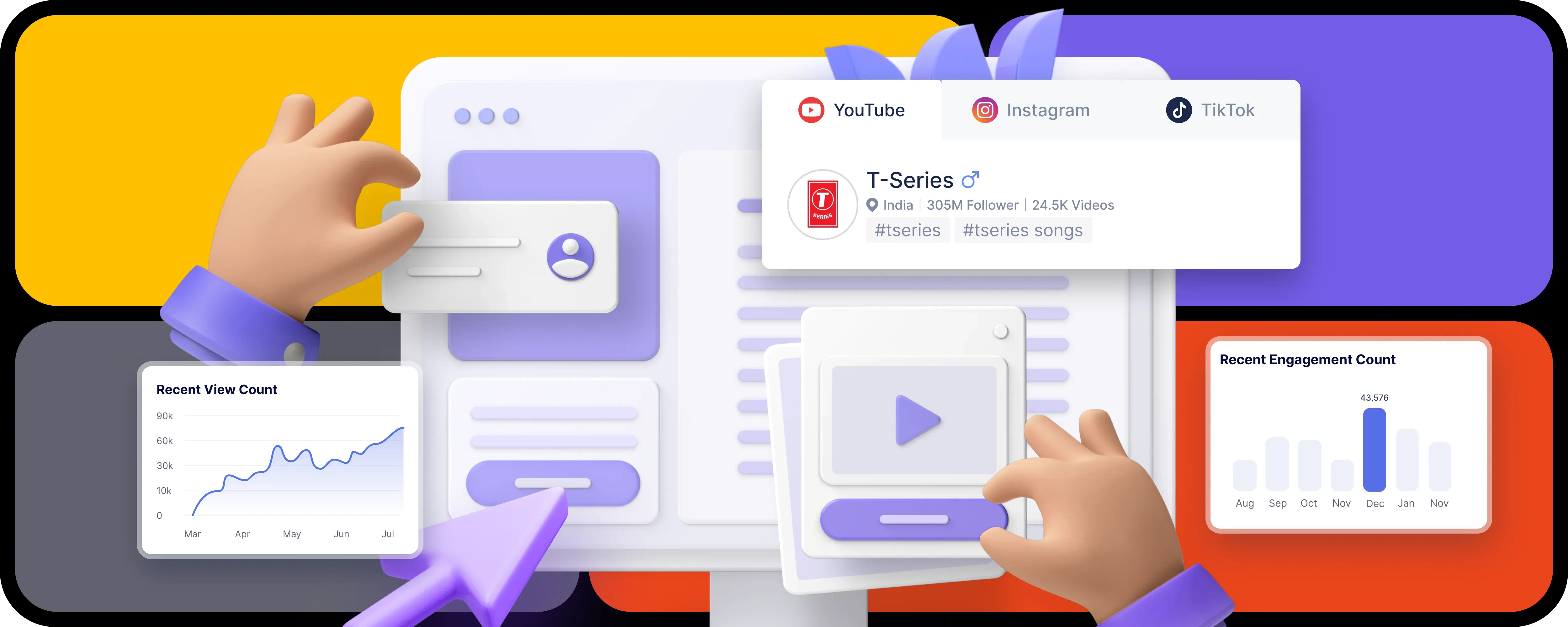
When influencer marketing is a serious growth channel, specialized systems matter. Professional influencer management platforms like Scrumball can help brands and agencies centralize creator data, automate parts of the outreach process, and keep campaign decisions tied to measurable performance.
Seamless integration of data across platforms
One of the hardest parts of modern marketing is connecting data from website activity, paid media, email, ecommerce, CRM, and social channels. Add influencer marketing to the mix, and the data picture gets even more fragmented.
A strong agency helps unify that view. In creator programs, that often means combining UTM tracking, affiliate links, discount codes, creator-specific landing pages, paid social performance, and CRM outcomes into one reporting framework.
When that integration is done well, influencer marketing becomes easier to evaluate alongside the rest of your acquisition mix. That makes budget decisions more grounded and less political.
Overcoming Challenges with a Data-Driven Marketing Agency Partner
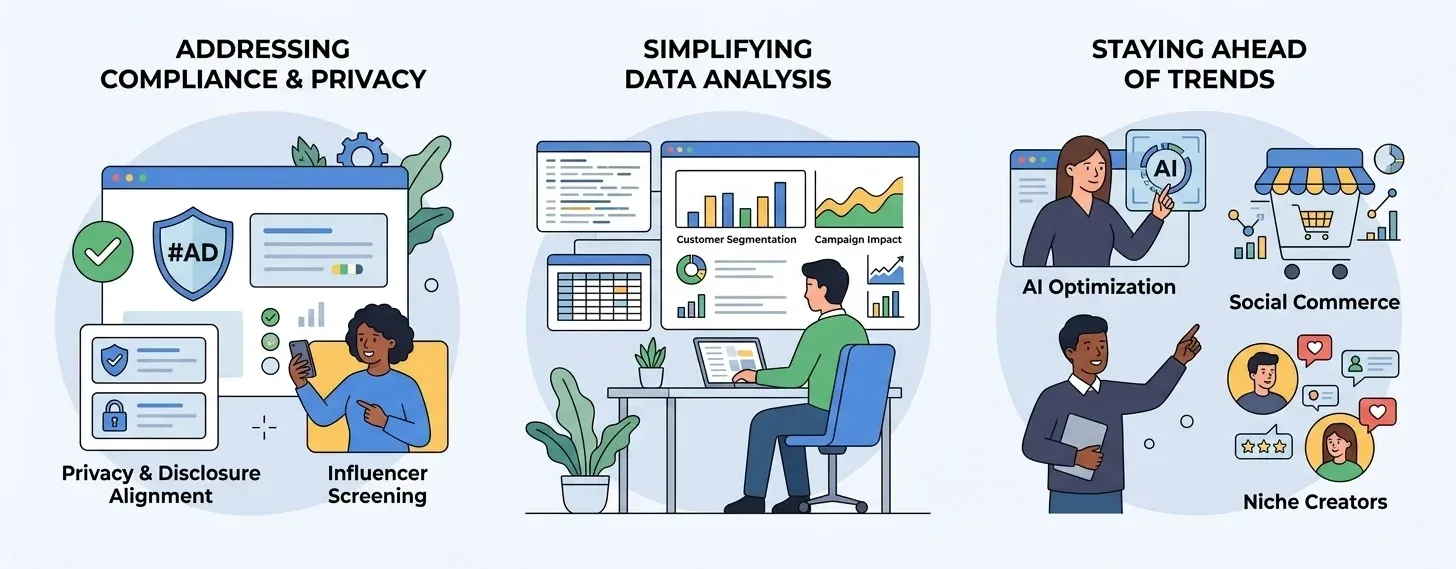
Addressing data privacy, brand safety, and influencer compliance
Data privacy matters, but in influencer marketing, compliance goes beyond data collection. You also need clear disclosure practices, safe creator partnerships, and trustworthy reporting.
A capable agency helps you manage both. That includes aligning campaigns with privacy expectations and applying standards from sources like the FTC’s influencer disclosure guidance. It also means screening creators more carefully so brand fit and audience quality are not left to guesswork.
Simplifying complex data analysis for businesses
Most businesses do not need more dashboards. They need clearer answers. A data-driven marketing agency simplifies analysis by focusing on the decisions behind the numbers.
| Activity | Description |
|---|---|
| Customer segmentation | Grouping customers by value, behavior, intent, or lifecycle stage. |
| Campaign tracking and measurement | Monitoring performance to refine targeting, creative, creators, and spend. |
| A/B testing | Comparing versions of copy, creative, offers, or landing pages to improve outcomes. |
| Influencer selection and attribution | Evaluating creators by audience fit, content quality, engagement signals, and campaign impact. |
| Personalization | Using customer and creator signals to tailor messages, offers, and content experiences. |
That process makes your strategy more practical. Instead of collecting more data than you can use, you focus on the inputs that improve decisions.
Staying ahead of trends with a data-driven marketing agency
The best agencies do not only report what happened. They help you adapt to what is changing. Right now, that includes first-party data strategy, privacy-safe measurement, AI-assisted optimization, social commerce, and stronger creator-led content systems.
Influencer marketing is evolving. Brands are leaning harder into niche creators, creator whitelisting, partnership ads, and long-term ambassador relationships. Those trends work best when they are backed by performance data, not just creative instinct.
That is why data-driven influencer marketing is becoming more important. It makes creator partnerships easier to compare, easier to improve, and easier to justify internally.
Conclusion
Partnering with a data-driven marketing agency gives you a clearer path from insight to growth. You improve decision-making, reduce wasted spend, and create campaigns that are easier to scale.
- Data-led strategies improve targeting and reduce bias.
- Better personalization makes campaigns more relevant and more profitable.
- Influencer data helps you choose stronger creator partners and measure real campaign impact.
- Cross-channel reporting helps you connect creator campaigns to broader business outcomes.
If influencer marketing is part of your growth strategy, the right partner should help you measure creators as seriously as any other acquisition channel. That is how brand awareness, content performance, and revenue start working together instead of living in separate reports.
Frequently Asked Questions
What is a data-driven marketing agency?
A data-driven marketing agency uses customer, campaign, and channel data to guide strategy. Instead of relying on assumptions, it analyzes behavior, conversions, and performance signals to improve targeting and spending. If influencer marketing is part of your mix, the agency should also use creator and audience data to improve partner selection and campaign results.
How does data improve influencer marketing?
Data improves influencer marketing by helping you evaluate creator fit, audience quality, engagement patterns, and conversion impact before and after a campaign. Instead of choosing creators based only on reach, you can compare niche relevance, content quality, click behavior, and attributed sales. That leads to stronger, more profitable partnerships and more efficient campaign spending.
How can a data-driven marketing agency improve my ROI?
A good agency improves ROI by finding the channels, campaigns, and creator partnerships that produce the strongest outcomes. It reduces wasted spend, improves audience targeting, and keeps campaigns under constant review. Over time, that means stronger acquisition efficiency, better conversion rates, and more confidence in where your marketing budget should go next.
Can a data-driven marketing agency help scale influencer campaigns?
Yes. A data-driven agency can help you scale influencer marketing by standardizing creator discovery, outreach, approvals, reporting, and post-campaign analysis. That structure matters once you move beyond a few partnerships. Many teams also use platforms like Scrumball to keep creator data, campaign operations, and performance insights more centralized as programs grow.
How do agencies handle privacy and influencer compliance?
Reputable agencies treat privacy and compliance as part of campaign planning, not an afterthought. They use consent-aware data practices, secure reporting processes, and clear creator disclosure standards. In influencer marketing, that also means following sponsored content rules, documenting partnerships properly, and screening creators carefully to reduce brand safety and reputation risk.