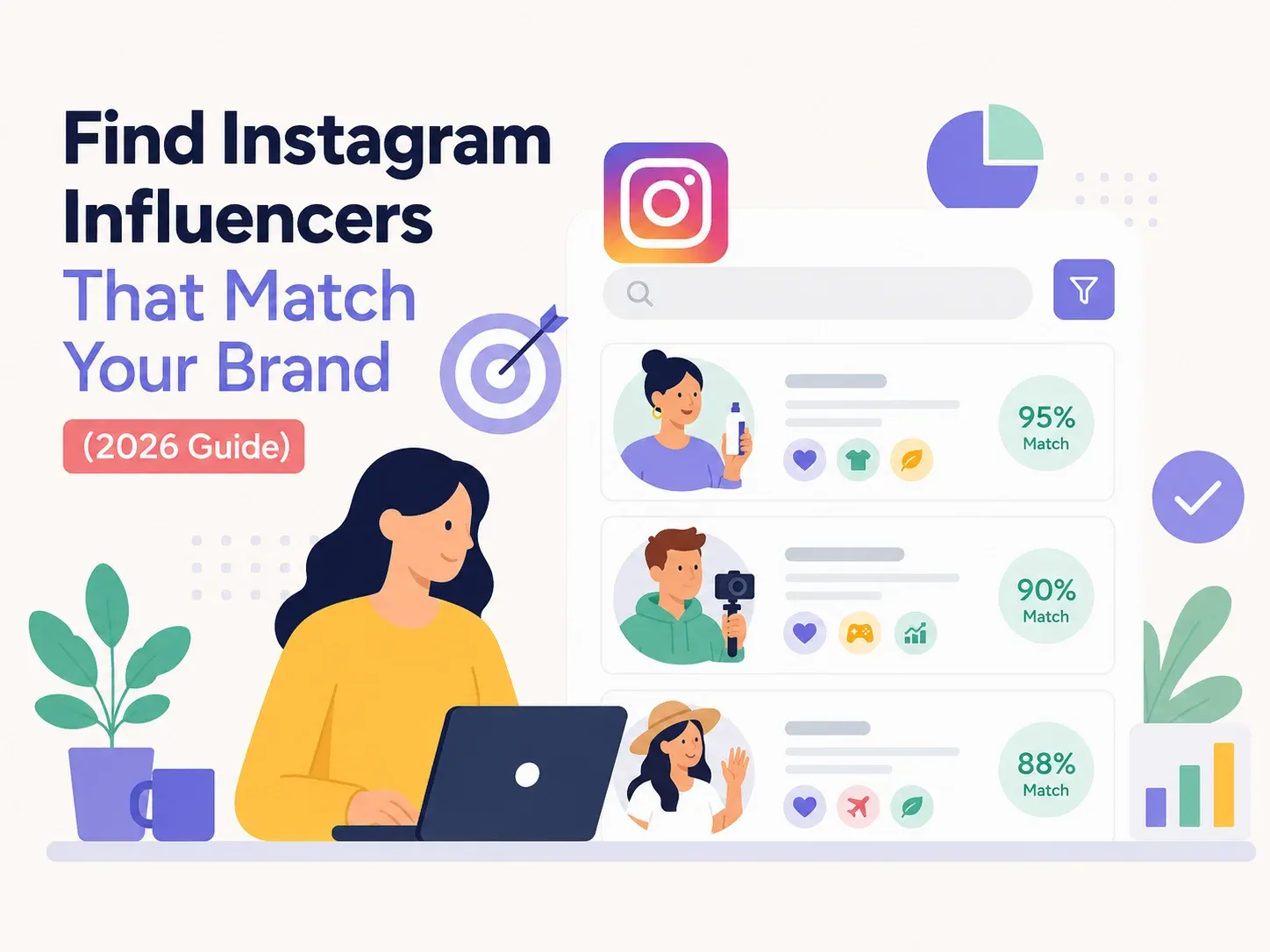

Instagram remains one of the most influential channels for modern brand storytelling, where creators shape perception and drive purchasing decisions in highly visual ways. However, many brands still struggle with finding Instagram influencers who truly align with their audience and campaign goals.
The challenge is no longer access to creators, but identifying the right ones among an overwhelming volume of content and engagement signals. This guide explains how to discover, evaluate, and select Instagram influencers using both manual methods and scalable tools.
How to Find Influencers on Instagram Manually?
Manual discovery is still a foundational approach, especially for niche or early-stage campaigns. These methods lean on platform-native behavior, letting brands find creators organically through content exploration and community activity. No tools required, just patience and a clear sense of the target niche.
Here are five ways to do it:
- Use Instagram search and explore: Search industry terms to surface creators in your niche, then let the explore page suggest trending and related accounts that direct search often misses.
- Search industry and product hashtags: Track topic-specific hashtags to find creators who consistently post relevant content, narrowing discovery to tight content ecosystems instead of broad audience pools.
- Analyze tagged brand content: Review tagged posts to spot creators who already mention or use similar products, a strong early signal of genuine brand affinity and lower onboarding friction.
- Read through comment sections: Look for highly engaged community members in niche discussions. Many aren't influencers yet, but consistent participation and topic authority often mark real early potential.
- Explore creator recommendations: Follow Instagram's suggested accounts, built on content similarity and engagement patterns, to uncover emerging creators who don't yet rank in competitive search results.
Using Intelligent Influencer Marketing Tools to Find Instagram Creators Faster
As influencer ecosystems expand, manual discovery becomes inefficient as campaign size increases, limiting both accuracy and operational speed. Brands will probably face the following challenges:
- Time-consuming process: Manual searching requires significant effort across profiles, hashtags, and engagement checks, making it inefficient for large-scale campaigns.
- Limited search visibility: Platform algorithms restrict exposure to a fraction of available influencers, preventing brands from accessing the full creator ecosystem.
- Hard to verify data accuracy: Without structured systems, brands struggle to validate the authenticity of engagement, audience demographics, and the reliability of influencer performance.
- Difficult campaign scaling: Managing multiple influencers manually increases coordination complexity, reducing efficiency and consistency across campaigns.
In short, manual methods are difficult to sustain as campaign-scale and precision requirements increase simultaneously.
The fix isn't more hours; it's a system that handles discovery, verification, and outreach in one place. Professional influencer platforms like Scrumball gives you four ways to find Instagram creators, and you can switch between them depending on how hands-on you want to be.
Let the AI Agent Find Instagram Influencers for You
The fastest route is full automation. All is required is to drop product page or homepage link, brand message, target market, campaign budget, etc. Scrumball’s AI agents, Lillian and Hunter, read what you sell and match Instagram influencers against it. If you want, they'll handle first-touch outreach too.
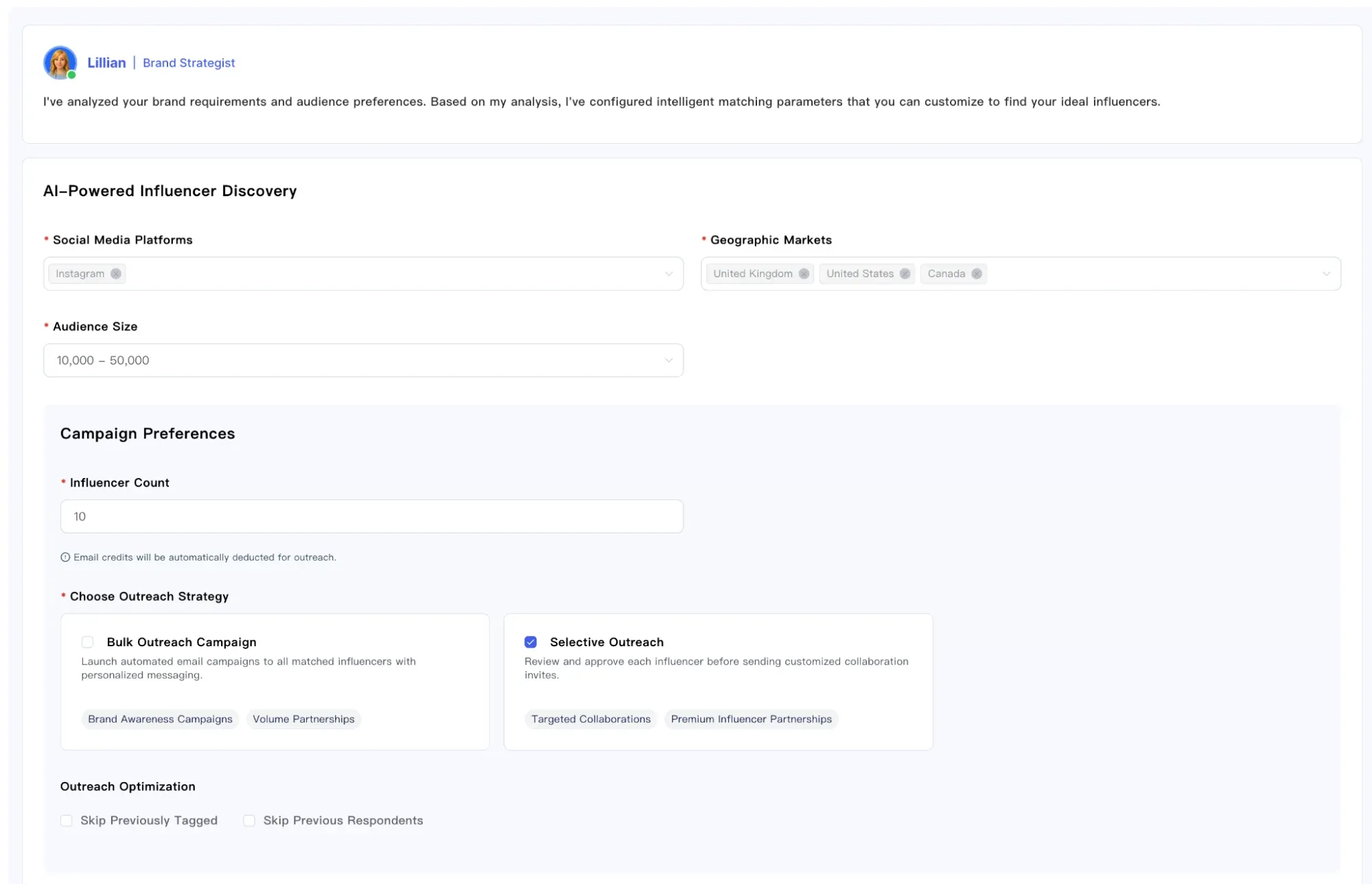
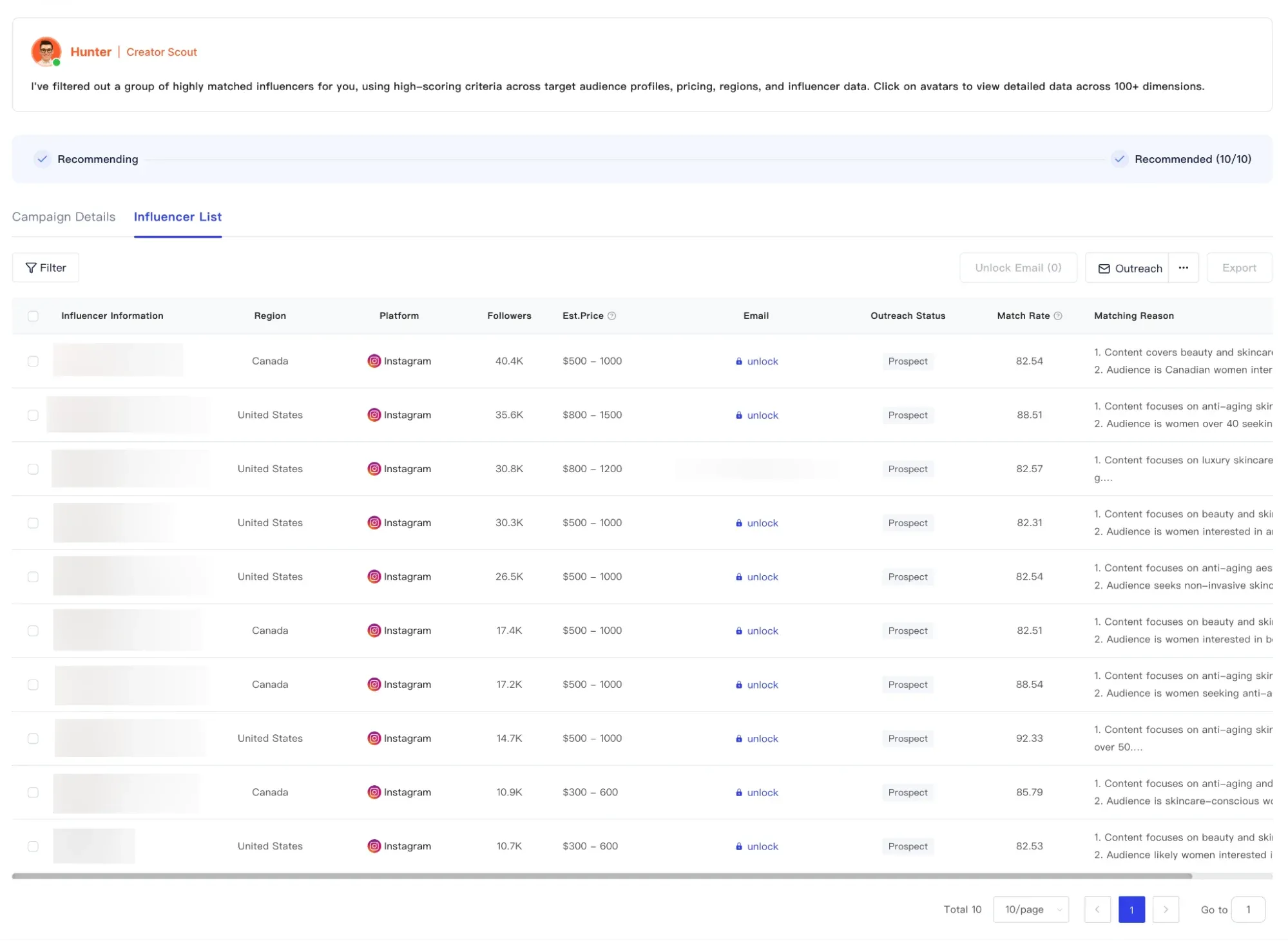
Most brands lean on this mode when a brief is clear, but a calendar isn't. You set the direction once, then review a matched shortlist instead of building one from scratch. The agents pull from the full creator database, so you're not capped by what Instagram's own discovery surfaces.
Run a Manual Search with Keywords and Filters
Sometimes you know exactly what you're after, and you want the controls yourself. Manual search lets you enter keywords, hashtags, and stack filters to pin down Instagram creators by niche, audience, location, engagement, and more.
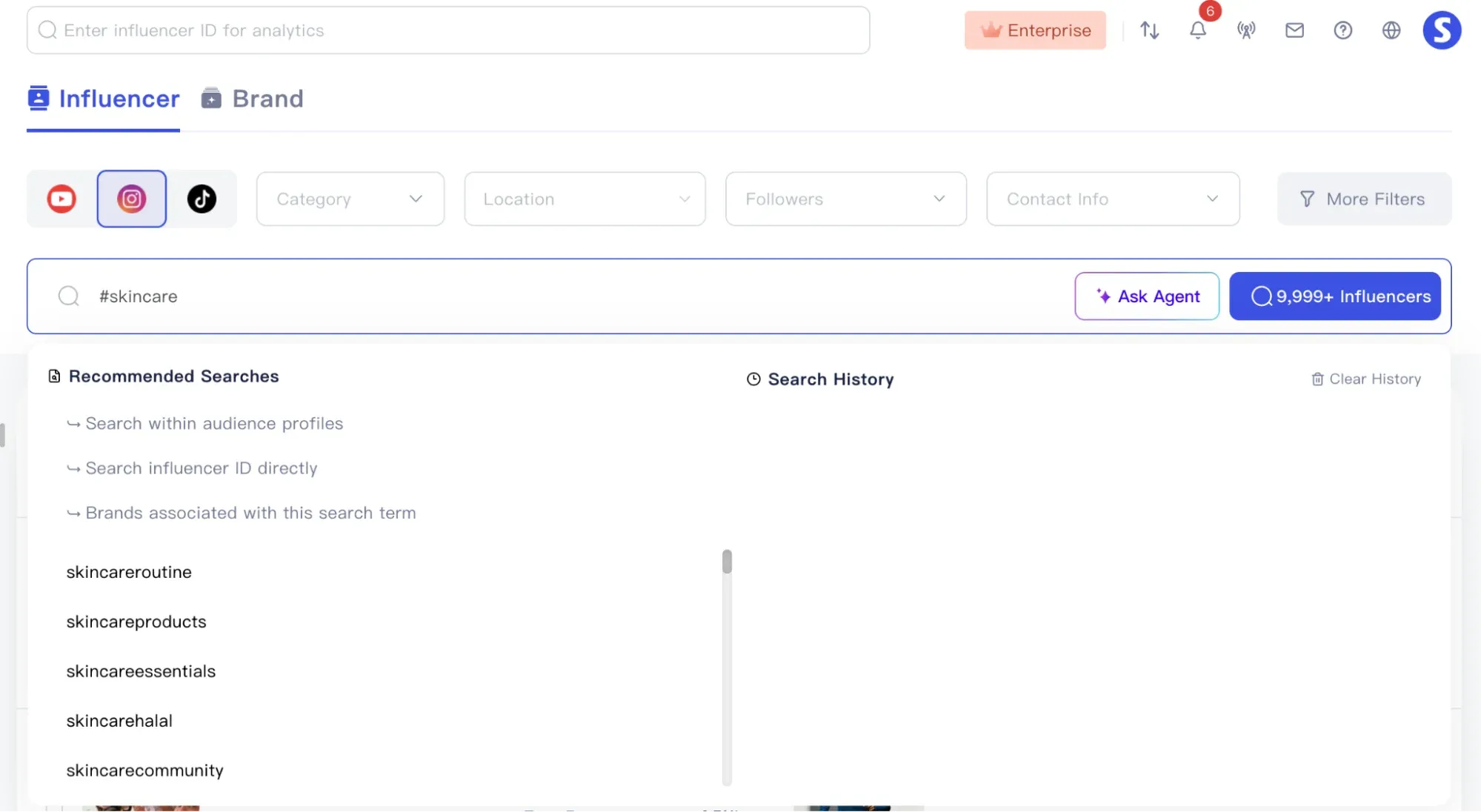
This is a default route when a campaign has hard constraints, say a beauty launch that needs creators in a specific country with a verified audience age band. You tighten each filter until the list reflects your real requirements, no guesswork involved.
Combine AI and Keywords with Hybrid Mode
Hybrid mode sits between the two. You write your requirements and goals in plain language, then ask the AI to filter influencers around them. It reads intent the way a teammate would, so "micro creators with high save rates in home cooking" becomes a working query.
Why bother with the middle path? Pure automation can miss nuance, and pure manual search makes you translate goals into rigid filters. Hybrid keeps your natural brief intact while still letting the AI do the heavy sorting across the Instagram creator pool.
Learn from Competitor Collaborations on Instagram
Here’s a shortcut most discovery tools skip: see what's already working for rivals. Scrumball collects brand collaboration data, so you can look up other brands in your industry and view the Instagram influencers they've partnered with, plus the collab content those partnerships produced.
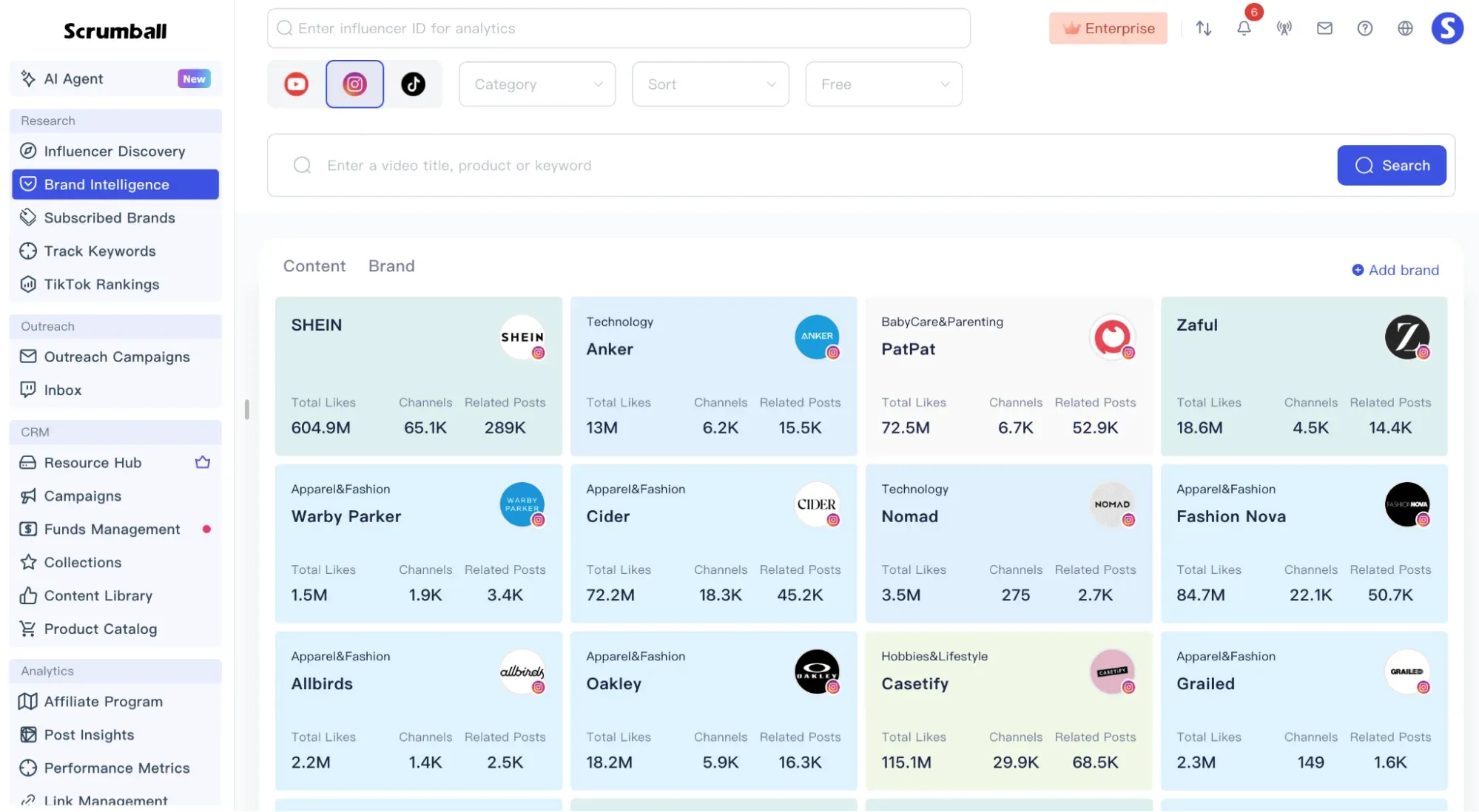
Open any brand, and you'll find their activity split across four tabs, each answering a different question:
- Overall collaboration status: the big picture, including total posts, reels, top-performing influencers, and standout content, so you grasp a competitor's whole Instagram approach in seconds.
- Brand post status: performance sorted into tiers, showing how many views their posts pull, engagement levels, and the mix of formats they use (single posts, reels, carousels).
- Overall influencer list: every creator they've worked with, account type and influencer tier distributed, which helps you see whether they bet on nano voices, mega names, or a blend.
- Paid influencer list: the partnerships our AI flags as paid through collab detection, separating sponsored relationships from organic mentions so you know what budget actually bought.
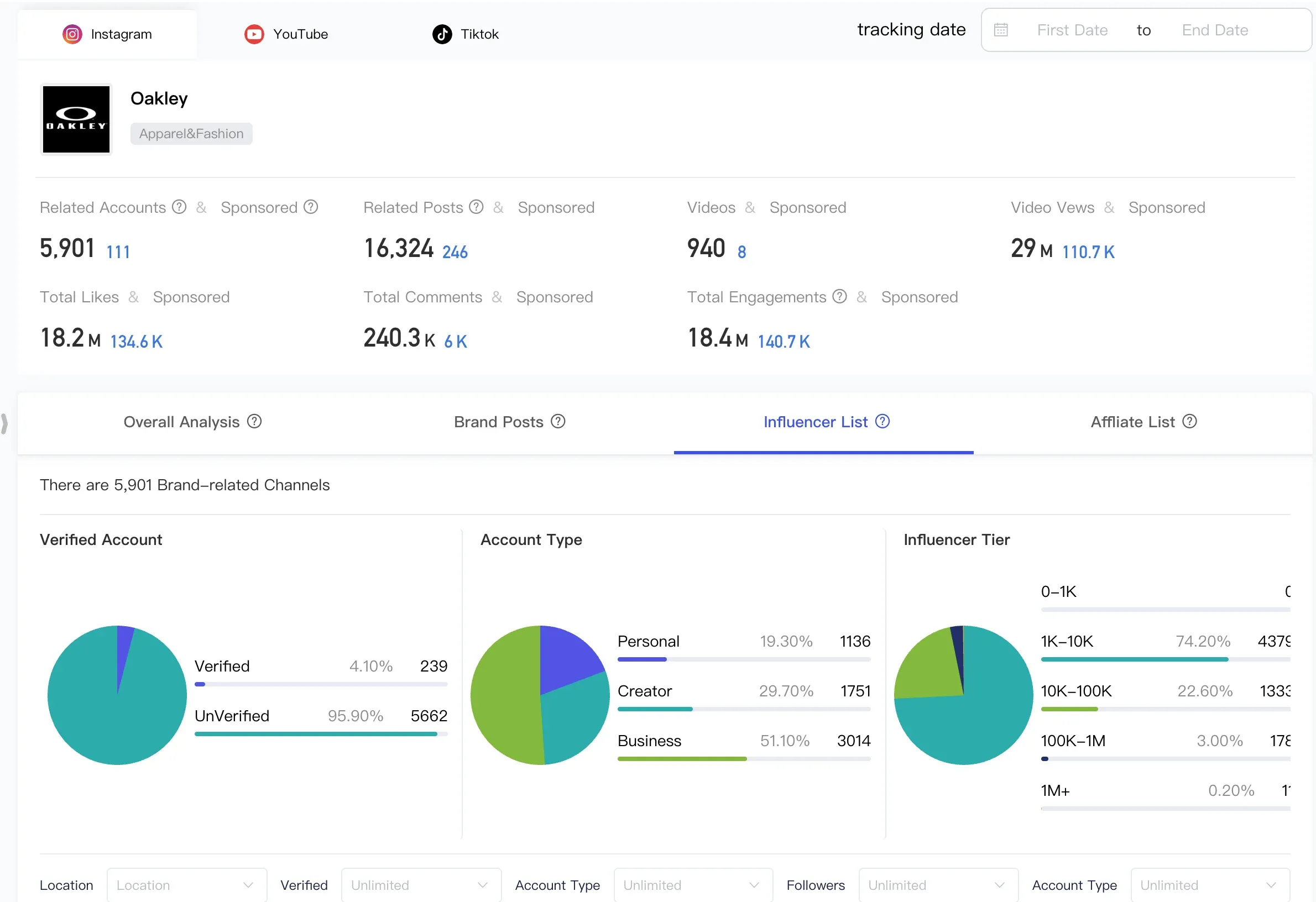
In practice, this saves a lot of trial and error. If three competitors keep returning to the same creator tier or content style on Instagram, that's a signal worth testing rather than ignoring. Treat it as a map of proven territory, then decide where you'd rather stand out.

Drop in a product link. Scrumball's AI agents return a matched creator shortlist. Get started for free today!
Drop in a product link. Scrumball's AI agents return a matched creator shortlist. Get started for free today!
How to Identify the Right IG Influencers for Your Brand Using Scrumball?
Identifying suitable Instagram influencers requires a structured evaluation that goes beyond surface-level metrics and focuses on long-term brand alignment. Before diving into discovery methods, brands must first understand what defines a high-quality influencer match and how evaluation criteria shape selection outcomes.
What Makes an Instagram Influencer a Good Brand Match?
A strong influencer-brand fit is built on multiple factors; let’s break it down.
- Audience alignment: Effective brand-fit influencers have audiences that closely match target demographics, including age, interests, purchasing behavior, and lifestyle patterns, ensuring campaign messages reach relevant consumers.
- Content relevance: Influencers whose content naturally fits within a brand’s niche create smoother integration, making promotional messaging feel authentic rather than forced or disconnected.
- Engagement quality: Strong influencers generate meaningful interactions, such as thoughtful comments and shares, which often indicate greater persuasive power than inflated like counts alone.
- Posting consistency: Consistent publishing behavior reflects audience trust and algorithmic stability, helping brands achieve more predictable visibility and sustained campaign performance.
- Brand safety and reputation: Influencers must maintain tone, values, and historical content that align with brand expectations to avoid reputational risks or message conflicts.
Overall, brand-fit influencers are those who deliver relevance and authenticity together, not just visibility at scale.
Evaluate IG Influencers Using Scrumball’s Detailed Analysis Page
Once you've defined what a good match looks like, the real work is verifying it without burning a day per creator. Scrumball's influencer analysis page pulls that vetting into one profile view, surfacing 90+ data points on any influencer on Instagram in our database so you can judge fit fast. The page sorts those dimensions into seven sections you can scan at a glance:
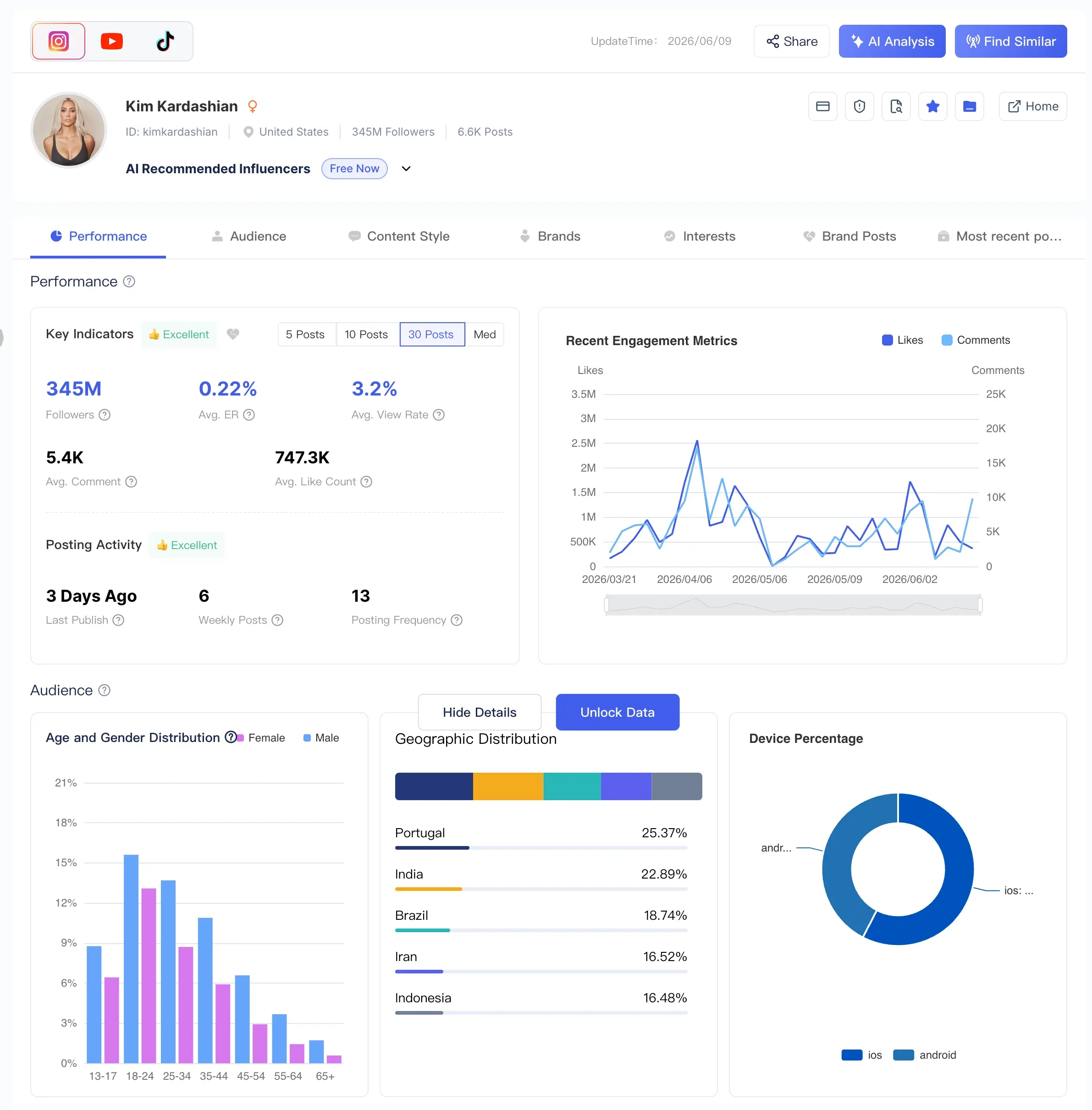
- Basic performance: follower counts, reach, and growth trends, the headline numbers that frame every other decision.
- Audience analysis: demographics, location, device, interests, and authenticity signals, so you can check real overlap with your target buyer instead of guessing.
- Influencer personality: Scrumball’s 16 personality types, which hints at how a creator communicates and the tone a partnership is likely to carry.
- Marketing and content strategy: the formats they lean on and the angles they return to, useful for spotting whether your message fits their existing rhythm.
- Content performance metrics: a scatter chart mapping views (x-axis) against engagement (y-axis), making outliers and consistency obvious in a single look.
- Past collaborations: brands they've worked with before, handy for gauging category fit and catching competitor conflicts early.
- Latest content: recent posts/reels with a quick performance read, so you see current form rather than a creator's peak-era highlights.
Hard numbers tell you what happened. They rarely explain why, or what it means for specific launch. Scrumball’s built-in AI chat closes that gap with four ready-made reads plus open questioning:
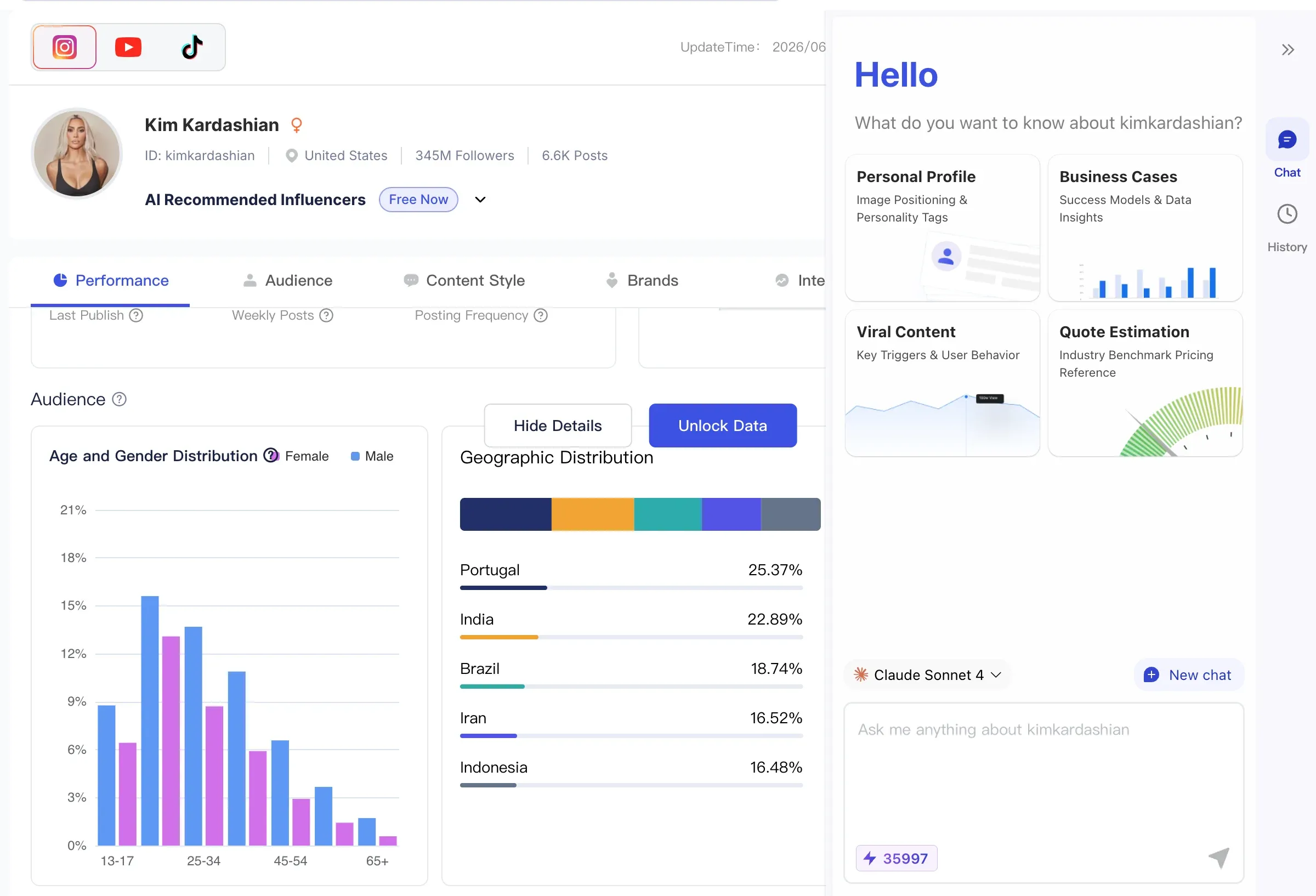
- Personal profile assessment: a plain-language summary of who the creator is and where they realistically fit.
- Business cases: how they've performed in comparable commercial contexts, not just organic posts.
- Viral content analysis: what actually drove their best posts or reels, so you can judge whether that success is repeatable or a one-off.
- Quote estimation: a ballpark on likely collaboration cost before you spend time on outreach.
Beyond those, plain language is also supported. Try something like "Would this creator suit a sustainable skincare launch in the US?" and get a reasoned answer drawn from the same underlying data.
Note that quote estimation gives you a negotiating anchor, not a locked-in price, so confirm rates directly when you reach out. Used together, the data view and the chat let you move from a long shortlist to a confident pick without leaving the page.
Common Mistakes Brands Make When Finding Instagram Influencers
Many brands underestimate how strategic influencer selection needs to be and often rely on incomplete metrics or assumptions during the discovery process. Understanding common pitfalls helps find influencers on social media more effectively and reduces campaign inefficiencies.
- Judging by follower count instead of real reach. Instagram's algorithm shows a post to a slice of an account's followers, so a creator with a large following can still land in front of relatively few people per post. Ask for reach and view data on recent Reels and feed posts, not just the follower number.
- Reading likes when saves and shares tell the real story. Likes are easy to inflate, and Instagram now lets accounts hide them entirely. Saves and shares signal that content was useful enough to keep or pass on, which maps far closer to purchase intent. Skim the comments too: generic emoji replies often mean an engagement pod, not a real audience.
- Matching the wrong format to your goal. A creator who excels at static carousels won't necessarily carry a Reel, and Stories disappear in 24 hours. Pick the format that fits your campaign first, then find creators with a track record in that specific format rather than strong numbers overall.
- Treating the partnership as a one-off. Single posts rarely build the familiarity that moves an Instagram audience, since followers need repeated exposure before a brand feels native to a creator's grid. Repeat collaborations compound trust and performance. It helps to understand the differences between short-term and long-term influencer strategies before deciding which model fits your goals.
Sidestep these four, and your shortlist starts reflecting creators who'll actually convert on Instagram, not just ones who look impressive in a search result.
Conclusion
Finding the right Instagram influencers has shifted from chasing follower counts to a structured process built on relevance, verified data, and evaluation that holds up at scale. Brands that grasp this change pick creators who genuinely fit their goals, not just ones who happen to surface first in a hashtag search.
Manual discovery still has its place. For a niche launch or a handful of targeted picks on Instagram, search, hashtags, and tagged content can carry you a long way. But the moment you're vetting dozens of creators or confirming whether an audience is real, those methods hit a ceiling.
Frequently Asked Questions
How do brands find Instagram influencers for a specific niche like fitness or beauty?
Start with signals: niche hashtags, keyword search, and category browsing to filter creators producing consistent, relevant content. Then check audience interests and recurring themes for real alignment.
Scrumball speeds this up four ways, letting Lillian and Hunter auto-match from your product link, manual filters, a natural-language plus AI hybrid search, or competitor collaboration data showing which creators rivals already trust.
What is the best way to check if an Instagram influencer has fake followers?
Brands should evaluate engagement consistency, comment authenticity, and follower growth patterns over time. Sudden spikes in followers or unusually low-quality interactions often indicate artificial audiences that may distort campaign performance and reduce trustworthiness. Additional signals such as repetitive comments, inactive follower profiles, and disproportionate reach-to-engagement ratios can also help identify inauthentic influence.
In addition, AI-powered influencer discovery tools can help brands detect fake followers more efficiently by analyzing audience authenticity, engagement anomalies, and growth patterns at scale, providing a more data-driven layer of verification.
How many followers should an Instagram influencer have to be effective for brand campaigns?
Influencer effectiveness depends more on engagement quality, audience relevance, and conversion potential than raw follower count. Micro and nano influencers often deliver stronger performance because their audiences tend to be more engaged and niche-focused. Brands should prioritize alignment and behavioral influence over scale alone, especially when optimizing for ROI-driven campaigns.
For budget planning for these high-engagement creators, see our latest breakdown of nano-influencer rates and compensation models.
Can small brands successfully work with Instagram influencers without large budgets?
Yes, small brands can successfully collaborate with influencers by focusing on micro creators, niche targeting, and flexible partnership models such as product seeding or affiliate-based compensation structures.
These approaches reduce upfront costs while still enabling brands to build authentic exposure and test performance before scaling larger campaigns.
What tools can help brands find Instagram influencers faster than manual search?
AI-powered influencer discovery tools help brands streamline the search process by combining audience filtering, niche categorization, and automated influencer matching into a single workflow. This significantly reduces manual effort while improving targeting precision.
In addition to discovery capabilities, modern influencer marketing platforms like Scrumball also integrate features such as fake follower detection and performance tracking & analytics, enabling brands to evaluate influencers more efficiently and make faster, data-driven collaboration decisions compared to manual search.