YouTube is still one of the most powerful and influential platforms for creator-driven marketing, but finding the right influencers on it tends to be slow, inconsistent, and hard to scale. For brands working out how to find YouTube influencers worth partnering with, the problem isn't access anymore. It's picking the right creators out of millions of channels.
This guide walks through how brands have traditionally found creators, how AI is reshaping that search, and how to evaluate a partnership before you commit budget to it.
How Brands Traditionally Find YouTube Influencers
Despite the rise of specialized technology platforms, many brands still rely on manual influencer discovery methods. These approaches can uncover valuable creators, but they often require significant time and effort, especially when campaigns need to scale across multiple audiences or markets.
Traditional Manual Discovery Methods
Before influencer platforms became widely available, brands primarily relied on research-intensive methods to find YouTube influencers manually through search, content analysis, and competitor research. Many organizations still use these approaches today because they are accessible and require little upfront investment.
| Method | How it works | Best for |
|---|---|---|
| YouTube search and recommendations | Enter industry keywords, product categories, or topics in YouTube's search bar, then follow the recommendation algorithm to related channels. | Quickly mapping creators who already cover your topic |
| Google site-filtered search | Pair operators like site:youtube.com with niche keywords to surface channels that don't rank well in YouTube's own search. |
Finding creators native YouTube search buries |
| Cross-platform discovery | Spot a creator on Instagram, TikTok, or LinkedIn, then check whether their YouTube channel fits the campaign. | Following creators you've already noticed elsewhere |
| Competitor sponsorship mapping | Review which creators have partnered with similar brands to find influencers proven to reach your audience. | Shortlisting creators with a track record in your space |
These approaches remain useful for uncovering relevant creators, particularly for smaller campaigns or niche markets.
Limitations of Traditional Manual Discovery
Although manual discovery methods remain common, their weaknesses become more noticeable when brands attempt to expand influencer programs across multiple campaigns, products, or markets.
- Slow and hard to scale: Evaluating a creator means watching the channel, not a single video. You're weighing content quality, upload consistency, engagement, and past sponsorships across dozens of uploads. Multiply that by a shortlist, and the hours add up fast.
- You only see public metrics: Subscriber counts, views, comments, and likes are visible. Audience demographics, viewer interests, watch-time behavior, and past campaign results aren't. That missing layer is exactly what tells you whether a creator can actually deliver.
- Hard to compare creators fairly: Tutorials, reviews, interviews, vlogs. Formats and posting rhythms vary so much that public numbers rarely line up cleanly, which makes side-by-side judgments shaky.
- Search and Recommendation Bias Can Limit Discovery: YouTube's algorithm favors big, established channels, so the same familiar names keep surfacing. Smaller niche creators with a near-perfect audience match often never show up at all (in manual searches).
While manual discovery can still generate valuable opportunities, these challenges explain why many brands are increasingly turning to AI-powered influencer discovery platforms that can streamline creator sourcing, improve evaluation accuracy, and help find YouTube influencers more efficiently at scale.
A Modern Solution: AI-Powered YouTube Influencer Discovery
As creator pools keep growing, manual research stops scaling. AI-powered platforms like Scrumball change how brands find YouTube influencers by combining large-scale creator data, audience intelligence, and automated matching to speed up discovery.
Instead of spending hours scanning channels and comparing metrics in spreadsheets, you can let AI surface qualified creators, check audience fit, and rank opportunities at scale. Three workflows make this possible: full autonomous AI agents, AI-assisted manual search, and the hybrid natural language plus AI matching.
AI Agents for End-to-End Sourcing & Outreaching
If you want less hands-on control and almost none of the manual labor, Scrumball's AI agents, Lillian and Hunter, run the whole loop: learning your brand, sourcing channels, matching, and reaching out once you give the go-ahead.
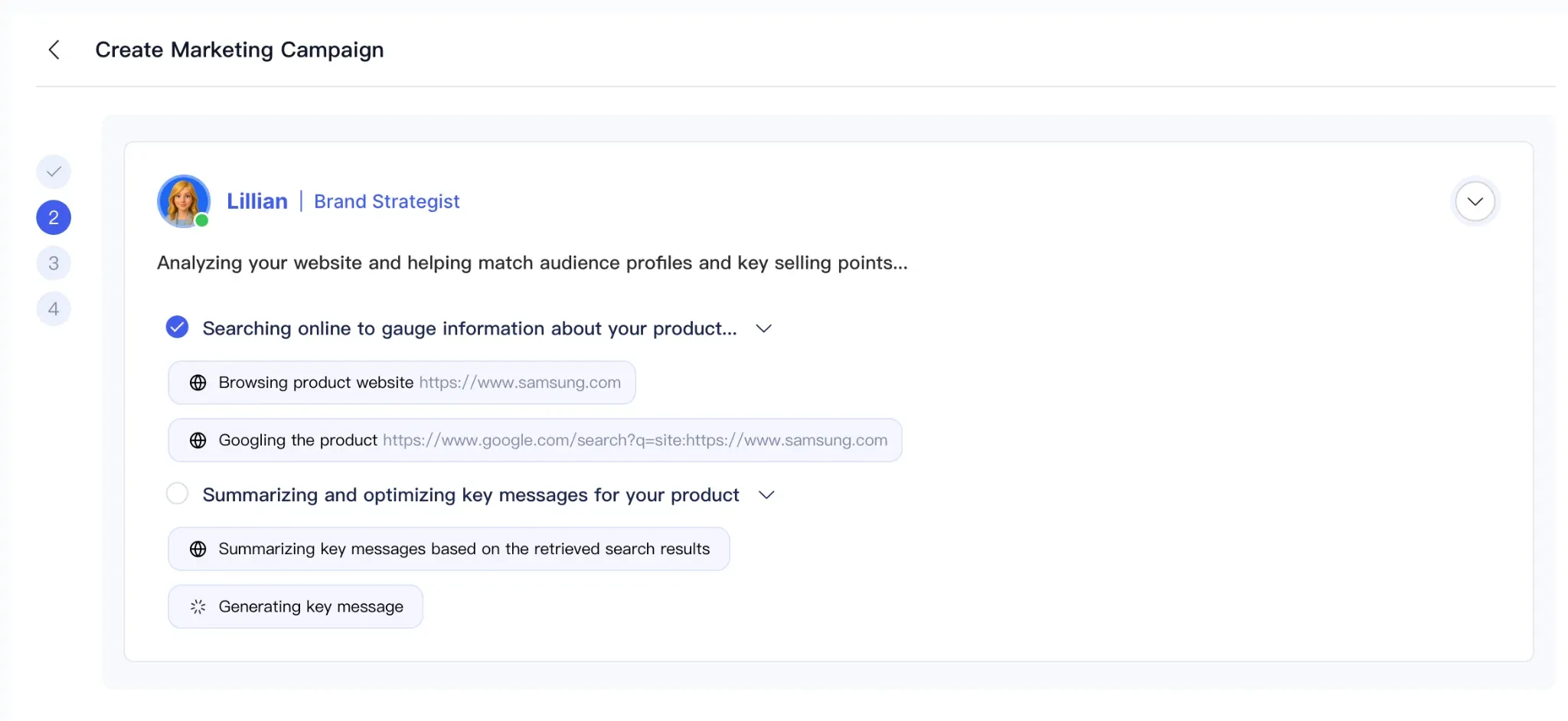
Point them at your website, product details, campaign brief, target audience, and budget, and they build a working picture of what the partnership needs. From there, they source across Scrumball’s YouTuber database, map audience overlap, and rank each channel on campaign fit, weighing whether a creator's format suits a dedicated review, a mid-roll integration, or a series of mentions.
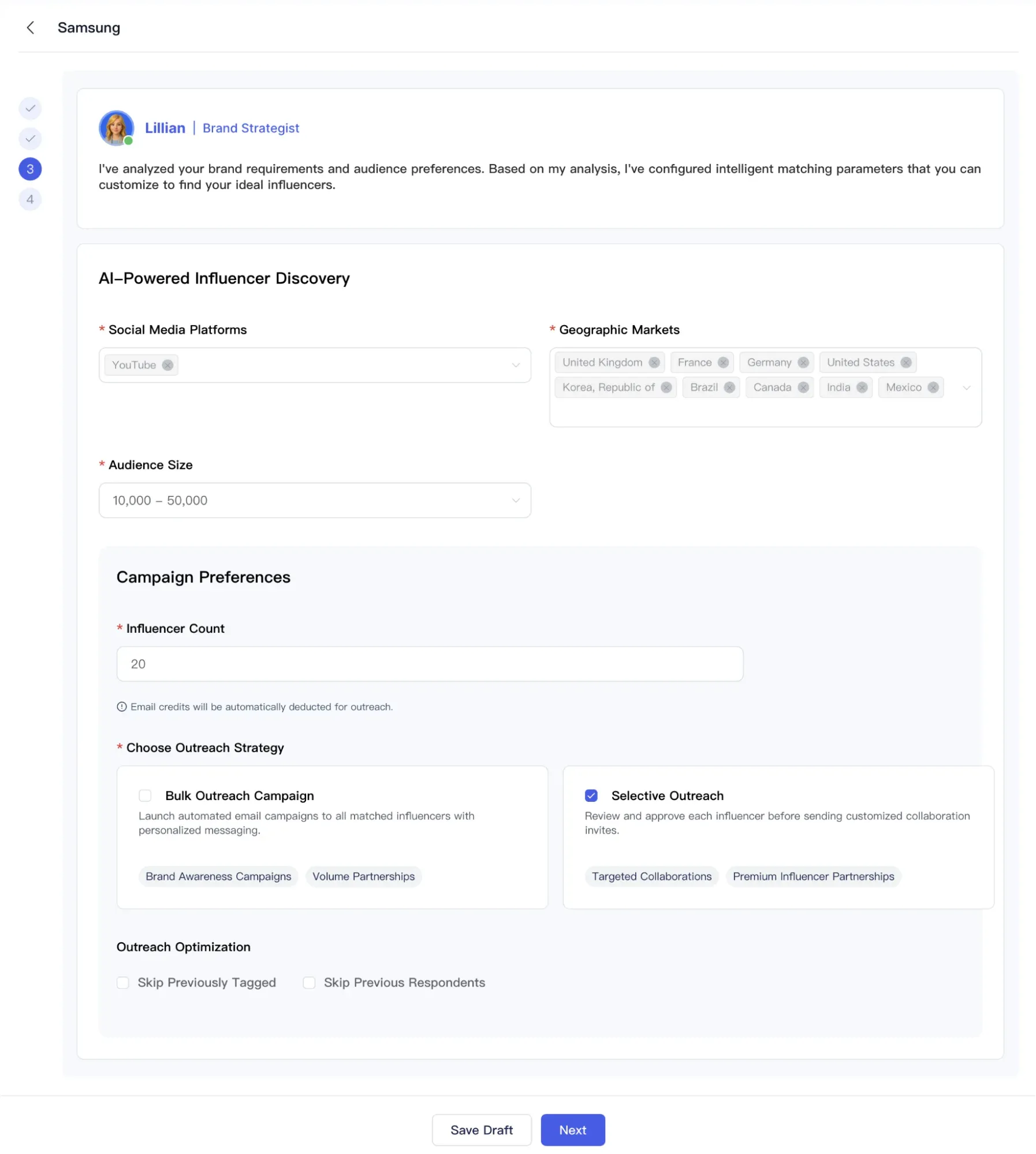
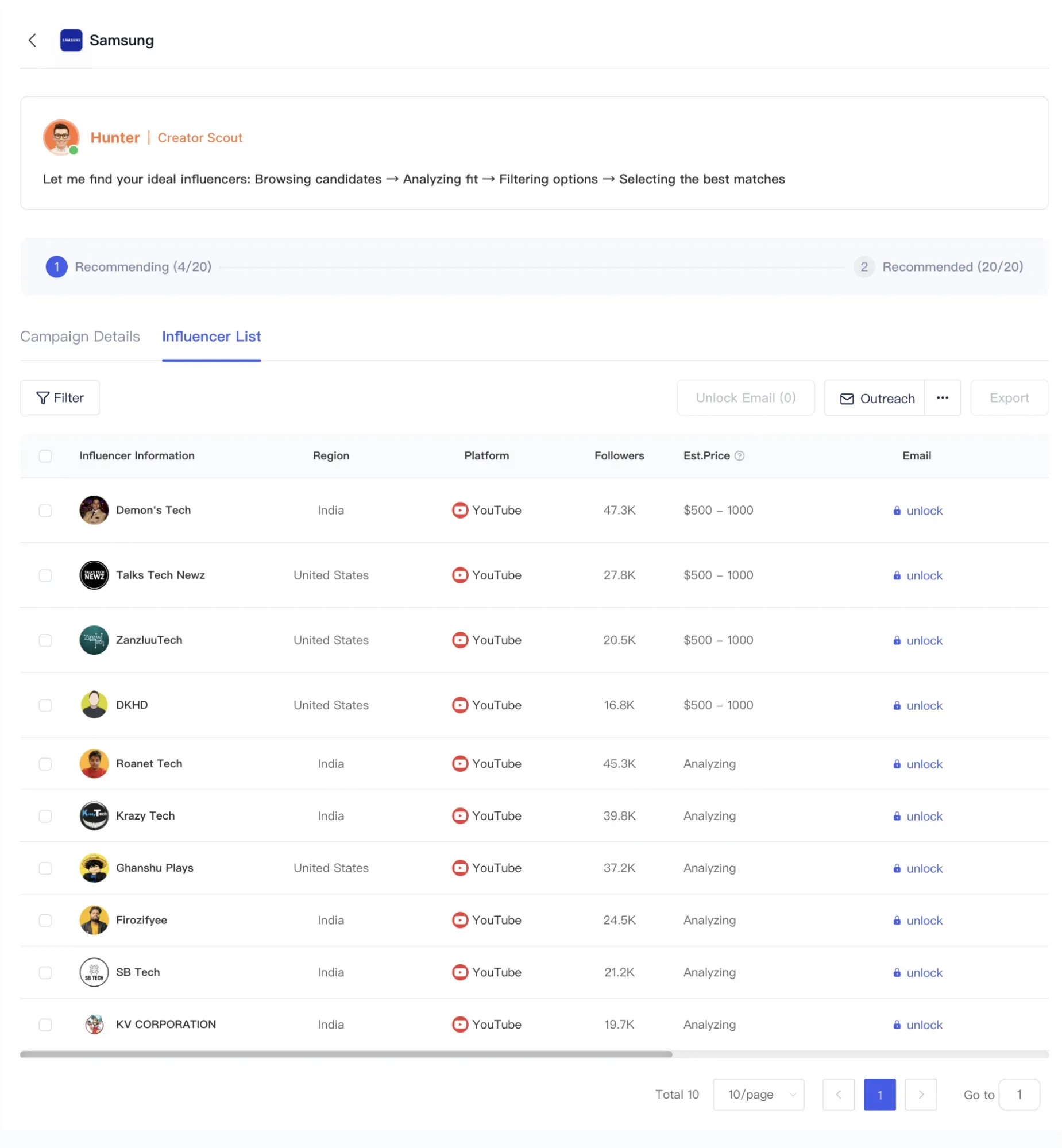
A keyword search can't read intent. The agents can. They factor in retention, upload cadence, and historical sponsorship performance, then surface the channels most likely to convert, not just the ones with matching tags.
Approve the shortlist, and the agents move to outreach, drafting, and sending the first contact to each creator on your behalf. You stay in the loop on who gets approached and what the offer is, while the sourcing-to-outreach grind runs without you. This is how Scrumball scales a YouTube campaign from brief to booked partnerships without losing relevance.
AI-Assisted Search for Faster Influencer Discovery
In cases when you know the kind of creator you want, and you want full control of the candidates, Scrumball's AI-assisted search gets you there faster.
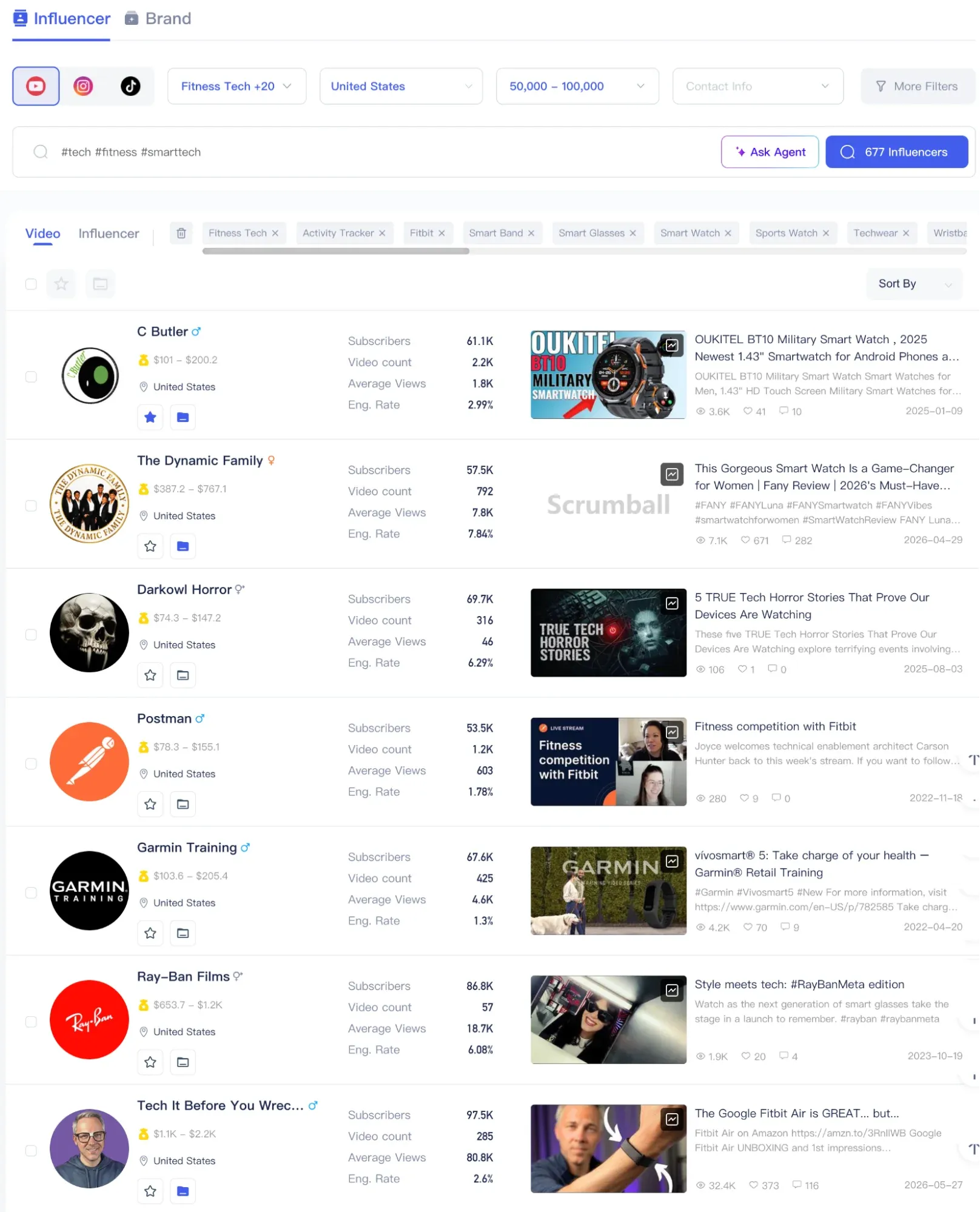
The old way meant opening channels one by one, scrubbing through back catalogs, and tracking view counts across spreadsheets. That breaks down once your candidate pool runs into the hundreds.
Scrumball filters a large YouTube database by niche, audience demographics, content category, upload cadence, and the signals that actually predict performance here: average view duration, audience retention, and post frequency. The AI then ranks each channel on audience fit, campaign relevance, and partnership potential.
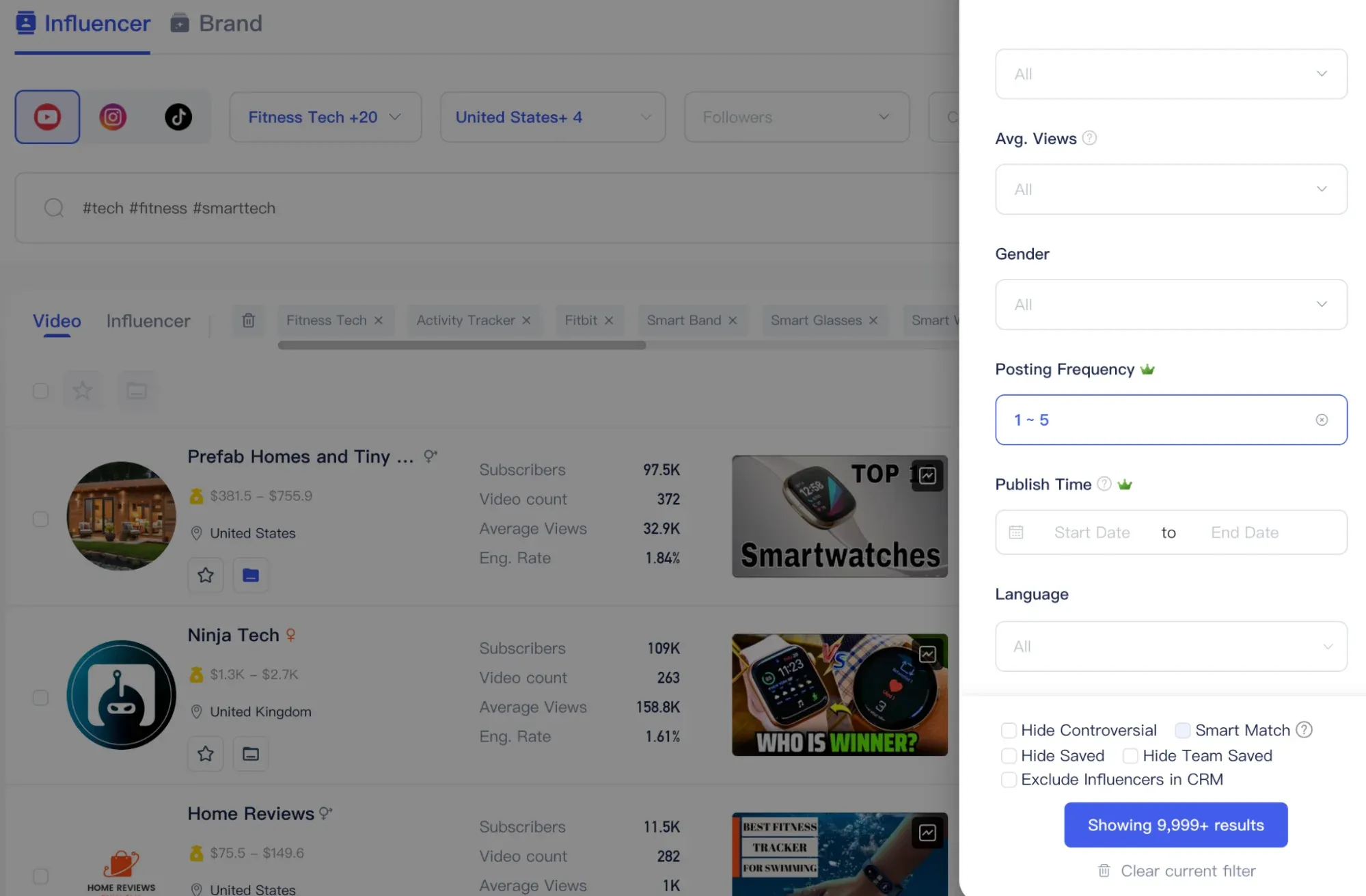
The result: thousands of YouTube channels are narrowed to a qualified shortlist in minutes, and your selection stays consistent instead of riding on gut feel.
Natural Language Creator Matching Through AI
Keyword filters may miss those who don't use the exact tag you searched. Scrumball's natural language matching gets around that. Describe what you want in plain English: the goal of your YouTube campaign, the audience you're after, and the brand tone you need to protect.
The AI reads that brief and weighs audience traits, content themes, purchase-intent signals, and creator positioning against it. So you turn up a list of YouTubers who fit the bigger picture, including strong matches that a keyword search would have skipped right past.
How Brands Evaluate YouTube Influencers for Partnerships
Finding creators is only the first step. Successful YouTube influencer partnerships depend on a structured evaluation process that helps brands identify creators capable of delivering meaningful business outcomes.
Core evaluation factors typically include:
- Audience Quality and Relevance: Focus on audience interests, demographics, and purchase intent rather than subscriber counts alone.
- Content Style and Brand Alignment: Assess whether the creator's storytelling approach naturally supports brand positioning and messaging.
- Engagement, Authenticity, and Community Trust: Prioritize genuine audience interaction and community loyalty over vanity metrics.
- Historical Sponsorship and Brand Safety Signals: Review previous sponsorship activity, partnership quality, and potential reputation risks.
- Performance Testing Before Scaling Campaigns: Use pilot collaborations to validate performance before increasing investment.
As YouTube creator ecosystems continue to expand, evaluating these factors manually becomes increasingly difficult. Brands may need to compare hundreds or even thousands of potential creators across audience characteristics, content quality, sponsorship history, and performance signals.
To improve consistency and reduce manual effort, many brands now use AI-powered influencer platforms like Scrumball to centralize creator data and automate evaluation. Here's how Scrumball handles each part of that process.
Multi-Dimensional Creator Profiles for Evaluation
Scrumball pulls audience, content, engagement, and sponsorship signals into one creator profile, then scores each YouTube channel across 90+ data points organized into seven analysis categories. You get a structured read on every candidate without combing through videos by hand.
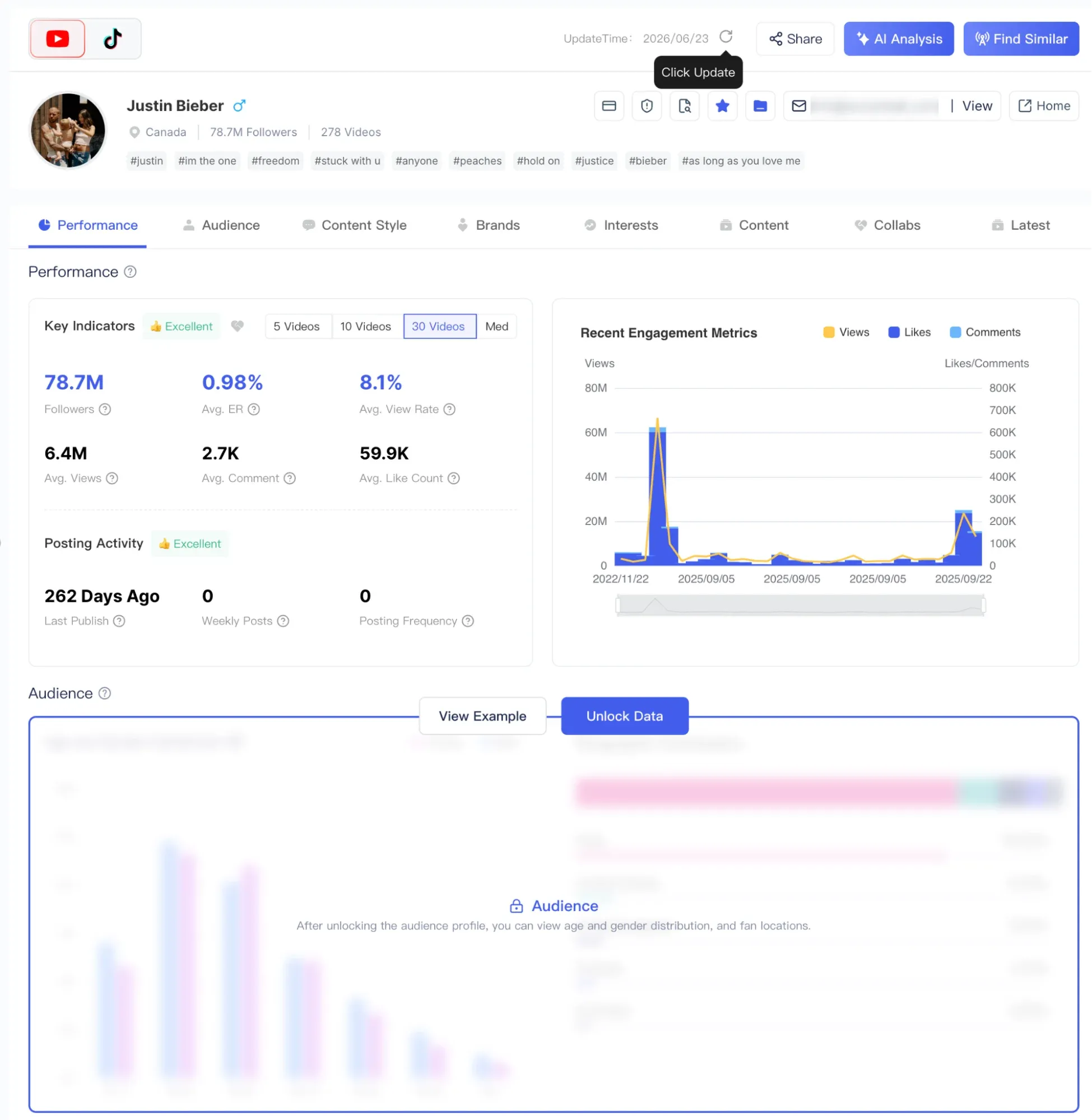
That structure earns its keep when a shortlist runs long. Because every creator is measured against the same criteria, you can line up audience relevance, content themes, and partnership history side by side and surface the real fits faster.
AI-Powered Influencer Analysis
All that depth is the point, but reviewing every signal and data dimension on every creator takes time.
To make your assessment easier and more efficient, every YouTube influencer page in Scrumball also comes with an AI chat sidebar, so you skip the long scroll through 90+ data points and just ask. It reads every signal behind the profile and hands back the part you actually need.
A few things it can instantly roll out:
- Quick profile read: a fast summary of who the YouTuber is and who they reach
- Business case analysis: which collaboration model fits, plus data insights to plan the partnership
- Viral content analysis: what's driven this YouTuber’s best-performing videos
- Quote estimation: a likely price range built from their metrics and past campaign performance
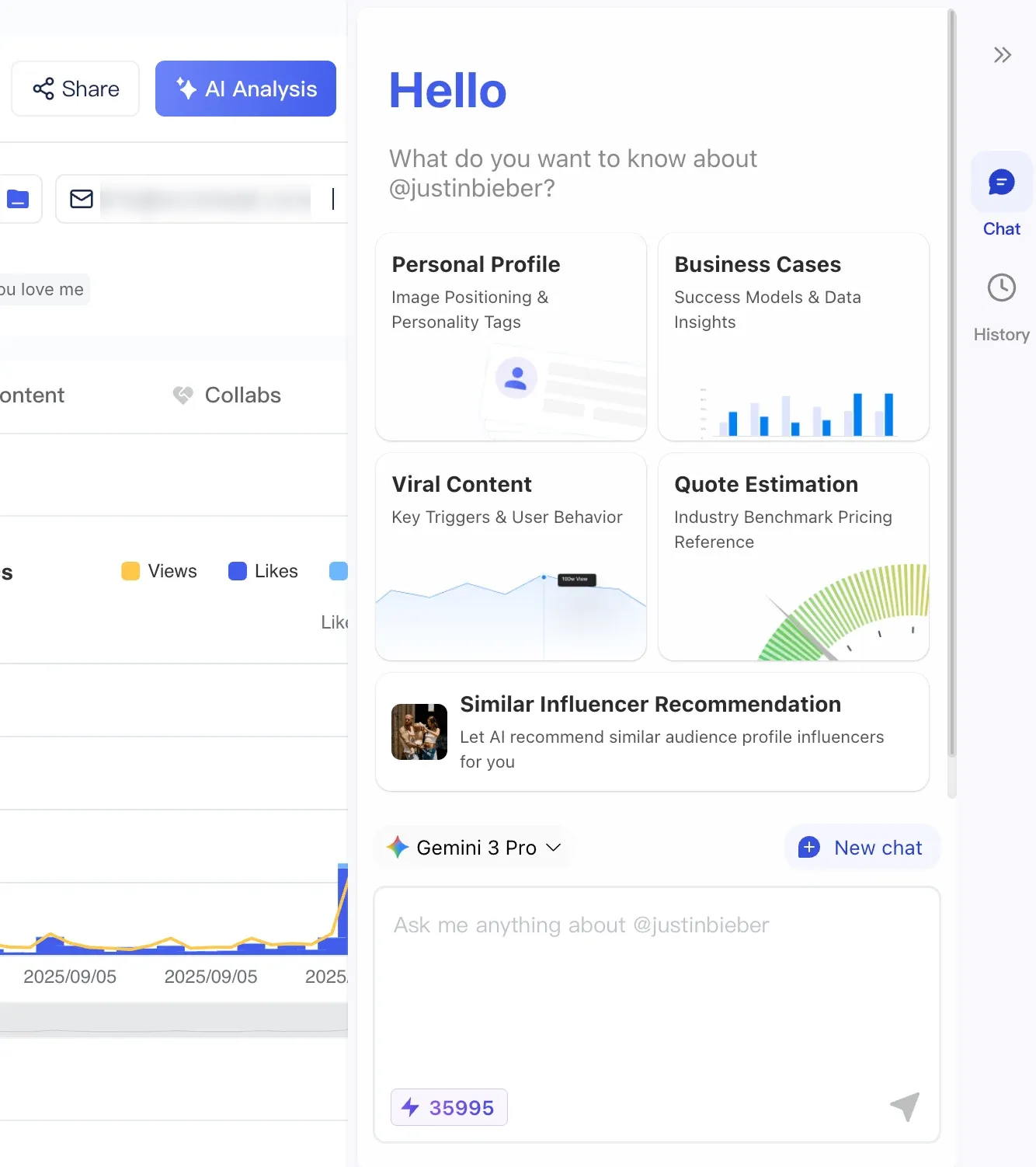
Beyond the quick presets, you can just talk to it. Ask whether a creator suits your launch or product, how their audience compares to a shortlisted name, or what the engagement trend looks like, and decide to fit in a couple of messages instead of hours of manual review.
Brand and Competitor Partnership Intelligence
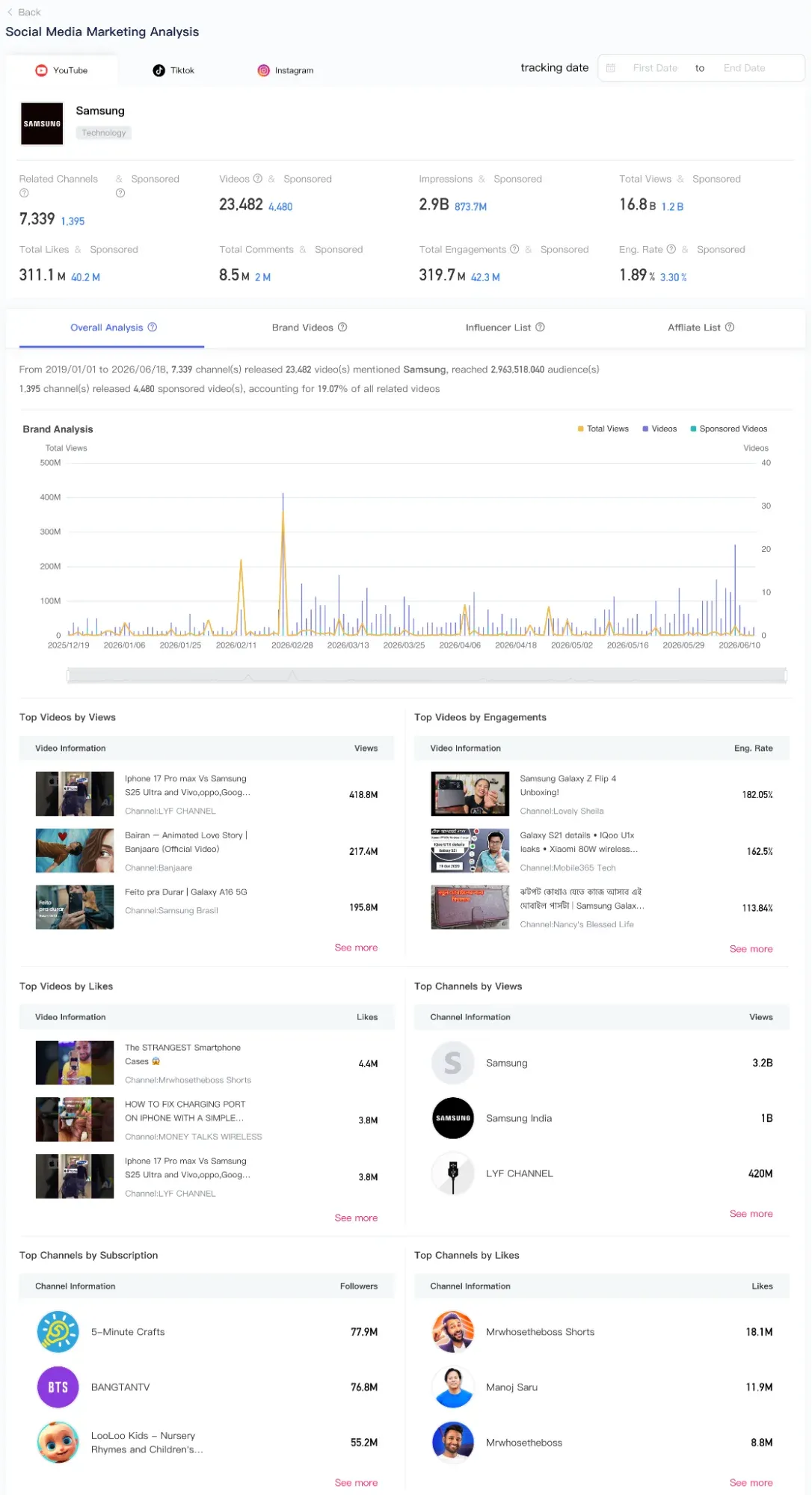
Creator metrics tell you who looks good. Partnership history tells you who has actually performed. Scrumball's Brand Intelligence shows which YouTube influencers your competitors have sponsored, and which of those creators delivered in campaigns similar to yours.
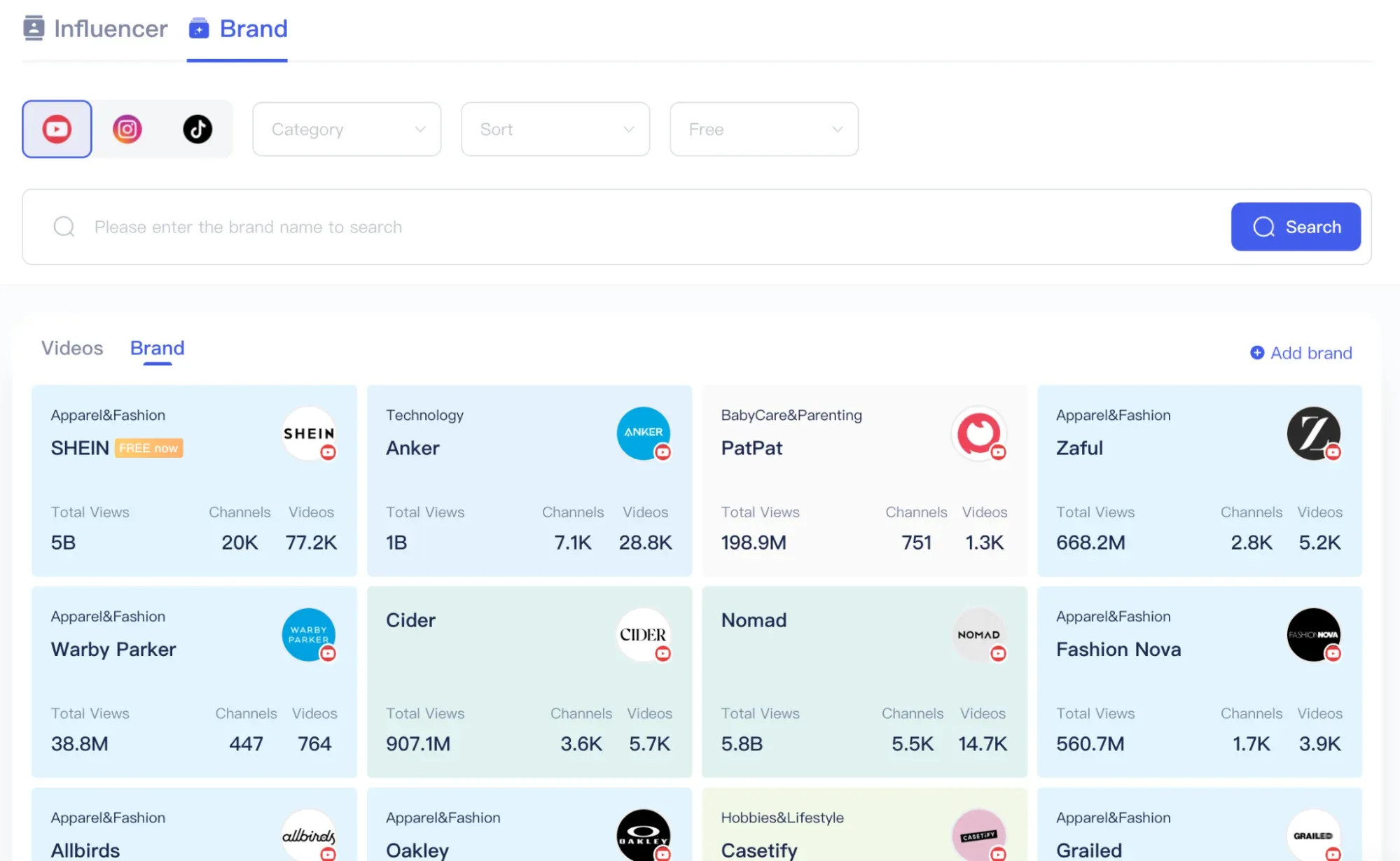
Dig into that history and patterns emerge: recurring sponsorships, category specialists, and creator pockets your rivals haven't tapped. It's the context a YouTube channel analytics page can't give you, and it removes a lot of the guesswork from deciding who to approach.
Why Finding the Right YouTube Influencers Matters for Brand Partnerships
Not all creator partnerships deliver the same results. Because YouTube combines long-form content, search-driven discovery, and highly engaged communities, influencer selection often has a greater impact on campaign performance, audience trust, and long-term ROI than many other social platforms.
Long-Form Content Creates Stronger Purchase Influence
YouTube's long-form format gives creators more opportunities to educate, demonstrate, and recommend products in meaningful ways. Product reviews, tutorials, comparisons, and hands-on demonstrations allow audiences to understand products beyond simple promotional messages.
Because viewers spend significantly more time consuming YouTube content, creator recommendations often carry greater credibility. This makes it especially important to find YouTube influencers whose communication style, expertise, and audience expectations align naturally with the brand. The right creator can turn a product mention into a trusted recommendation that directly influences purchasing decisions.
Search-Driven Discovery Extends Campaign Lifespan
Unlike content on many social platforms that quickly disappears from users' feeds, YouTube videos often continue to generate traffic long after publication. YouTube functions as both a social platform and one of the world's largest search engines, making creator content highly discoverable over time.
When brands partner with creators who rank for relevant industry topics and product-related searches, sponsored content can continue attracting views, engagement, and conversions for months or even years. This long-tail visibility means that choosing the right influencer affects not only immediate campaign performance but also the long-term value generated from each partnership.
Niche Communities Enable More Precise Audience Reach
YouTube's creator ecosystem comprises highly specialized communities that span nearly every interest, profession, hobby, and purchasing category. Whether targeting technology enthusiasts, fitness audiences, finance professionals, gamers, beauty consumers, or B2B decision-makers, brands can often find creators serving highly focused audience segments.
Compared to broader audience-targeting approaches, niche influencer partnerships often deliver stronger intent alignment, higher audience relevance, and more efficient targeting. Rather than maximizing exposure alone, brands that find YouTube influencers within closely aligned niches often achieve better audience fit, stronger engagement, and more efficient campaign performance by reducing wasted impressions.
Creator-Audience Relationships Drive Higher Trust at Scale
Many YouTube creators build relationships with audiences over years of consistent publishing. Viewers frequently follow the same channels, regularly consume long-form content, and become familiar with creators' opinions, recommendations, and expertise.
These repeated interactions create a level of trust that is difficult to replicate through shorter content formats. When trusted creators recommend products that genuinely fit their audience's interests, brand messages often feel more authentic and persuasive. For this reason, selecting creators with strong relationships with their audiences is often a critical factor in partnership success and long-term brand credibility.
Conclusion
Manual research still works for finding YouTube influencers, but it buckles once your shortlist runs into the hundreds. Scanning channels, judging retention, and tracking sponsorship history by hand simply doesn't scale with the platform's growth.
That's the gap Scrumball closes. AI-assisted search, natural language matching, and autonomous agents handle the sourcing, evaluation, and outreach grind, while you stay in control of who you actually partner with. The depth behind each channel, from audience fit to past campaign performance, is there when you want it and summarized when you don't.
The brands that win on YouTube aren't the ones searching hardest. They're the ones reaching the right creators first, with the context to back the decision. Scrumball gets you there faster. Start finding your next YouTube partner today.

Turn thousands of YouTubers and channels into a vetted shortlist in minutes with Scrumball.
Turn thousands of YouTubers and channels into a vetted shortlist in minutes with Scrumball.
FAQs About Finding YouTube Influencers
How many YouTube influencers should a brand work with in one campaign?
There is no universal number. The ideal creator count depends on campaign objectives, budget, audience size, and market coverage requirements.
- For smaller campaigns, brands often work with 1–3 YouTube influencers to test messaging, evaluate performance, and validate audience fit.
- Mid-scale campaigns typically involve 5–10 creators to balance reach, niche audience coverage, and content diversity.
- Large-scale brand awareness initiatives may include 10 or more influencers to maximize distribution across multiple audience segments.
Ultimately, the right number should align with conversion goals, content production needs, and the level of audience diversification required. Brands looking to find YouTube influencers at scale often start with a smaller test group before expanding successful partnerships.
What is a good engagement rate for YouTube influencers?
A good YouTube engagement rate varies significantly by niche, content format, and channel size.
Industry benchmarks suggest that nano and micro YouTube creators often achieve engagement rates between 4.5% and 5.5%, while larger macro creators typically fall between 2.5% and 4%. Sources such as Upfluence and recent influencer marketing benchmark studies consistently show engagement rates declining as subscriber counts increase.
However, brands should avoid relying solely on engagement percentages. On YouTube, comment quality, audience discussion depth, repeat viewer behavior, and watch-time performance often provide stronger indicators of audience trust than likes and comments alone. A creator with highly relevant discussions and consistent engagement patterns may deliver stronger campaign outcomes than one with a higher headline engagement rate.
Should brands prioritize micro-influencers or macro-influencers on YouTube?
Neither creator type is inherently better. The right choice depends on product matches and your campaign goals.
Micro-influencers often provide stronger niche relevance, higher audience trust, and more authentic community engagement. They are particularly effective for product education, consideration-stage campaigns, and conversion-focused initiatives.
Macro-influencers offer broader reach and faster awareness generation. They are often used when brands want to maximize visibility across larger audience segments.
Many successful YouTube influencer programs combine both approaches. Macro creators help generate awareness, while micro creators reinforce credibility and drive deeper audience engagement. When brands use a YouTube influencer database to build creator lists, they frequently allocate budget across multiple creator tiers rather than focusing on a single category.
How do brands measure the success of YouTube influencer campaigns?
Unlike many social platforms, YouTube performance should be evaluated using metrics that reflect long-form content consumption and audience intent.
Key performance indicators typically include watch time, audience retention, video completion rates, click-through rates, conversions, subscriber growth, and branded search lift. Brands should also evaluate the quality of engagement, referral traffic, and the post-campaign revenue impact.
Because YouTube videos often continue generating views through search and recommendations long after publication, campaign measurement should extend beyond the initial launch period to capture long-term performance.
What are the biggest risks when scaling YouTube influencer marketing campaigns?
As influencer programs grow, maintaining creator quality becomes increasingly difficult. One of the biggest risks is audience mismatch, where creators generate views but fail to reach the most relevant consumers.
Other common challenges include declining watch-time quality, inconsistent performance of long-form content, excessive reliance on subscriber counts, and inefficient creator selection processes. Brands may also struggle to evaluate large numbers of channels consistently when sourcing creators manually.
These challenges are one reason many organizations now use AI-powered discovery tools and structured evaluation frameworks to find YouTube influencers for your business more efficiently while maintaining partnership quality at scale.
How much does it cost to work with a YouTube influencer?
Rates swing widely with channel size, niche, and format. Nano creators may charge $10 to $100 per post, micro creators roughly $100 to $1,000, and larger channels several thousand and up. A dedicated review costs more than a short integration. Rather than guessing, build estimates from a creator's metrics and past sponsorship performance before you open negotiations.
How can you spot fake YouTube influencers or inflated engagement?
Look for mismatches. Authentic channels show comments tied to the actual video, steady watch time, and views that track sensibly with subscriber count. Red flags include generic comments, overnight subscriber spikes, and audience geography that doesn't match the creator's market. For a faster read, Scrumball's free YouTube fake subscriber checker estimates real versus inflated subscribers on any channel.