

The era of celebrity endorsements is fading. In 2025, micro influencer marketing has taken center stage, with creators in the 10,000–100,000 follower range driving the creator economy.
As highlighted in the Influencer Marketing Benchmark Report, more than half of brands plan to increase their investment in micro and nano influencers, reflecting a clear shift toward more authentic, niche voices. At the same time, global influencer marketing spend is projected to surpass $24 billion annually.
However, building an effective micro influencer marketing strategy comes with challenges. While engagement is high, scaling across multiple creators requires strong coordination and systems. Below, we break down the key trade-offs to help you decide if this approach fits your 2026 roadmap.
Pros of Micro Influencer Marketing
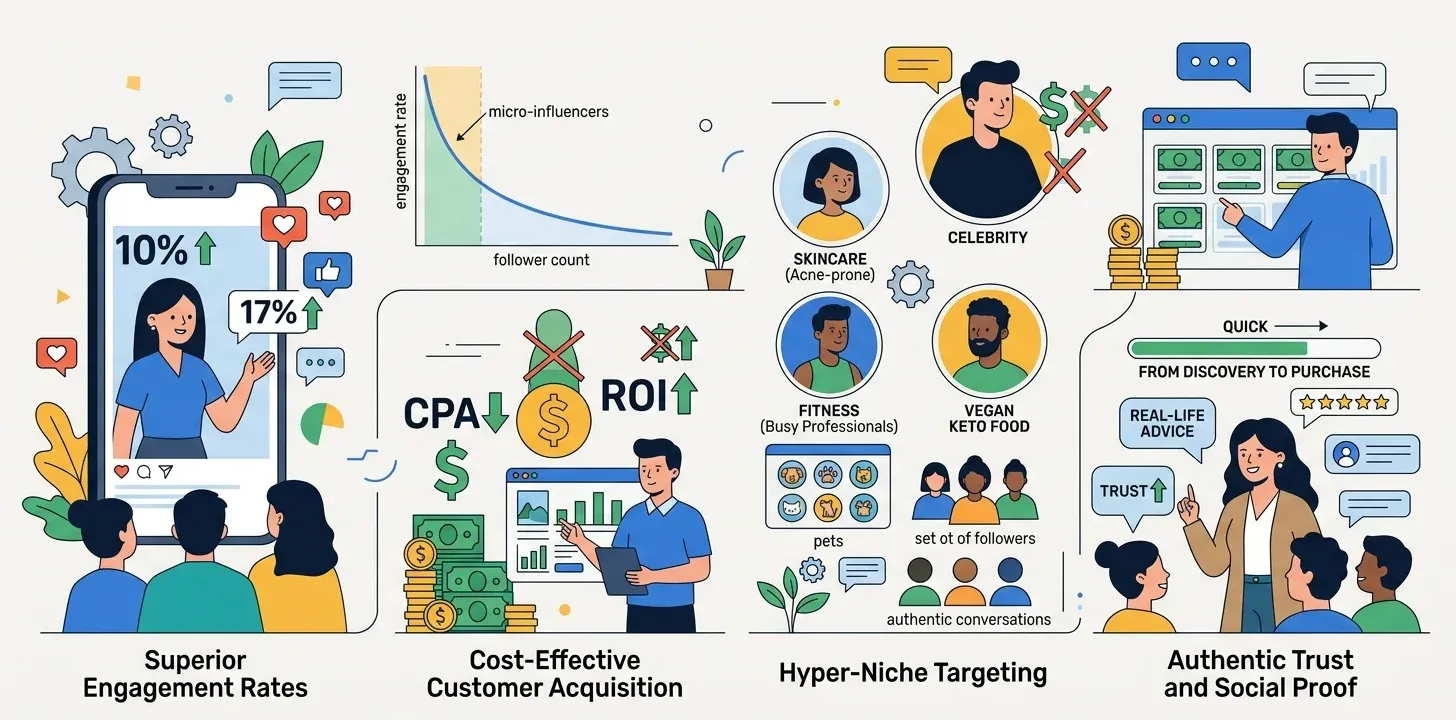
Micro influencers sit at the intersection of trust, affordability, and performance. Below are the key benefits of using a micro influencer for marketing.
1. Superior Engagement Rates
The most compelling argument for micro-influencers is the "Engagement Gap." As follower counts rise, engagement rates typically plummet. Micro-influencers sit in the sweet spot where the community is large enough to have an impact but small enough to maintain personal connections.
- TikTok Dominance: Micro-influencers see engagement rates averaging 10% to 17%, drastically outperforming the 4-5% average of mega-influencers.
- Algorithm Love: Social algorithms in 2025 prioritize "saveable" and shareable content. Because micro-influencers create niche-specific value, their content is favored by the algorithm, granting you organic reach that money often can't buy.
2. Cost-Effective Customer Acquisition
Micro influencer marketing offers a significantly more cost-effective approach compared with traditional celebrity campaigns. While a single celebrity post can cost $50,000 or more, a micro influencer typically charges between $100 and $500 per post. This lower cost enables brands to work with multiple creators simultaneously, test different content strategies, and reduce overall campaign risk.
Rather than relying on one high-profile influencer, brands can activate dozens of micro influencers and use performance data to optimize campaigns, ultimately lowering the cost per acquisition (CPA) and generating a higher return on investment compared with macro influencer campaigns.
3. Hyper-Niche Targeting
Micro influencers enable precision targeting based on interests, not just demographics. Here are some Micro influencer marketing examples:
- Beauty: Skincare influencers focusing on acne-prone skin
- Fitness: Home workout creators for busy professionals
- Food: Vegan keto meal prep communities
For example, brands like I and Love, and You leveraged this by partnering with 400 specific pet influencers, resulting in authentic conversations that broad targeting could never achieve.
Takeaway: You reach audiences with high purchase intent, not just broad exposure.
4. Authentic Trust and Social Proof
Authentic trust and social proof are key strengths of micro influencer marketing, as consumers tend to see these creators as relatable and genuine. In fact, 89% of consumers are more likely to purchase based on their recommendations.
Unlike polished ads, their content feels like real-life advice, which makes it more persuasive and effective. This authenticity lowers resistance and helps shorten the path from discovery to purchase.
Cons of Micro Influencer Marketing
While powerful, the challenges of micro influencer marketing are mostly operational—not strategic.
1. Limited Reach Per Partner
Each micro-influencer naturally has a smaller audience than macro influencers, so achieving meaningful scale requires working with multiple creators simultaneously. Coordinating campaigns across several influencers becomes essential to maintain consistency in messaging and timing.
While this approach offers more authentic engagement, it also poses the challenge of generating a single viral moment, which is harder to achieve without careful planning and mass coordination across the influencer network.
2. Management Logistics
Scaling micro influencer marketing creates a logistical bottleneck, as managing 50 relationships is exponentially harder than managing one.
| Operational Challenge | Impact on Team |
|---|---|
| Communication | Sending 50+ DMs/emails and chasing replies. |
| Product Shipping | Logistics of sending packages to 50 different addresses. |
| Contracting | Negotiating and signing dozens of individual agreements. |
Without using an automated platform like Scrumball, your marketing team can quickly burn out on administrative tasks rather than strategy.
3. Quality Control Issues
Content quality can vary significantly among influencers, even among those who align well with your brand. Common challenges include off-brand visuals, poor lighting or editing, and occasional misinterpretation of the creative brief.
To address these issues, brands should establish clear, standardized guidelines that provide visual references, caption frameworks, and precise deliverables. The key is to balance quality control with creative freedom, giving influencers enough space to maintain authenticity while ensuring their content consistently represents the brand.
4. Attribution and ROI Tracking
Tracking performance across multiple influencers in micro influencer marketing remains complex, particularly when conversions occur through the “dark funnel,” where users move from viewing content to searching and purchasing later without clear attribution. Inconsistent tracking methods used by creators can further blur results.
To address this, brands often rely on UTM links, unique discount codes, and influencer tracking tools to more effectively connect engagement with outcomes. The goal is to measure micro influencer marketing ROI more accurately across channels and gain a clearer view of overall impact.
The Best Micro Influencer Marketing Strategy for 2026
To stay competitive in 2026, brands must embrace a scalable, data-driven micro influencer marketing strategy that goes beyond one-off campaigns. Success relies on authenticity, long-term partnerships, and measurable ROI, while adapting to evolving social media trends and audience expectations.
Build a Scalable Micro Influencer Marketing Strategy
A truly effective micro influencer marketing strategy is ongoing, not a single campaign. Brands should focus on creating sustainable relationships and continuously refining their approach. Key elements include the following:
- Long-term partnerships: Collaborate with influencers over multiple campaigns to foster trust and deeper audience engagement.
- Ambassador programs: Turn loyal influencers into brand ambassadors who consistently represent your values and products.
- Continuous testing and optimization: Monitor metrics like engagement rate, conversion, and audience growth to refine campaigns in real-time.
Use the Best Micro Influencer Marketing Platforms
The right platforms streamline influencer marketing and allow brands to scale efficiently. Top platforms offer tools for:
- Influencer discovery: Find creators whose audiences align perfectly with your brand.
- Campaign management: Coordinate content, approvals, and timelines without cumbersome spreadsheets.
- Performance tracking: Measure ROI, engagement, and conversion to make data-backed decisions.
By automating these processes, brands reduce manual effort and can execute campaigns at a larger scale without compromising quality.
When to Work with a Micro Influencer Marketing Agency?
Partnering with a specialized agency can accelerate results and reduce internal workload. Consider an agency if:
- Internal resources are limited: Agencies provide the team and tools needed to run campaigns efficiently.
- Rapid scaling is a priority: Agencies can quickly identify and engage multiple influencers across platforms.
- Expert campaign execution is required: Leverage industry insights, trend analysis, and creative strategies for maximum impact.
Agencies are particularly valuable for brands that prioritize speed, efficiency, and measurable growth in their micro influencer initiatives.
Execution Tips for Micro Influencer Campaign Success

To maximize the impact of micro influencer marketing, brands need a structured yet flexible approach to execution. While clear planning is essential, leaving room for creativity ensures campaigns feel authentic and resonate with audiences in a meaningful way.
Create Clear and Detailed Creative Briefs
A strong campaign begins with a well-crafted brief that sets expectations without limiting creativity. Brands should clearly outline the content format, whether it’s Instagram Reels, TikTok videos, or other formats, along with the key messaging, deliverables, and timelines.
However, in micro influencer marketing, it’s important to guide rather than control. Providing direction rather than rigid scripts allows creators to adapt the message to their own voice, ultimately leading to more genuine and engaging content.
Focus on Storytelling Instead of Direct Promotion
One of the biggest strengths of micro influencer marketing lies in its ability to feel personal and relatable. Instead of pushing direct sales messages, brands should encourage creators to share their own experiences and demonstrate how the product naturally fits into their daily routines.
This storytelling approach builds trust and makes the content more compelling. Audiences are far more likely to respond to “how I use this every day” than to a straightforward “buy this now” message, which often feels forced or overly promotional.
Prioritize Short-Form Video
Short-form video has become the driving force behind successful micro influencer marketing campaigns. Platforms like TikTok, Instagram Reels, and YouTube Shorts favor concise, engaging content that captures attention quickly. This format not only tends to generate higher engagement but also aligns with platform algorithms, increasing visibility.
Additionally, short-form videos are highly versatile, making them easy to repurpose for paid advertising through whitelisting strategies, which helps extend the lifespan and performance of campaign content.
Conclusion
In 2026, micro influencer marketing offers unmatched advantages in authenticity, cost-efficiency, and engagement. While challenges such as logistics and tracking exist, they can be addressed with the right tools, platforms, or agency support.
By implementing an effective influencer marketing solution and strategy for working with micro influencers, brands can transform small creators into a scalable, high-ROI growth engine.
FAQ
What is the typical follower count for a micro influencer?
Micro influencers typically have between 10,000 and 100,000 followers, positioning them between nano and macro influencers. This range allows them to maintain a close connection with their audience while still reaching a meaningful number of people. Because of this balance, they often achieve higher engagement rates than larger influencers. This makes them ideal for brands focusing on trust and targeted marketing.
What is the best micro influencer marketing platform?
The best micro influencer marketing platform should offer tools for influencer discovery, campaign automation, and performance tracking. These platforms help brands identify the right creators, manage outreach efficiently, and measure ROI accurately. Popular options often include AI-powered analytics to detect fake followers and optimize campaigns.
Ultimately, the best choice depends on your budget, campaign size, and the level of automation you need.
Should I hire a micro influencer marketing agency?
Hiring a micro influencer marketing agency is a smart choice if you want to scale campaigns quickly and efficiently. Agencies handle everything from influencer sourcing to negotiation, execution, and reporting. This reduces your internal workload and ensures a more strategic approach.
However, if you have a smaller budget or prefer hands-on control, using a professional influencer matching platform may be a better and more flexible option.
What are some successful micro influencer marketing examples?
Successful micro influencer marketing examples often focus on niche audiences with strong purchase intent. For instance, beauty brands collaborate with skincare-focused creators to target specific concerns like acne or sensitive skin. Fitness brands partner with home-workout influencers to reach busy professionals, while pet brands partner with dedicated pet communities.
These campaigns succeed because they feel authentic and resonate deeply with a targeted audience.
What is the ROI of micro influencer marketing?
The ROI of micro influencer marketing is typically higher than that of macro influencers due to lower costs and stronger engagement. Micro influencers generate more meaningful interactions, which often lead to better conversion rates. Their niche audiences also improve targeting accuracy, reducing wasted ad spend.
So, when combined with proper tracking methods like UTM links and discount codes, brands can clearly measure and optimize performance.
Is micro influencer marketing better than macro influencers?
Micro influencer marketing is not always better, but it often outperforms macro influencers in key areas like engagement, cost efficiency, and authenticity. Micro influencers build stronger relationships with their audiences, making their recommendations more trustworthy. However, macro influencers are still valuable for large-scale brand awareness campaigns. The best approach often combines both, depending on your marketing goals.