


Choosing the right influencer marketing platform is no longer just a tactical decision; it is a strategic necessity. In 2026, the influencer marketing industry is projected to surpass $28 billion. With businesses earning an average of $6.50 for every $1 spent, the ROI is undeniable—but only if you have the right infrastructure.
Managing hundreds of relationships via spreadsheets is impossible. You need a platform that automates discovery, vets for fake followers, and tracks ROI in real-time. Whether you are a D2C startup or a global enterprise, this guide compares the top 6 influencer marketing platforms to help you find your perfect match.
1. Scrumball: The AI-Driven Growth Engine
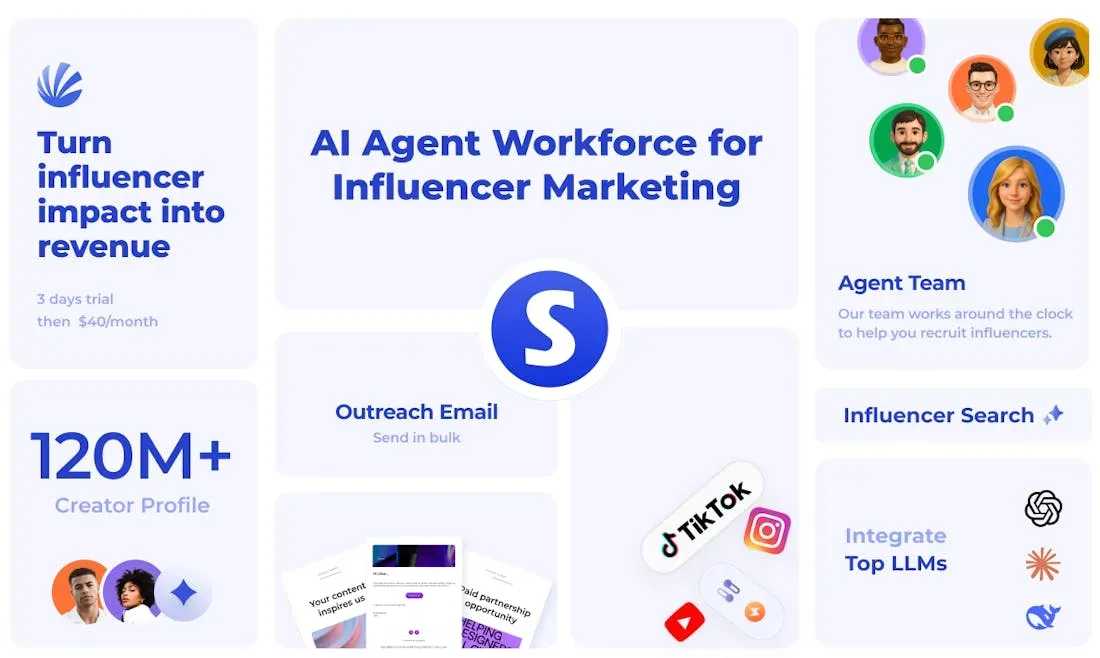
Scrumball has emerged as the disruptor of 2026 by democratizing enterprise-level data for businesses of all sizes. Unlike legacy platforms that act merely as databases, Scrumball functions as an intelligent workforce. It utilizes specialized AI Agents—Hunter, Charlie, and Lilian—to handle the heavy lifting of campaign management, effectively replacing the need for a large in-house team.
Deep Dive into Features
- Lilian (Strategy Agent): Think of Lilian as your dedicated campaign manager. She analyzes your brand website and goals to generate data-backed campaign strategies, writes creative briefs automatically, and identifies the best creator archetypes for your specific niche before you even start searching.
- Hunter (Discovery Agent): Unlike static filters, Hunter scans a database of 120M+ profiles using natural language processing to find "hidden gem" micro-influencers. You can search for complex queries like "Vegan moms in California who love hiking and coffee," and the AI returns a vetted list with accurate emails.
- Charlie (Outreach Agent): This feature automates hyper-personalized email sequences. Charlie handles follow-ups, negotiations, and scheduling, ensuring you never miss a reply. It creates a "drip campaign" experience specifically for influencer recruitment.
- Cross-Platform ROI Tracking: Scrumball offers real-time monitoring of Instagram, TikTok, and YouTube content. It automatically pulls performance data into a Kanban-style CRM, allowing you to track a creator's journey from "Identified" to "Paid."
Target Audience
- Business & Professionals: Ideal for Startups, SMEs, and Agencies who need a powerful, all-in-one tool without the 5-figure enterprise price tag.
- Individuals: Also Suitable for individual sellers, freelance influencer marketers, or developers who are looking to promote self-developed software.
Pricing
- Scrumball offers a highly competitive Free Plan for beginners, which already unlocks a number of powerful features.
- The paid plans start at roughly $32/month (with yearly package discounts), making it the most accessible AI-powered tool on this list.
For more information regarding Scrumball's package pricing and feature comparisons, please feel free to visit the Scrumball pricing page to learn more.
Pros and Cons
| Pros | Cons |
|---|---|
| Full suite of AI Agents (Strategy, Search, Outreach). | Packed with features, will take some time to master. |
| Extremely affordable entry point. | |
| Massive database (120M+) covering all niches. | |
| Customizable API services for extensive usage. |
2. Aspire: The "Word of Mouth" Engine
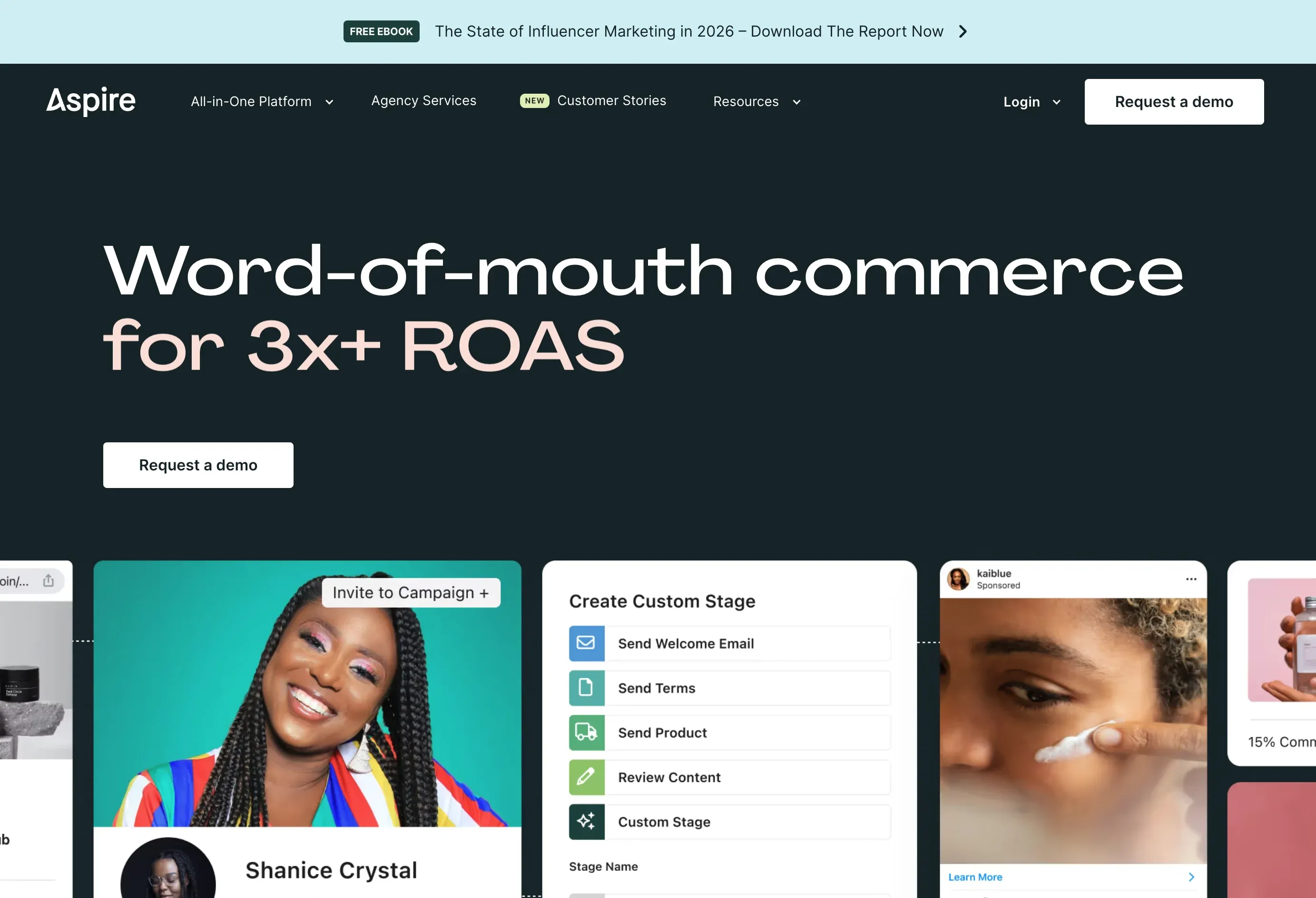
Aspire (formerly AspireIQ) automates the entire supply chain of influence. It distinguishes itself by flipping the traditional model: instead of you hunting for influencers, it offers a Creator Marketplace where influencers pitch you.
Deep Dive into Features
- Inbound Creator Marketplace: Brands post a campaign brief, and qualified creators apply. This saves marketing teams significant time on cold outreach and ensures the influencers are genuinely interested in the product.
- Image Recognition AI: This unique discovery tool allows you to search for influencers by uploading an image (e.g., a specific aesthetic or product type) to find creators who post visually similar content.
- Shopify Integration & Logistics: Aspire handles the gritty details of product seeding. It creates tracking numbers for shipments and tracks sales via promo codes and affiliate links seamlessly.
Target Audience
Aspire is ideal for high-growth DTC brands and enterprises that want to scale user-generated content (UGC) production quickly.
Pricing
Pricing starts around $2,000 per month with an annual commitment. It is a premium tool designed for teams with a dedicated budget.
Pros and Cons
| Pros | Cons |
|---|---|
| Excellent "Inbound" system saves time. | High starting price ($24k/year). |
| Strong e-commerce logistics tools. | Annual contracts only; no monthly flexibility. |
| Great for generating high volumes of UGC. | Reporting can be less granular than Traackr. |
3. Upfluence: Turning Customers into Creators
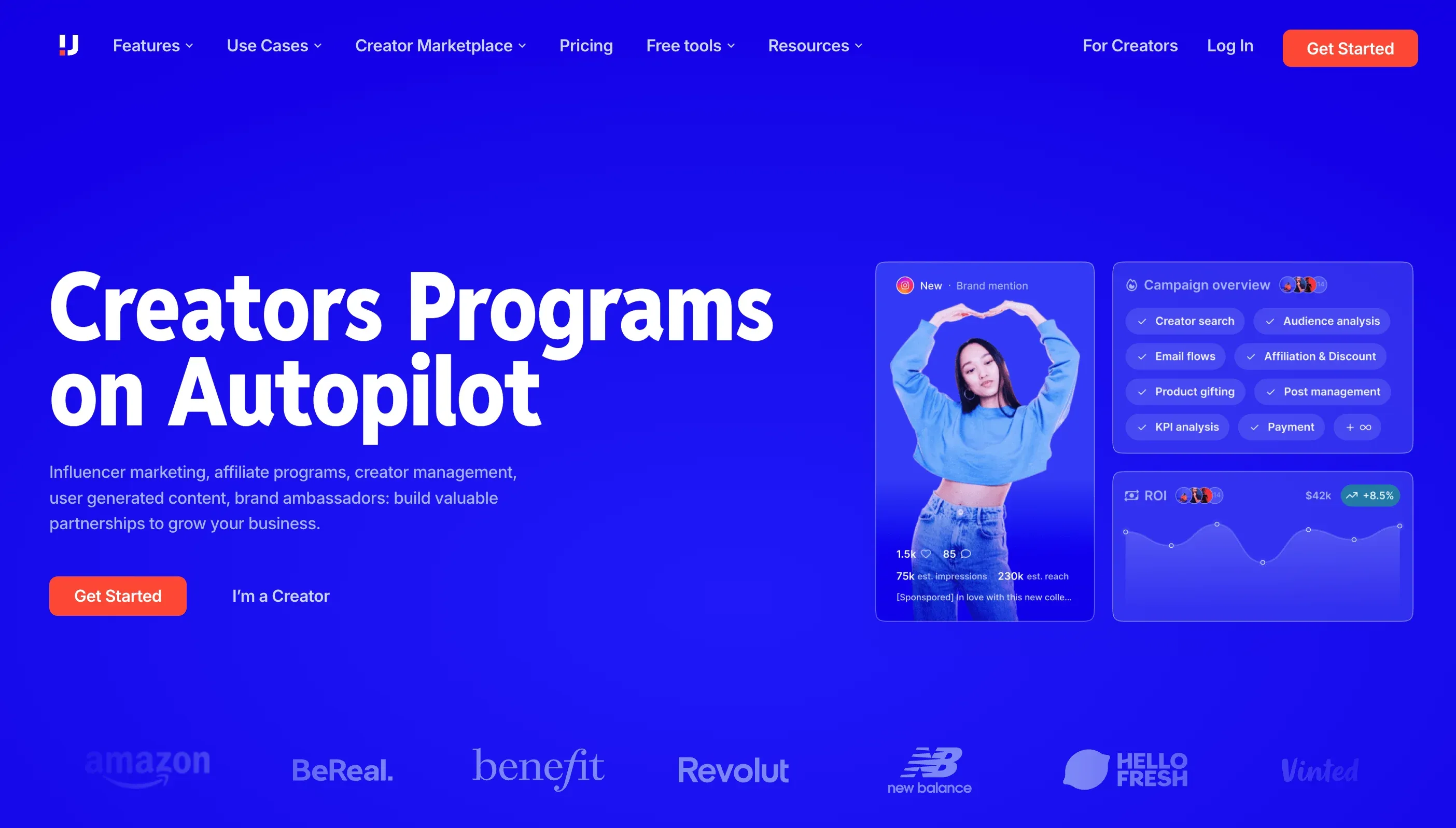
Upfluence excels at "Influencer Matching" from your own customer base. It connects directly to your CMS to analyze your customer database, identifying influential people who are already buying your products. This creates the most authentic partnerships possible.
Deep Dive into Features
- Live Capture: A tool that scans your website visitors to reveal their social influence in real-time via a browser plugin. You can see if a visitor has 50k Instagram followers while they are browsing your site.
- ChatGPT Integration: Upfluence heavily utilizes AI to draft personalized outreach emails based on the creator's recent bio and posts, increasing response rates.
- Global Payments: One of the strongest platforms for international brands, handling payments in 135+ currencies and managing tax compliance.
Target Audience
Best for e-commerce brands with a large existing customer database looking to launch an ambassador program.
Pricing
Custom pricing, generally starting around $800 - $1,000 per month depending on the number of active influencers.
Pros and Cons
| Pros | Cons |
|---|---|
| Unique customer-to-influencer discovery. | Interface can be complex for beginners. |
| Strong AI writing assistants. | Opaque pricing model. |
| Robust payment handling. | Search filters can be overwhelming. |
4. GRIN: The Creator Management Platform
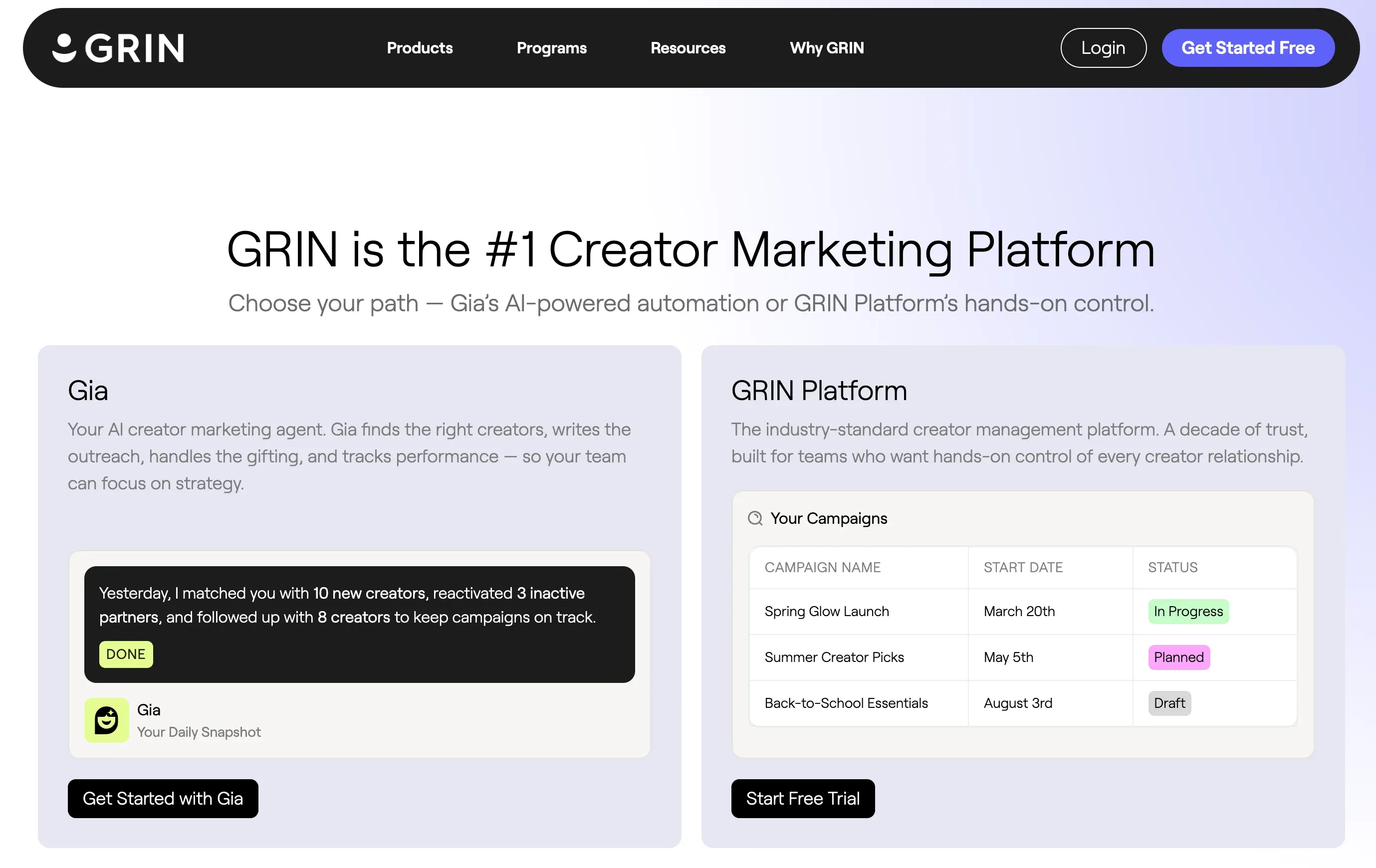
GRIN is built on the philosophy that influencer marketing is about relationships, not transactions. It markets itself as a CRM first. It removes the "middleman" network feel, allowing brands to own the direct relationship with the creator. It is widely considered the gold standard for high-volume product seeding (gifting) campaigns.
Deep Dive into Features
- Product Seeding Logistics: Integrates deeply with Shopify/WooCommerce to create "zero dollar" orders. It automates shipping labels and tracks deliveries to influencers so you know exactly when they receive the product.
- Sales Attribution: Creates unique discount codes and affiliate links automatically for every creator, tracking revenue down to the individual SKU.
- Private CRM: A dedicated portal for your creators to log in, view their stats, and access assets. It looks like your brand, not GRIN's brand.
Target Audience
Ideal for high-growth DTC brands running massive gifting or affiliate campaigns.
Pricing
Enterprise pricing only, typically starting around $25,000 per year.
Pros and Cons
| Pros | Cons |
|---|---|
| Best-in-class product seeding tools. | Very expensive entry point. |
| Own your creator relationships (no network). | Limited discovery database compared to others. |
| Deep Shopify integration. | No monthly billing option. |
5. CreatorIQ: The Enterprise OS
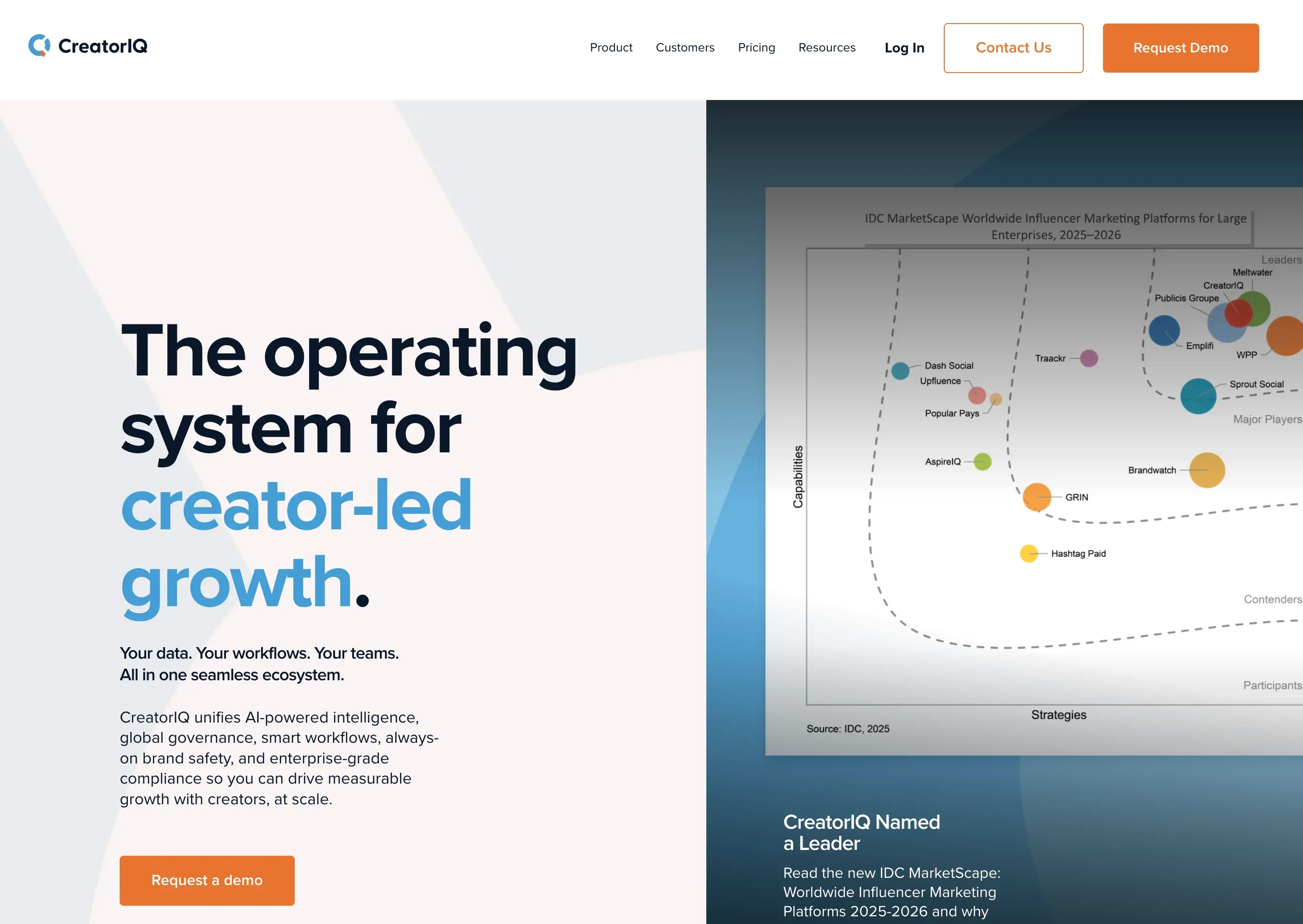
CreatorIQ is the software behind the world's largest companies (Disney, Unilever, Dell). It integrates with almost everything—Salesforce, Tableau, and Google Analytics. It is designed to be the "central nervous system" for creator relationships across an entire global organization, prioritizing data security and scalability.
Deep Dive into Features
- White-Label Portals: Create a fully branded, secure portal for your influencers to log in, view briefs, submit content for approval, and sign tax documents.
- One-Click Global Payments: Automated tax forms (W-9/W-8BEN) and global payments in 120 currencies, removing the burden from your finance team.
- Data Security: Enterprise-grade security compliance (SOC2) which is essential for publicly traded companies.
- Google Analytics Integration: Tracks full-funnel conversion data, not just social clicks.
Target Audience
Fortune 500 companies managing thousands of creators across multiple teams and regions.
Pricing
High-tier Enterprise pricing, often exceeding $30,000+ per year.
Pros and Cons
| Pros | Cons |
|---|---|
| Unmatched scalability and security. | Overkill for small/medium businesses. |
| Excellent white-label capabilities. | Steep learning curve. |
| Google Analytics & Salesforce integration. | High cost barrier. |
6. Traackr: The Data Heavyweight
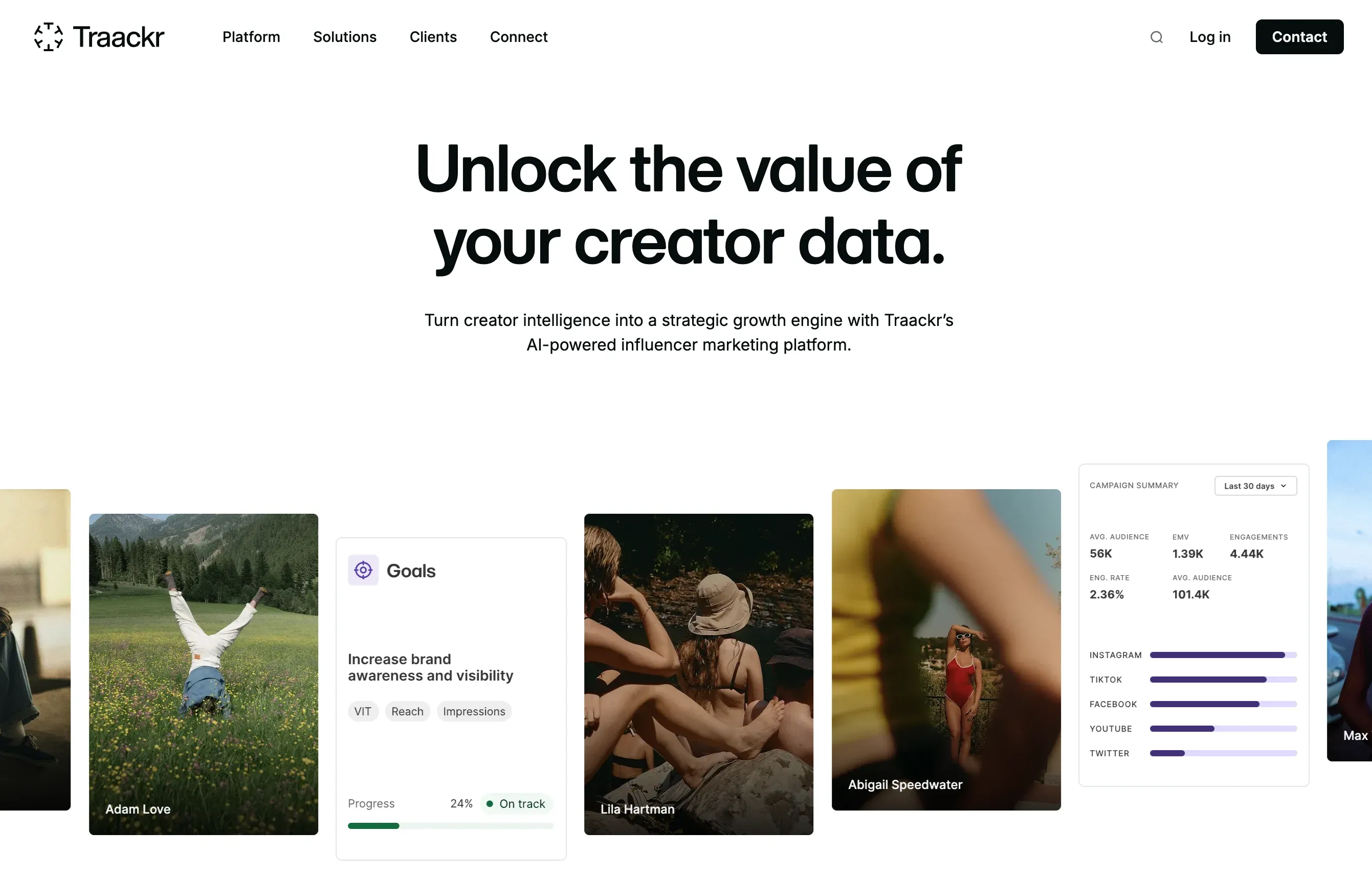
Traackr is the system of record for data-driven global organizations, particularly in the beauty and fashion sectors. It introduced the Brand Vitality Score (VIT)—a proprietary metric measuring the Visibility, Impact, and Trust of content. This allows brands to benchmark their performance against competitors with scientific precision.
Deep Dive into Features
- Competitive Intelligence: See exactly how much your competitors are spending, who they are working with, and what their VIT score is compared to yours.
- Global Compliance: Tools to manage complex multi-region campaigns and regulatory disclosures (FTC, ASA).
- Influencer Vetting: Deep analysis of audience quality to detect fraud and ensure brand safety alignment before engagement.
Target Audience
Global beauty and fashion conglomerates (like L'Oreal or Coty) that need rigorous data compliance and benchmarking.
Pricing
Custom enterprise pricing, typically starting at $20,000 per year.
Pros and Cons
| Pros | Cons |
|---|---|
| Industry-standard benchmarking data. | Expensive for smaller brands. |
| Excellent fraud detection. | Database is smaller than open discovery tools. |
| Robust multi-team permissions. | Adding new influencers can be slow. |
How to Choose the Right Influencer Marketing Platform?
1. Define Your Goal: Awareness vs. Sales
If your goal is direct sales, prioritize platforms like Scrumball (for outreach) or GRIN (for logistics) that streamline the conversion path. If your goal is brand awareness and "Share of Voice," data-heavy tools like Traackr are superior.
2. Assess Your Budget and Scale
Don't overpay for enterprise features you won't use. Small teams should look for flexible monthly plans like Scrumball rather than locking into $30k annual contracts with CreatorIQ. Check if the platform charges by "seat" (user) or by "active influencer," as this impacts scalability.
3. Check for AI & Fraud Detection
In 2026, AI-generated content and bot farms are rampant. Ensure your chosen platform has a built-in "Audience Quality Score" feature. You need to know if an influencer's engagement is coming from real humans or server farms.
Summary
Choosing the right platform is the first step toward a scalable influencer strategy. While enterprise giants like CreatorIQ offer immense power, modern AI-driven tools like Scrumball are democratizing access to high-end features for brands of all sizes. Start with a clear goal, test a few free trials, and pick the partner that fits your workflow.
FAQ
What is the most affordable platform for startups?
For startups on a budget, Scrumball offers a robust free tier and affordable starter plans ($32/mo) designed specifically for growing brands needing discovery and outreach automation without the enterprise price tag.
Can I manage influencers without software?
Technically yes, using spreadsheets. However, once you scale beyond 10 influencers, tracking posts, Story expirations, and payments becomes unmanageable. Software saves an estimated 20+ hours per week in administrative work.
Do these platforms find influencers for me?
Yes. Platforms like Upfluence and CreatorIQ use AI to recommend influencers based on your brand criteria. Others, like Aspire, have marketplaces where influencers apply to work with you.
How do I detect fake followers?
Most top-tier platforms (Traackr, Upfluence, CreatorIQ) have built-in fraud detection. They analyze engagement patterns, follower growth spikes, and comment quality to flag suspicious accounts automatically.
Is it better to use an agency or a platform?
Agencies offer "done-for-you" service but charge high retainers. Platforms give you "in-house" control at a lower cost but require your team to execute the work. A hybrid approach is often best for scaling.