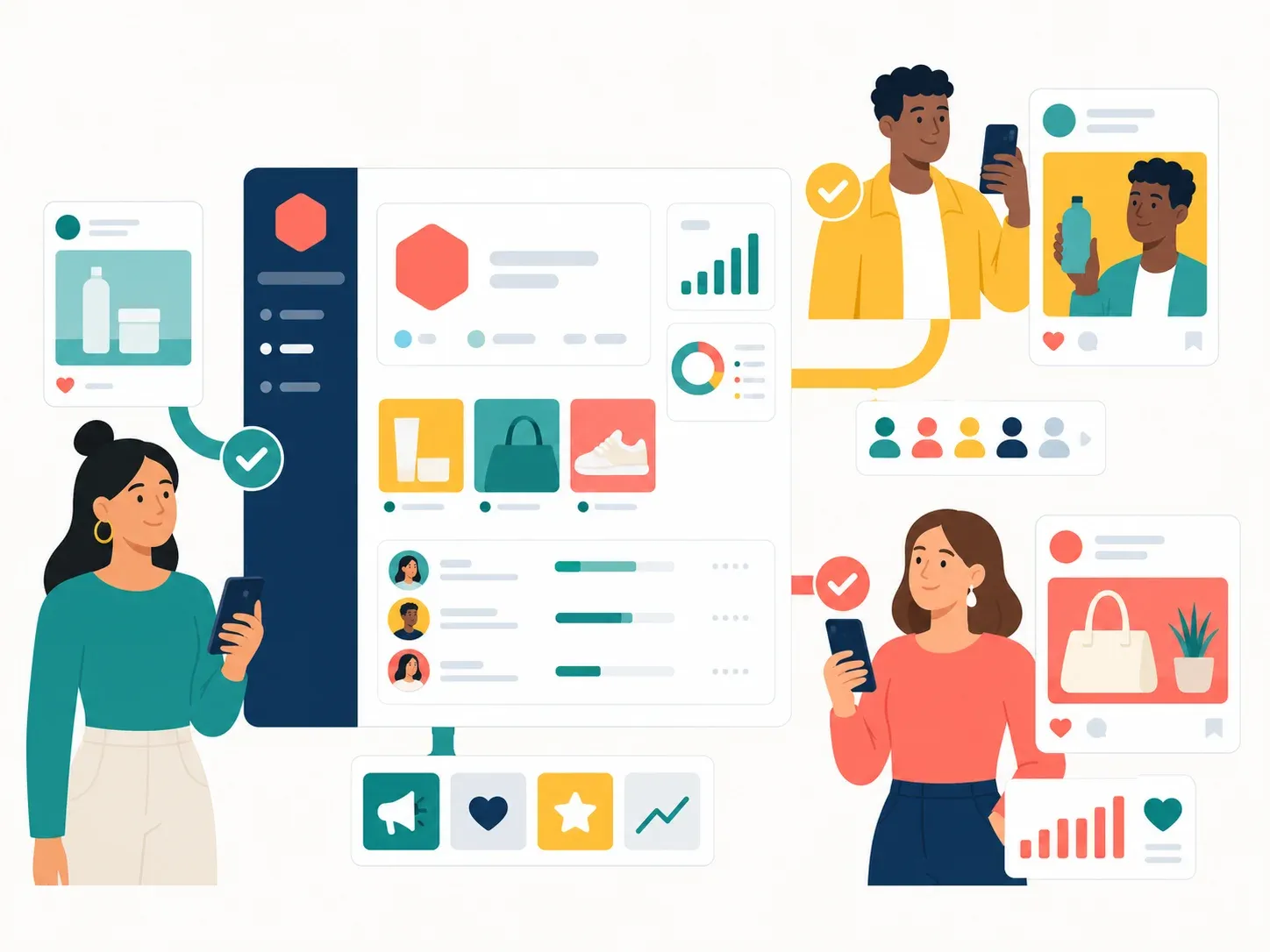
UGC creator and influencer are used as if they mean the same thing. They don’t, and the gap decides where your budget goes. A UGC creator sells you content you own. An influencer sells you access to an audience that already trusts them.
Same-looking video, completely different purchase. Confuse the two, and you either pay influencer rates for footage you could have licensed for a few hundred dollars, or hire a UGC creator and wonder why nobody saw the campaign.
Understanding UGC Creators and Influencers
UGC Creators: Content First, Audience Second
A UGC creator (User-Generated Content) produces brand-focused content for businesses to run through their own marketing. No large following required. What you pay for is their ability to make a video that looks like a real customer filmed it: demos, testimonials, unboxings, everyday lifestyle shots.
Once the files land, the brand owns or licenses them and can publish anywhere the usage rights allow.
Common places brands run UGC:
- Paid social advertisements
- Brand websites and landing pages
- Product detail pages
- Email marketing campaigns
- Amazon listings
- Organic social media accounts
Because UGC is built to resemble a real customer experience rather than a polished ad, it tends to hold up in paid social, where people scroll past anything that announces itself as advertising.
On TikTok, @charlotte.ugc walks through a UGC ad she built, section by section, from the opening hook to the product payoff. It reads like advice to other creators, which is exactly the point: her deliverable is the ad itself, not a post promoting the brand to her own followers.
@charlotte.ugc A UGC ad example, explaining each section step by step! 🙌🏼 #ugc #ugccreator #ugccreators #ugccommunity #ugcconcept #ugctips #usergeneratedcontent #marketing #digitalmarketing #ugcexample #contentcreator #contentcreatortips #ugcvideo #ugcjourney #ugcupdate #ugcideas #ugcgang #ugc101 #ugchowto #ugcvideos #contentcreation #ugcportfolio #ugecontentcreator #ugctipsandtricks #ugcinspo #socialmediamarketing #ugcjourneyupdate #creatortok #ugcideas #newugc #adexample #ugcadexample ♬ original sound - Charlotte | UGC creator
@lucilleugc tags a skincare video as a paid UGC ad and drops a hire-me note in the caption. The clip mirrors an ordinary skincare routine, yet it is commissioned creative the brand can run in paid social. That is the “authentic but ownable” quality brands pay UGC for.
@lucilleugc Paid Ads #ugcexample for a skincare brand✨🍵 If you need engaging content for your brand, here’s how you can reach out to me👇🏻 💌: [email protected] 📲: lucillemarson.my.canva.site #ugcexample #socialmediamarketing #contentcreator #ugcmarketing #digitalmarketing #contentmarketing #ugccreator #ugccreatorsneeded ♬ original sound - Lucille | UGC Creator
Then there is the part that settles most budget arguments. A single UGC video typically runs $150 to $300, median around $175, with usage rights adding roughly 30% to 50% on top. A mid-tier Instagram or TikTok creator charges $500 to $5,000 per post.
So the same $3,000 buys you one influencer post, or a month of creative you can test against.
In short: hiring a UGC creator buys content. Hiring an influencer buys reach.
Influencers: Audience First, Content Second
An influencer is a creator with an engaged following they can move toward a purchase. They make branded content too, but the content is only half of what you are buying. The other half is the relationship behind it.
Rather than handing files to a brand, influencers post on their own channels, putting the product in front of people who already know them. Because followers treat them as trusted experts or relatable voices, their recommendations lift awareness, engagement, and purchase consideration.
That is why brands vet influencers on audience demographics, engagement rate, niche fit, and past campaign results rather than production polish alone.
UGC Creator vs Influencer: Key Differences
Side by side, the split is clean.
| Category | UGC | Influencer |
|---|---|---|
| What You’re Buying | Content assets | Audience access, trust, and distribution |
| Role in Marketing | Creates brand-owned content assets | Creates content and distributes it to their audience |
| Audience Ownership | Does not necessarily own a large audience. Brands mainly pay for the content itself. | Owns a community and can influence purchasing decisions through audience trust. |
| Content Style | Product-focused, brand-directed content designed for ads or owned channels. | Audience-oriented content designed to engage followers and build trust. |
| Cost | Roughly $150 to $300 per video, plus 30% to 50% for usage rights. Additional terms may apply depending on use case. | Roughly $500 to $5,000 per post for mid-tier creators, priced on audience size and engagement |
| Best for | Paid ads, creative testing, content scaling | Awareness, trust building, community growth |
The short version: UGC creators produce marketing assets, influencers provide marketing distribution.
When Should Brands Choose a UGC Creator or an Influencer?
Choose UGC Creators for Content Production and Paid Advertising
Pick UGC when the bottleneck is creative, not awareness. Unlike influencer deals, where distribution is tied to one person’s audience, UGC leaves you with a library you can keep running.
- Ads that do not look like ads: UGC-style footage blends into the feed, which matters when the first half-second decides whether anyone keeps watching.
- Volume for testing: at $150 to $300 a video, a $3,000 month buys 10 to 15 variations. You usually need that many before a hook clearly wins.
- Reuse without renegotiating: because you own or license the file, the same video runs on Meta, TikTok, a product page, and an email.
- Cheap failure: killing a UGC concept that flopped costs a couple hundred dollars. Killing an influencer post costs the whole fee.
If you are judged on CTR, CPA, and ROAS, UGC is usually the cheaper route to a creative that actually converts.
Choose Influencers for Reach and Audience Trust
Influencers sell the one thing UGC structurally cannot produce: an audience that already opted in.
- Reach you cannot buy cold: a post lands with people who chose to follow. Building that from scratch through paid takes months.
- Borrowed credibility: a recommendation from someone a follower already trusts clears hesitation a brand ad cannot.
- Launch momentum: reviews, demos, and first impressions cluster attention into a window, which is what a launch needs.
- Compounding relationships: repeat partnerships beat one-offs, because a third mention reads as conviction rather than a paycheck.
Price in one caveat. Fewer than one in five influencer contracts include any clause tying pay to a measurable outcome. You are buying exposure, usually up front, whatever it returns.
Combine Both for Maximum Impact
Often you do not have to choose. Stanley is the case everyone points at: agency Nativve credits its network of UGC and influencer creators with growing Stanley 1913 from 10k to over 235k followers, a 204.8% lift, with engagement up 208.6% over 18 months.
Read that wording closely. Neither creator type did it alone, which is the honest version of this comparison.
A campaign that uses both usually sequences like this:
- Influencers introduce the product and generate awareness.
- UGC creators supply the assets the brand repurposes for paid ads, landing pages, email, and organic social.
- Performance data shows which assets and partners earned more budget.
That blend is what people mean by UGC influencer marketing: influencers open the door, UGC keeps the ads running once it is open.
How to Build a Marketing Strategy That Uses Both
Few campaigns run on one creator type start to finish. Strong creator marketing blends the two with a clear workflow and steady measurement. Put those three together, and you scale faster while spending less.
Find the Right Mix of Creators
Your mix should follow the goal: product awareness, scalable content, paid ad creative, or long-term community growth. Match the creator type to the job.
A launch might lean on influencers to introduce the product while UGC creators supply extra assets for ads and owned channels. Performance campaigns tilt toward UGC. Brand-building usually needs both.
As campaigns spread across platforms and markets, vetting partners by hand gets slow. Scrumball’s AI-powered discovery surfaces matching creators and the data behind them, so audience fit, past performance, and campaign requirements are visible at a glance.
Manage Collaborations in One Workflow
Run 40 creators at once, and the first thing to break is not discovery. It is tracking. Who signed, who shipped, who is late, which cut is approved, who has been paid. A spreadsheet handles ten of those. It does not handle forty.
Scrumball’s influencer management tool keeps creator profiles, campaign status, creator libraries, collaboration tracking, and content monitoring in one place, so answering “where does this creator stand” takes a glance instead of an audit.
Measure What Actually Drives Results
The two creator types fail in different ways, so measure them differently.
For UGC, judge the creative against paid benchmarks:
- Click-Through Rate (CTR)
- Cost Per Acquisition (CPA)
- Return on Ad Spend (ROAS)
If a video cannot beat your control creative within a few thousand impressions, that is a hook problem, not a UGC problem. Cut it and test the next one.
For influencers, the useful signals are broader:
- Reach and impressions
- Engagement rate
- Earned Media Value (EMV)
- Sales and conversions
Attribution here is messier, and pretending otherwise leads to bad calls. One post rarely maps cleanly to sales, so watch branded search volume and follower growth in the days after it lands.
When you run both, Scrumball’s performance tracking puts creator and campaign results in the same dashboards, with content analytics and live reporting, so comparing a UGC test against an influencer post does not mean stitching two exports together.
Conclusion
Starting from zero, the cheap sequence is straightforward. Buy three or four UGC videos, run them as paid, and find out which hook converts before spending anything on reach.
Once you know which message works, an influencer campaign amplifies something proven instead of gambling on a script nobody has tested. Most teams do it backwards: they pay for the reach first, then discover the creative was the problem all along.
FAQs
Can an influencer also be a UGC creator?
Yes, and many are both. Plenty of influencers sell UGC packages, producing content brands run themselves without posting it to their own audience. UGC creators also grow followings over time and start offering distribution too. Judge the deal, not the job title: in any given campaign, you are buying either content, reach, or both.
Should brands pay UGC creators and influencers differently?
Yes, because the pricing logic is different. UGC is priced on production:
- Production complexity
- Number of content assets
- Editing requirements
- Revision rounds
- Usage rights and licensing duration
Influencer fees are priced on the audience:
- Follower count
- Engagement rate
- Content niche
- Campaign deliverables
- Platform selection
- Exclusivity agreements
Comparing the two rates directly tells you nothing useful. Compare each against the outcome it is supposed to produce.
How much does a UGC video cost compared to an influencer post?
A single UGC video typically runs $150 to $300, median near $175, with usage rights adding another 30% to 50%. Mid-tier Instagram and TikTok influencer posts run $500 to $5,000. Practically, one influencer post costs about what a full month of UGC testing costs.
How can brands find the right UGC creators and influencers?
Social search, creator marketplaces, agencies, referrals, and influencer marketing platforms all work. Finding them is the easy half. Screen on content quality, audience demographics, engagement, brand fit, and past collaborations rather than follower count, which predicts very little about whether a creator can sell your product.
Can brands build long-term partnerships with UGC creators?
Yes, and repeat creators usually get cheaper and faster. Once someone knows your product, messaging, and audience, onboarding shrinks and revision rounds drop. You also get a dependable source of fresh creative for seasonal pushes and launches instead of restarting the search every quarter.