
The short answer: micro influencers get you engagement and niche trust, macro influencers get you reach. Which one wins depends on whether your campaign needs to convince people or simply reach them.
Neither tier is better in the abstract. They fail in different ways, and the useful question is which failure you can afford. This guide compares both on follower count, engagement, cost, and platform fit, then walks through how to actually run each one.
What Is a Micro Influencer? Definition and Benefits
Micro-Influencer Definition
Micro-influencers have between 10,000 and 100,000 followers and build around one niche rather than broad appeal. Their audiences are small enough that the creator can still reply to comments and DMs, which is where the trust comes from.
That direct contact is the whole product. A recommendation from someone who answers questions in the comments reads like advice from a friend, not an ad. Engagement follows: micro creators on Instagram typically land in the mid-single digits, while a good engagement rate across the market sits between 1% and 5%.
Benefits of Working With Micro Influencers
The value comes from the relationship, not the follower count. Audiences in a tight niche already trust the creator on that specific subject, so the recommendation carries further than the raw numbers suggest.
Cost is the other half. Because rates scale with audience size, you can book several micro creators for the price of one large partnership and cover several niches at once. That also spreads your risk: if one creator underperforms, the campaign does not go with it. We cover the trade-offs separately.
Micro-Influencer Examples in Practice
Two Instagram skincare and beauty creators show what the tier looks like with real numbers.
- Rachael (@skincarestandard) has 97.2K followers across roughly 1,300 posts, sitting at the top of the micro range on skincare education.
- Amanda Frisch (@amandafrischbeauty) has 55.1K followers over about 1,200 posts, squarely mid-tier, focused on beauty products and personal care.
Note the post counts. Both have published over a thousand times, which is what a niche audience is actually buying: someone who has been consistent on one subject long enough to be worth trusting. Rachael's Reel is a good sample of the format.
What Is a Macro Influencer? Definition and Benefits
Macro Influencer Definition
Macro influencers have between 100,000 and 1 million followers. At that size, the operation changes: most work with a manager or agency, and content moves to a production schedule rather than a phone camera.
You get higher production quality and visibility that a small creator cannot match. What you give up is the direct contact. A macro creator cannot answer every comment, so the relationship that drives micro conversion is thinner here.
The Trade-Off: Reach vs. Engagement
Engagement rate falls as audience grows. This is close to a rule, not a tendency, and it holds across platforms.
The reason is simple arithmetic plus attention. A creator can sustain real interaction with a few thousand people. At half a million, most followers are passive viewers, so the same post earns a smaller share of replies. Macro buys you far more total impressions at a lower rate of response per follower.
Macro-Influencer Examples in Practice
- Natacha Oceane (@natacha.oceane) has 929.1K followers from only 818 posts, near the ceiling of the macro tier. Science-based fitness, high production, and a much lower post count than the micro creators above.
- Samantha Clarke (@samiclarke) has 594.3K followers across about 1,700 posts on fitness, nutrition, and self-care. She also co-founded Form, her own digital workout platform.
That contrast is the tier in one line: Oceane reaches nine times Rachael’s audience on a third of the output. Clarke shows the other pattern, where a creator at this size becomes a business rather than a placement, which changes how you negotiate. Oceane's Reel shows the production difference.
Platform-Specific Nuances: Instagram vs. TikTok vs. YouTube
The same creator tier behaves differently depending on where you run the campaign.
Instagram: Visual Content and Community Building
Micro creators do well here through Reels, Stories, and carousels, and Instagram gives them the tools to close: product tags, affiliate links, promo codes. Discovery and conversion happen in the same place.
Macro creators fit awareness work better. The reach and the polish build credibility fast, but you should not expect the same conversion rate per follower.
TikTok: Discovery and Viral Potential
TikTok is the one place where follower count matters least. The recommendation feed can push a micro creator’s video far past their own audience, so a small creator can occasionally deliver macro-scale reach at micro cost.
That cuts both ways. It is unpredictable, so treat the upside as a bonus rather than the plan. Macro creators give you a more reliable floor when a launch needs guaranteed visibility.
YouTube: Long-Form Content and Search Value
YouTube is the only channel where the content keeps working after the campaign ends. A review or tutorial keeps pulling views from search for months, so a micro creator with strong subject authority can outperform their subscriber count over time.
Macro creators bring production quality and audience loyalty, which matters most when the product needs explaining. For anything complex, the longer format earns its cost.
Micro vs Macro Influencers: The Ultimate Comparison
Side by side, on the dimensions that actually change a decision.
| Metric | Micro-Influencers | Macro-Influencers |
|---|---|---|
| Follower Count | 10K to 100K | 100K to 1M |
| Engagement Rate | Higher, typically mid-single digits on Instagram | Lower, and it keeps falling as the audience grows |
| Cost per Post | Lower, so you can book several at once | Higher, usually a single large commitment |
| Audience Trust | Strong within a niche | Broad recognition rather than personal trust |
| Content Control | Flexible, closer to the creator’s own voice | Structured, produced to a brief and a schedule |
| Main Risk | Limited reach per creator, high coordination load | Inflated or low-quality followers, competitor overlap |
Rates move with platform and niche, so treat cost as a range rather than a number. Our guide to influencer rates breaks down what each tier actually charges.
Micro vs Macro Influencers: Which One Works Better for Your Campaign?
Match the tier to the job. Three situations cover most decisions.
Brand Awareness and Mass Market Goals
Launching a product or entering a crowded market rewards reach, and macro creators supply it faster than anything you can build on owned channels.
This works best in lifestyle, fashion, and consumer goods, where the audience is broad by nature and polished visuals do real work for the brand.
High Engagement and Conversion-Driven Goals
If the target is sales, sign-ups, or niche conversions, micro creators usually win. Their audiences are pre-qualified by shared interest, so the recommendation lands on people who were already close to buying.
This holds especially for B2B, specialized software, and local services. Those products need someone who can explain them, and a creator with genuine subject knowledge does that better than a large general audience.
Budget and Resource Constraints
Micro is the cheaper way to test. You can run several creators, several messages, and several audiences before committing real budget.
The catch is workload. Fifty micro partnerships mean fifty outreach threads, fifty briefs, and fifty payments. A small team may get more done with three macro deals, simply because there is less to coordinate.
How to Build a Micro vs Macro Influencer Strategy
The same six steps apply to both tiers, but each one plays out differently depending on which you pick. Where they diverge is what matters, so that is what each step below focuses on. For broader context, see our influencer marketing strategy guide.
Step 1: Define Target Audience and Campaign KPIs
Set the audience and the KPIs before you contact anyone. Which metric counts depends entirely on the tier you chose.
- Micro: the audience follows out of shared interest, not fame, and trusts recommendations the way they would a friend’s. Measure engagement rate and in-community conversion, such as promo code redemptions and DM inquiries, rather than raw reach.
- Macro: the audience follows for entertainment or aspiration and spans many interests. Measure reach, impressions, and brand mentions. Conversion will look diluted here because the audience was never pre-qualified.
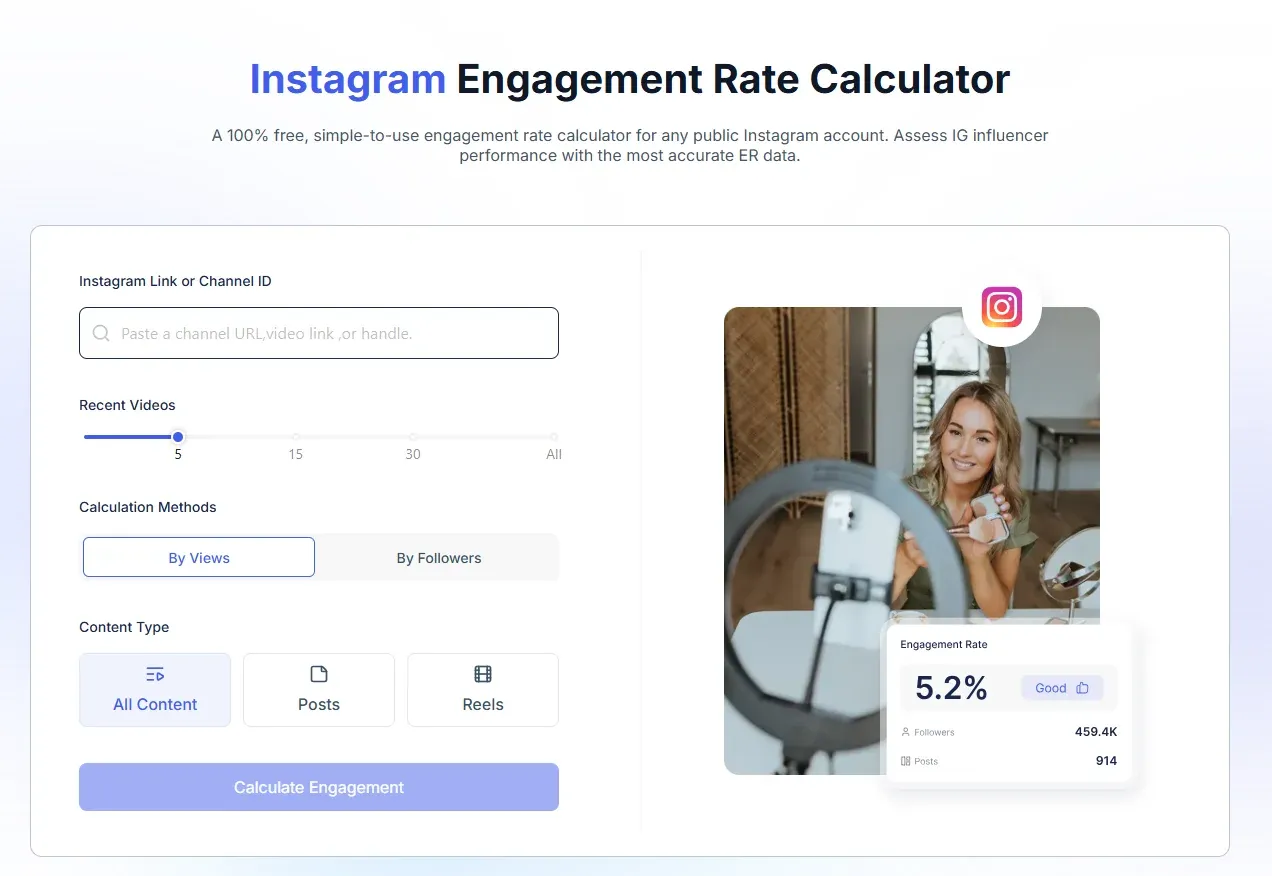
Set targets against real numbers instead of guesses. Scrumball’s free Engagement Rate Calculator (available for YouTube, TikTok, and Instagram) shows what counts as good in a given niche and tier before you commit to a KPI.
Step 2: Creator Discovery and Vetting
Find creators whose audience overlaps yours, then check the audience is real. The failure mode is different at each tier.
- Micro: the risk is a creator who looks engaged but holds no real sway in their niche. Read the comments. Real product questions and opinions are the signal; a wall of emojis is not.
- Macro: the risk is inflated scale. Bought followers hide more easily at this size, and large creators often run several deals in one category at once, which dilutes your exclusivity and confuses their audience about who they actually endorse.
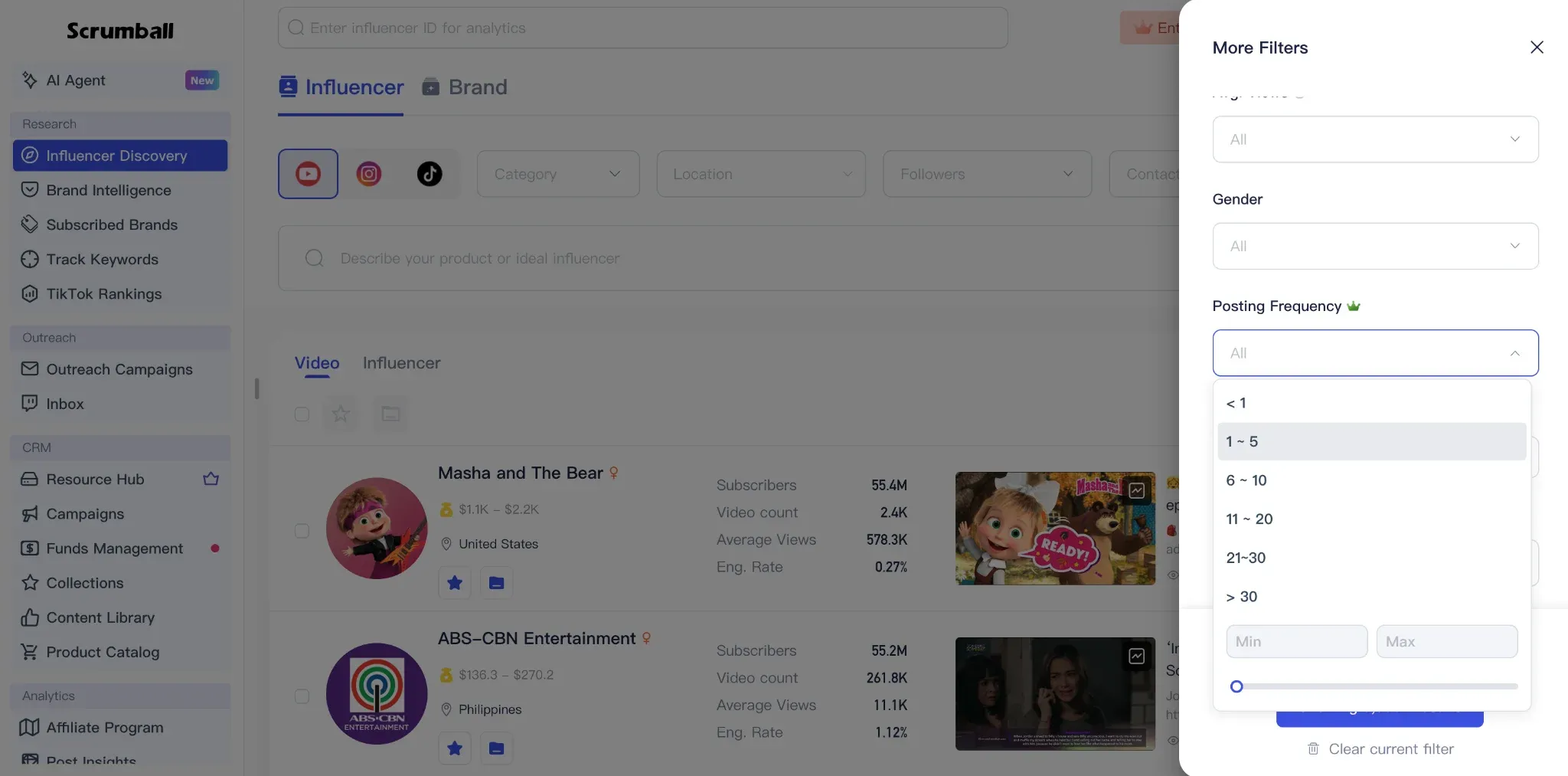
Scrumball’s Influencer Discovery covers both checks. You can search a 180M+ creator database across YouTube, TikTok, and Instagram, filter by budget alignment, email availability, and posting schedule, review 92+ performance metrics per profile, and use Competitive Analysis to see whether a creator recently worked with a rival.
For a faster first pass, the Fake Follower Checker flags suspicious follower patterns in seconds.
Step 3: Streamline with Specialized AI Tools
Managing partnerships by hand stops working at scale, though the bottleneck differs by tier.
- Micro: a lean team might coordinate 50 to 100 creators at once, each with a shipping address, a deadline, and a payment status. Spreadsheets break down fast here through missed follow-ups and duplicate outreach. The constraint is throughput.
- Macro: three to five creators, but each needs deep background checks on brand conflicts, audience authenticity, and past negotiations before a large commitment. The constraint is decision quality, and there is no volume to average out a bad call.
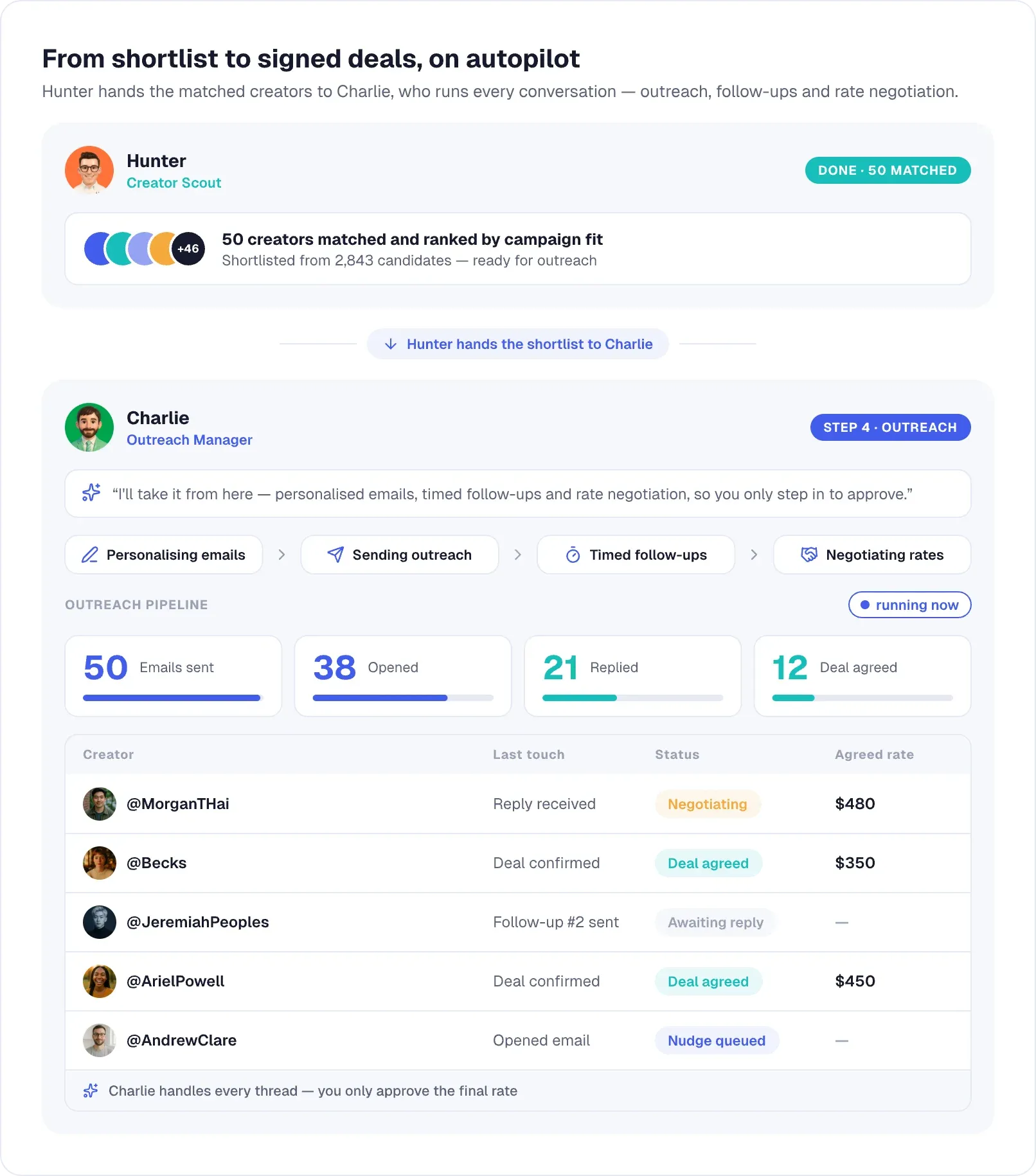
Scrumball splits this across dedicated AI agents. Hunter handles sourcing, and Charlie handles outreach, so a small team can run discovery, outreach, and tracking from one dashboard.
Step 4: Personalized Outreach and Pitching
Say why this specific creator fits. Generic templates read as spam, and both tiers can spot one instantly.
- Micro: creators usually reply to DMs or email themselves, so things move fast. The problem is volume. Eighty near-identical messages will feel like spam, and referencing something specific from recent content is slow to do by hand at that scale.
- Macro: outreach goes through a manager or agency, so the first message is about getting past a gatekeeper. It needs to read as a business proposal with budget, deliverables, and timeline. Expect replies in days or weeks, not hours.
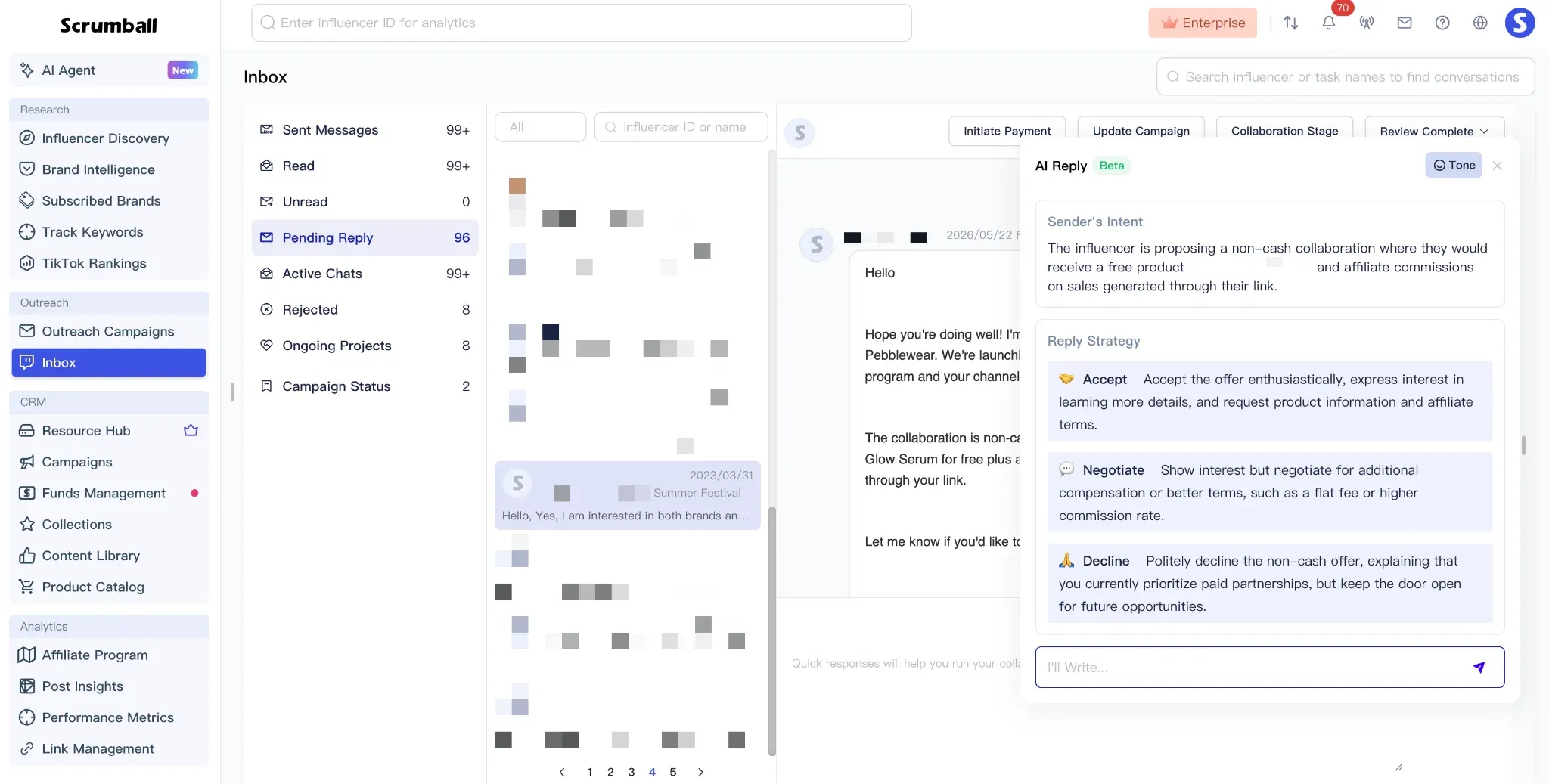
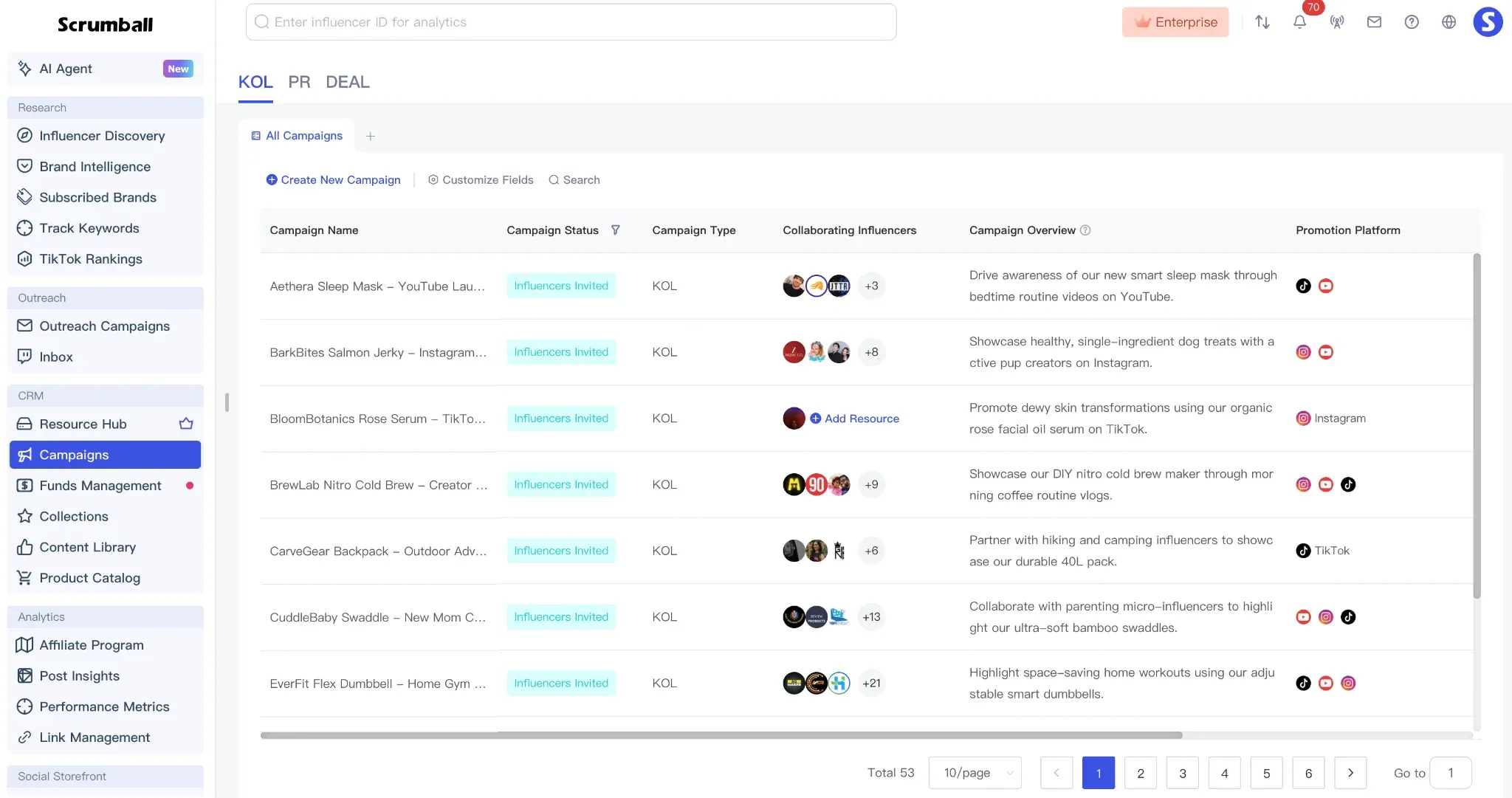
Scrumball’s Automatic Outreach handles the volume problem. AI-powered Email Writing pulls product details from your link to draft creator-specific messages, the Multi-Step Flow Builder chains follow-ups on your own timing, and the Smart Response Hub flags which replies show genuine interest.
Step 5: Contract Negotiation and Content Briefing
Put deliverables, usage rights, deadlines, and payment in writing. Then leave the creative voice alone, because an over-scripted post reads like an ad and loses the trust you paid for.
- Micro: simpler contracts, often a product exchange. The work is standardizing terms across a lot of creators at once.
- Macro: agencies, exclusivity clauses, and several rounds of revisions. The work is individual negotiation on every deal.
Once terms are set, Scrumball’s Influencer Management holds the campaign together. The Campaign Management Center covers objectives, budget, and deadlines, Team Assignment sets who owns what, and Brand Safety & Risk Management screens creators before you sign.
Step 6: Performance Tracking and Optimization
Track with links, promo codes, and analytics, then move budget toward what worked. Read the results differently by tier.
- Micro: read performance in aggregate. Combined conversion and CAC across many creators tells you who to reinvest in; any single creator is too small a sample.
- Macro: read it deal by deal, and watch brand lift signals such as branded search volume and follower growth. One large campaign rarely maps cleanly onto sales, and pretending otherwise leads to bad calls.
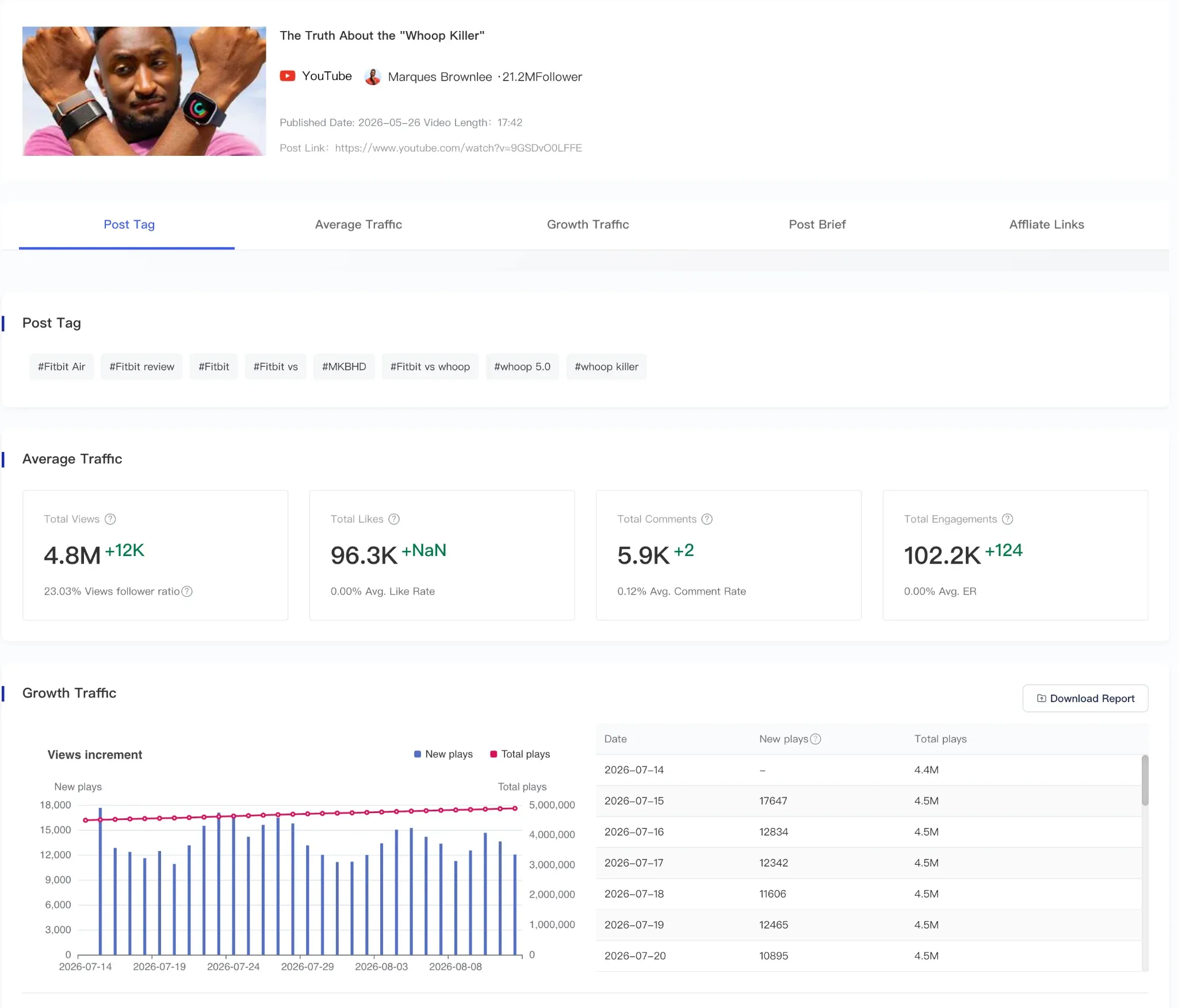
Scrumball’s Performance Tracking puts both views in one place. The Creator Commerce Engine issues per-creator links with Shopify integration for sales attribution, while the dashboard pulls revenue, cost, and post-level data together, refreshed every 2 hours.
Conclusion
If you are starting out, run micro first. It is the cheaper way to find out which message actually converts, and you will learn more from five small partnerships than from one large one.
Once you know what works, macro amplifies a proven message instead of gambling on an untested one. Most teams run that order backwards, buy the reach first, and then discover the creative was the problem.
FAQs
Do micro-influencers have better engagement than macro-influencers?
In most cases, yes, and the gap is consistent. Engagement rate falls as follower count rises, because a creator can only sustain real interaction with so many people. Micro creators on Instagram typically see mid-single-digit engagement, while larger accounts trend lower. You are trading response rate for total impressions.
Should I choose a micro or macro influencer for a new brand?
Start with micro. A new brand usually needs to learn which message converts before paying for scale, and micro partnerships let you test several angles for the price of one macro deal. Move to macro once you know what works and need volume behind it.
Can you run a successful campaign using both micro and macro influencers?
Yes, and most mature programs do. Macro creators open a launch and generate awareness, then micro creators sustain engagement and supply steady niche recommendations afterward. The two cover different stages of the buying journey, so running them together usually beats picking a side.
How do you measure ROI for micro vs macro influencer campaigns?
Measure them differently. Micro campaigns support direct attribution, so track promo codes, affiliate links, and blended CAC across the whole group rather than judging any single creator. Macro campaigns rarely map cleanly to sales, so judge them on brand lift: branded search volume, reach, and earned media value against the fee you paid.
How much do micro-influencers charge compared to macro-influencers?
Rates vary by platform, niche, and engagement quality, so treat any figure as a range. The reliable pattern is that cost scales with audience size, which means a limited budget usually buys several micro creators or one macro deal. Our influencer rates guide covers current benchmarks by tier.
What are the risks of working with micro vs macro influencers?
Each tier fails differently. Micro creators reach few people individually, so awareness work needs many running at once, which multiplies outreach, tracking, and payment overhead. Macro carries the opposite problem: one bad pick is expensive, inflated follower counts are harder to spot at that scale, and large creators often run competing deals in your category.