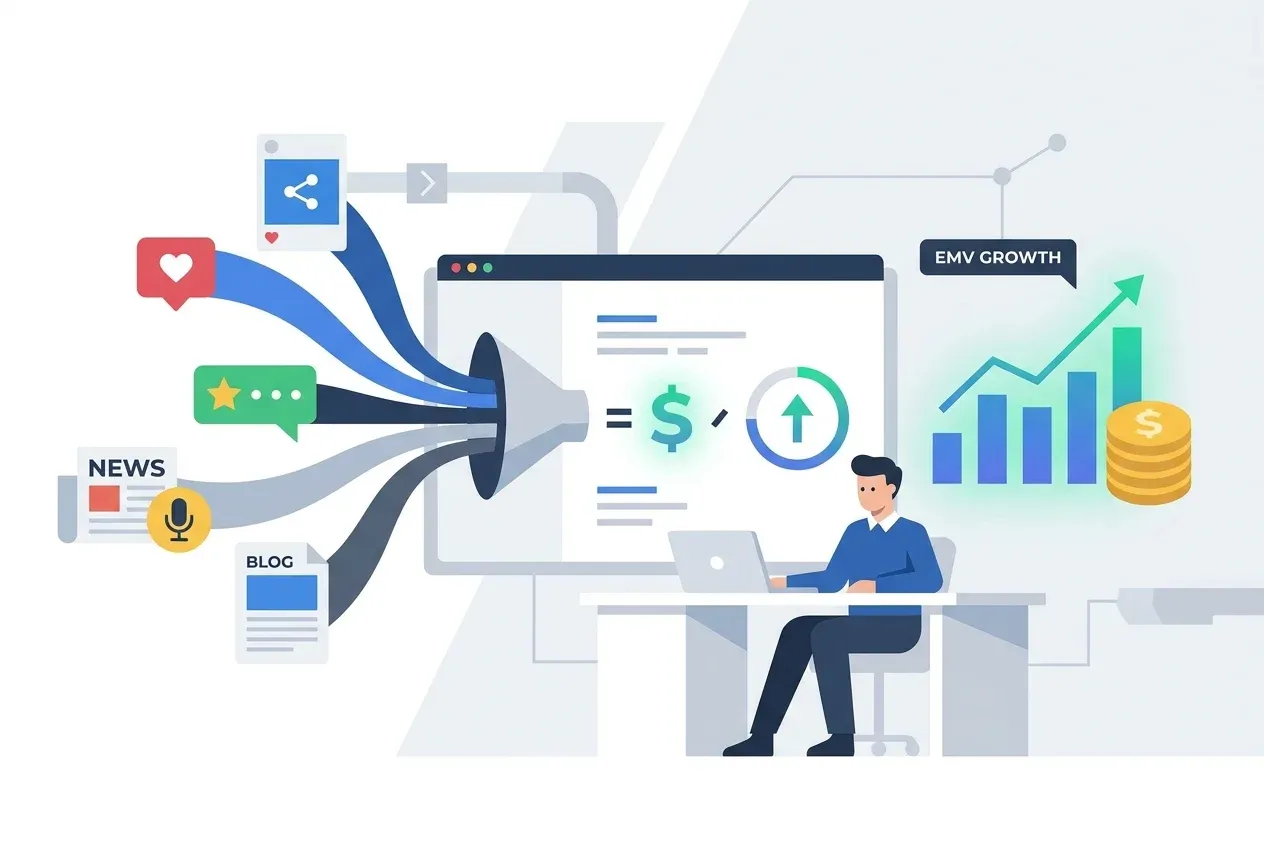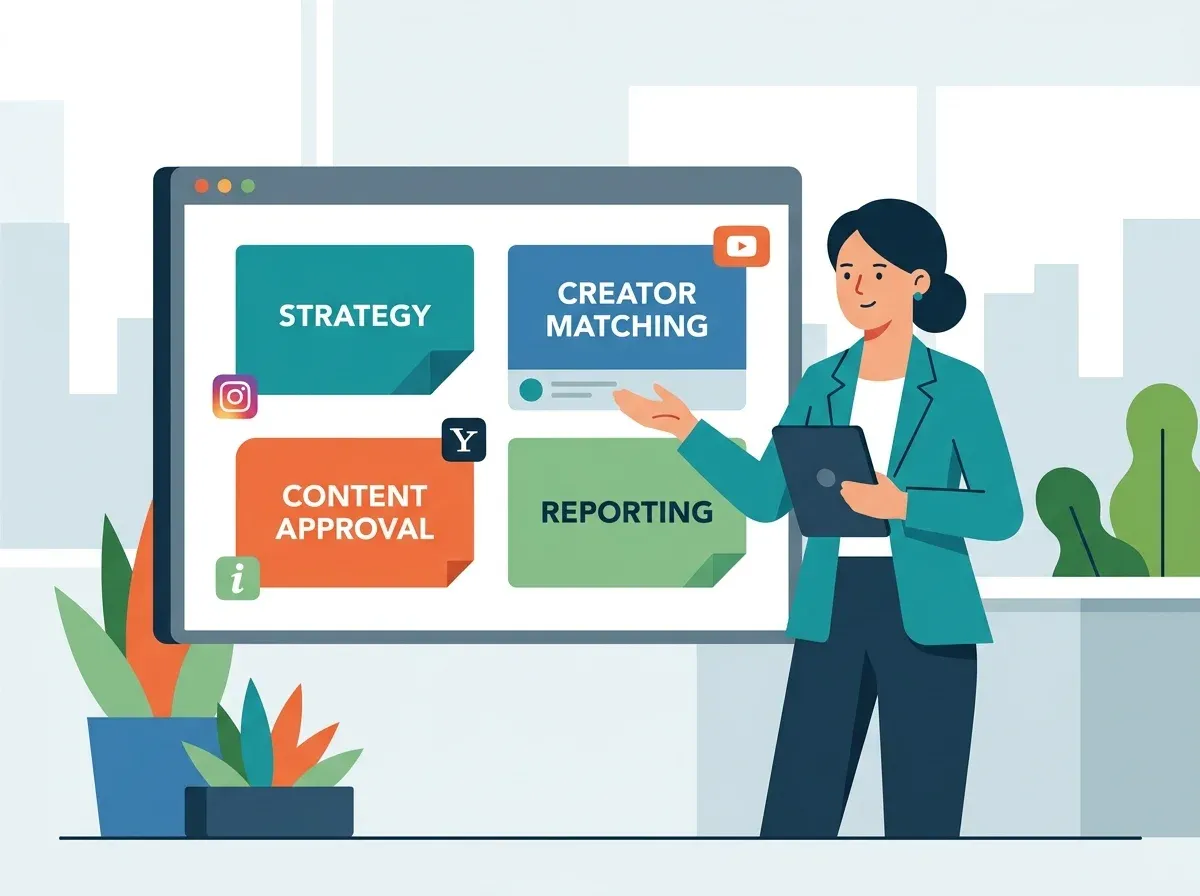

Many brands invest in influencer campaigns without fully understanding what influencer marketing services actually include. Some assume services stop at creator sourcing, while others expect complete campaign execution, reporting, and long-term optimization.
In reality, modern influencer marketing services cover far more than just influencer outreach. They combine strategy, creator operations, workflow management, analytics, and increasingly, AI-powered automation.
This guide breaks down the core services that shape modern influencer marketing programs, how agencies and platforms differ, and why AI-powered automation and integrated platforms now play a central role in executing scalable campaigns.
Influencer Marketing Services: A Primer for Brands
Before evaluating providers or platforms, brands first need a clear understanding of how influencer marketing services are structured today. The industry has evolved from simple creator matchmaking into a much broader operational ecosystem.
What Exactly Falls Under Influencer Marketing Services?
At a basic level, influencer marketing services help brands plan, execute, and optimize creator-led campaigns across social platforms. However, the actual scope usually extends well beyond creator partnerships.
A modern service offering often includes:
- Influencer discovery and vetting
- Campaign strategy development
- Creator outreach and negotiation
- Content approvals and workflow management
- Performance reporting and attribution
- Paid amplification support
- Ongoing optimization and analytics
Many social media influencer marketing services now also include AI-powered automation tools that reduce manual work and improve campaign scalability.
The exact service mix depends on whether a brand works with a platform, a managed agency, or a hybrid provider.
Managed Agency vs. SaaS Platform: What's the Difference?
A full-service influencer marketing agency typically handles campaigns end-to-end. The agency manages creator sourcing, negotiations, briefs, timelines, reporting, and optimization on behalf of the brand. This model works well for companies that lack internal influencer expertise or need external operational support.
SaaS (Software-as-a-Service) influencer platforms operate differently. Instead of managing campaigns directly, they provide software infrastructure that brands use internally. These systems focus on discovery, workflow management, outreach automation, analytics, and reporting.
In practice, many brands now combine both models. A social media influencer agency may use internal software platforms, while enterprise brands increasingly build hybrid in-house systems supported by external agencies and technology platforms.
Why Do Brands Choose Full-Service Agencies?
Even as software platforms become more sophisticated, agencies remain highly relevant. Influencer campaigns involve coordination across creators, content approvals, legal reviews, paid media, and reporting workflows. Managing those moving parts internally can become operationally heavy.
As campaign complexity increases, many brands rely on agencies to provide:
- Faster campaign execution
- Established creator relationships
- Cross-market operational support
- Creative direction and strategy
- Dedicated campaign management resources
For companies scaling globally, agencies can also reduce internal workload while maintaining execution consistency across multiple campaigns.
How Services Differ for B2B vs. B2C Campaigns
Not all influencer programs run the same way. B2C campaigns chase reach, engagement, and consumer awareness on Instagram, TikTok, and YouTube. B2B programs work differently, leaning on industry experts, niche creators, and long-form educational content.
That split shows up across every part of the service:
| Dimension | B2C campaigns | B2B campaigns |
|---|---|---|
| Primary goal | Reach, awareness, consumer engagement | Lead generation and pipeline influence |
| Creator focus | Macro and mega influencers for scale | Experts, thought leaders, niche creators |
| Content format | Short-form, platform-native video | Webinars, events, long-form education |
| Main channels | Instagram, TikTok, YouTube | LinkedIn and niche professional communities |
| Attribution model | Affiliate links and promo codes for direct sales | Lead gen tracking across a longer cycle |
| Core metrics | Consumer sentiment, share of voice, engagement | Qualified leads, audience quality, pipeline impact |
The gap goes deeper than tactics. B2B runs on longer sales cycles and messier ROI frameworks. B2C moves through shorter funnels with more direct revenue attribution.
The Core Services That Make Up Influencer Marketing
Most influencer marketing runs on three gears:
| Stage | What it covers |
|---|---|
| Discovery & vetting | Finding creators whose audience fits and whose followers act |
| Campaign management | Running outreach, content, and coordination day to day |
| Analytics & ROI | Measuring what came back and feeding the next round |
Styles differ between teams. The core work doesn't. For how these pieces fit a full campaign, see our guide on how to do influencer marketing.
Strategic Influencer Discovery & Vetting
Discovery isn't about the biggest follower counts anymore. It's about creators whose audience overlaps with yours and whose followers actually act.
Start with fit, not reach. The best partnerships involve influencers who already sit close to your target audience. To judge that fit, check:
- Audience demographics and whether they match your buyer
- Content themes and niche relevance to your brand
- Past brand deals and how they performed
- Sentiment and engagement patterns on each platform
Manual research breaks at scale. Once you're vetting hundreds of creators, discovery tools keep standards consistent, letting you screen by niche, geography, and engagement without losing the thread.
One caution: follower count rarely predicts results. Some of the strongest creators we've worked with had smaller, fiercely engaged audiences. So look past the surface and read:
- Comment depth and conversation quality
- Save and share behavior
- Repeat engagement over time
- Whether past campaigns held up
Not every creator plays the same role, either. Most programs sort them into tiers:
| Tier | Best for |
|---|---|
| Mega influencers | Broad reach and mass awareness |
| Mid-tier creators | Balanced reach and performance |
| Micro influencers | Niche, high-engagement targeting |
| Nano creators | Community trust and authenticity |
Tiering is how you spend on purpose, instead of overpaying for reach you don't need.
Campaign Orchestration & Creator Management
With the roster set, the work turns to coordination. Communication, content, and daily management decide whether things run or stall.
It starts with outreach, and outreach beats mass emails. Strong onboarding sets expectations early. Lock these down before kickoff:
- Rates and contracts
- Briefs and content timelines
- Usage rights and approvals
Scale changes the math. Dozens of creators can't run on manual follow-ups. Automated outreach, templates, and a central inbox keep activation moving and messaging steady. For multi-market programs, that's not optional.
Coordination is the part that teams underestimate. A creator management platform pulls scattered work into one place:
- Content review pipelines
- Brand approval workflows
- Deliverables and calendars
- Internal collaboration
The result is fewer dropped threads and faster decisions.
Protect one more thing as you scale: voice. Every creator talks differently, and that's a feature. Good guidelines keep messaging and compliance aligned while leaving room for native storytelling. The goal is a coherent brand, not identical creators.
Performance Analytics & ROI Optimization
This is where influencer marketing grew up. Brands stopped settling for engagement screenshots and started tying creator activity to revenue.
Start with the right KPIs, because no two campaigns measure success alike. Match the metric to the goal:
| Campaign goal | KPIs that matter most |
|---|---|
| Awareness / launch | Reach, impressions, engagement rate |
| Lead generation | Click-through, cost per lead, conversions |
| Sales / revenue | Revenue attribution, customer acquisition cost |
Tie those numbers to real business goals, or they're just numbers.
Timing matters too. A post-campaign report is too late to fix anything. Real-time reporting lets you catch a weak creator early and shift budget while it still counts.
The best programs never stop measuring. Each campaign feeds the next, sharpening:
- Creator selection models
- Platform allocation
- Messaging frameworks
- Audience targeting precision
Then there's attribution, still the hardest part. Brands want a straight line from creators to sales and signups. Affiliate tracking, promo codes, first-party analytics, and integrations get you closer than engagement metrics ever will.
The Technology Stack Powering Modern Influencer Marketing Services
Technology increasingly acts as the operational foundation behind influencer marketing services. Even agency-led campaigns now rely heavily on platform infrastructure.
AI’s Role: Reshaping Influencer Marketing Workflows
AI is rapidly transforming influencer marketing operations by improving creator discovery, audience analysis, fraud detection, and campaign forecasting. Modern platforms can process large volumes of creator and performance data far faster than manual teams.
AI-driven systems also help automate outreach workflows, optimize campaign decisions in real time, and improve targeting precision, allowing brands to scale influencer programs more efficiently while reducing operational complexity and repetitive manual work.
Unified System: Core Modules and Workflows
Integrated influencer platforms consolidate multiple capabilities into a single operational environment. Core modules typically include:
- Influencer discovery and vetting
- Automated outreach and communication
- Content collaboration and approval pipelines
- Campaign calendar and deliverable tracking
- Real-time analytics and reporting
Platforms like Scrumball support full-cycle campaign execution by helping brands manage creator sourcing, communication workflows, content approvals, and performance reporting through one centralized system.
This unified approach improves operational visibility, reduces workflow fragmentation, and enables teams to scale campaigns more efficiently across multiple markets.
Data and Decision Consistency: The Core Advantage
A unified platform is precisely what unlocks the full potential of AI-driven automation and predictive analytics. Without integration, AI insights remain trapped in disconnected tools. The core advantage of an integrated platform lies in data and decision consistency — ensuring that discovery signals, outreach logs, approval history, and performance data all live in a single source of truth.
Fragmented point solutions create data silos and conflicting metrics, leading to slower decisions and inconsistent reporting. In contrast, integrated platforms provide a centralized infrastructure where every campaign decision — from creator selection to budget reallocation — is informed by the same real-time, cross-campaign data. This consistency enables more confident, faster decision-making at scale.
Global Scale: Building an Enterprise-Grade Foundation
Enterprise influencer programs involve far greater operational complexity than smaller campaigns, particularly when managing creators, approvals, reporting structures, and compliance requirements across multiple regions and internal teams.
A scalable technology infrastructure helps global brands standardize workflows, maintain operational visibility, and coordinate high-volume influencer activity efficiently without creating unsustainable increases in manual management complexity.
Conclusion
Influencer marketing services now extend far beyond creator matchmaking. Modern programs combine strategy, creator operations, workflow management, analytics, automation, and long-term optimization into a single operational ecosystem.
For brands, the key decision is no longer simply whether to use influencer marketing. The bigger question is how to structure execution efficiently through agencies, software platforms, or hybrid models. As campaigns grow more complex, the most effective influencer marketing services are increasingly those that combine operational expertise with scalable technology infrastructure.
Frequently Asked Questions
What should I look for in an influencer marketing service?
Brands should evaluate the quality of creator discovery, reporting capabilities, workflow management tools, scalability, and industry expertise. Strong providers should also offer transparent analytics, clear communication processes, and measurable performance frameworks rather than focusing only on influencer sourcing.
Where can I find influencer marketing services?
Brands commonly find influencer marketing services through agency directories, professional referrals, LinkedIn networks, SaaS marketplaces, and industry conferences. Many social media influencer marketing services also operate through self-service platforms that allow brands to explore capabilities before committing.
How much do influencer marketing services typically cost?
Pricing varies significantly depending on service scope. Full-service agency retainers may range from several thousand dollars monthly to enterprise-level contracts, while SaaS platforms often use subscription pricing. Some providers also charge campaign-based fees or performance-based compensation models.
How long does it take to see results from influencer marketing services?
Awareness campaigns can generate engagement quickly, often within days of launch. However, measurable business outcomes such as customer acquisition, brand lift, or long-term revenue growth usually require multiple campaigns over several months to consistently optimize performance.
Can I manage influencer marketing in-house, or do I need a service provider?
Smaller campaigns can often be managed internally using influencer software platforms. However, larger campaigns involving multiple creators, markets, and reporting requirements typically benefit from agency support or integrated technology systems that reduce operational complexity and improve scalability.